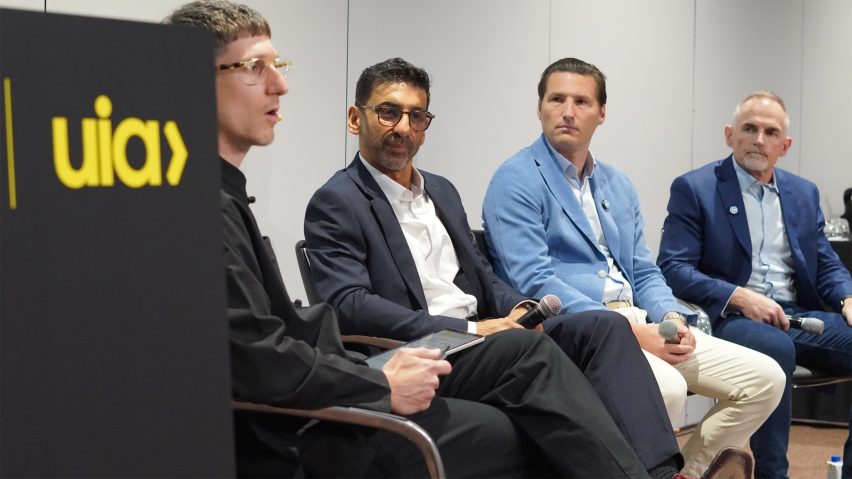
"Runaway train" of massive file sizes causing issues for architecture projects says panel at HP talk
Promotion: architects' designs are being contained within digital files so big they can take two hours to load, leading to delays and mix-ups on projects, experts warned in a talk hosted by HP at the UIA World Congress of Architects 2026.
During the discussion, which took place in Barcelona, HP senior vice president and division president of advanced compute solutions Jim Nottingham warned that increasingly complex digital architectural models have become "massive".
"Data has been exploding or growing for several decades," Nottingham said. "Now with AI, it's growing exponentially faster."
"In reality, all the AEC – architecture, engineering and construction – customers that we work with, particularly architects, the model sizes are getting massive. And so I've been surprised to go on site and see teams loading their design, taking 90 minutes, two hours, just to load the design."
Nottingham added that managing this data and how it transitions between different tools is essential for removing friction from AEC workflows that can often lead to inefficiencies, errors or lost work.
"Waiting is the enemy... waiting reflects a point of friction, and those points of friction are usually where the opportunities come in for the design to drift," he said.
"Misinformation gives you the wrong trade-off, so when you look at everything that happens around the design and the workflow, all the transitions to different tools, all the handoffs, all the reviews, all of the work that happens outside. That's where you see people waiting."
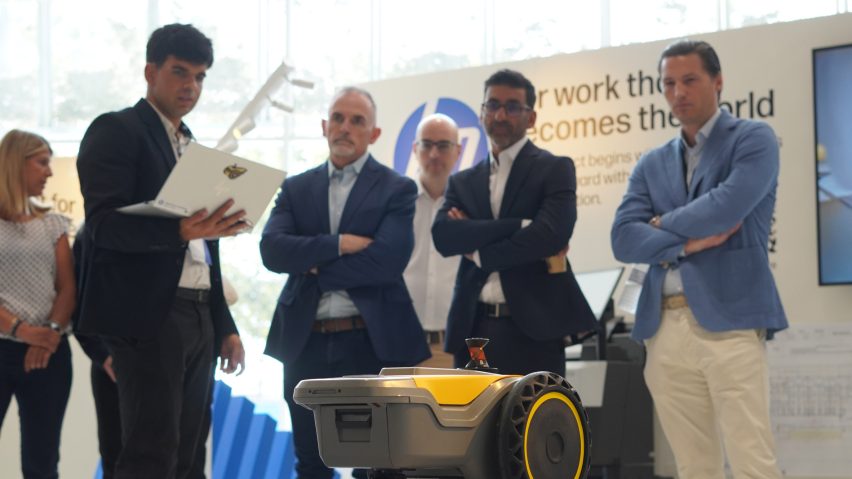
Also on the panel, Nadeem Mir, head of technology and senior partner at global architecture studio Foster + Partners, explained that transitioning to 3D modelling in recent years has led to "an explosion of file sizes".
The huge and ever-expanding size of these files is a "runaway train" that is making collaboration with other studios and firms on projects "incredibly difficult", Mir added.
"I have people come to me saying, 'You've ruined my life because my client is complaining'. Because the interior designers that their client has chosen can't operate in our space, because they're a small interior designer and they're just not ready to do this level of computation," said Mir.
"We're definitely going to have to change and shift completely away from the current way of working, quite frankly," he added. "The kind of legacy of using file-based design is just not going to work anymore."
Joining Nottingham and Mir on the panel, HP senior vice president and division president for large-format print, Daniel Martinez, warned that such hugely complex architectural models are contributing to construction errors.
"The ability to represent a lot more information in that model, in the data, ultimately makes it much richer in the design phase, but it also makes it more complex in the build phase," he said.
"Today, it's estimated that close to 15 per cent of the cost of a construction project is related to reworks or mistakes that need to be redone, or inefficiencies in terms of the ability to represent the work in the real world," he added.
"And therefore, there's a real opportunity to streamline that process and make it much more efficient. I envision in the future that architects, as they present a project, will also be incorporated with a level of technology and a technology enablement that allows them to reduce that 15 per cent or 10 per cent of inefficiencies to 1 per cent or even below."
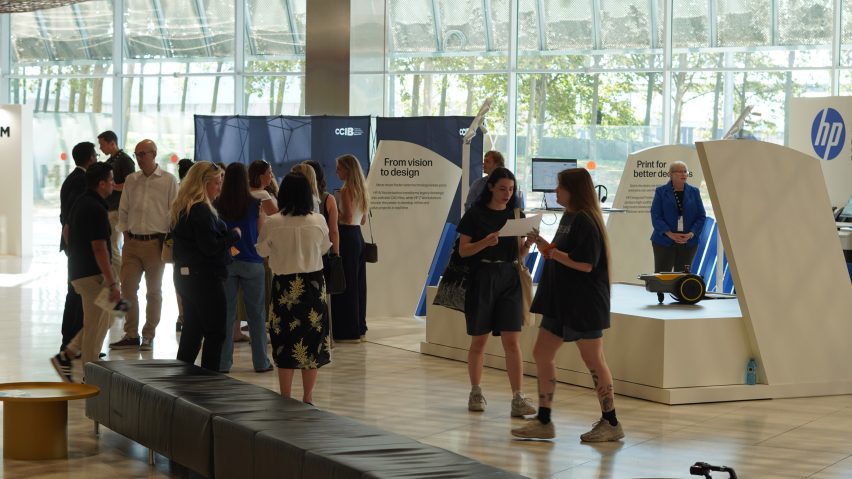
The talk, titled "Closing the distance between an idea and a building", focused on how technology can help ensure architectural intent is maintained through to the end of a project as construction becomes ever-more complex.
It included a discussion about AI, and how it might be able to assist architects.
Nottingham said that the initial design phase has already been "significantly accelerated for many architects" by image-generating AI diffusion models, but he predicted that the technology will also increasingly play a role in reducing tasks that architects tend to dislike.
"There's a tremendous opportunity that some people are starting to do, and I think you're going to start seeing a lot more people do," he said. "You can eliminate a lot of that friction with agentic AI that takes a lot of the mundane out and lets the creative brilliance stay in the flow, and the end-through, and it's going to be a big opportunity to eliminate a lot of the drift and a lot of the waiting."
"In this case, AI is not replacing the creative expertise; AI is eliminating all of the mundane work that gets in the way of creative expertise," he added.
Martinez revealed that HP is running pilots in some areas of an AI tool that would assess development plans and provide a chance of success for gaining approval based on local policies.
"Being able to accelerate that from what today takes 18, 24 months, and in some cases, to being able to do that within a few weeks, would be a phenomenal use of this technology that would also reduce the amount of effort on the administrative side," said Martinez.
"So I think there's ample opportunity to accelerate building, there's ample opportunity to reduce those efficiencies in ways that we talked about, and ultimately bring down the amount of work that architects need to spend on those mundane tasks that aren't adding value, or that aren't as enjoyable to them as we know, and as we hear, and ultimately free up more space for that creative work, and accelerating that creative work, and doing more of that," he added.
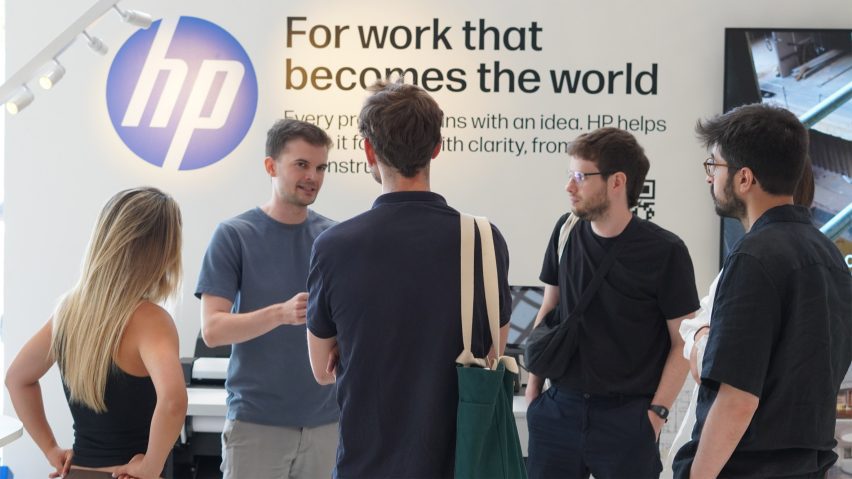
Mir said that Foster + Partners is looking to use AI tools trained on its own data sets.
While he agreed that AI has the potential to be "hugely helpful" for architects, he stressed the importance of understanding how the technology works and its limitations.
"I think there's a bit of fever going on at the moment, and we might need to calm down a little bit, but it also can be hugely helpful," he said. "I think the challenge here is making sure we understand where the opportunities are and target those opportunities; not doing AI for the sake of AI, doing it with a degree of caution and understanding."
"It's very, very difficult when – I mean – this literally is almost the definition of a black box, and you throw something at it, and it throws something back, and I think you need to have a level of understanding of what is going on in that black box, so that you can assess what's coming back in an objective way."
To find out more about HP, visit its website.
Partnership content
This article was written by Dezeen as part of a partnership with HP. Find out more about Dezeen partnership content here.