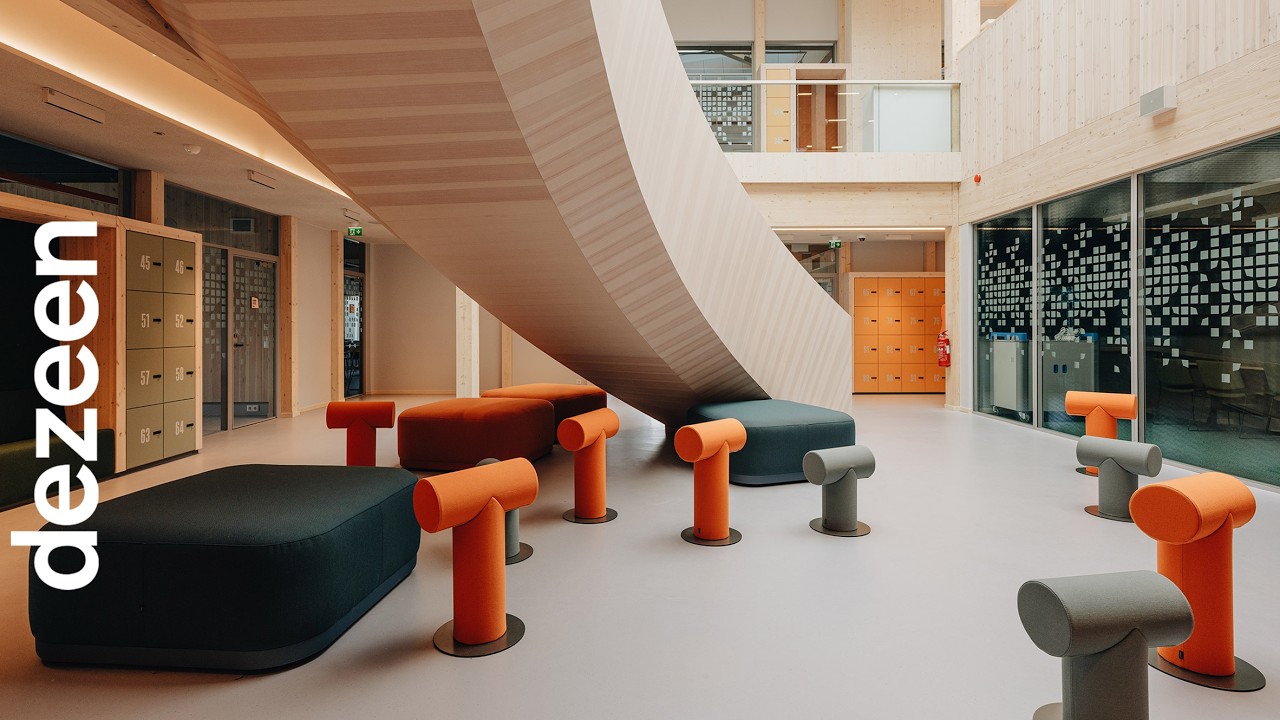
Forbo incorporates discarded cocoa shells into Marmoleum flooring
Flooring manufacturer Forbo has revealed how agricultural waste from cacao production has been repurposed into flooring that supports cacao-growing communities in West Africa in this exclusive video produced by Dezeen.
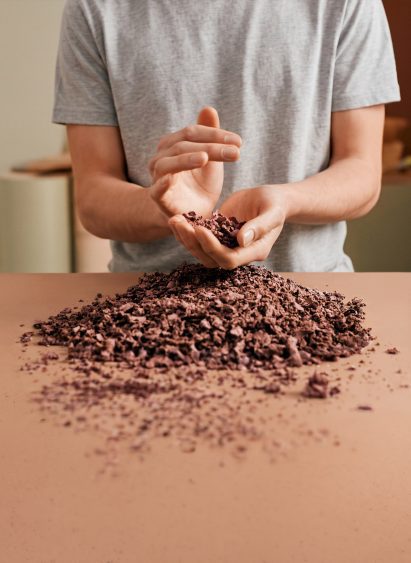
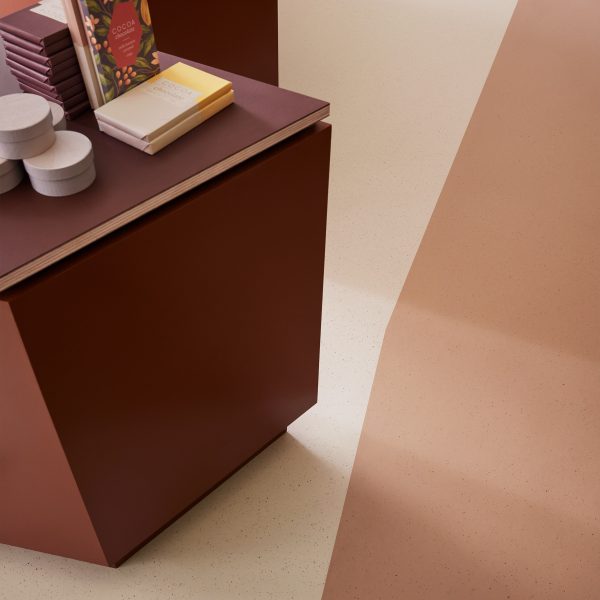
According to the brand, Marmoleum Cocoa is made from up to 98 per cent natural raw materials including linseed oil, wood flour and jute.
The flooring incorporates discarded cocoa shells sourced through Kumasi Commodity Innovations, a Netherlands-based sustainable agritech company that upcycles discarded cacao fruit and other agricultural side-streams into juices and ingredients.
The video explores how local architecture studio KOKO used Marmoleum throughout Rae State Secondary School, which it designed in Jüri, Estonia.
According to interior architect Raili Paling, the flooring, which was made from Marmoleum, became the “main character” of the school’s interiors due to both its sustainable credentials and visual qualities.
“We had a vision to use very sustainable products,” Paling said. “[Marmoleum] has this special light reflection; it’s sophisticated and contemporary.”
Principal interior architect Liis Lindvere also highlighted the material’s environmental benefits.
“It’s a brilliant way to reuse waste from [cacao] production – not just as a filling material but as an aesthetic value as well,” she said.
The natural variation in the cacao shells creates subtle differences in colour and tone, which Paling said contribute to a calming learning environment.
“In educational spaces, you need something that subconsciously calms you down,” she said.
Outside of the aesthetic appeal, the architects were also drawn to the wider story behind the material and its potential to reduce the environmental impact of construction.
“Up to 40 per cent of the world’s carbon emissions come from the built environment,” Lindvere said. “So we have a huge responsibility to keep this planet safe.”
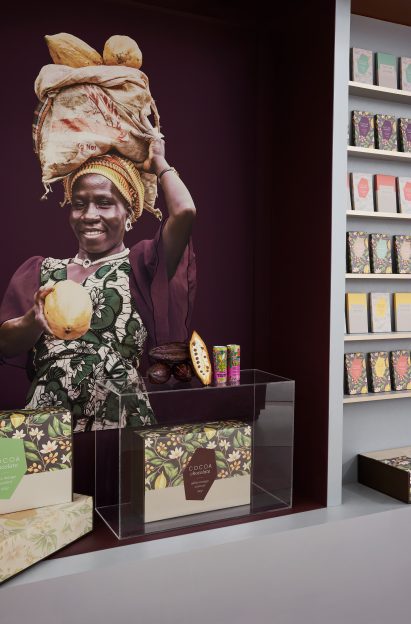
The collaboration also provides an additional source of income for the West African farmers who supply the cacao.
Kumasi Commodity Innovations co-founder Linda Klunder explained how the process works.
“Kumasi started by increasing the income of West African farmers by upcycling the overlooked part of the cacao fruit,” she said. “As part of our collaboration with Forbo, the wives of farmers from whom we source receive an additional income.”
“We are showing that there is not just a one-dimensional application of the fruit,” Klunder continued. “It’s a story of circularity and also about human impact.”
The photography is by Forbo and Tõnu Tunnel.
Partnership content
This video was produced by Dezeen as part of a partnership with Forbo. Find out more about Dezeen partnership content here.
Read more
Recommended stories

Six calming wellness spaces shortlisted in Dezeen and Forbo Flooring’s Marmoleum Design Challenge

Forbo Flooring and Dezeen launch Marmoleum Design Challenge
Forbo Flooring spotlights creative possibilities of custom flooring

Only a week left to register for Dezeen and Forbo Flooring’s Marmoleum Design Challenge webinar

One month left to enter Dezeen and Forbo Flooring’s Marmoleum Design Challenge

“Togetherness aids wellbeing” say winners of Marmoleum Design Challenge
Linde chair and table by OUT among five new products on Dezeen Showroom