


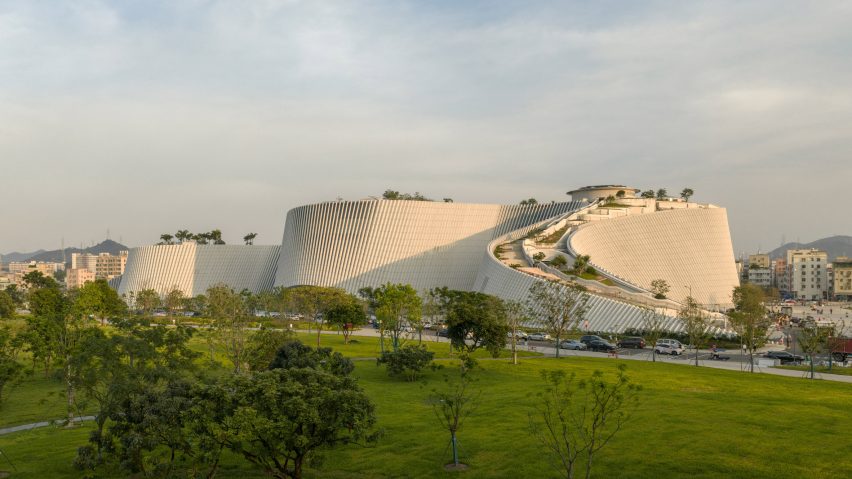
Granite cloaks the sweeping form of Shenzhen Natural History Museum, completed in China by architecture studios 3XN, B+H Architects and Zhubo Design.
Now officially open in the Pingshan District, the 100,000-square-metre building was planned as a new cultural landmark for Shenzhen.
It is distinguished by its fluid form that rises from the ground, designed by 3XN, B+H Architects and Zhubo Design to evoke nearby rivers and hills.

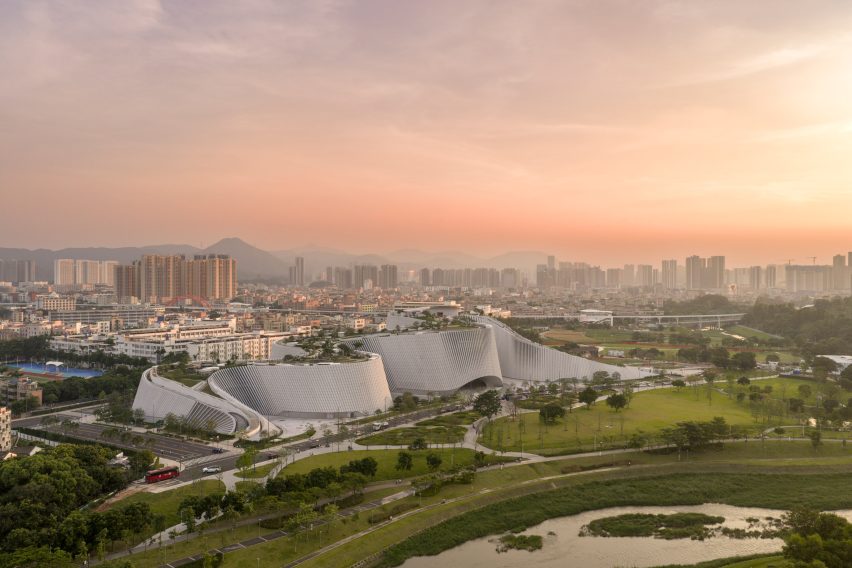
"Nothing in nature is square," said 3XN founder Kim Herforth Nielsen.
"Nature is amorphous, dynamic, and always in formation. From the beginning, the ambition was to create not a building, but a piece of landscape that had always been there – shaped by local geology, water and time," he continued.
"That idea has been carried all the way from the competition stage to the museum that opens today, a place where the story of our planet is experienced as a physical journey through terrain, light and space."

The design team 3XN, B+H Architects and Zhubo Design won a competition to design Shenzhen Natural History Museum in 2020 for a site beside Yanzi Lake. It is the largest natural history museum in southern China.
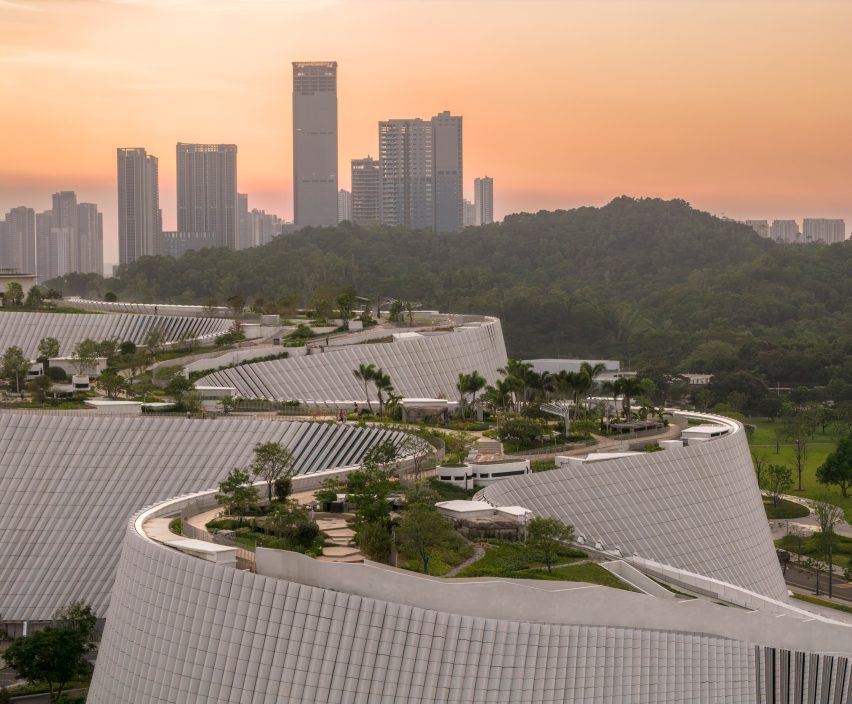
The museum's sweeping form rises from the ground with a sloping roof and terraces, which allow direct access from ground level to invite "everyday use beyond the threshold of the galleries", the studios said.

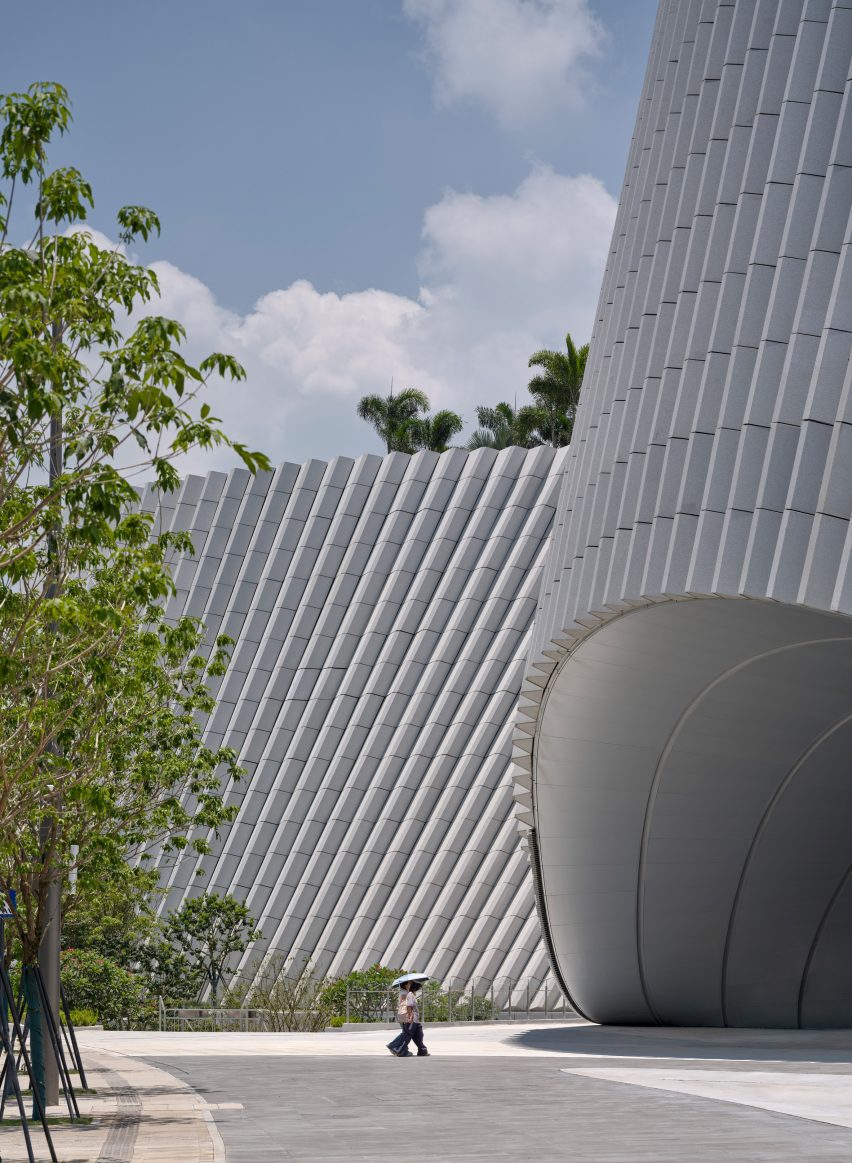
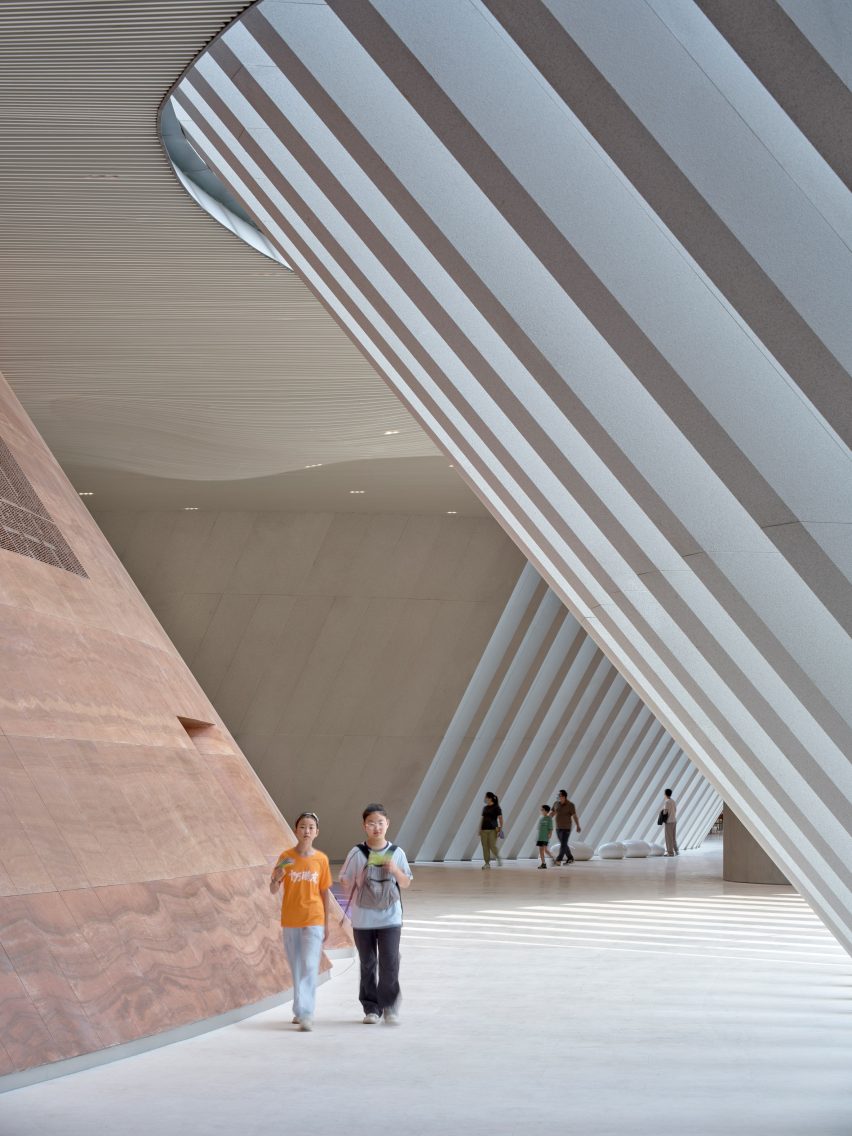
Externally, the museum is wrapped in strips of granite with openings intended to appear as though they have been carved within it.
Inside, it is divided across five cone-shaped volumes, linked by cave-like passages and atriums.

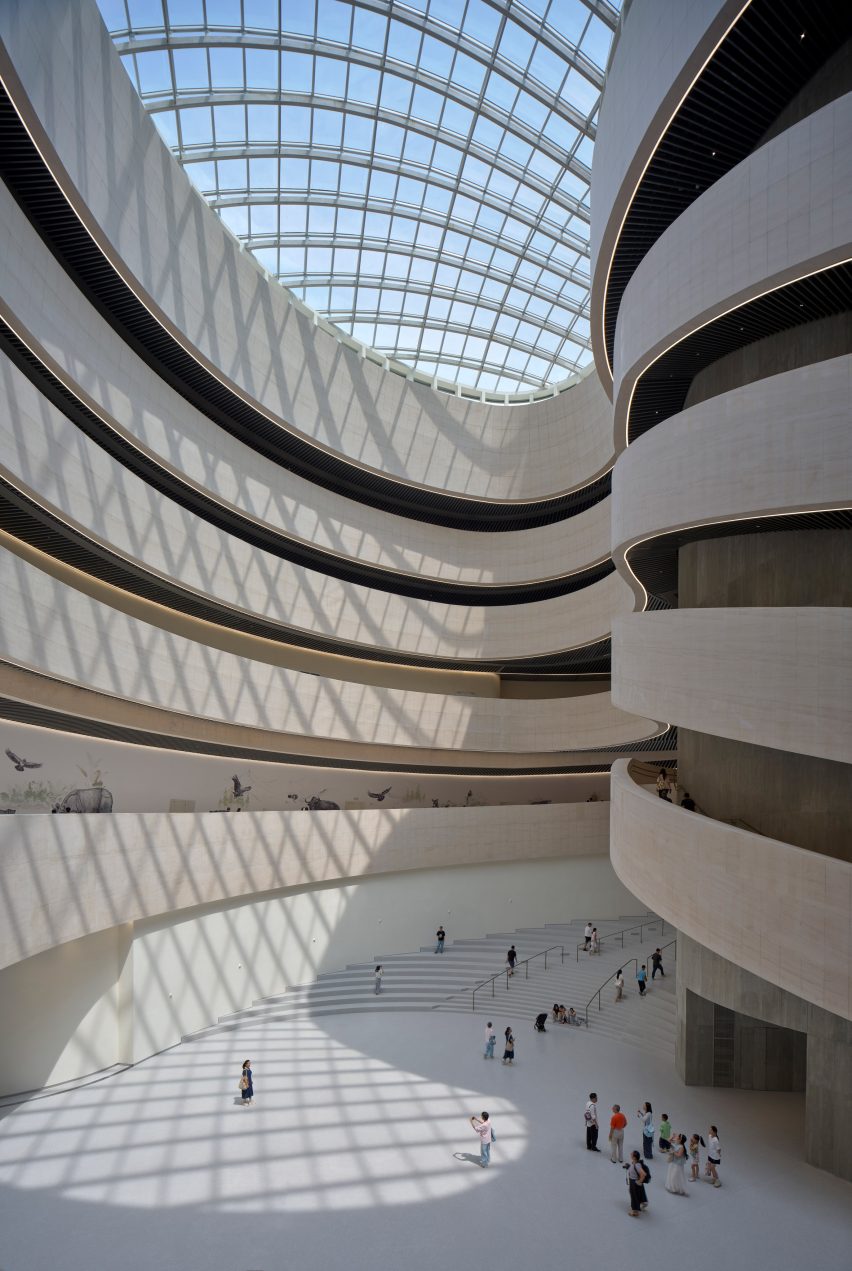
The galleries are dedicated to exhibits on natural history, as well as the ecology of Shenzhen and its surrounding region.
Photos of the galleries are yet to be released, but these have been developed with Atelier Brückner and Museum Studio to be "immersive, media‑rich environments". There is also a range of specimens on display alongside large‑scale installations.
"Shenzhen Natural History Museum is designed to interpret the laws of natural evolution and present the geographies of Shenzhen in a global ecological perspective," said the museum director Nan Zhaoxu.
"It brings together collections and research that trace 4.6 billion years of Earth’s history, but it is the architecture that makes this story tangible," he continued.
"By turning the museum into a living educational landscape – from the roof park to the cone‑shaped galleries – it allows visitors from Shenzhen and around the world to experience science, nature and place as one continuous journey that is specific to its place."

Elsewhere in Shenzhen, Urbanus recently designed a colourful school modelled on Hakka walled houses while MAD created a trio of "cloud buildings" for the Tencent headquarters.
Another natural history museum recently featured on Dezeen is the white, rock-like Natural History Museum Abu Dhabi, which Mecanoo completed on Saadiyat Island.
The photography is by Adam Mørk.