


Tashkent's key modernist buildings from the 1960s, 70s and 80s have been listed by UNESCO as World Heritage Sites. Here, we round up the 10 buildings in Uzbekistan's capital that are now protected.
The collection of 10 buildings was recognised following the multi-year Tashkent Modernism XX/XXI research and preservation project led by the Uzbekistan Art and Culture Development Foundation.
"This inscription brings a vital part of Uzbekistan's recent architectural history into the international account of twentieth-century heritage and the global modernist movement," said Uzbekistan Art and Culture Development Foundation chairperson Gayane Umerova.
"These buildings record how Tashkent imagined public life, collective identity and the future through architecture," she continued. "The UNESCO recognition also carries a long-term responsibility: to conserve these buildings with rigour, keep them part of the life of the city and pass their knowledge to future generations."
As one of the most populated cities within the former Soviet Union and the largest in Central Asia, Tashkent contains numerous municipal, cultural and residential buildings from the era.
Ahead of the listing, a team led by Milan-based architecture studio Grace, academic Boris Chukhovich, the Politecnico di Milano and Laboratorio Permanente carried out extensive research into the city's modernist architecture.
Below, Grace co-founder Ekaterina Golovatyuk and Chukhovich explain the qualities of the 10 buildings that are now UNESCO-listed:

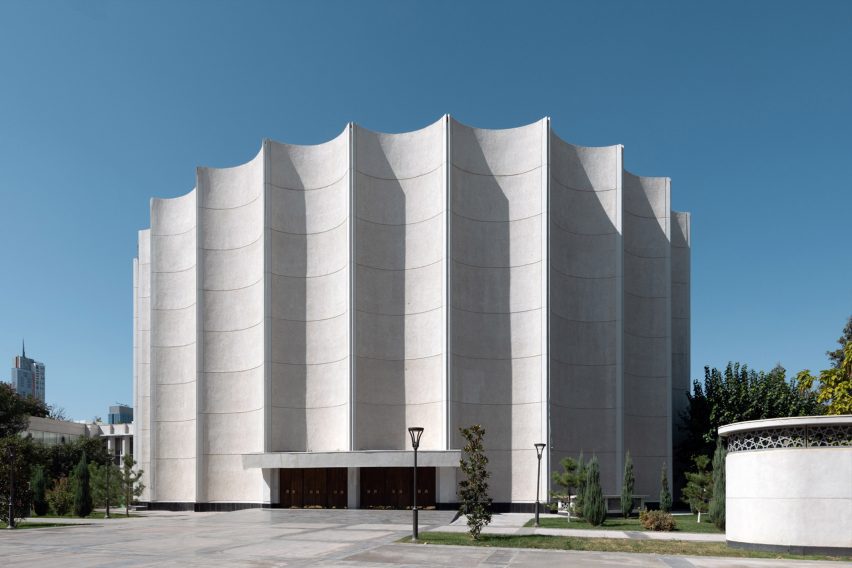
Panoramic Cinema by Vladimir Beryozin, 1964
One of Tashkent's most iconic buildings, this cinema hall occupies a block that has a form informed by a doric column. An adjacent long, transparent block previously contained the foyer and cafe, although this has now been blocked up.
"The Panoramic Cinema (Palace of Arts) is the first in Central Asia and one of the first in the USSR immersive halls for viewing panoramic and widescreen films," said Golovatyuk and Chukhovich.
"Its aesthetics, the original layout and the unique design make it unequivocally the main masterpiece of Tashkent modernism and the most famous work of Tashkent architecture of the 20th century."
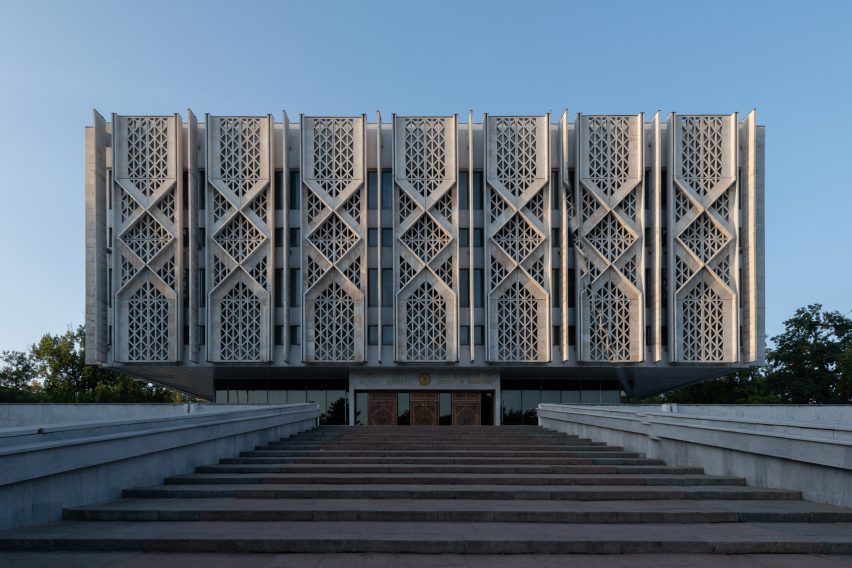
Lenin Museum by Yevgeny Rozanov and Vsevolod Shestopalov, 1970
Built to mark the centennial of Vladimir Lenin's birth, this building was one of the earliest museums dedicated to the former Soviet leader. It acted as a prototype for the other 13 built across the Soviet Union.
"The Lenin Museum (Museum of History) is a building that played a key role for Tashkent, on the one hand proving the possibility of introducing reworked traditional elements into the modern architecture of Uzbekistan, and for the USSR on the other, becoming a model of a memorial museum, repeatedly reproduced in other Soviet republics," said Golovatyuk and Chukhovich.
"An important indicator of the significance of the museum was the fact that even ideological opponents of the use of historical architecture forms in modern buildings recognised the quality, the grace and the elegance of the building."

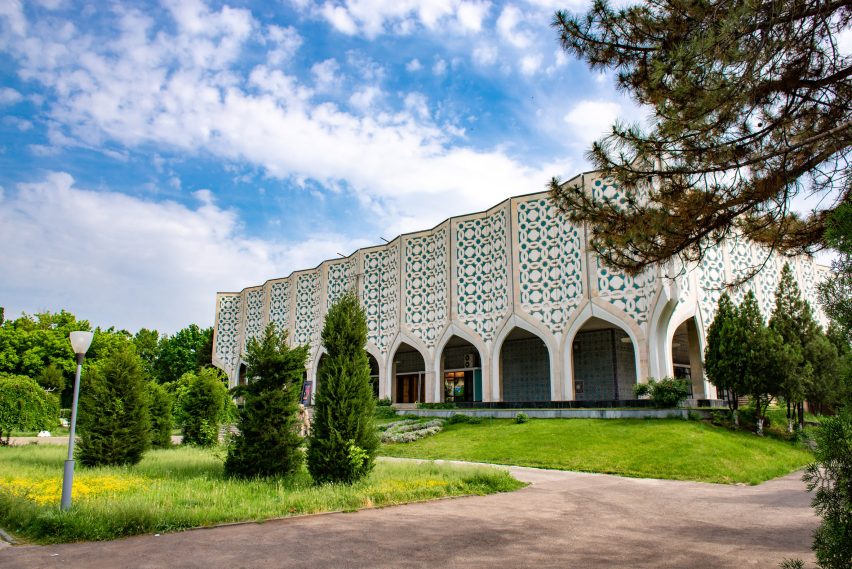
Central Exhibition Hall of the Academy of Arts, by Rafael Khayrutdinov and F Tursunov, 1974
One of the largest exhibition halls in Central Asia, the two-storey building was set on a civic podium in a small garden. It was designed to display sculpture and applied arts on the ground floor, with paintings in the galleries above.
The entire building is surrounded by an arched colonnade with an angled facade decorated with a geometric mosaic.
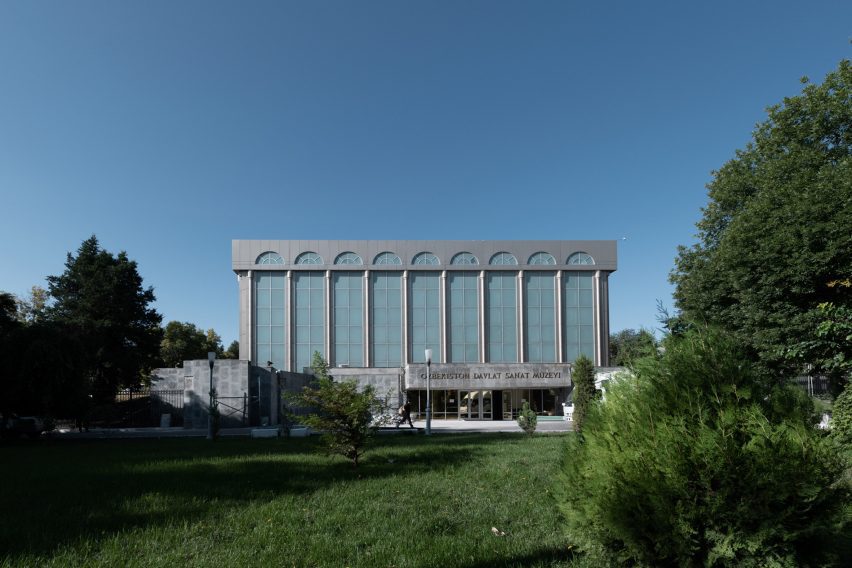
State Museum of Arts by Iskander Abdulov and Anatoly Nikiforov, 1974
The venue for the Where in the World is Tashkent conference, the State Museum of Arts is the headquarters of the Uzbekistan Art and Culture Development Foundation.
One of the first purpose-built modern-art museums in the Soviet Union, the building was originally clad in a series of abstract, square panels. In the 1990s, it was renovated with new facades added, and now the organisation is considering returning the building to its original state.
"The most abstract and hermetic work of Tashkent modernism, the Museum of Art remains a testament to the possibility of designing a building as a work of art, even in a standardised construction industry," said Golovatyuk and Chukhovich.
"It was the first modern-art museum designed in Central Asia and one of the first in the USSR. Inspired by the possibilities of new materials, the building also betrays the architects' desire to transform the museum into a temple with its metaphysical and transcendental qualities."

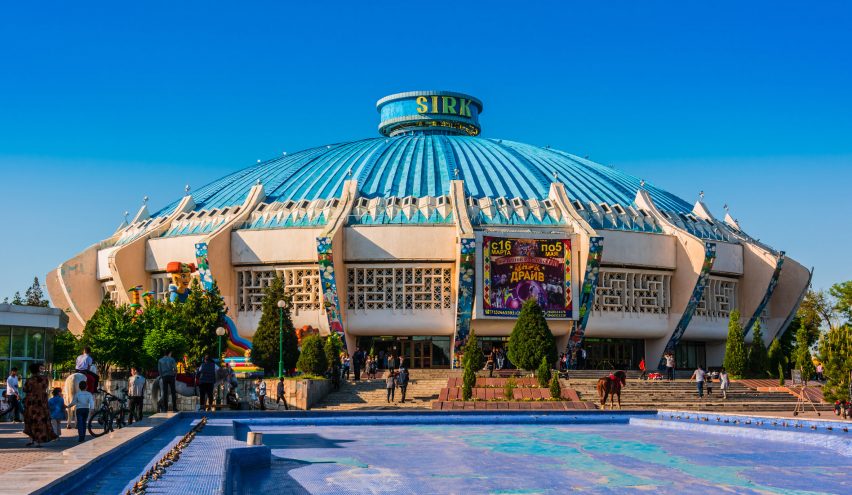
State Circus by Genrikh Aleksandrovich and Gennady Masyagin, 1976
With a UFO-like form, the State Circus was one of numerous built in major cities across the Soviet Union. However, unlike the majority that follow a set Moscow-approved design, the Tashkent circus has a unique, futuristic identity.
"The Tashkent circus is an example of a creative initiative of Tashkent architects who defended the right to create unique local architecture at a time when architects in other cities could only adapt typical Moscow projects," said Golovatyuk and Chukhovich.
"The custom design of the dome, the new concept of the spectator foyer, the strong connection of the design with the historical Khadra Square – all this makes the circus an object that appeared at the right time in the right place, marking the new birth of the old city."

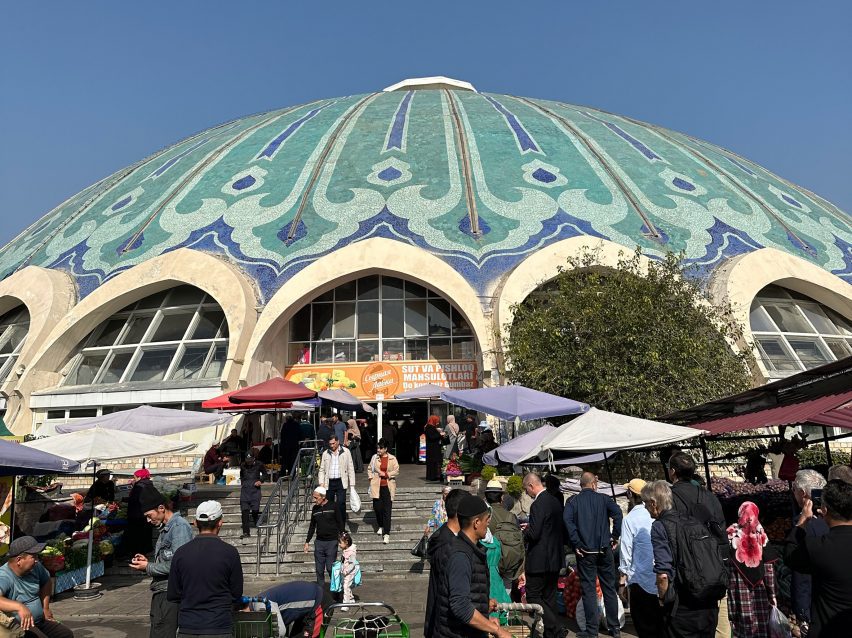
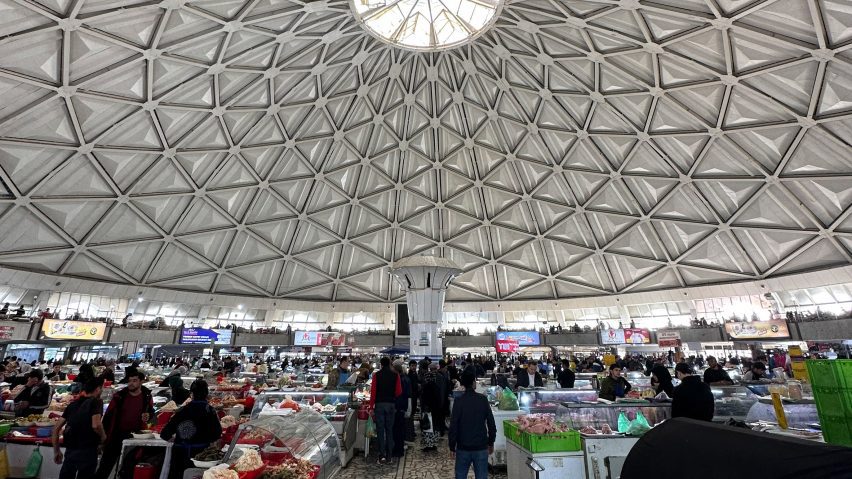
Chorsu Market by Vladimir Azimov and Sabir Adylov, 1980
The city's largest farmers' market, this building has a decorative green dome that encloses a large indoor market where the structure's steel frame is on display.
"For a long time, historians believed that the inspiration for the creation of the Chorsu market was the work of the Moscow architect Andrey Kosinsky," said Golovatyuk and Chukhovich. "However, we managed to establish more unexpected origins of this daring project, embedded in the very heart of the medieval part of Tashkent."
"The process, which began in the Algerian city of Sidi Bel Abbas and ended with the construction of a huge dome in the old city of Chorsu, could be a clear illustration of the concept of 'cultural transfers', through which architectural models developed in one part of the world are transformed beyond recognition in others, acquiring features and cultural characteristics of the context that accepts them," they continued.

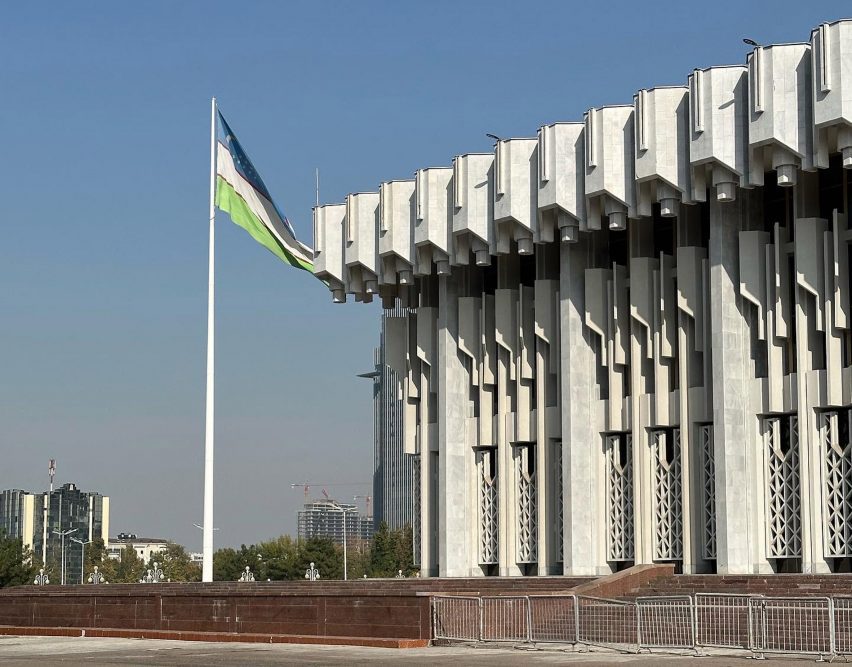
People's Friendship Palace by Yevgeny Rozanov, 1981
Designed by the same Moscow institute that created the Lenin Museum, this building was also one of several of the same typology that were built across the Soviet Union.
Its style is very representative of Brezhnev-era architecture and the building is wrapped in a facade informed by technology, with concrete representations of bolt heads.
"The Palace of Friendship of Peoples is unprecedented in size, composition, constructive system, palette of materials, the amount of monumental art," said Golovatyuk and Chukhovich. "If we had to prescribe its place in the history of Tashkent architecture, the Palace could be considered a modernist version of Shchusev's Navoi theater."
"The gigantic building, in which Moscow architects reflected their ideas about the traditional architecture of Uzbekistan, has survived to this day in almost unchanged form," they continued. "The Palace is unique not only in terms of its aesthetics, but also for the construction technologies applied."
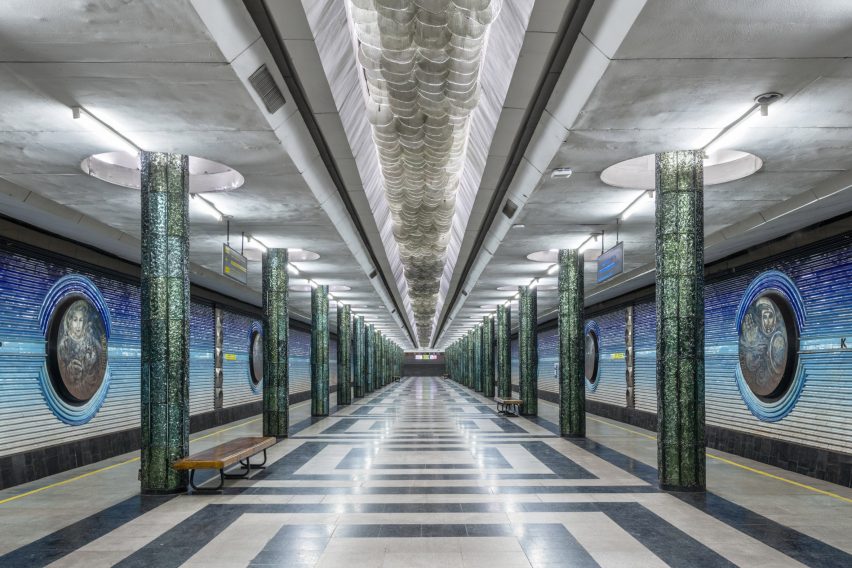
Metro station Prospekt of Cosmonauts by Spartak Ziganshin, 1984
Built in 1984, as the name suggests, this station is dedicated to the Soviet Union's cosmonauts. Richly decorated with marble and decorative glass lighting, the station is flanked by reliefs dedicated to Soviet space pioneers created by artist Boris Klochkov.
"Tashkent's metro, operating since 1977, was the first in Central Asia. At the urban scale, it represented a very important step in the modernisation of the city and was seen as more than a transportation system," said Golovatyuk and Chukhovich. "It had not only strategic defensive but also ideological functions, as it had to testify to the country's history and identity by means of the architecture of the stations."
"A team of local architects supervised by S Sutyagin designed the Cosmonauts Avenue station, quite original for its high spatial quality, fine finishes and numerous works of monumental art, inspired by the heroic conquest of space," they continued.
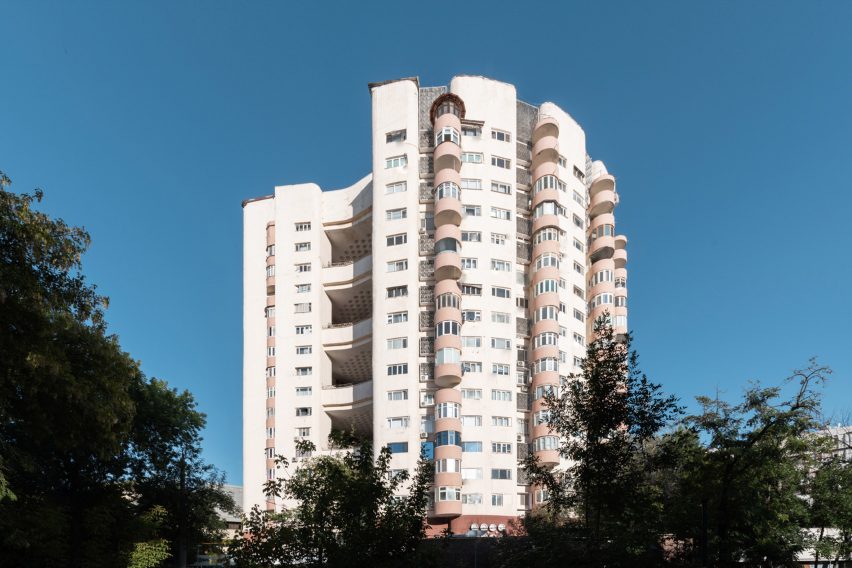
Zhemchug by Ophelia Aidinova, 1985
Designed to recreate the traditional collective living environments of central Asian mahallas, this residential tower block contains a series of stacked, three-storey courtyards.
"The architect Ophelia Aydinova decided to oppose the cheap prefabricated concrete housing, manufactured at the factory and mounted on the construction site, [for] the even cheaper construction technique implying construction in situ," said Golovatyuk and Chukhovich.
"Though the new technology ended up not being as economical as announced, Tashkent earned a brutalist masterpiece, attracting architects from across the world," they continued. "The concept and the layout of Zhemchug – the Pearl – has no analogues in the world – its shape was generated by the social ties in traditional Uzbek one-story neighbourhoods (mahallas), which Aidinova decided to re-interpret by erecting a multi-storey building with collective hanging courtyards."

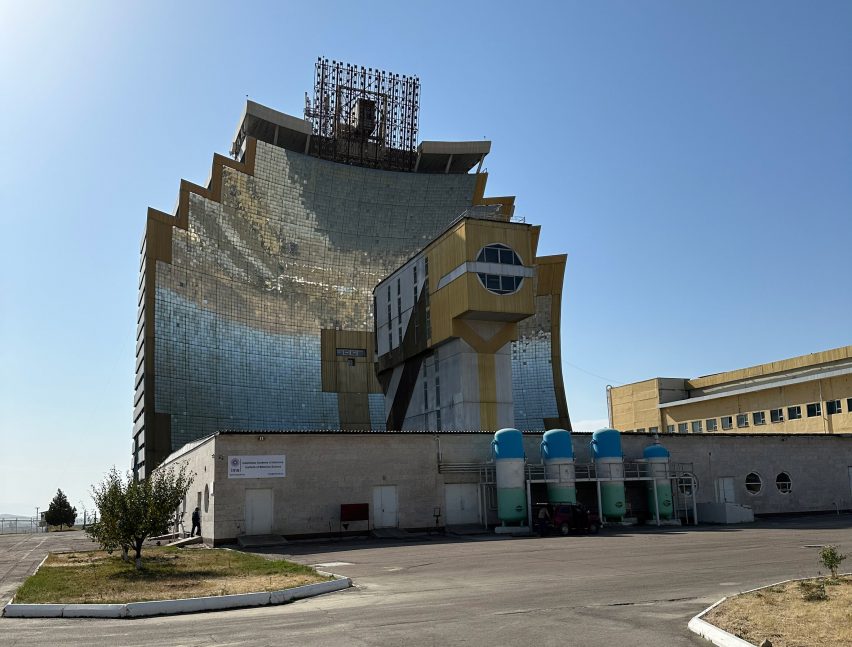
Heliocomplex Sun, 1987
Located on a hill around 45 kilometres from Tashkent, the Heliocomplex Sun is one of the largest sun furnaces in the world.
Built as one of the last major scientific projects developed by the Soviet Union, it has a futuristic form and, with 12,090 mirrors, can heat materials up to 3,000 degrees Celsius.
"From a technological point of view, there are two similar solar furnaces in the world: in the city of Odeillo in the French Pyrenees and the Parkent foothills near Tashkent," said Golovatyuk and Chukhovich. "The French building appeared first, but its Uzbek successor was more ambitious."
"While the complex at Odeillo is completely utilitarian, the solar complex at Parkent was inspired by futuristic structures and cosmic dreams," they continued. "Functioning to this day, the sun institute testifies not only to the universality of the principles of modernist architecture, but also to its ability to adapt to various landscapes of the planet."
The photography is by Alexey Narodizkiy unless otherwise stated.
A previous version of this article was published in 2023, following the Where in the World is Tashkent conference.