


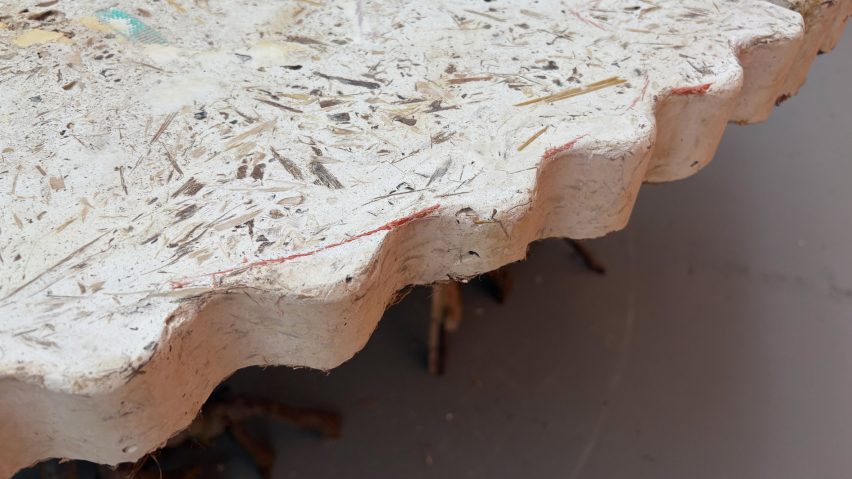
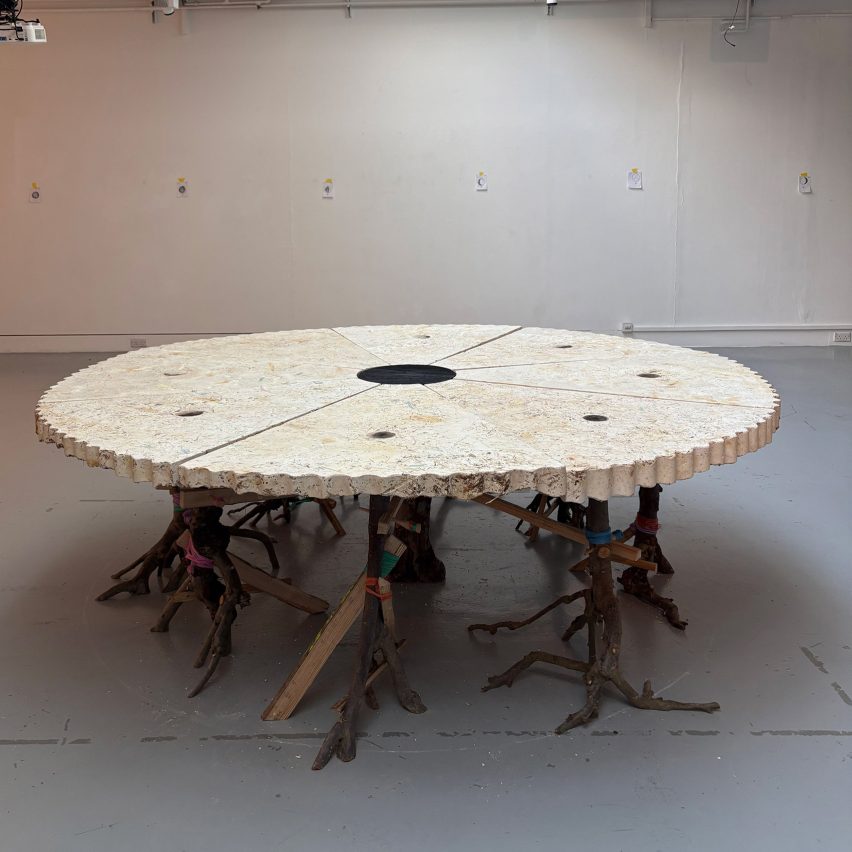
Architect Charles Holland, academic Catharine Rossi and design studio Local Works have fabricated a table from materials harvested within a 40-mile radius of Canterbury, UK.
Named Harvest Moon, the table was designed to investigate the potential of local biomaterials, while evoking the ideals of gathering associated with harvest rituals.

"The table explores not just the materials we use but the attitudes and rituals around them," Holland told Dezeen.
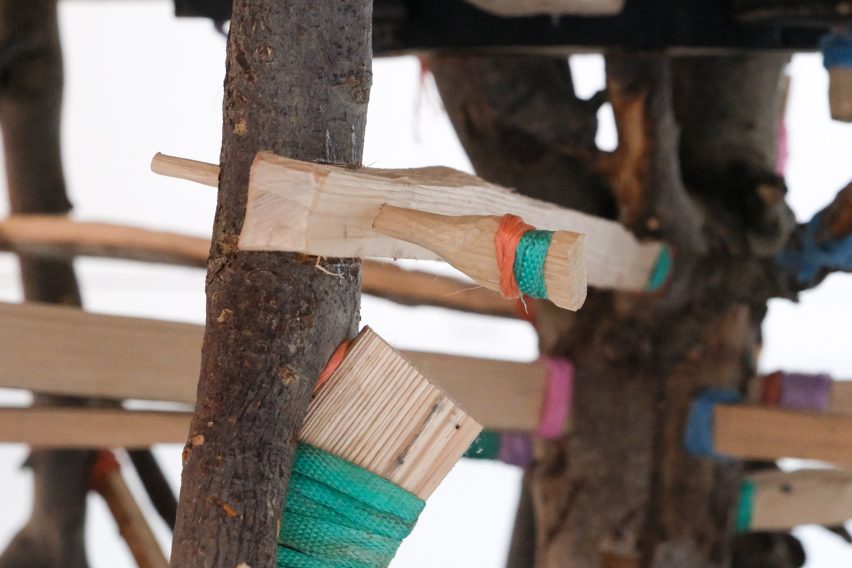
"Everything comes from a 40-mile radius of Canterbury and that includes the tools that are used to assemble it, such as mallets and hammers made from apple tree wood and pegs made from chestnut wood."

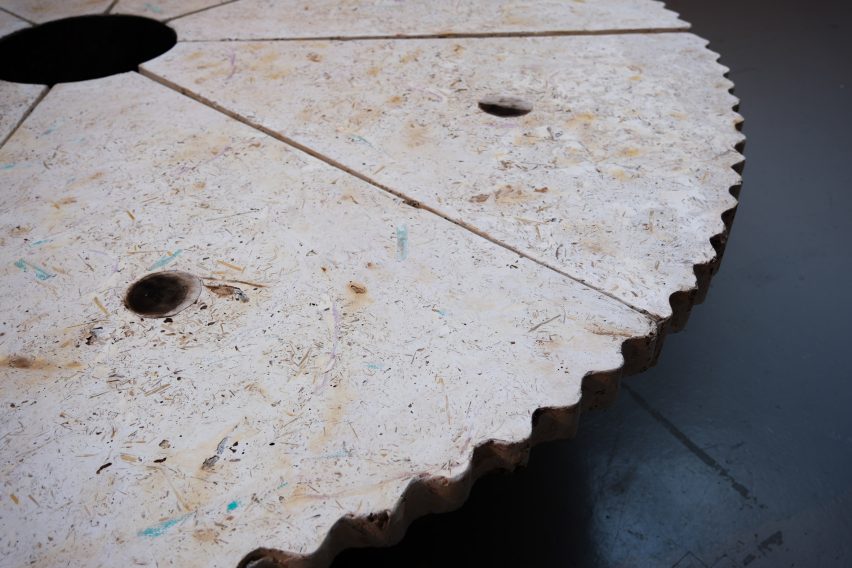
The table was predominantly made from biomaterials including chalk, chestnut timbers, bark peelings, dug-up apple trees, combined with agricultural industrial waste products such as baling twine and pallet straps.
Its top was cast from chalk, along with other waste materials to form a terrazzo effect, while the legs were made from apple tree branches.
"The biggest challenge was casting the top segments, the process of which involved a refinement of the technique by Local Works in their workshop," said Holland.
"The chalk was cast around a simple chestnut timber frame with embedded apple wood 're-bars' and is really a shell, rather than a solid object. The shell got thinner and the pieces lighter as the process went on due to a greater confidence in the materials."
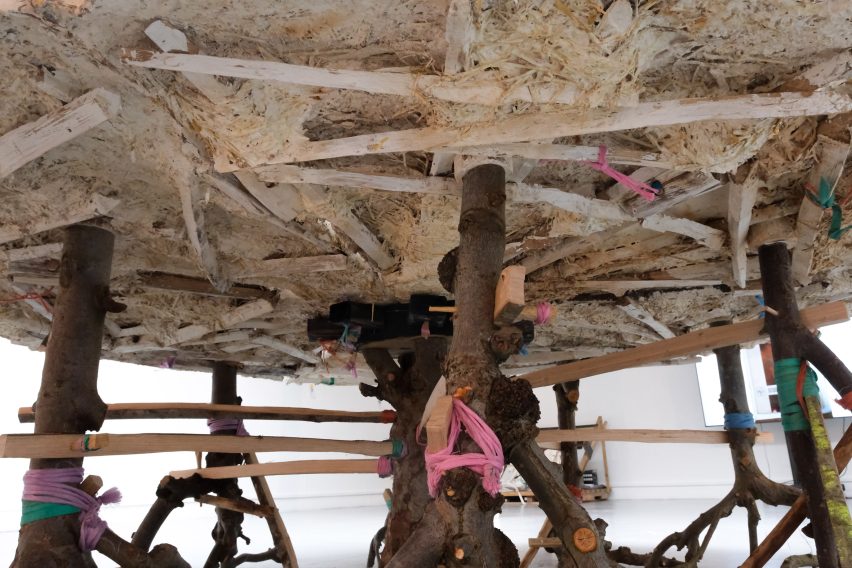
Throughout the design, the team aimed to ensure that the materials and construction process were visible, which contributed to the overall aesthetic.
"The table is made from gathered materials and it visually expresses the ad-hoc nature of that…materials are bound together, used as supports and props or 'rebars' or as the basis of dyes or colouring," said Holland.
"The table top is cast chalk with other materials mixed in, including bark and wood chipping and baling twine, like a form of terrazzo," he continued.
"The earthiness of some parts is deliberately contrasted with brightly coloured binding which is both practical – the colours provide a key to the order in which the table is assembled – and decorative, allowing us to enjoy and express the contrasts between them."

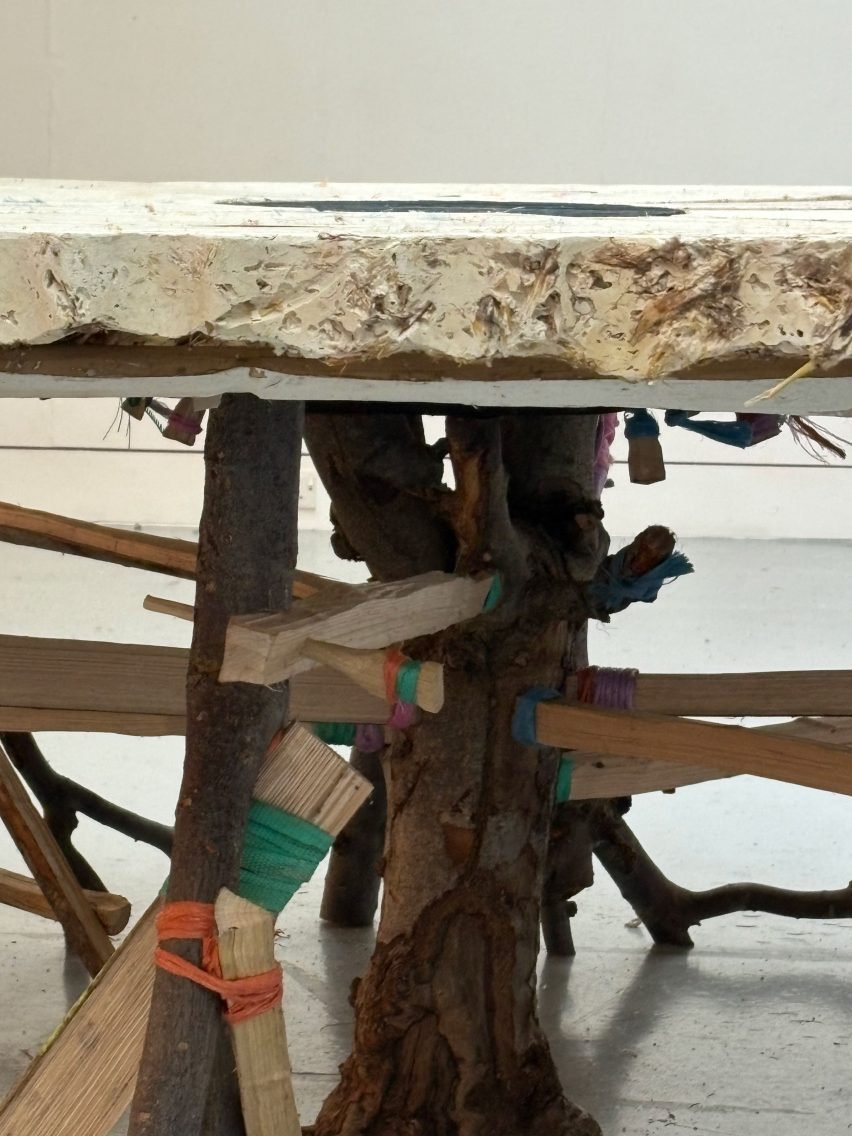
As the table was designed as a research project, it will be disassembled and transported to various locations where it will be reassembled as a social activity.
"The core concept of the table is harvest, an idea of designing and making using gathered materials coupled with a related idea of ritual and social gathering," explained Holland.
"Each time the table is made it is a social gathering, like a barn raising."
Along with the table, the team created a publication that contains instructions and drawings of how to assemble the table, along with a musical score to accompany it.
"Each time it has been assembled the ritual changes slightly and the music evolves too," Holland said.
"The table itself is an active part of the dissemination because it will travel and its assembly involves a physical and conceptual interaction with it."
The publication also contains essays and a "guide for hosting a harvest gathering".
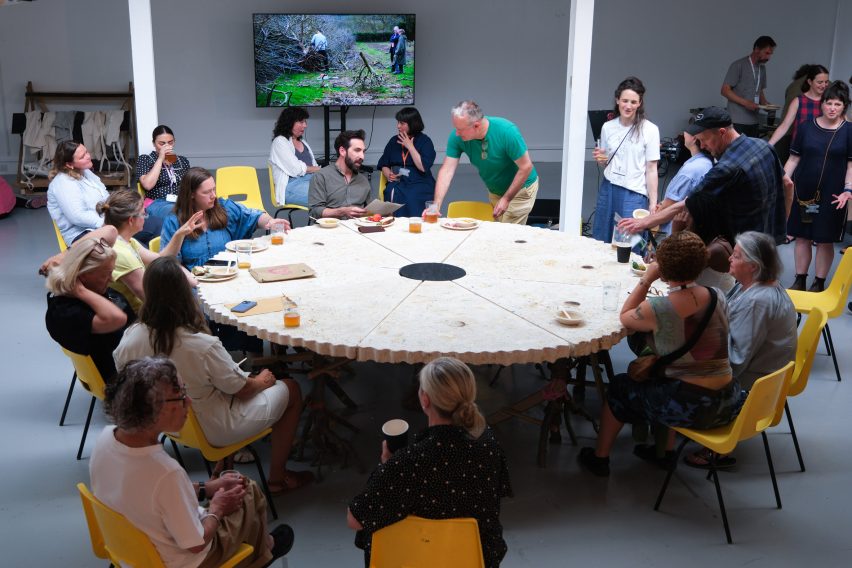
"We learnt a lot about the materials, about a collaborative process of design, and an open-ended one too," said Holland.
"But we also learned a lot about the processes of the two businesses we worked with, how growing, farming and coppicing is impacted by a mix of policy, economics, consumer taste, climate change and a host of other factors that are determining why our landscape is the way it is and how it is changing."
Holland and Rossi both teach at UCA Canterbury. Holland is the founder of Charles Holland Architects, which recently created a contemporary bandstand at Mitcham Fair Green and a colourful extension to a Victorian terraced house.
The photography is by Charles Holland, unless stated.