


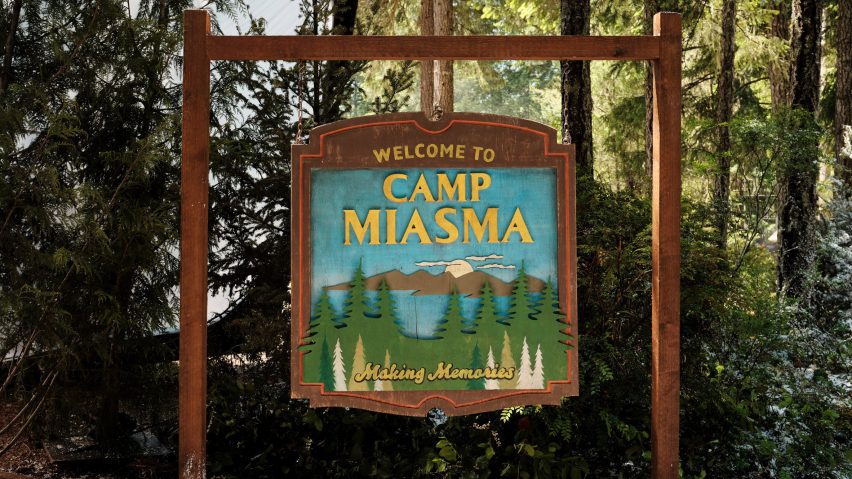
Production designers Brandon Tonner-Connolly and Matt Hyland constructed sets including a "flesh palace" and a taxidermy-filled gas station to create a dreamlike world for this horror film starring Gillian Anderson.
The name of the film, Teenage Sex and Death at Camp Miasma, nods to the lurid titles of 1970s and 80s slasher movies – a feeling the designers also wanted to evoke with the sets themselves.

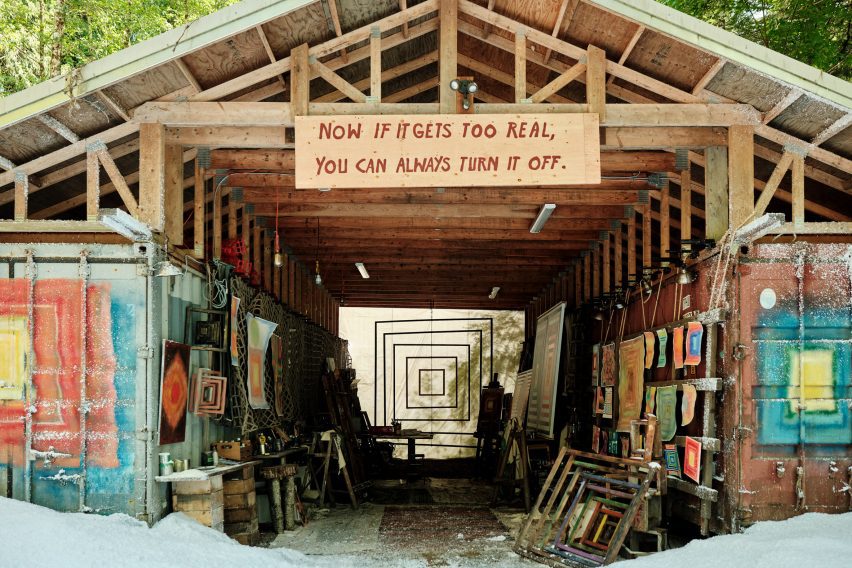
The movie centres around filmmaker Kris, played by actor Hannah Einbinder, who has been tasked with reviving the fictional Camp Miasma franchise.
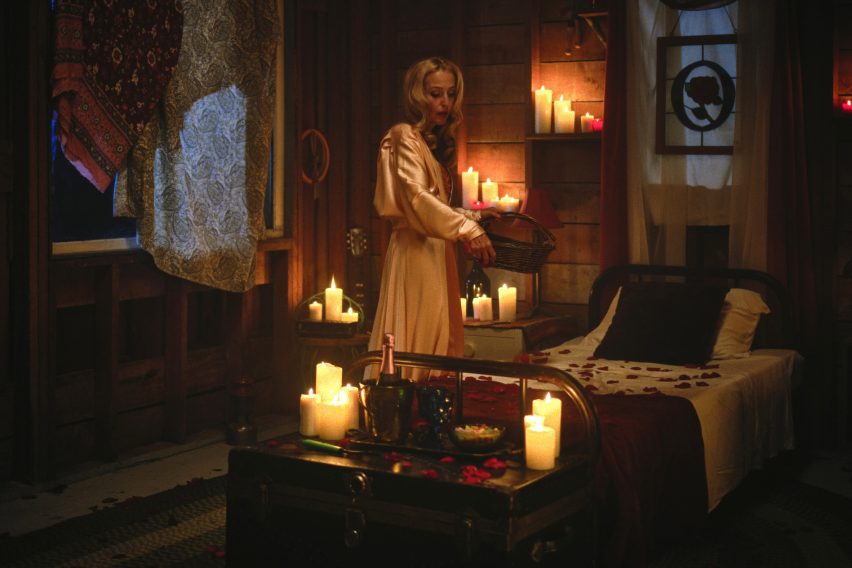
She travels to meet Billy, played by Anderson – the star of the cult horror film that started the Camp Miasma horror franchise – who now lives on an abandoned summer camp that featured in the first film.
Tonner-Connolly and Hyland wanted Teenage Sex and Death at Camp Miasma, which was directed by Jane Schoenbrun, to immediately draw both Kris and the audience into Billy's self-contained world on the horror-film set.
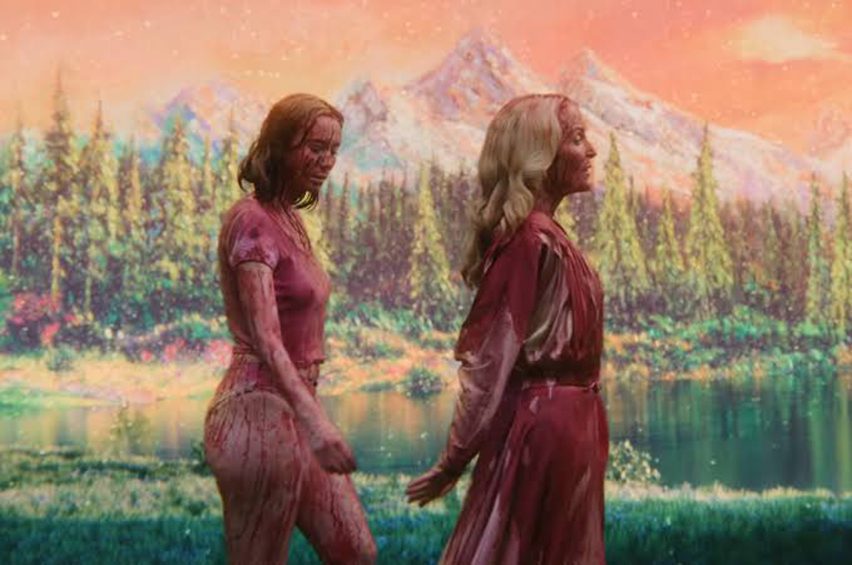
"[It's] very much supposed to be a moment where Kris is walking into this storybook world, leaving behind the reality that we've created in the first 20 minutes of the film and entering into this storybook romance," Tonner-Connolly told Dezeen.

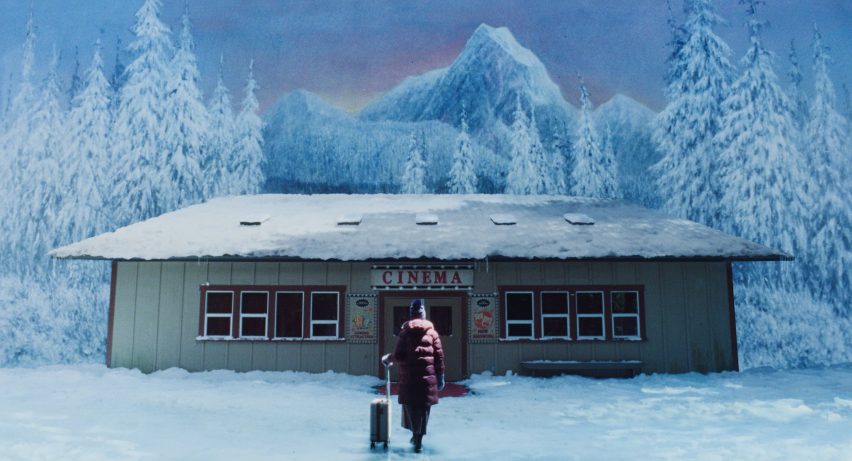
To create a dreamlike feeling, the designers used matte glass painting, a technique of painting on glass plates that are then placed in front of the camera. This created fantastical backgrounds, such as fairytale-like mountains that sit behind the old summer camp site.
"We knew from the very beginning that the MO of this movie wasn't 'let's set out and scare the shit out of everybody,' it was 'we should take people on the best ride possible,'" Hyland told Dezeen.
Teenage Sex and Death at Camp Miasma was mainly shot on location using two functioning summer camps on Vancouver Island, Canada.
These were turned into the summer camps seen both in the film's contemporary timeline and the 1980s summer camp of the older Camp Miasma movies.
Vancouver Island turned out to be a treasure trove of products and props, including taxidermied animals that Tonner-Connolly and Hyland used to decorate a run-down gas station.

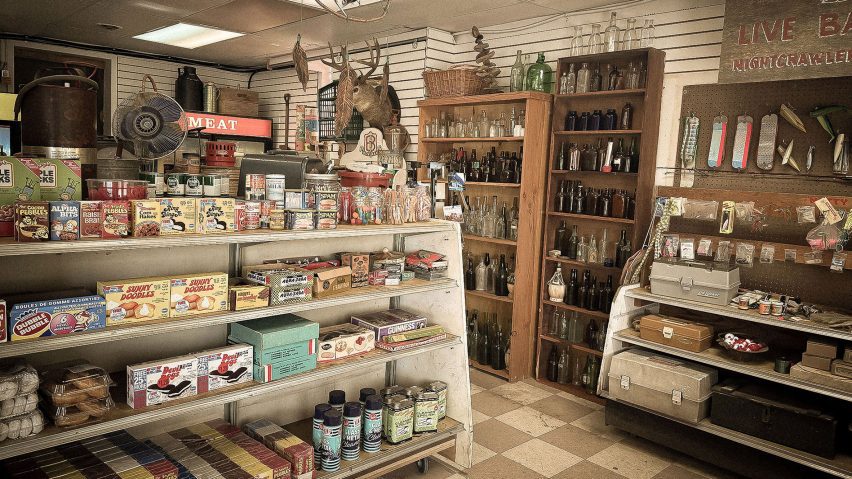
The sourcing of these pieces ended up feeling like a horror film in itself, according to Tonner-Connolly.
"I was just driving down a road one day and saw a faded sign on the side of the road that said 'taxidermy studio' and an arrow; I pulled off a two-lane highway onto a back road and then just drove to somebody's house," he said.
"I got out and it's completely silent, nobody around, just a workshop off in the distance and a massive wood pile," Tonner-Connolly continued.
"And I was like: 'God, actually, nobody knows where I am right now – this is a very Texas Chainsaw Massacre moment'."
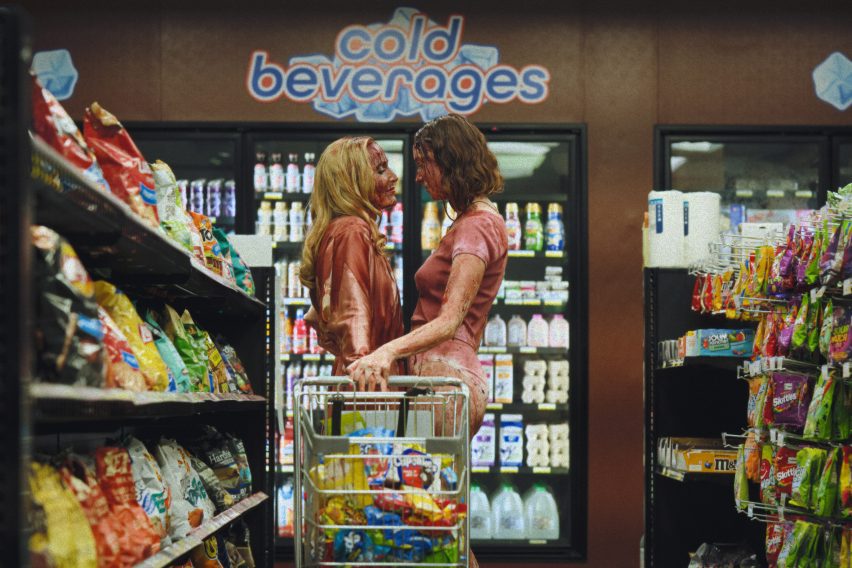
Other cult horror films that inspired the designers to create the right feel for the sets included Friday the 13th, Halloween and Nightmare on Elm Street.
"For this movie's approach to period and genre, it's not really about rote memorisation of accurate details – it's more about getting ourselves into the mentality of 'if we're making a slasher in the 80s, this is what we'd have available to us'," Hyland said.
However, Tonner-Connolly and Hyland also turned to the gothic romance genre to get the romantic aspect of the film right.
"We looked at Bram Stoker's Dracula and other examples of gothic romance," Hyland said. "Also Black Narcissus and Kwaidan, an older Japanese film where everything was shot on stage, even the exteriors, so it has a very heightened, storybook reality."
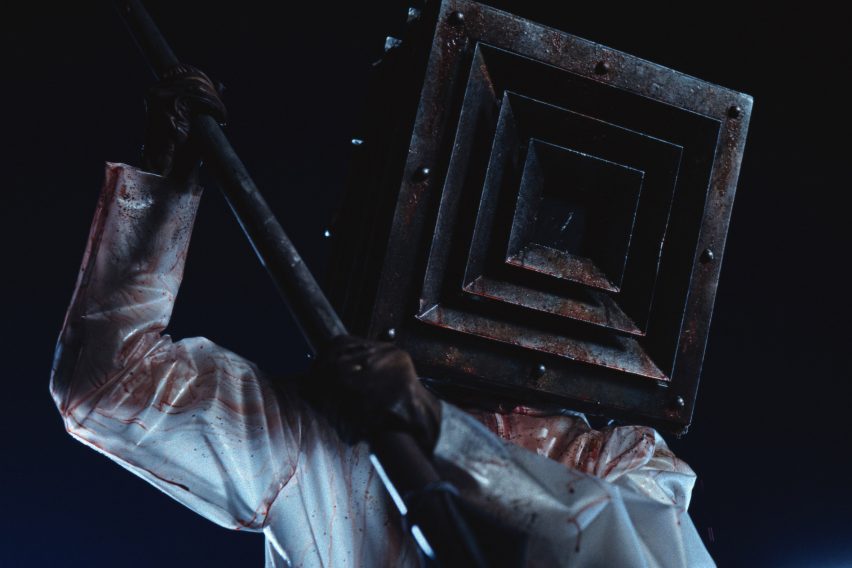
Some of the designs for Teenage Sex and Death at Camp Miasma were replicated from these older films, as a nod to the inspiration and an Easter egg for horror fans.
"There was the scene where [villain] Little Death rises out of the lake, and there was a really specific life vest rack and lifeguard chair that we had seen in one of those slasher films on the beach," Tonner-Connolly said.
"We had our construction scenic department build it exactly to what it looked like in that film, and it's very subtle in the background."
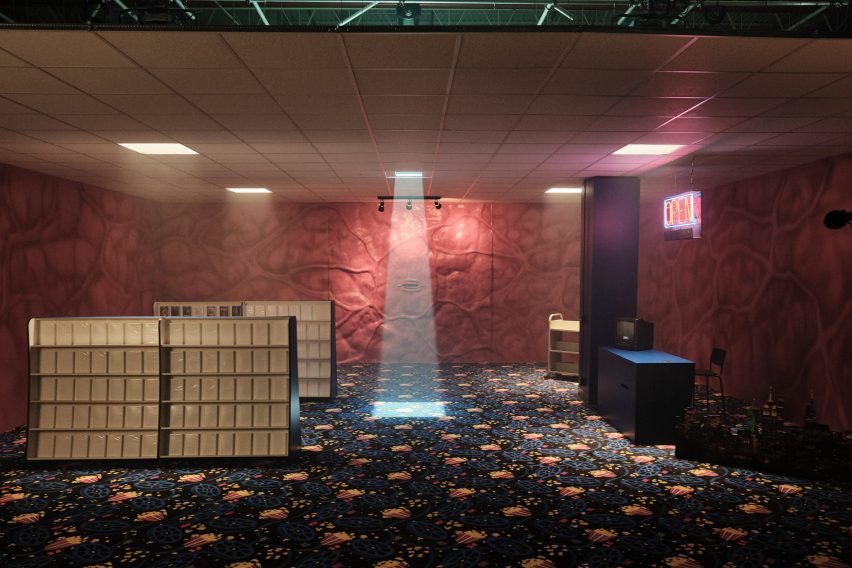
Other designs were created using more modern techniques, such as the flesh wall inside Little Death's "Flesh Palace", which was a combination of visual effects and a physical wall.
"In terms of the Flesh Palace, we created a very large portion [of the wall] near where the movie slot is," Hyland said.
"That was first drawn as concept art and then turned into a 3D mockup", he continued. "From that 3D model, we were able to further illustrate the walls and figure out the undulations – how crazy are they? How veiny? And then we were able to actually export directly from there to a robot that carves that shape out of foam."

Overall, the designers focused on creating a world that would feel real not just to the film's viewers, but also to the actors as they were moving through the sets.
"We're designing for the camera, but we're also designing for the people who are in the space with us when we're shooting it," Tonner-Connolly said.
"We need to have these small details so that we can create this fully realised world. So anybody can open any drawer, anybody can look at anything, anybody can – hopefully – step into it and get lost in this bubble and create this intimate work of art."
Other film sets recently covered on Dezeen include horror film Backrooms and the Shaker-focused drama The Testament of Ann Lee.
The photography is courtesy of Mubi.