


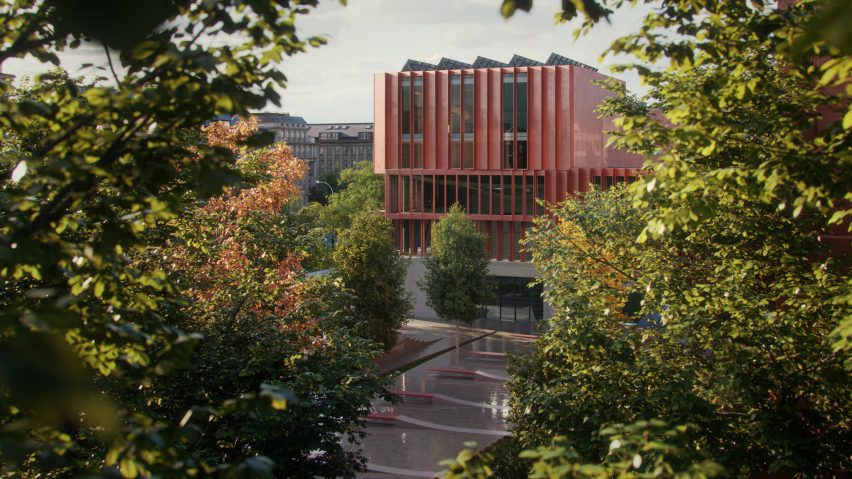
Promotion: US technology company Dell has incorporated Nvidia GPUs and AI-assisted visualisation technologies into its workstation portfolio to support its latest real-time design studio.
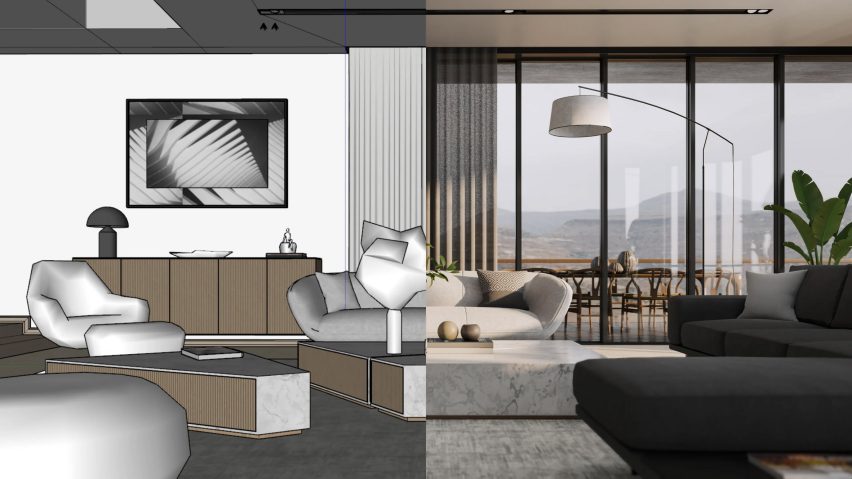
According to Dell, advances in graphics processing unit (GPU) rendering and AI-assisted visualisation technologies are helping to close the gap between initial design concepts and final client-ready presentations.

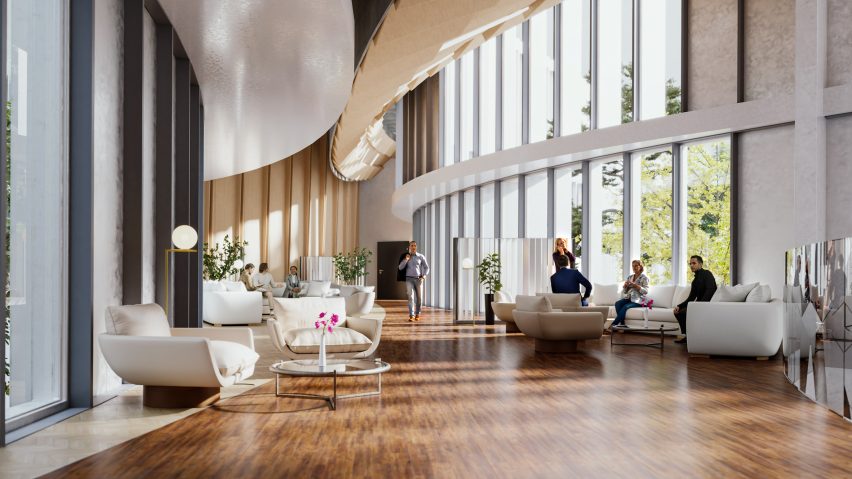
The company noted that real-time workflows are changing the way design studios work, enabling teams to create photorealistic images and explore multiple options interactively.
It also allows studios to test ideas and design iterations as 3D models are updated.
Dell also suggested that "visualisation is becoming part of the design thinking itself". This marks a shift from it being a specialist output at the presentation stage to being a tool for concept development and decision-making during the design process.
"The role of the visualisation specialist has been democratised to the role of the actual designer," Dell AECO alliances and solutions director Ken Flannigan told Dezeen.
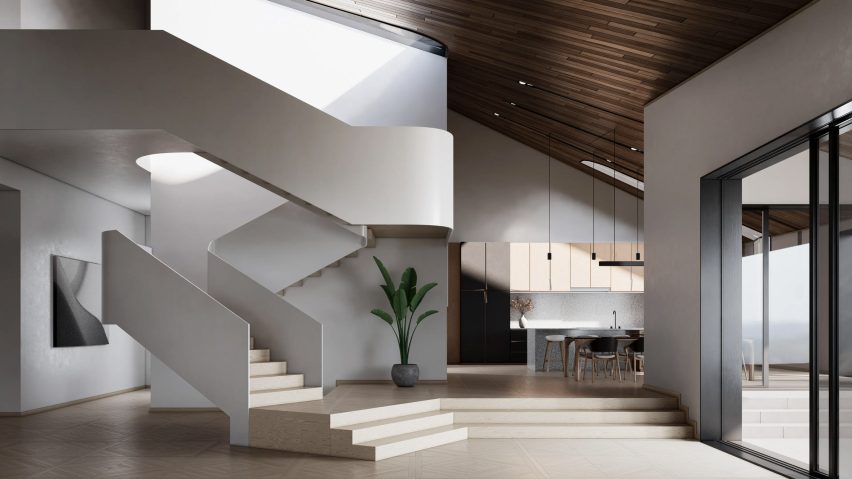
To support these workflows, the Dell Pro Max and Dell Pro Precision workstations are equipped with the latest Blackwell generation of Nvidia RTX PRO GPUs.
These professional GPUs combine traditional ray-tracing hardware (RT Cores) with AI-processing capabilities (Tensor Cores).
The Dell Pro Max and Dell Pro Precision workstations support Nvidia's Deep Learning Super Sampling (DLSS) – an AI-assisted technology using pre-trained models to upscale images rendered at a lower resolution, generate additional frames, and improve ray-traced image quality.
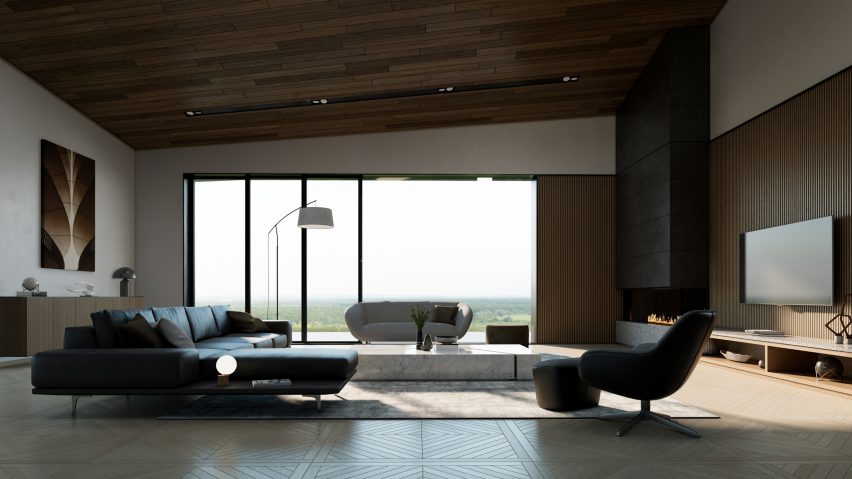
According to Flannigan, this represents a change from relying primarily on increasingly powerful hardware towards combining GPU performance with AI-assisted processing.
"Now it's not just power – it's power plus these pre-trained AI intelligent models that are allowing you to work faster," Flannigan said.
"It's not that the GPU got faster, but that the intelligence behind the GPU got better," he added.
Flannigan noted that these advances may also improve energy efficiency by reducing power consumption and heat generation.
By processing visualisations and AI workloads locally on workstations instead of cloud-based services, Dell also suggested that studios can benefit from quicker workflows while maintaining more control over their design data.
Dell argued that while cloud-based services are important for storage and collaboration, local compute can be more predictable in terms of operational costs, as well as for intellectual property protection and data governance requirements.
"Bringing it locally means that you're buying compute, not renting compute," added Flannigan.
He noted this can benefit architecture firms working with sensitive project information and client data, which cannot always be processed through centralised cloud services.
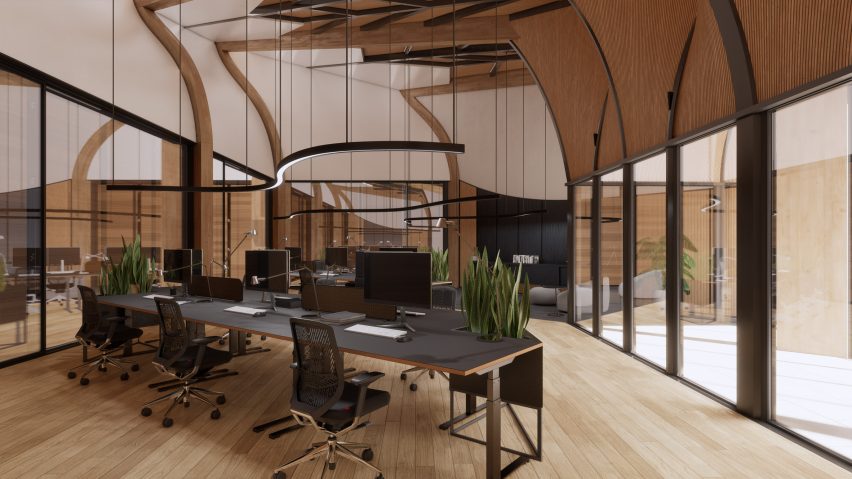
Looking to the future, Flannigan noted that local computing will become increasingly important as design firms begin training AI tools on their own data.
"If we're all training visualisation and design aesthetics on a centralised data source, everything in the future designed by AI will eventually look exactly the same," stated Flannigan.
"So it's really important for designers to own their AI-trained design aesthetic," he added.
To find out more about the Dell Pro Precision portfolio equipped with Nvidia technologies, visit its website here.
Partnership content
This article was written by Dezeen as part of a partnership with Dell Technologies. Find out more about Dezeen partnership content here.