


Lazy attempts to frame interiors products as more inclusive for neurodivergent people are becoming too common, writes Ellie Foster.
Most of us would agree that increasing awareness around neurodiversity is important and overdue, with 15-20 per cent of the global population demonstrating traits of ADHD, autism, dyslexia and the like. It makes sense that interior designers pursuing a more inclusively built world are following the conversation closely, asking themselves to better accommodate those who interpret and experience space differently.
For better or worse, product manufacturers have been following along too. However, too often, neurodiverse design is merely a marketing ploy.
Is neurodiverse design just another gap in the market to exploit, similar to greenwashing before it?
Naturally, some contract furnishers will bristle at that accusation, and for specifiers aiming to envelope people up and down the spectrum it may also rankle. But recent industry events and product launches make it difficult for me to come to any other conclusion.
In the past three years, there has been no shortage of events championing "designing for difference" in my inbox; no lack of press releases pulling on the terms hypo- and hypersensitivity to explain that a task chair comes in both brights and neutrals.
More recently, the sheer volume of these kinds of emails has raised questions for me about honest intentions. Do this many manufacturers really care about making products that improve the wellbeing of all?
Or, is neurodiverse design just another gap in the market to exploit, similar to greenwashing before it? Having a heightened awareness of space myself, these are the same questions that have started to gnaw at my conscience in a big way.
For more than a few brands, the plan of attack has been to showcase how updated furniture collections soothe individuals overstimulated by clashing patterns and loud colours, and energise those rendered lethargic by muted tones and minimalism.
At last year's Clerkenwell Design Week, one commercial name hosted a showroom installation addressing the acute sensory needs associated with certain diagnoses. Once attendees had marvelled at the work, the structure doubled as a backdrop for a talks programme on how we can be kinder to neurodivergent employees and service users through the use of design.
The focus on colour overlooks the psychological and physiological impact that objects have on neurodiverse brains
The activation then linked to a new luxury vinyl tile collection – one that looked similar to the brand's previous lines, but professed to ease mental anguish nonetheless.
All that is to say, the event was good; well-intentioned, well-received. The tenuously linked PVC planks in Herringbone, Chevron and Checkerboard? Not so much.
The fanfare around ever-so-slightly tweaked product ranges rarely ventures beyond those two "H" words (hyposensitivity and hypersensitivity), which are almost exclusively used in the context of colour. The main outcome – for me, at least – is a subtle repositioning of said brand as the ethical choice, alongside an excuse to mass produce its current portfolio in a range of new and "progressive" hues.
The focus on colour overlooks the psychological and physiological impact that objects have on neurodiverse brains in other ways. Low-hanging light fixtures leading to feelings of claustrophobia; castor-mounted furniture causing emotional instability; chairs with too many components creating distraction or obsessive compulsions.
These are just a few topics that could broaden the conversation around neurodiversity in product design – and the fact that we're still accepting that additional Cobalt and Stone colourways are enough to prevent meltdowns only proves that the area remains chronically understudied.
I want to urge interior designers not to take things at face value
From where I'm sitting (and that's in a central Manchester co-working space revamped just a year ago), it seems obvious that often it's just a rebranding of the same old products. Neurodiverse-friendly lounge chairs come in the same kaleidoscopic fabrics that were once flogged in the name of "design versatility"; those with stripped-back aesthetics – at one time marketed to fans of wabi-sabi or biophilic design trends – are now prime for people overwhelmed by pattern complexity and vibrance.
Repackaging collections that already exist shows a significant lack of care for people whose entire worldview can be skewed by spatial discordance, as manufacturers continue to cash in on industry-wide conversations around diverse perspectives.
I want to urge interior designers not to take things at face value. To read between the lines on brands pushing a "designing for difference" rhetoric, to uncover whether these same brands championed neurodiversity before it became a global talking point.
It's also worth investigating whether neurodiverse individuals have been involved in the product design process at all or if, at the very least, the process was informed by talking to them directly.
It goes without saying that product and interior designers mutually aspiring for more inclusive interior settings is a positive thing, but the problem lies in the recent surge of stuff that overpromises and under-delivers. The risk is that marketing products in this way leaves neurodiverse occupants failed, and designers mis-sold.
Ellie Foster is an architecture and design journalist based in Manchester.
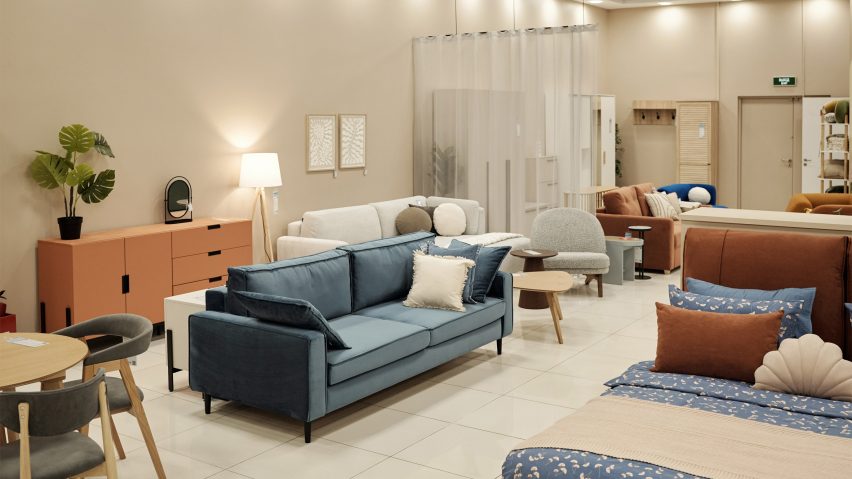
The image is a stock photo via Shutterstock.
Dezeen In Depth
If you enjoy reading Dezeen's interviews, opinions and features, subscribe to Dezeen In Depth. Sent on the last Friday of each month, this newsletter provides a single place to read about the design and architecture stories behind the headlines.