


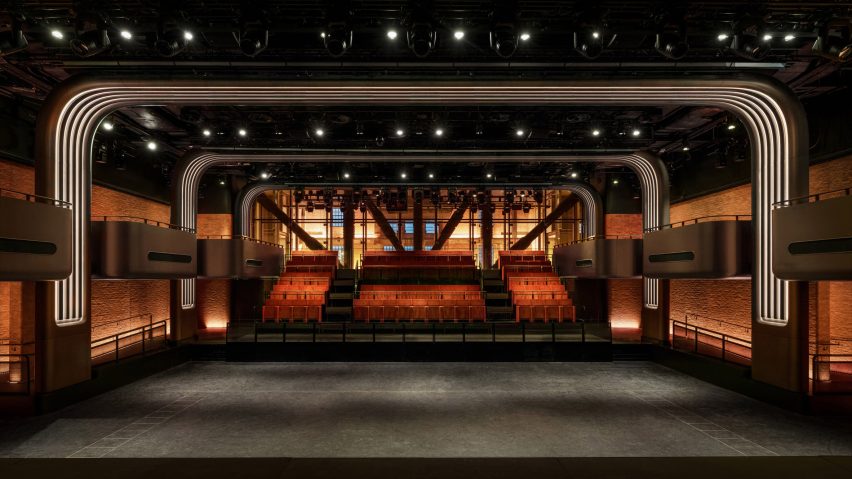
Tech brand Apple has revealed the 600-seat Apple Music Hall, its first live music venue, which sits alongside its offices within London's Battersea Power Station.
Set to open later this year, the venue overlooks the power station's Turbine A at the northern end of the huge brick building. It will be Apple's first permanent performance venue.

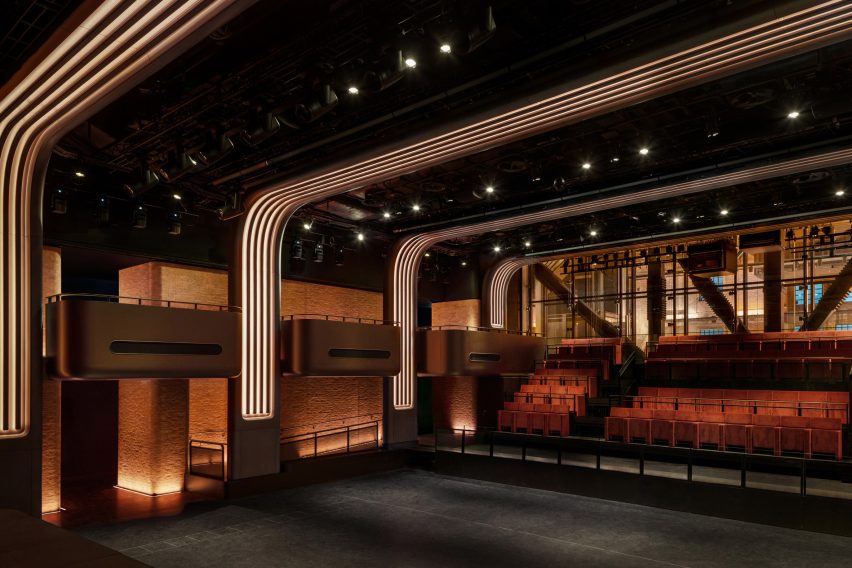
Designed by Apple's in-house team led by Apple Places vice president Kristina Raspe, the venue takes its industrial language directly from the Giles Gilbert Scott-designed power station.
The venue is flanked by brick walls, while the building's huge structural steel joists are exposed at the rear of the performance space.
As a nod to the art deco design of the original power station, a series of four illuminated, streamline-styled arches span the venue.
Bronze, art deco balconies were placed between the arches, as box-like areas overlooking the main venue space.

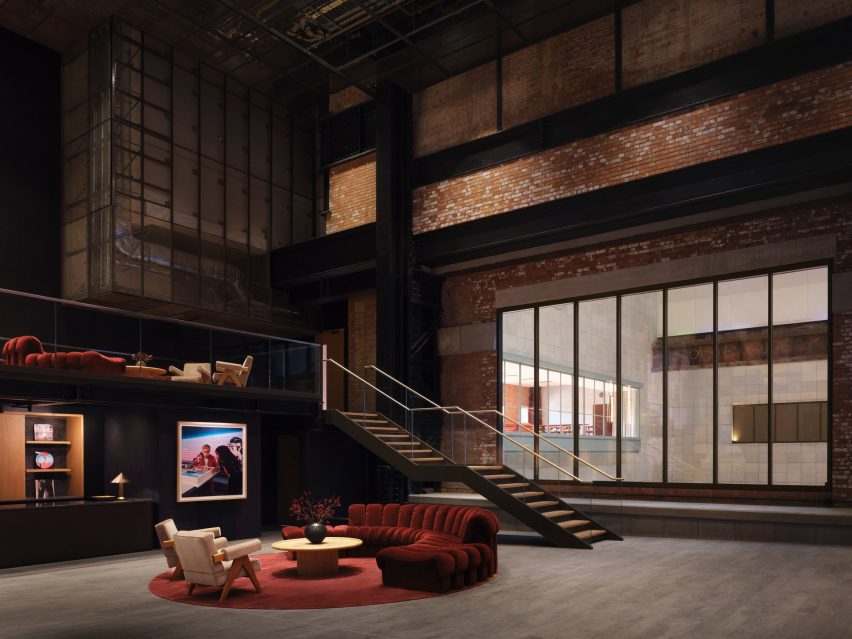
According to Apple, the flexible venue was designed to give artists an "unprecedented level of creative control".
The venue has an 11.5-metre-wide stage and can be arranged in multiple configurations as either an all-seated or all-standing venue, or a combination of the two.
Music will be played through a 48-speaker spatial sound system, while 16 hardwired cameras can capture performances to be broadcast.
"In short, an artist can perform an intimate live show for fans at Apple Music Hall and walk out with a finished Spatial Audio recording, a broadcast-ready mix, and multicamera video — all from a single show," said Apple.
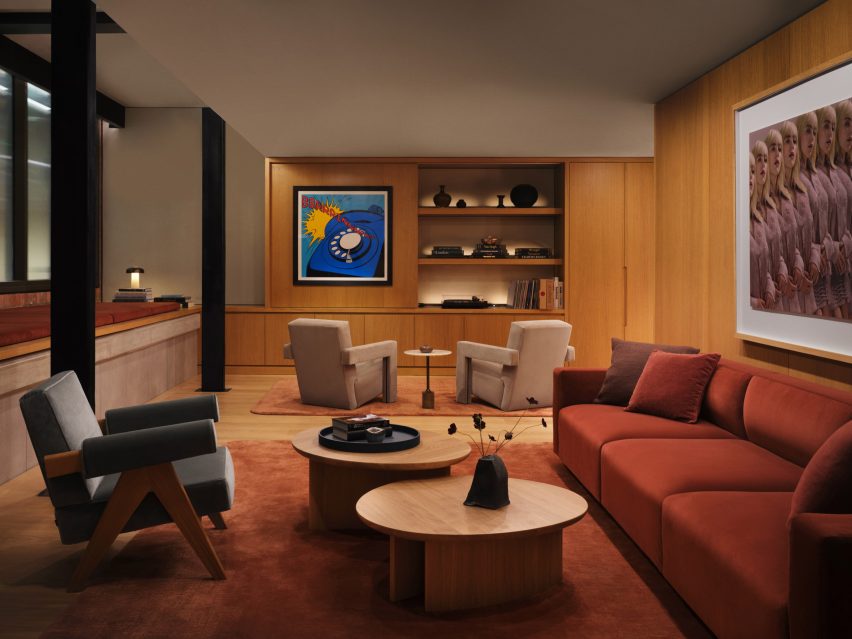
Alongside the main venue space is what Apple describes as a "full production facility" that contains a pair of professional-standard recording and mix studios.
The venue also includes a dedicated space for Apple's radio station – Apple Music Radio, which will now broadcast from inside the building.
Apple Music Hall was built alongside Apple's Foster + Partners-designed European HQ, which occupies the centre of Battersea Power Station. One of London's best-known buildings, the power station was refurbished in 2022 by architecture studio WilkinsonEyre after being derelict for 40 years.
It now contains apartments on the upper floors, with restaurants and shops, including an Apple Store in the former turbine halls.
The photography is courtesy of Apple.