Brutalist cassette listening booth in Berlin's KaDeWe unlocks "music you can't find on Spotify"
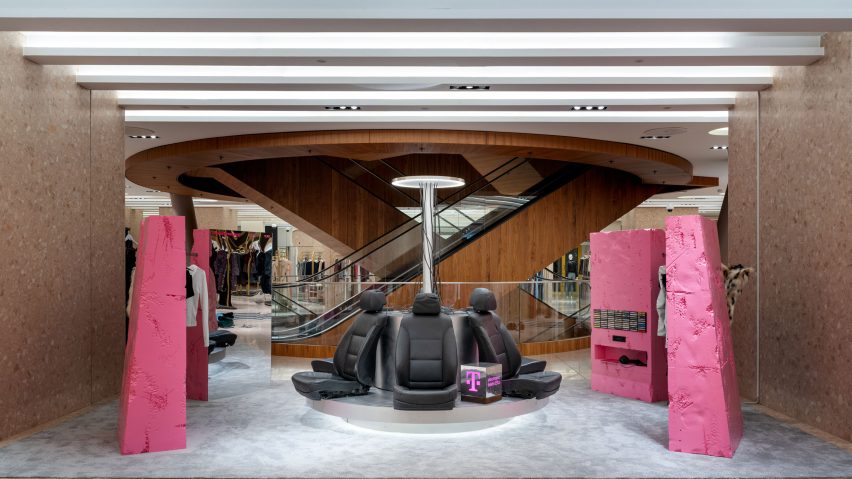
Design firm Yont Studio has used salvaged car seats and more than 140 cassette tapes to create an analogue sound installation inside Berlin department store KaDeWe.
Created in collaboration with Telekom Electronic Beats and local fashion brand Namilia, the installation is set on the second floor of the city's century-old department store, which was recently renovated by OMA.
The hybrid display stand and listening booth aims to take Berliners on a sonic ride down memory lane.
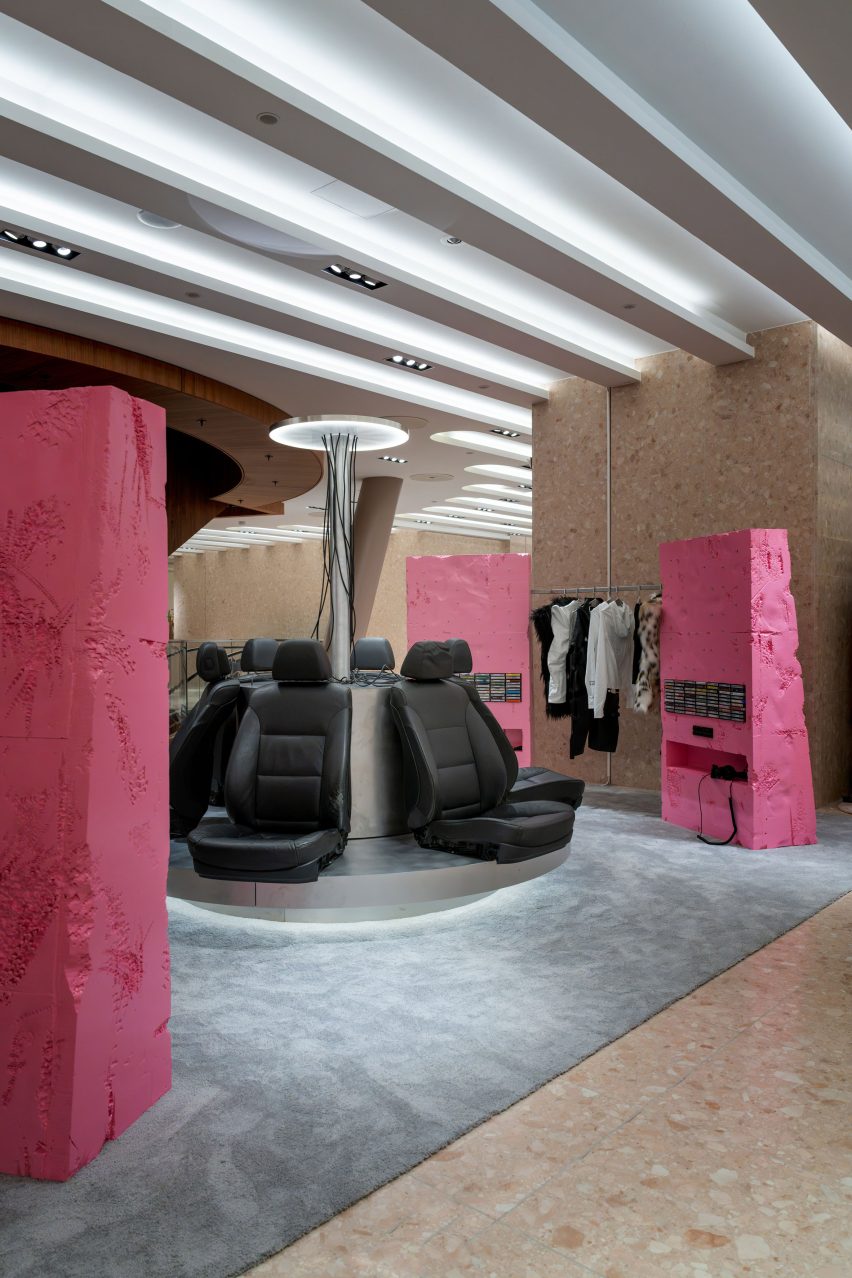
The collaboration was inspired by the 1977 Iggy Pop song The Passenger, which he recorded during his time in West Berlin with David Bowie, describing the sweet melancholy of watching the world pass by through a car window.
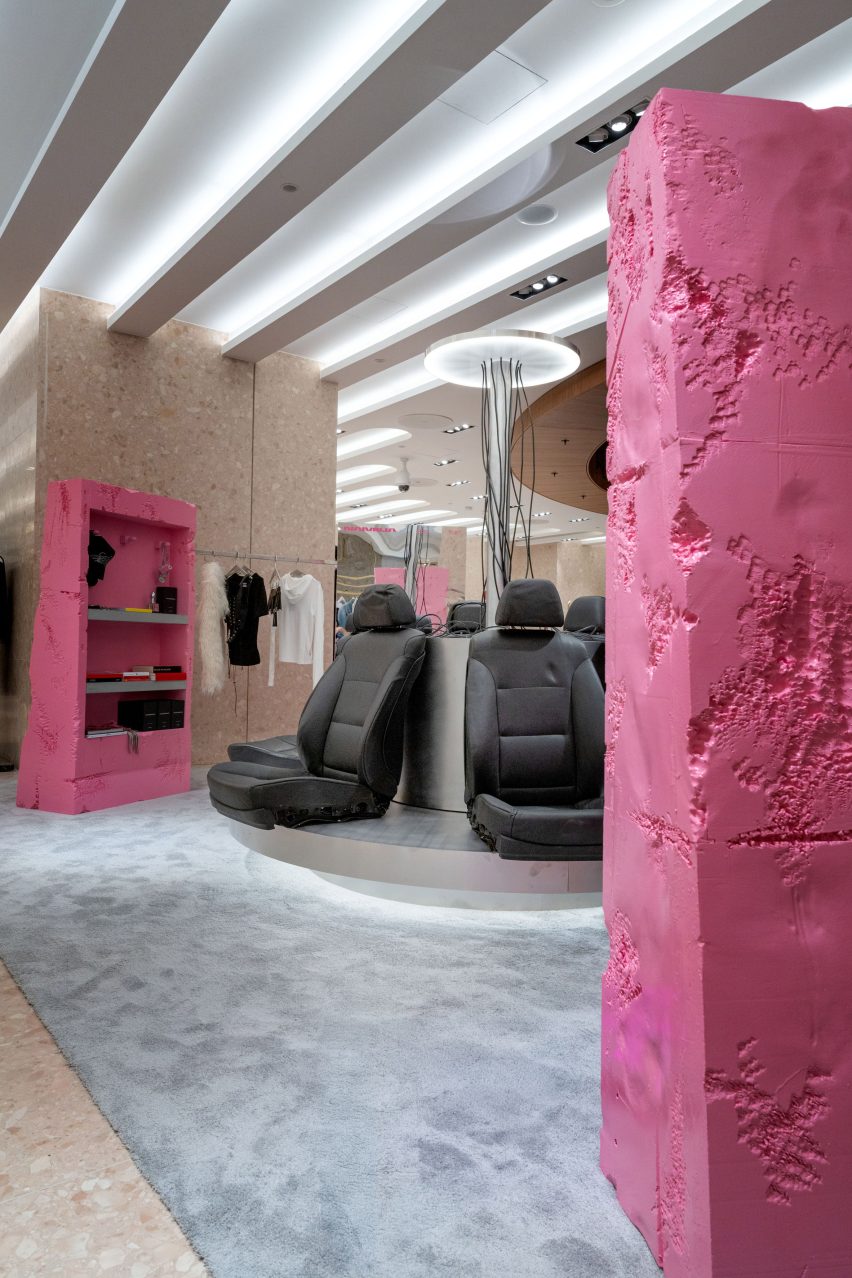
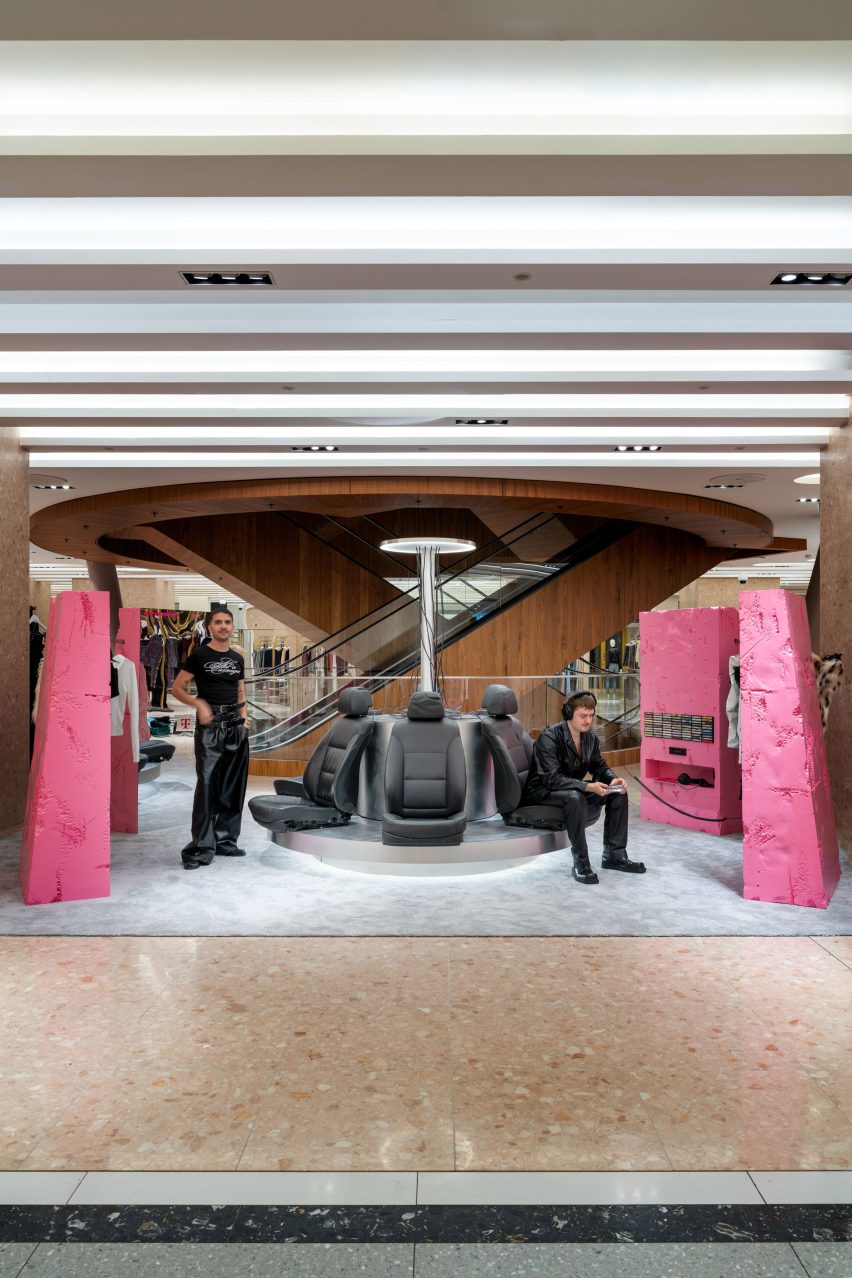
To evoke this same feeling, Yont Studio created a circle of second-hand black leather car seats, inviting shoppers to slow down and settle in with a pair of headphones, so they can listen to a selection of rare and second-hand cassettes.
"It comes almost from a place of nostalgia; the memory of listening to your favourite singer's cassette on a road trip as a kid," said Coşan Karadeniz, who founded Yont Studio together with Serdar Ayvaz. "Contrary to today's internet world, it's a slow and physical ritual."
The installation was designed to mark the launch of a collaborative fashion collection created by Namilia, run by Royal College of Art graduates Nan Li and Emilia Pfohl, music platform Telekom Electronic Beats and British indie rock band Wet Leg.
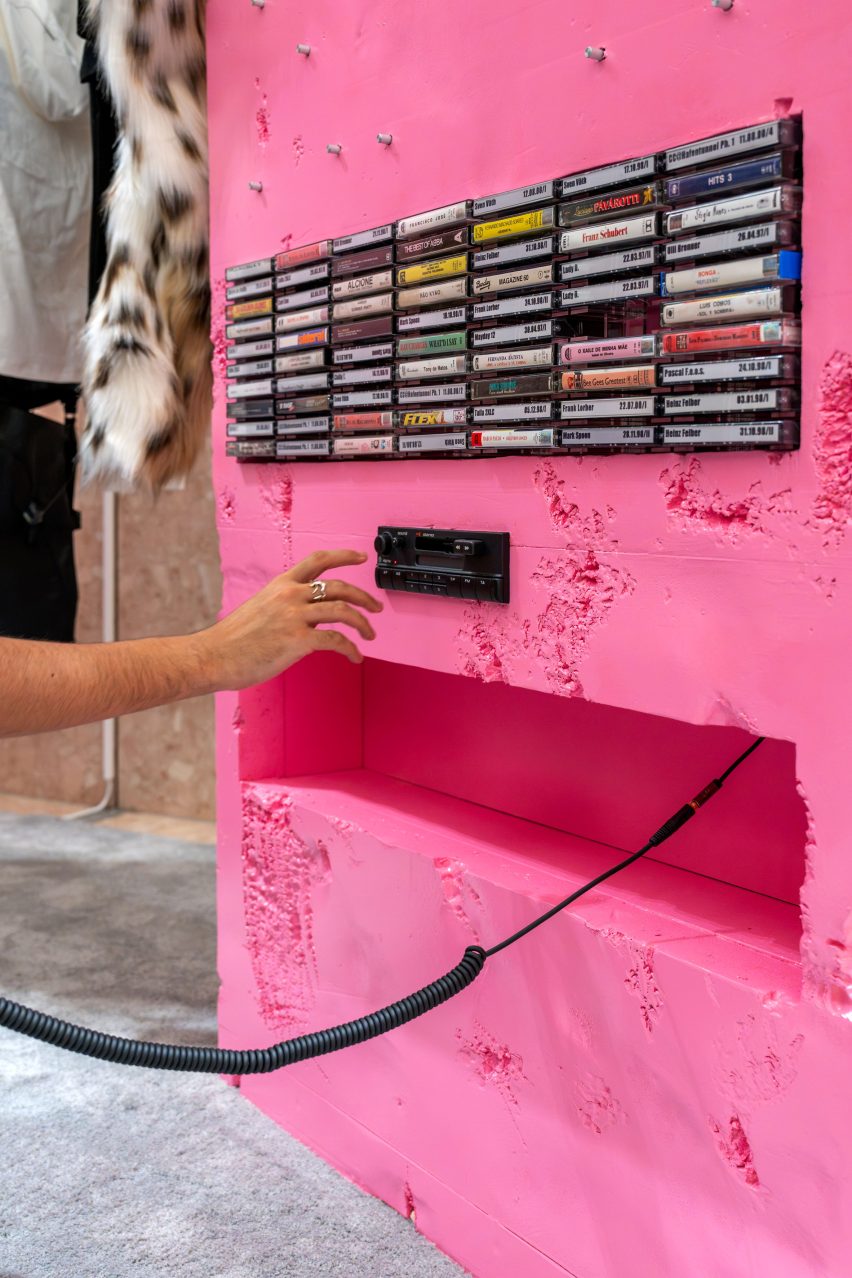
To display the pieces from the collection and hold the cassette players and tapes, Yont Studio created a quartet of bright-pink foam wedges, with integrated metal shelving and clothes rails.
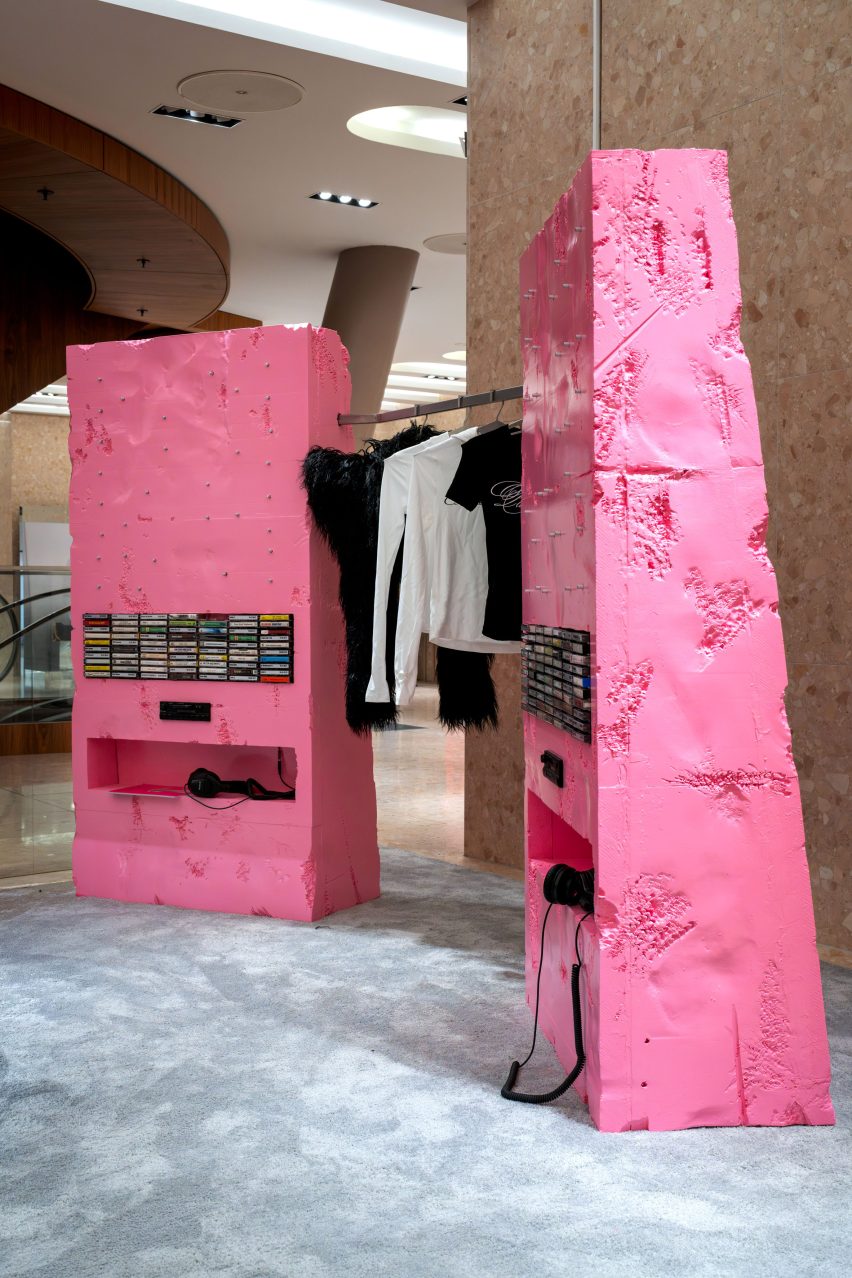
The duo distressed the foam by hitting it with stones and burning it with flamethrowers and it was completed with metal rebar poking out of the polystyrene.
"It's really fun because it's an intuitive process," Ayvaz said. "It's quite manual, very Stone Age."
The aim was to evoke the brutalist concrete birthplaces of Berlin techno. At the same time, playful details like the glossy pink car paint and clothes hooks shaped like butt plugs bring moments of irreverence.
"Namilia's fashion attitude was quite a starting point for us – unapologetic, kinky, queer," Ayvaz explained.
"KaDeWe is a place with a really rich history; it's the first luxury department store in Berlin," he added. "And we were really happy to bring something very young, fresh, and in a way provocative."
Techno can also be found in the cassette collection itself, which includes sets by pioneering DJs like Sven Väth and Carl Cox, alongside little-known world music.
"There is a lot of music that I'm so sure you can't find on Spotify or anywhere else because it's just super niche or it was only recorded once," said the Telekom Electronic Beats team, who compiled the selection from second-hand shops and private collectors.
"There is a lot of music that was recorded from the radio, entire sets that someone just recorded. So you can basically only hear them here."
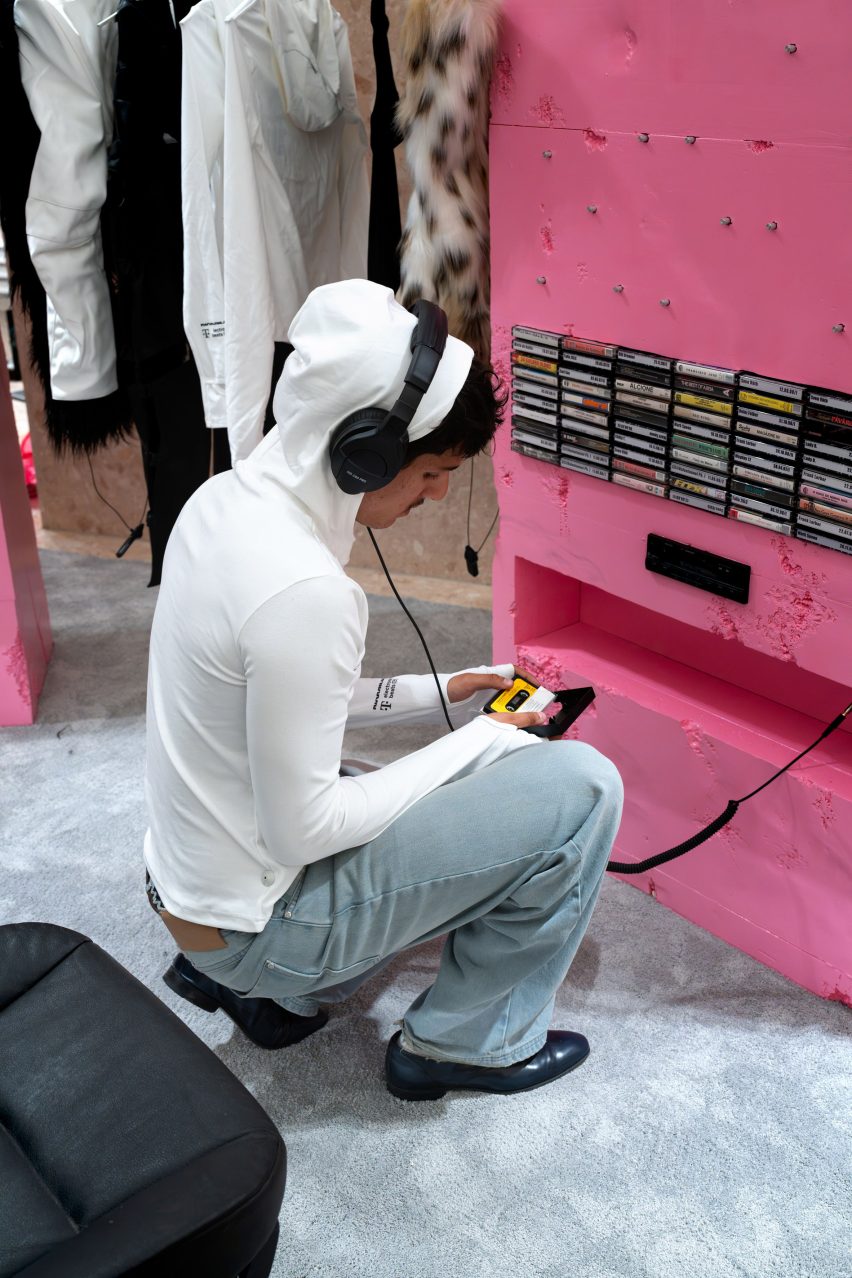
The listening booth is open until 27 September, with visitors encouraged to stay and listen for as long as they want.
"We encourage people to bring their cassettes and listen to whatever they want, or maybe exchange what they have there," Karadeniz said. "So it's kind of like a living organism."
Karadeniz and Ayvaz, two club kids who met while studying architecture at the Technical University Berlin, have found a niche in catering to the growing demand for well-designed music spaces.
The duo are known for creating playful brutalist DJ booths using their distinctive epoxy-foam combination, previously seen at this year's Milan design week and in a record store they designed in Berlin's Mitte district.
"We are getting more and more digitised, so people actually care more about sensual experiences," Ayvaz said. "Sound is one of the first things you notice when you're in a space. So I think people will care more and more about being physically in a place and experiencing that."
The photography is by Juan Camilo for Telekom Electronic Beats.