Willem van Hooff transforms extension cords into modern-day altars
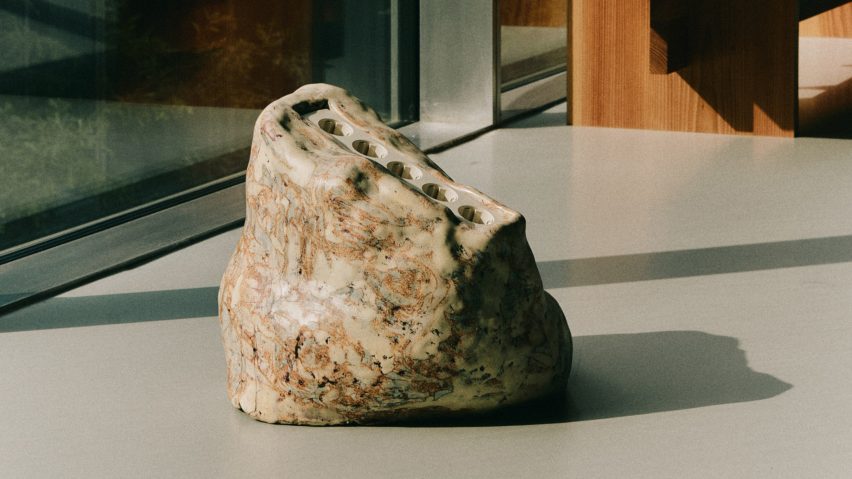
Wet clay was allowed to collapse in on itself to form these sculptural ceramic socket boards, born from a collaboration between designer Willem van Hooff and Danish design brand Pedestal that challenges the idea that "power needs to be tucked away".
Power Gems resemble natural rock formations with either three- or six-way power strips buried at their heart, as if emerging from the earth itself.
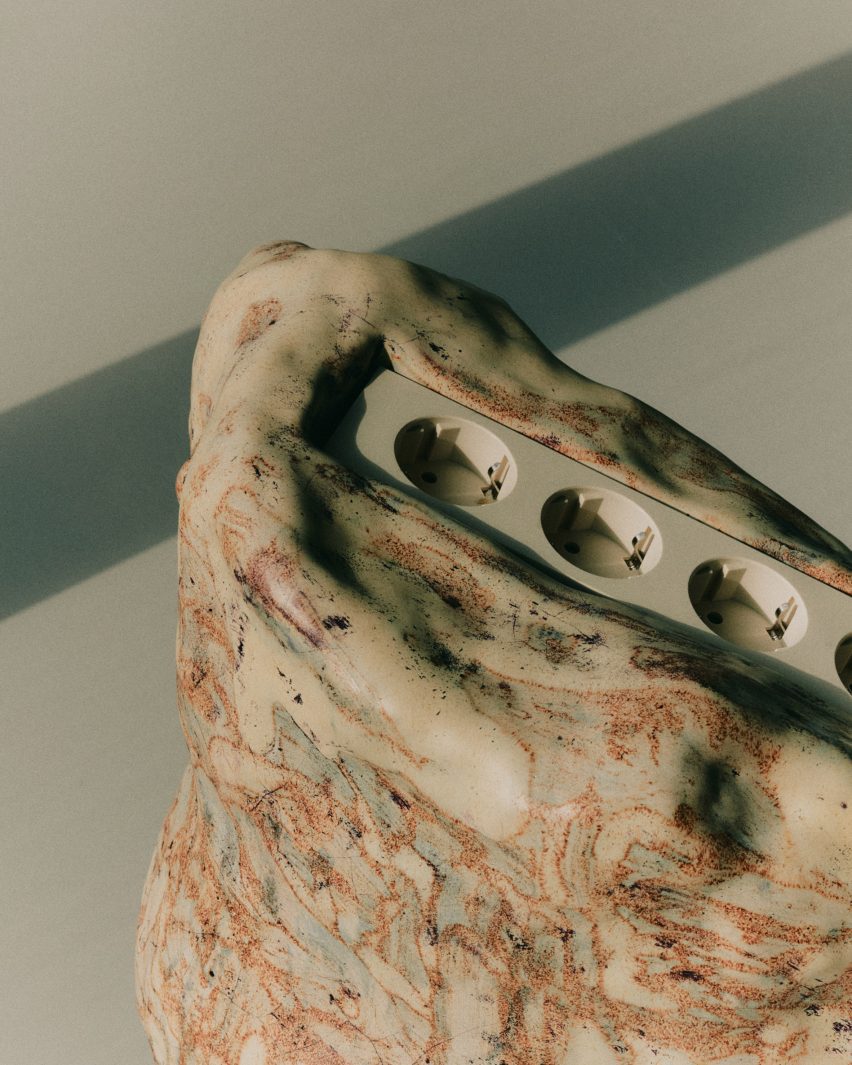
Rather than allowing the familiar fixtures to disappear into the background, their hefty ceramic bodies are designed to take up as much space as possible.
The aim is to reflect the central role that sockets have come to play in our plugged-in lives.
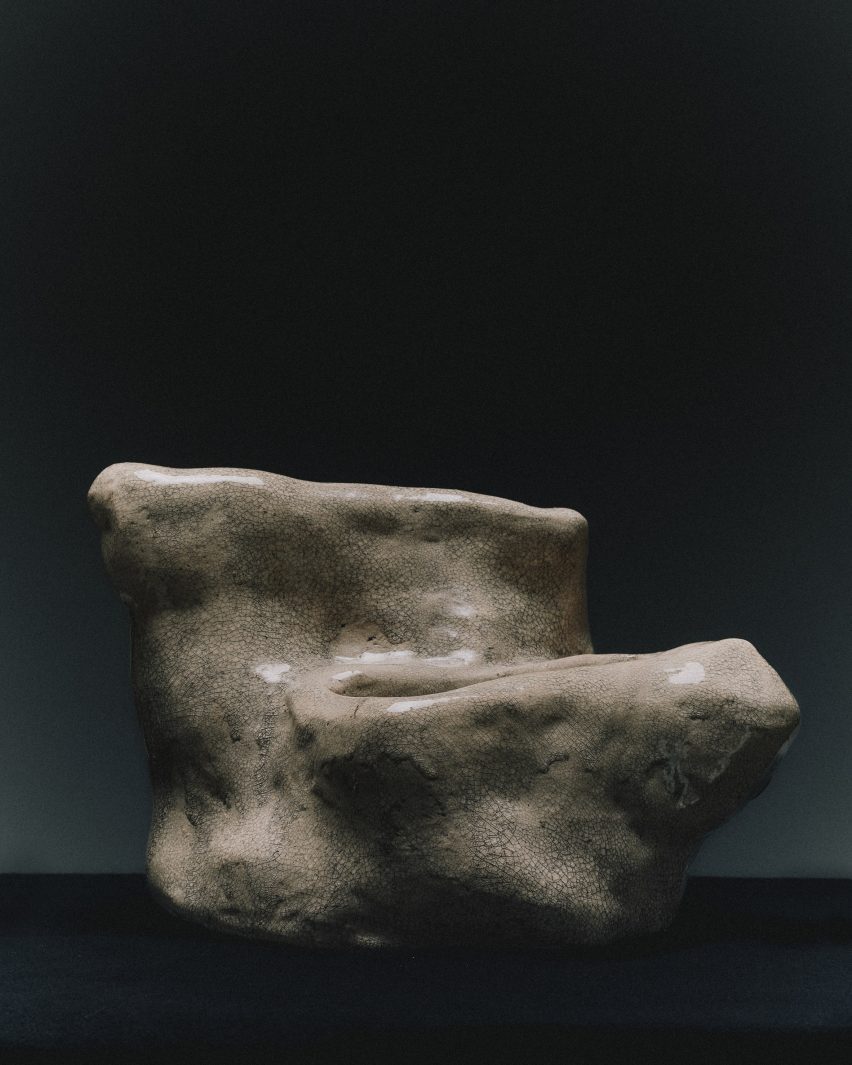
"Plugs are like altars now – same with the wi-fi router," van Hooff told Dezeen. "These are some of the most important things in our homes today."
"But we still try to hide them, under the couch or stuffed away in corners. That made me want to redesign them."
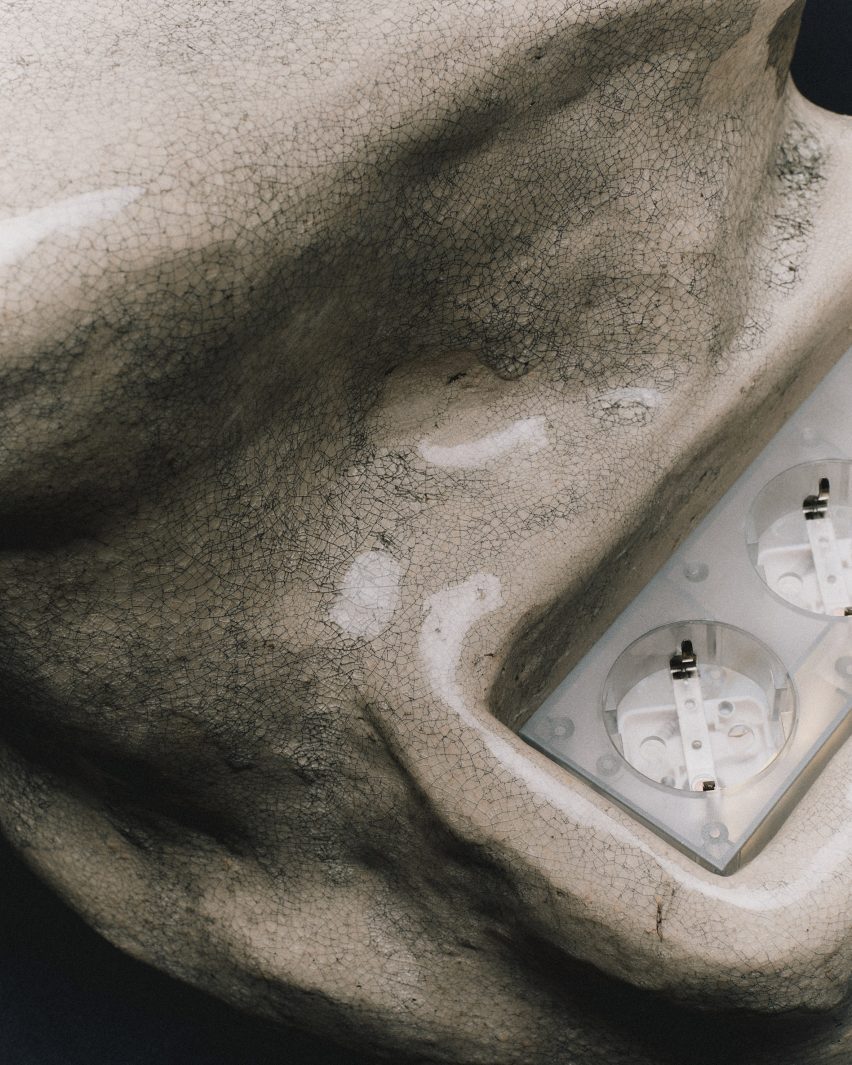
Pedestal approached van Hooff precisely for the dramatic counterpoint his raw, textural ceramics would provide to the company's precision-engineered power strips, with their translucent plastic shells that leave their technical components exposed.
As a result, the designer was given carte blanche to push the design of the Power Gems to its limit.
"We wanted to challenge the idea that power needs to be tucked away," explained Pedestal's brand manager Kristian Fæste. "With Willem, we've created something that's both industrial and expressive – something that earns its place in the room."
Van Hooff began with sculpting the forms by hand using white clay. But he quickly realised that ceding control to the clay – letting it droop and slump, as it was wont to do – yielded more organic results.
"There's something honest in clay that's been allowed to collapse," he explained. "So, I began working even quicker, letting the shapes break down on purpose."
"That's when they really started to feel like something nature could've made."
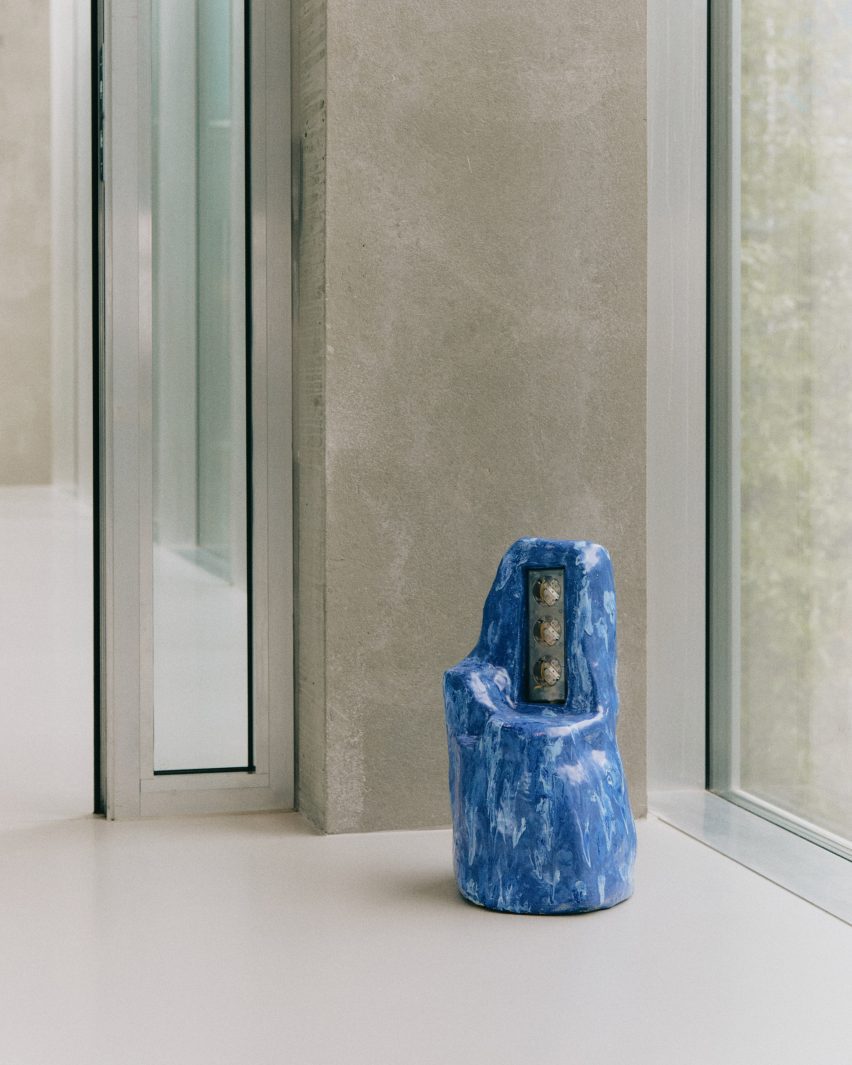
To hold the power strips, van Hooff created hollows within the ceramic bodies using 3D-printed moulds, carefully sized to consider the clay's shrinkage in the kiln.
"The challenge was to make them fit perfectly because of the behaviour of clay itself," he explained.
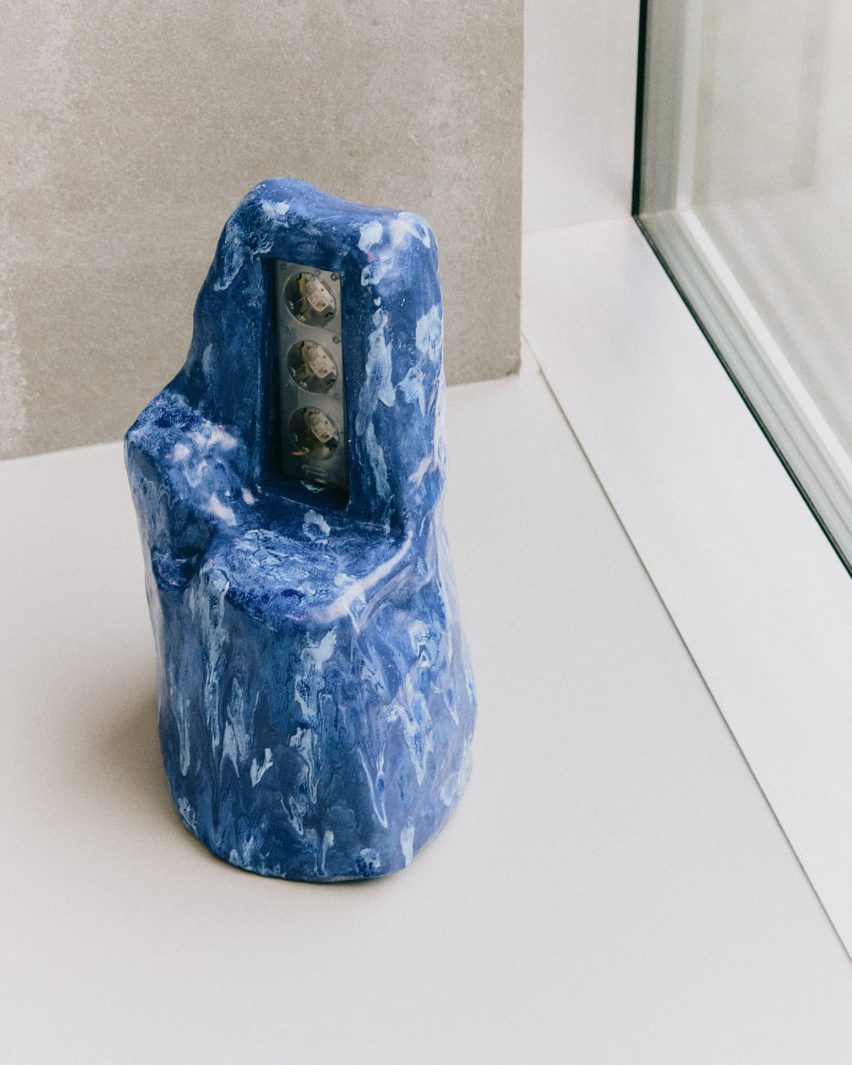
Instead of matching the colour of the glaze to that of the plugs, as the designer had originally intended, he ended up creating more experimental finishes reminiscent of speckled stone and cracked earth.
"As we progressed, Pedestal encouraged me to go wilder," van Hooff remembered. "That's when it really got fun."
"I started taking risks with the glazing process, and the results surprised even me – textures and surfaces I hadn't seen before."
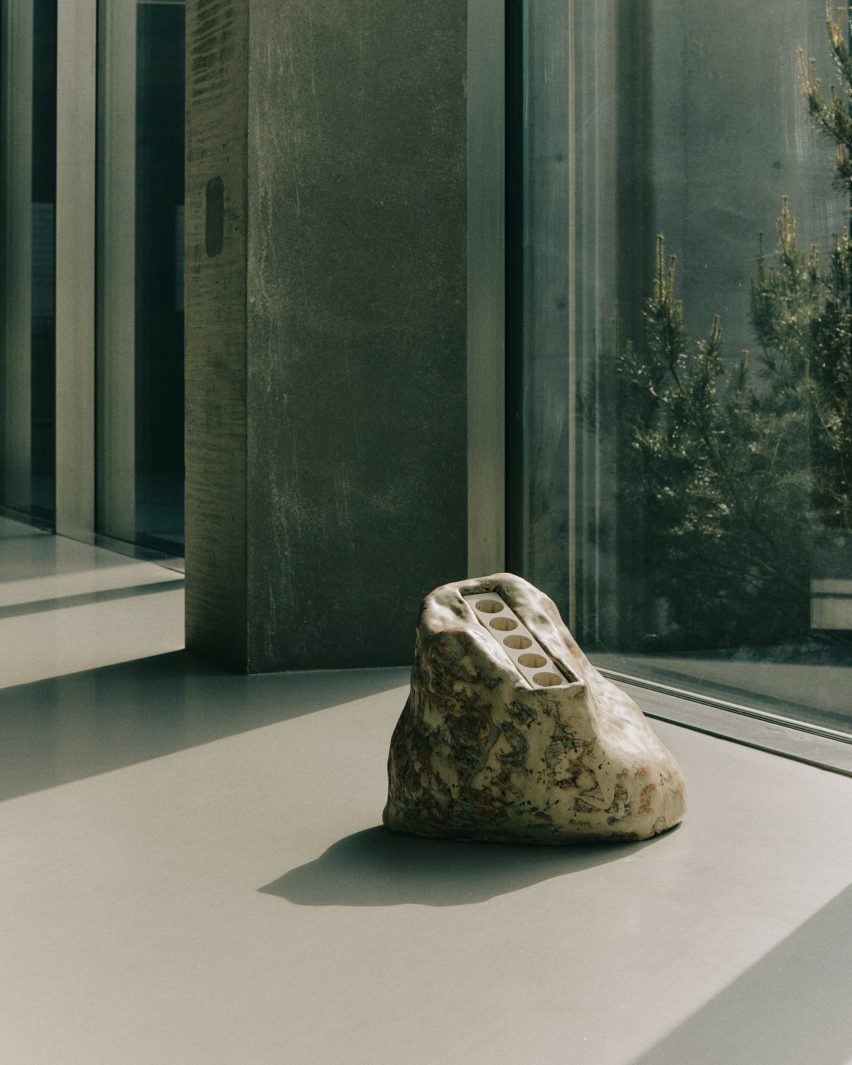
The Power Gems, which are being produced as limited editions by Pedestal, are the latest example of how designers have started reinventing plugs in recent years.
Among them are India Mahdavi, who used them to decorate an armchair designed for charging ten devices at once, and Diego Faivre with his Memphis-infused Minute plugs.