
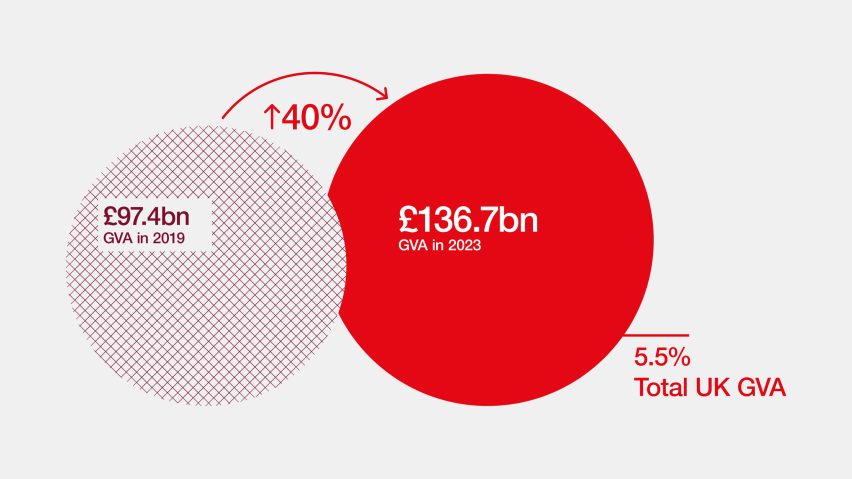
Britain’s design industry has grown by 40 per cent and is now responsible for £1 in every £20 generated across the country, according to a landmark report from the Design Council.
Published today, the report paints a positive picture of a thriving design industry, which contributed £136.7 billion in gross value added (GVA) to the UK economy in 2023 – a 40 per cent rise from 2019.
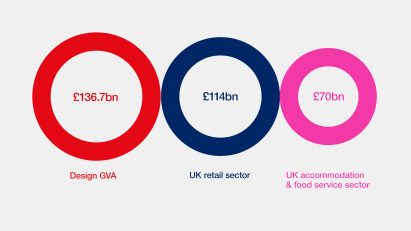
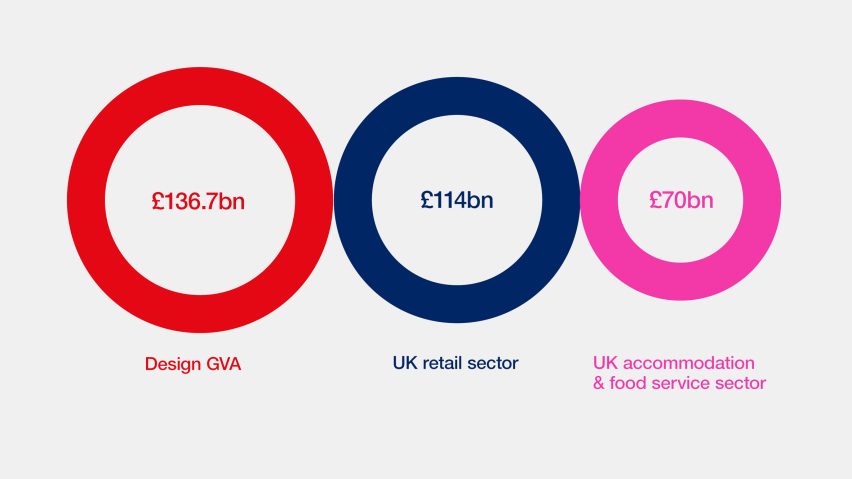
As a result, the design industry has overtaken the £114 billion retail sector as the single biggest contributor to the national economy, the report argues.
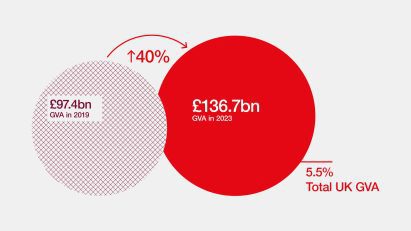
It is now almost twice the size of the £70 billion accommodation and food service industry, and responsible for around £1 in every £20 generated nationwide.
The sector has also outpaced the UK economy as a whole, which grew by only 24 per cent over the same period.
“80 per cent of designers work in other parts of the economy”
Ahead of the report’s publication, the Design Council‘s chief design officer Cat Drew spoke to Dezeen about the findings.
“Design is an essential business capability across industries with designers operating across the whole of the economy, from urban planning to computer games,” she said.
“We classify some designers as working in design industries, in businesses such as architecture firms or fashion houses, but 80 per cent of designers work in other parts of the economy,” Drew added.
“For example, healthcare providers such as the NHS now have digital teams, and financial service providers rely on in-house designers to create new products and services.”
The report also found that the design economy has seen a 15 per cent increase in employment since 2020 – adding around 297,000 jobs – and currently supports 2.27 million jobs.
During this period, total UK employment grew by less than 2.5 per cent, highlighting the comparative expansion of the design sector.
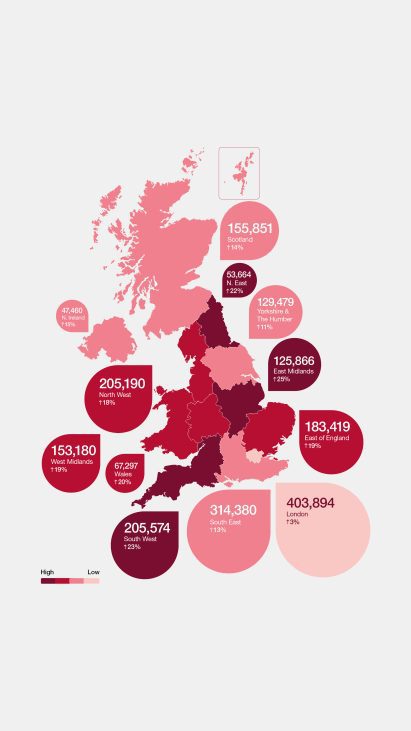
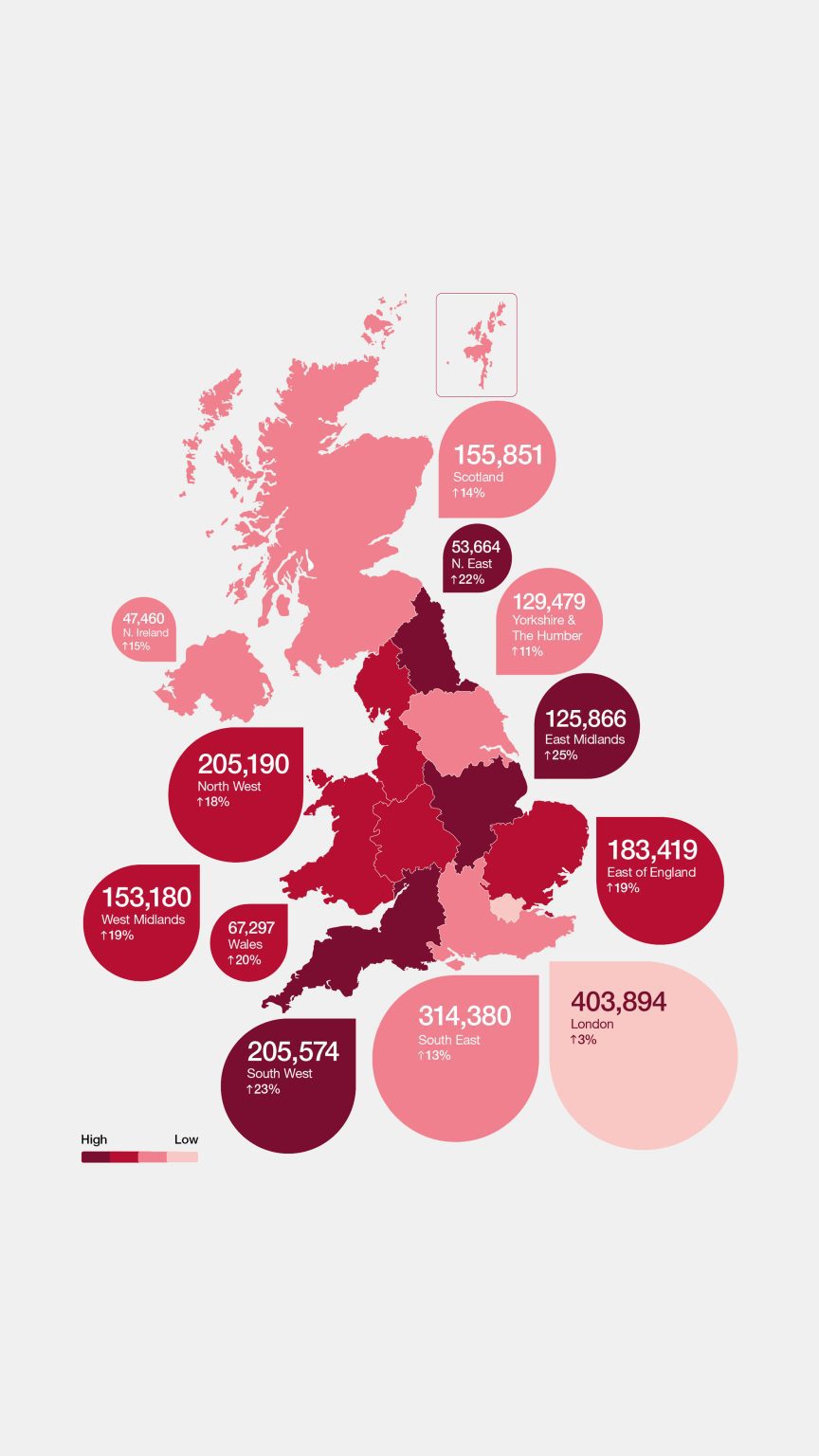
The Design Council also found that design-led growth is being felt beyond London and the southeast of the UK, regions historically afforded the most creative opportunities.
Since 2019, the council reported an 88 per cent increase in design’s economic contribution in Wales, a 67 per cent increase in the northeast and a 32 per cent increase in Scotland.
AI could present a threat to future growth
While these results point to a thriving industry, Drew acknowledged that it “is possible that we have captured a peak in the trend”, considering the potential impacts of artificial intelligence (AI).
“It’s likely too early to see the effect of AI on the design workforce in the medium-term data trend, from 2020 to 2025, and when looking at the design economy as a whole,” she said.
A survey from the World Economic Forum previously found that graphic design is considered one of the jobs most at risk from AI, while the demand for UX and UI designers is expected to grow.
Early indications in the Design Council report seem to reflect this trend.
“When we look more granularly, growth in graphic design slowed between 2023 and 2025,” she continued. “Digital design by comparison has seen a boom, now accounting for 59 per cent of the whole design economy and growing by 26 per cent to over 1 million people employed.”
“If you’re 16 today, studying design isn’t only training to become a graphic designer in a design studio,” added Drew.
“It’s developing the ability to understand people, frame problems, generate solutions and turn ideas into things that work and those capabilities require human sensibilities that AI cannot replace.”
Design needs a “more diverse talent pipeline”
Drew also acknowledged AI as a possible threat to the next generation of designers, with automation chipping away at entry-level opportunities that traditionally help young people get a foot in the door.
Risks to the future skills pipeline also emerge earlier on in education, with 68 per cent fewer students taking the Design and Technology (D&T) GCSE course between 2014 and 2024, while the number of D&T teachers was halved.
Drew emphasised the sustained lack of sufficient progress towards workforce diversity as another key pillar of the report.
“Our new findings show that only two per cent of designers were female in 2025 and only two per cent of designers were Black, compared to five per cent in the UK workforce,” she said.
“We need to attract a more diverse talent pipeline if the products, services, buildings and public spaces they produce are to be truly inclusive and accessible.”
Last year, the Design Council hosted the World Design Congress, which took place in London.
The biennial event included a keynote speech by architect Norman Foster on the importance of walkable cities, and another talk with musician Brian Eno, who emphasised the importance of communities in the design world.
The images are courtesy of the Design Council.
Read more
Recommended stories

Design contributes £71.7 billion to UK economy says Design Council report
Number of UK Design businesses has increased by 70 per cent since 2010

Creative industries in the UK generate £8.8 million per hour

Design profession receives own classification in upcoming Australian census

“It’s time for the luxury brands who profit from makers’ labour to start supporting craft”

UK government undermines design with “disappointing” budget, say industry organisations

UK’s creative industries generate almost £10 million per hour