GRT Architects adds modular shelving in Storefront for Art and Architecture revamp
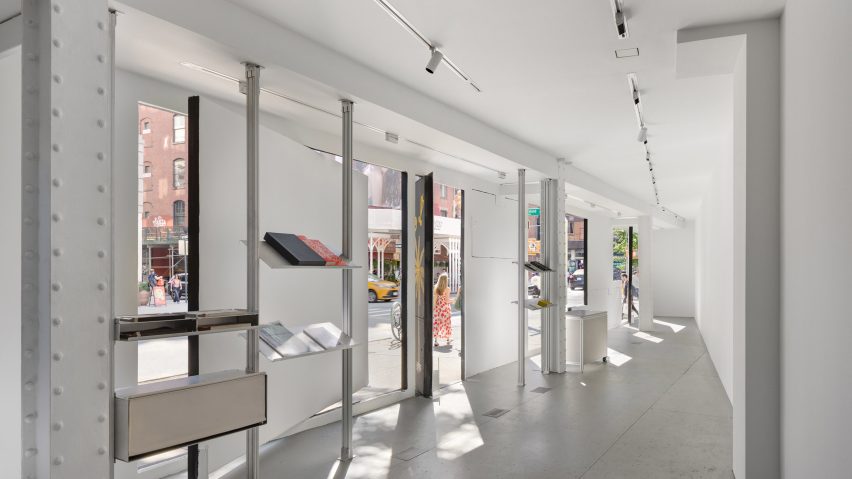
Architecture studio GRT Architects has modernised and updated New York architecture gallery Storefront for Art and Architecture, installing custom, removable shelving units and placing a doorknob on its facade for the first time.
The scope for the renovation included updating electrical and HVAC systems in the single, triangular gallery space at Storefront for Art and Architecture (Storefront) and adding flexible display units that can be adapted as needed for the gallery's diverse range of installations.
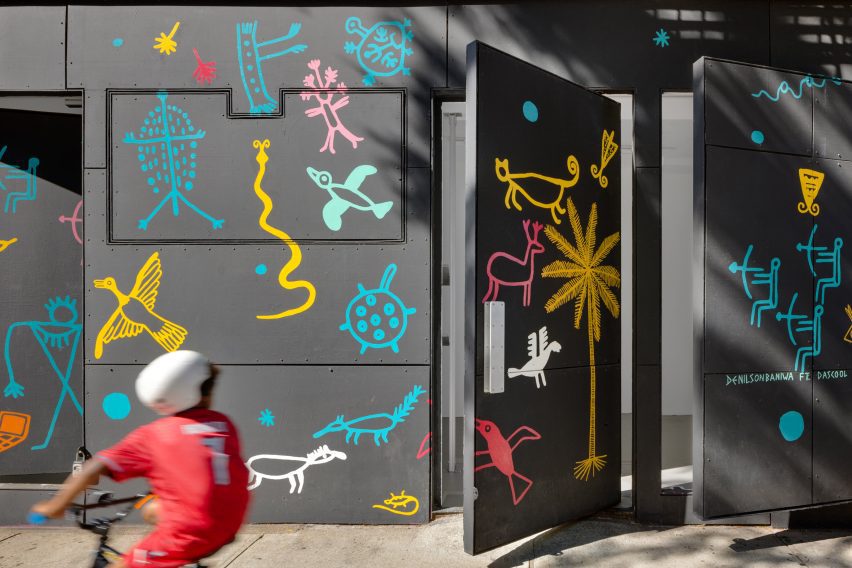
Storefront is a storied gallery dedicated to subversive architecture and art installations, founded in 1982 by architect Kyong Park in a tiny downtown storefront.
It was later moved into a sliver of a building in the Lower East Side and fitted out with a concrete facade designed by architects Steven Holl and Vito Acconci, with giant concrete panels that swing open and closed.
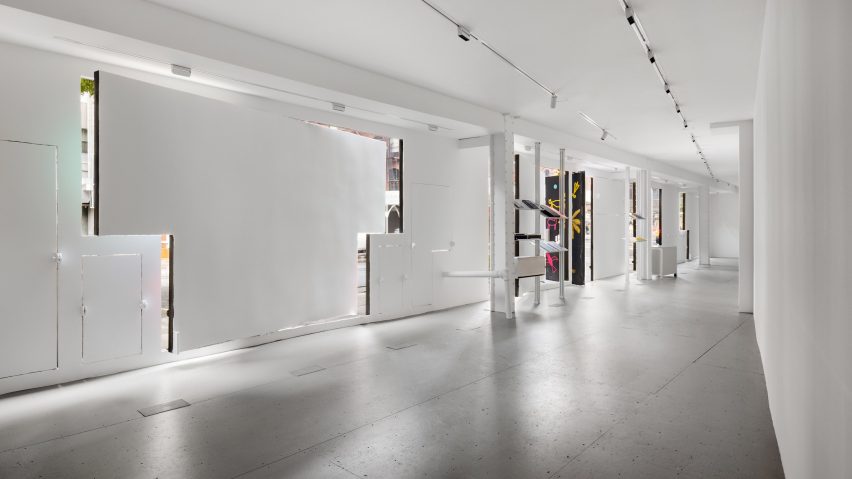
The institution and its cavernous basement have been updated throughout the years, but GRT Architects' renovation marks the first significant changes to the street-level gallery in twenty years, as well as the first semi-permanent display system for exhibitions.
"Practically, we needed to bring the gallery up to today's standards for mounting exhibitions safely, without having to reinvent the space from scratch every time," Storefront deputy director Guillermo Ruiz told Dezeen.
For the project, GRT Architects created a modular, aluminium shelving system that is affixed to tiny anchors along the gallery's front wall, just far enough away from the facade to avoid collision with a rotating panel.
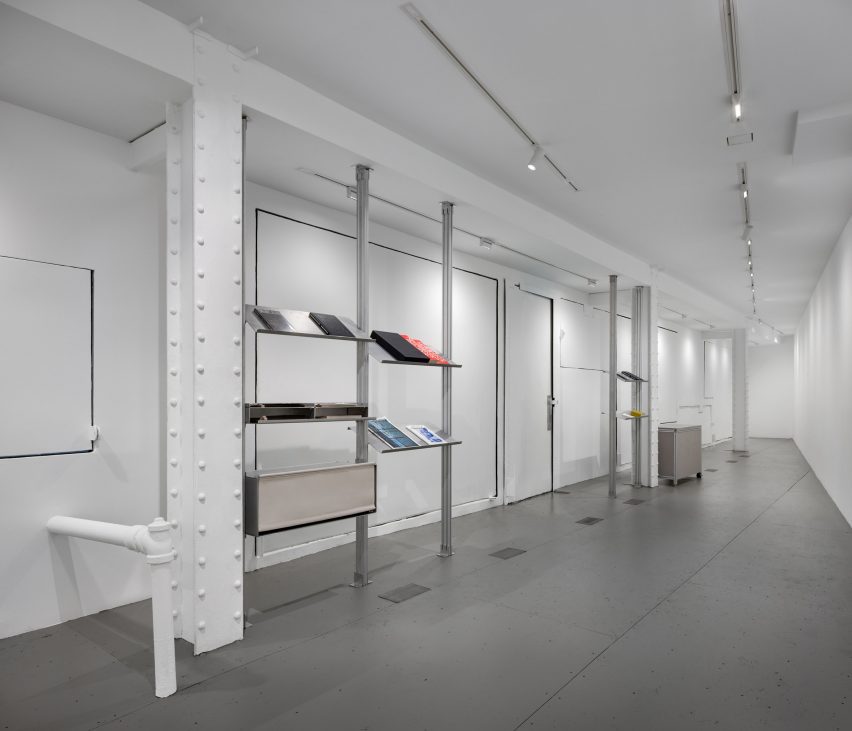
The system can be completely deconstructed so that the gallery is empty, or various configurations can be slid and bolted into place depending on the needs of an exhibition.
Modular components designed by GRT Architecture can also be arranged within the system at various heights and positions, including panels for projecting video and a shelf concealed by a canvas curtain. The studio primarily worked with customised parts from aluminium framing system company 80/20 for the build.
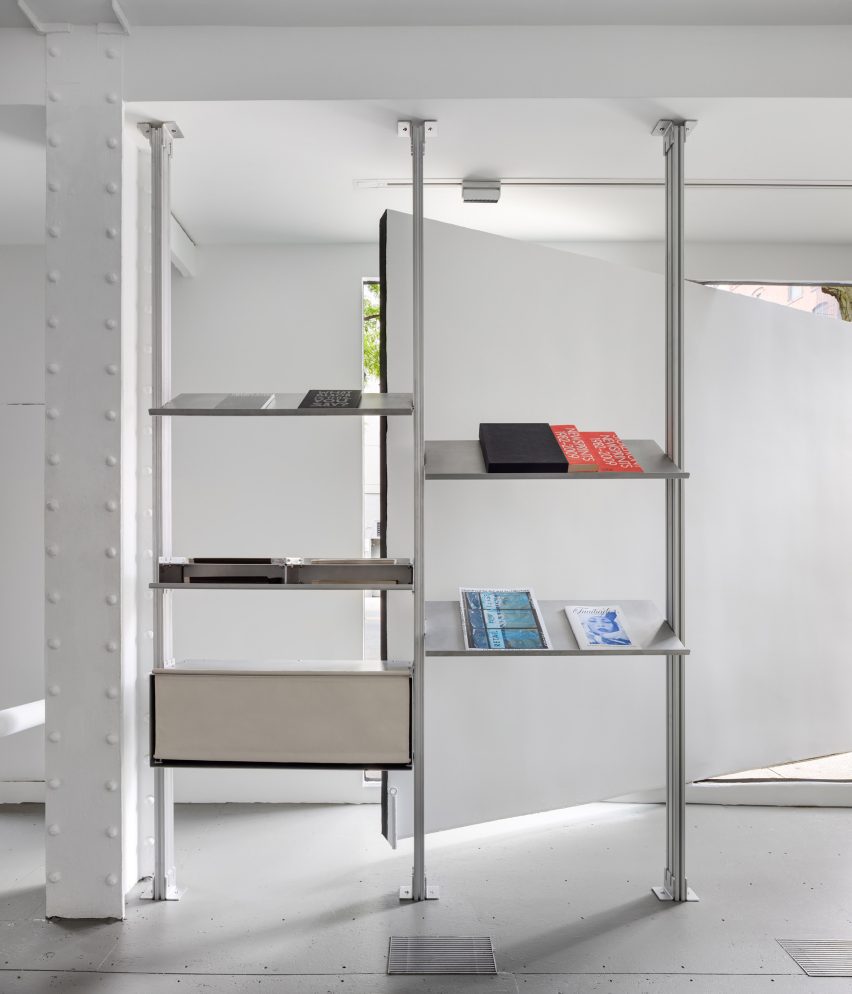
"It's flexible enough that it's always working well with whatever exhibition they have, " GRT Architects founding partner Tal Schori told Dezeen. "Whether it's video projection or objects or things on the wall."
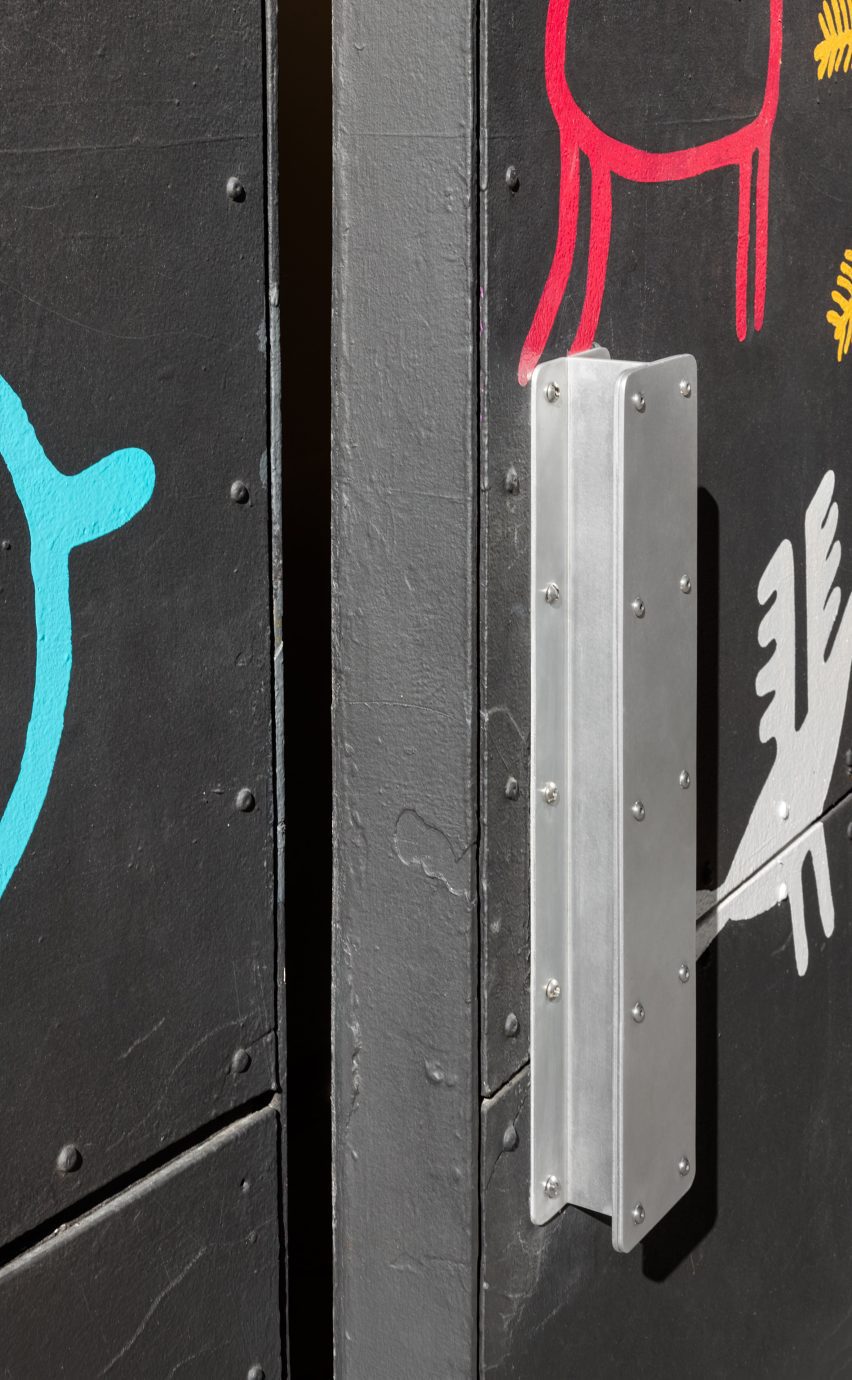
The studio also added small touches like a mobile desk for a gallery attendant, and a slim, stainless steel handle on one of the gallery's panels that doubles as the main door. Both elements, and the shelving system, were informed by Storefront's industrial, riveted beams.
"It is a small thing, but it's really significant because for decades Storefront never had a door handle," said Schori. "I think this small gesture is a really nice way to welcome people."
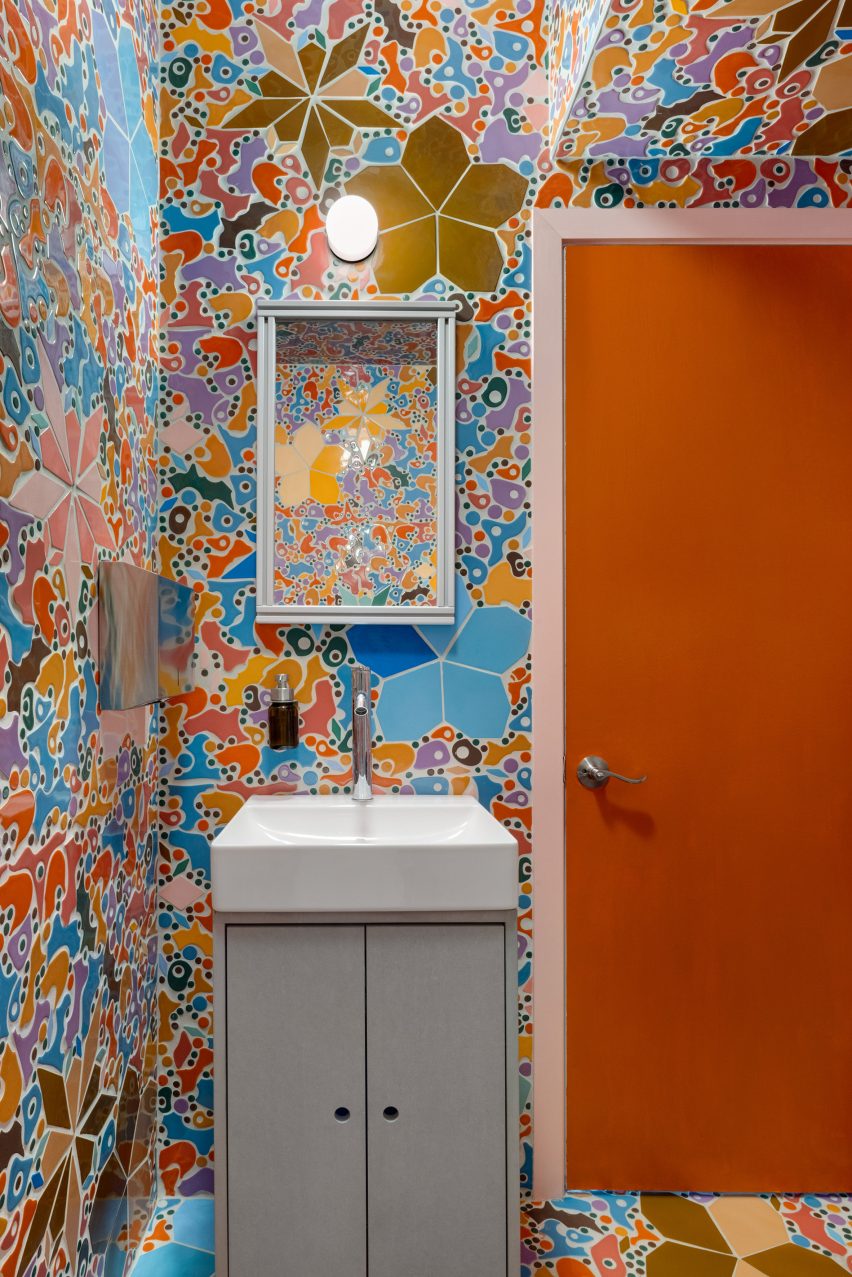
The studio also updated Storefront's small bathroom, covering it completely in bright tile work by Jorge Pardo, a Cuban American artist who sits on the organisation's board.
Other structural updates included reworking the gallery's track lighting and "gutting" its walls, ceiling and plywood floor to minimise "all the weird perturbations, soffits, and bump outs" the space collected over decades of use, said Schori.
The studio also illuminated the concrete letters that spell out an elongated "Storefront for Art & Architecture" sign on the facade.
"It's no longer this dark void on the block where everything else is lit up," said Schori.
GRT Architects is based between Brooklyn and Mexico City and was founded in 2014 by Schori and architect Rustam-Marc Mehta. Schori also serves on the board of Storefront and previously worked at the institution as a gallery manager in 2003, as a first job out of college.
The studio recently completed a maximalist restaurant in Beverly Hills and spoke to Dezeen about the skills needed for adaptive reuse projects.
The photography is by Rafael Gamo