Gjergji Shkurti integrates bar, retail and hi-fi at Million Goods in Brooklyn
Architect Gjergji Shkurti has collaborated with concept shop Million Goods for its second Brooklyn location, using marble, custom millwork and curated furniture to create a transition from hospitality to retail.
A glossy red spiral staircase can be spotted through windows that face the buzzy part of DeKalb Street in Fort Greene, Brooklyn. The space became the Million Goods's second shop after co-founder Matt Reyer, who lives nearby, spotting it when it was inhabited by a design studio.
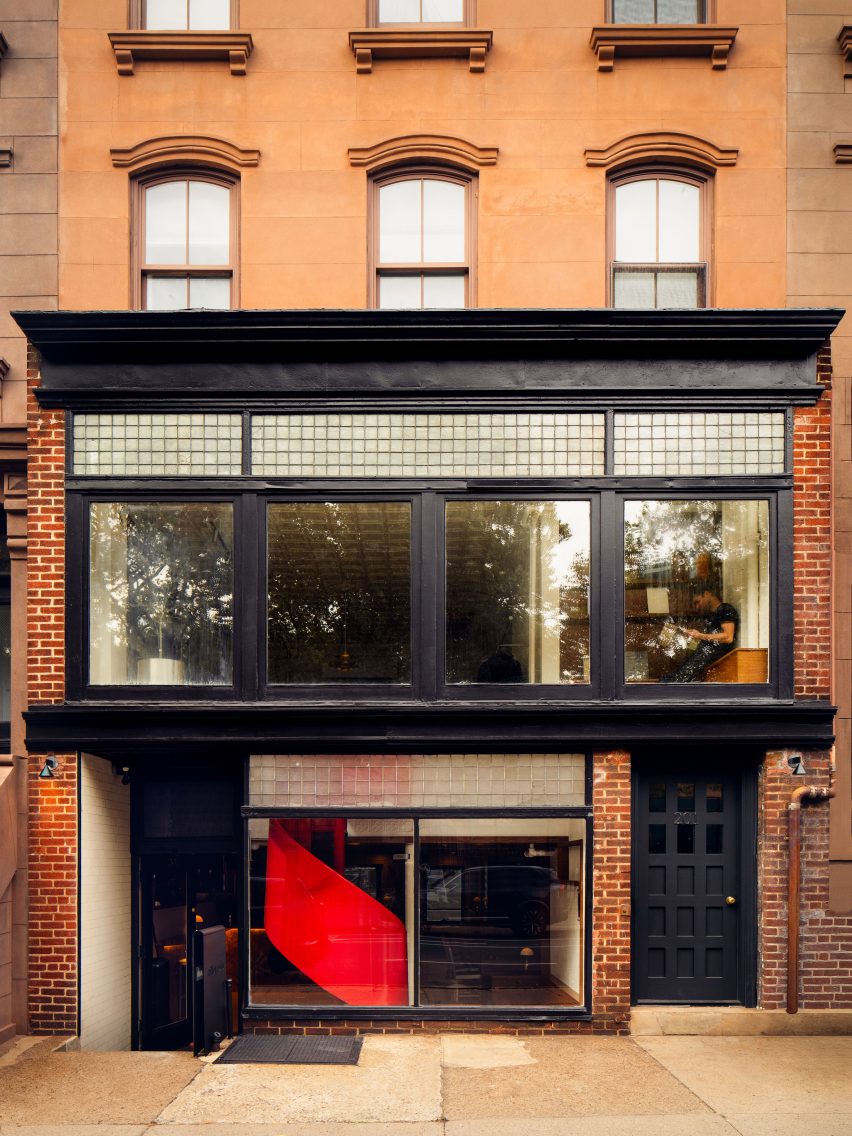
Reyer and fellow co-founder Drew Kaufmann brought on local architect Gjergji Shkurti, founder of Figure Ground, to convert the space.
Whereas the original Million Goods in Greenpoint is condensed into a single level, the Fort Greene location gave the team more room to work with, with two levels and an expansive courtyard.
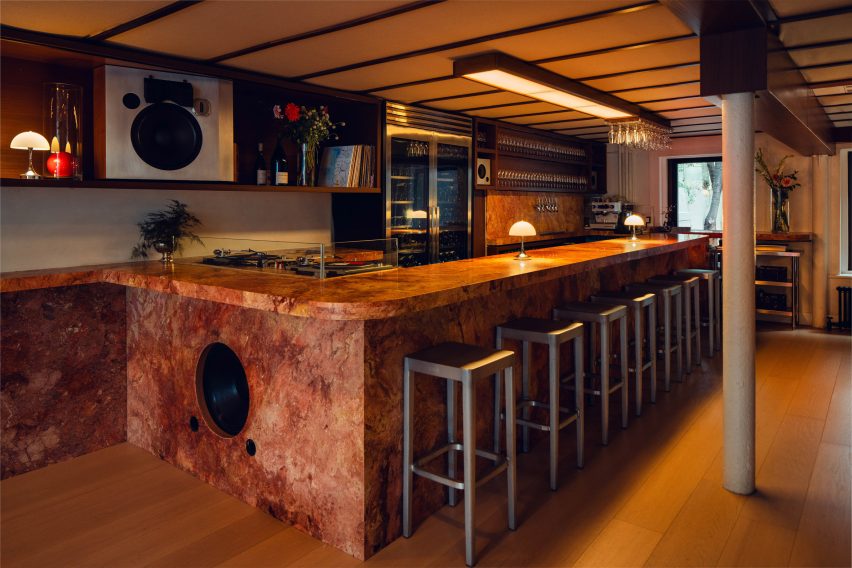
"I think this was more regal, whereas Greenpoint was a little bit more fun," Shkurti told Dezeen, referring to the expansive Breccia Pernice stone countertop that forms the wine bar portion on the first level.
Stripping the interiors back to their essentials, Shkurti organised the space to provide social areas and retail, integrating them stylistically but separating them physically, with the social spaces on the bottom floor and the retail above.
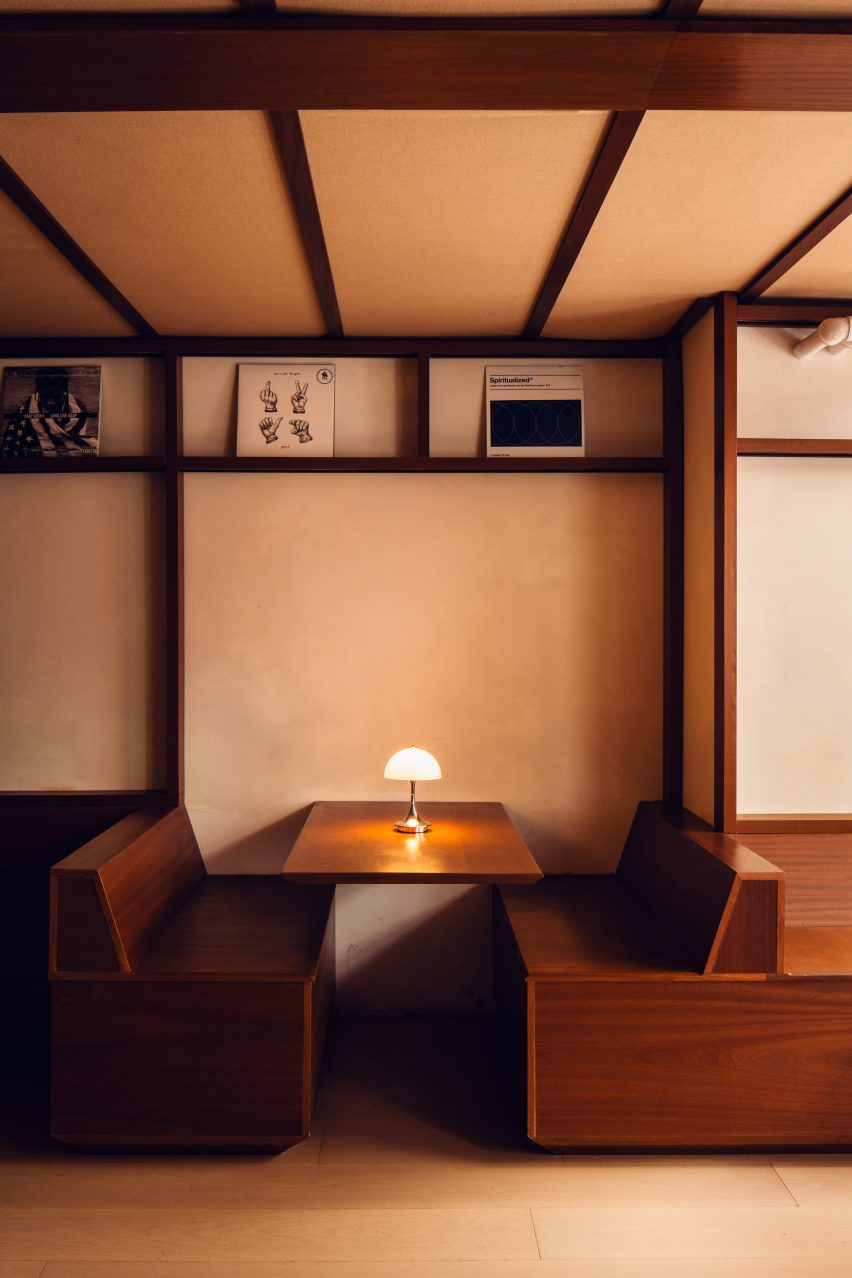
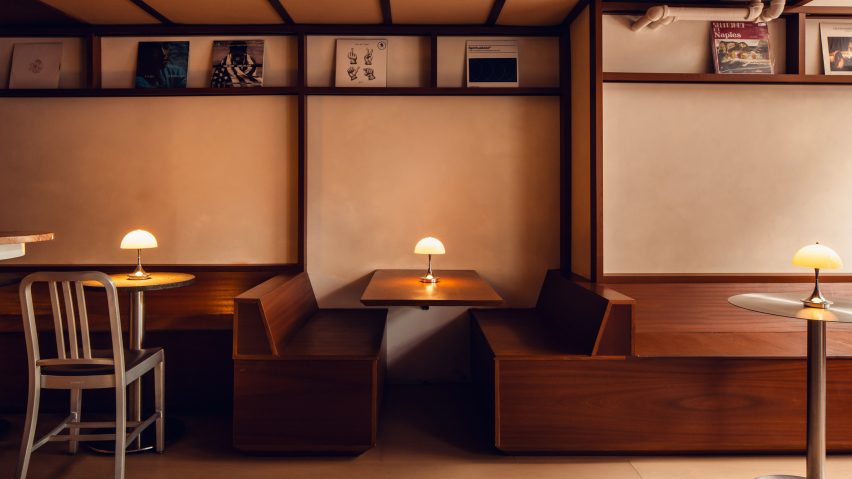
The first-level bar and social space combines multiple different design languages into a contemporary New York style.
Behind the bar, metallic speaker boxes were integrated into the custom casework, which was rendered in sapele wood finished in a peca tone.
Bridge Street Sound did the sound system, integrating a large speaker directly into the face of the marble bar. Emeco bar stools by Philippe Starck line the bar, and these chairs were used with the wooden banquet seating that hems the space.

The ceiling has a distinctly Japanese appearance, with fabric draped between wooden slats. This fabric and an additional layer of insulation were included for sound, but also, with an interesting effect, dampen the lighting from the fixtures above the fabric.
A relatively large backyard space was given a central planter for a mature tree. The circular planter doubles as a bench and seating was integrated into the washed concrete walls around the space.
Shkurti said the backyard was designed to evoke Brazilian brutalism.
A Louis Poulsen Flindt Plaza post is the centrepiece of the backyard space, rising from the custom pavers. The lighting company sponsored the store and its lamps and fixtures can be found throughout.
The refinished facade of the historic low-rise building was refinished with the blessing of the local preservation boards, and the backyard-facing trim was given a red that aligns with the staircase in the front. In the front, the facade was kept black.
The spiral staircase at the front of the shop was original, but given siding and painted a bright red by local fabricator Wood Steel Stone.
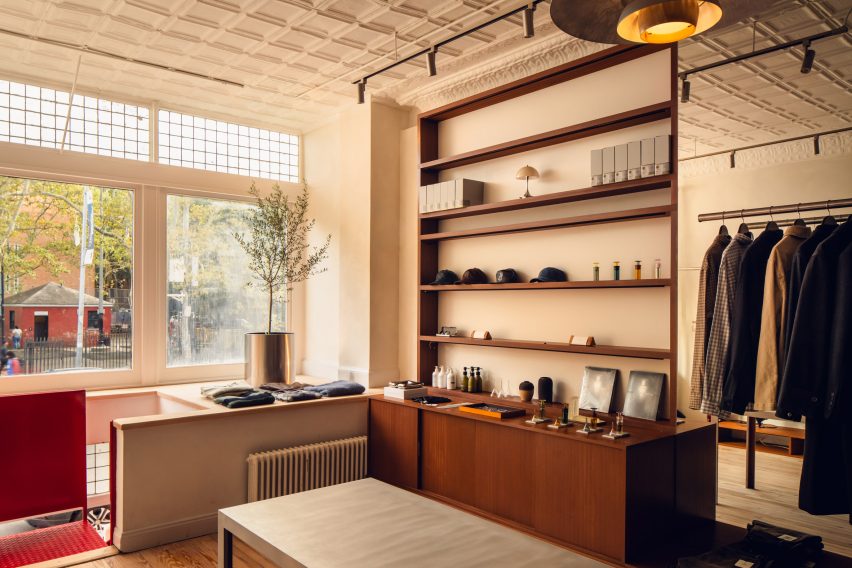
Wood Steel Stone also completed an impressive central display table on the upper floor that folds aluminium and wood into ply layers with aluminium on top.
Upstairs, the original wood from the floors was refinished and used.
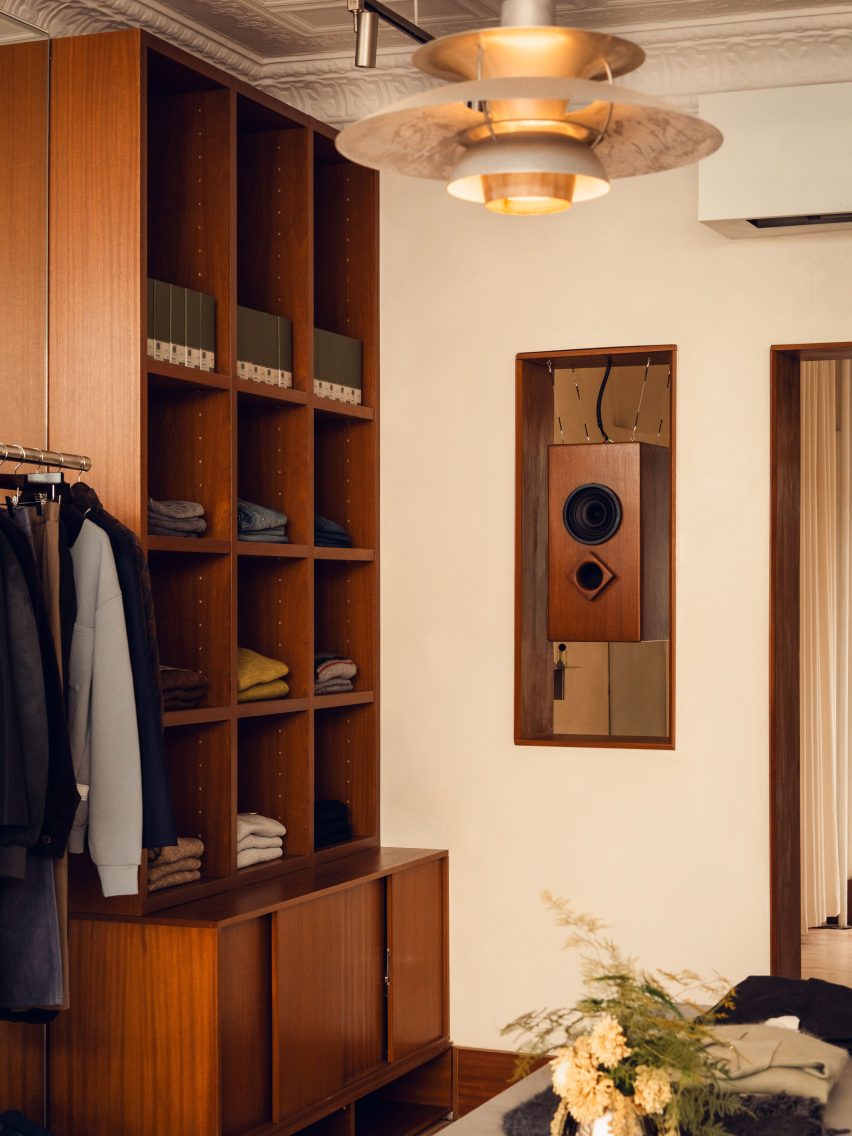
Shkurti's custom millwork appears again as casing for the clothing and goods on display, which Reyer described as contemporary and accessible.
Through a portal door, a metal stand, also created by Wood Steel Stone was designed to function as both a point-of-sale location and a DJ booth for events. To the sides of the portal door, voids were cleared out to put additional speakers that face into the primary retail space.
Above the custom display table is a Louis Poulsen pendant lamp designed to have a vintage look.
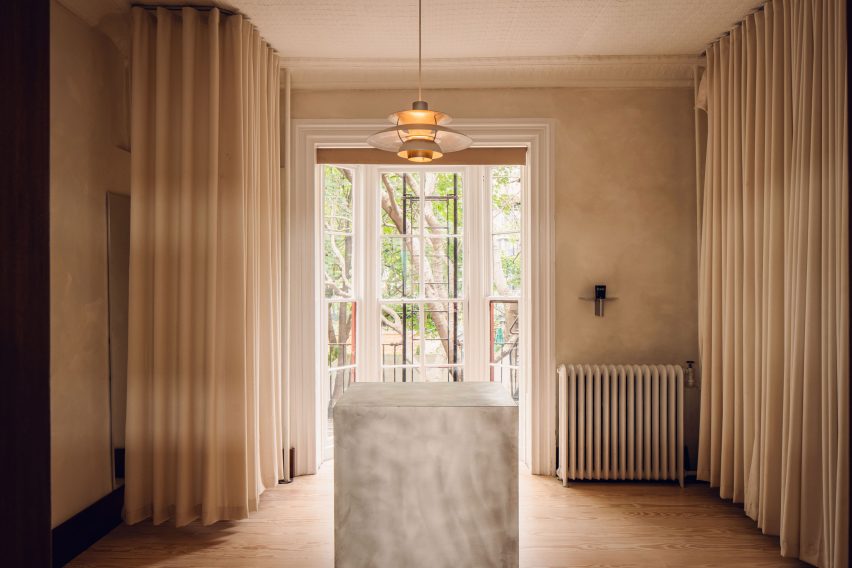
From the upstairs, shoppers can see kids playing basketball on courts across the street, anchoring the location in the neighbourhood.
Other recent stand-out interiors include Federico Stevanovich's studio designed with Nama Studio in Mexico City.
Litening bars are increasingly a site of interesting design. Check out seven listening bars from across the globe.
The photography is by Joe Thomas.