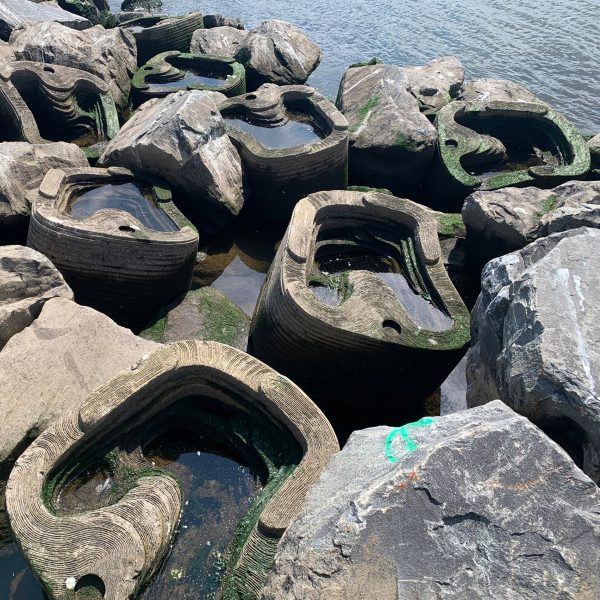
TetraPOT is a greener alternative to concrete coastal defences
Taiwanese designer Sheng-Hung Lee and Malaysian designer Wan Kee Lee have created a concept for a new kind of sea defence that also functions as a set of giant plant pots.
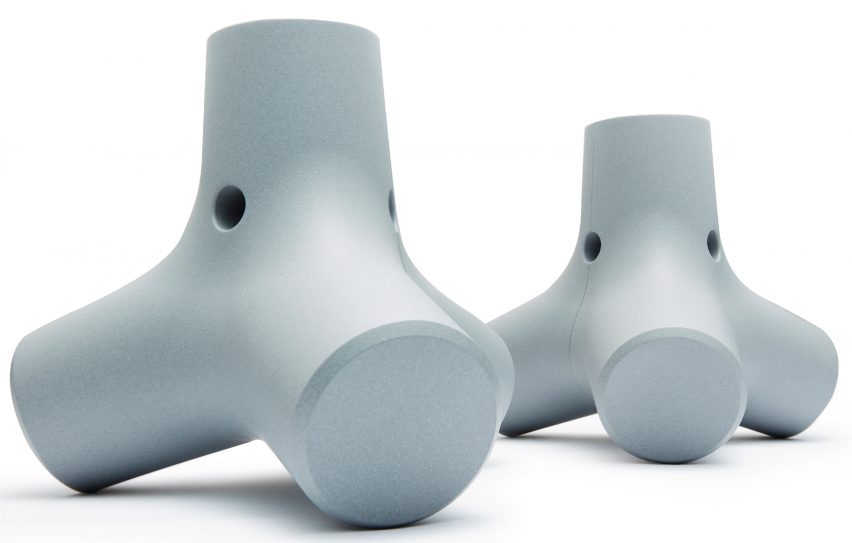
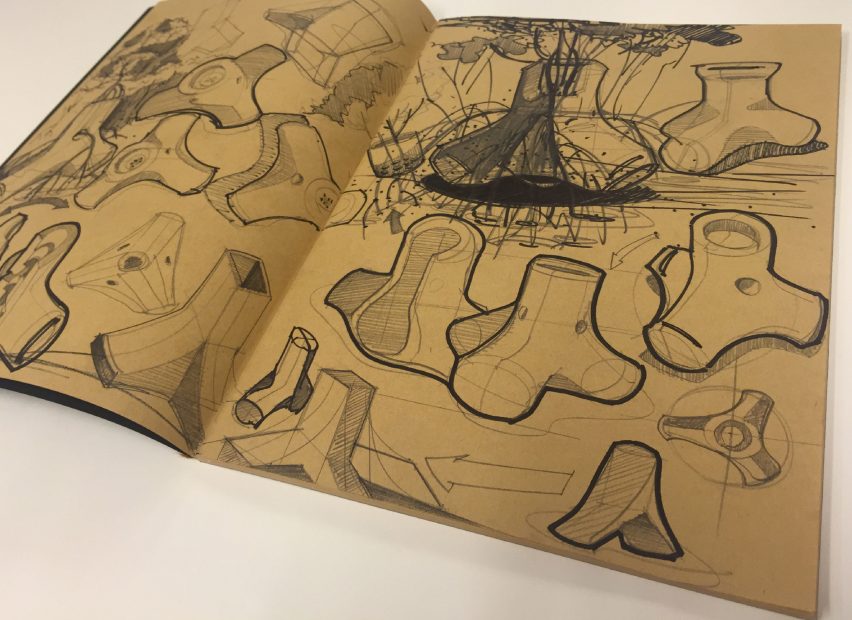
TetraPOT is a similar shape to current defences – often made from large concrete blocks called tetrapods, designed to prevent soil erosion.
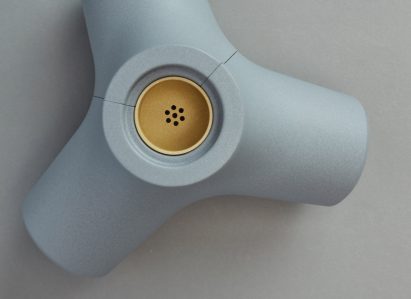
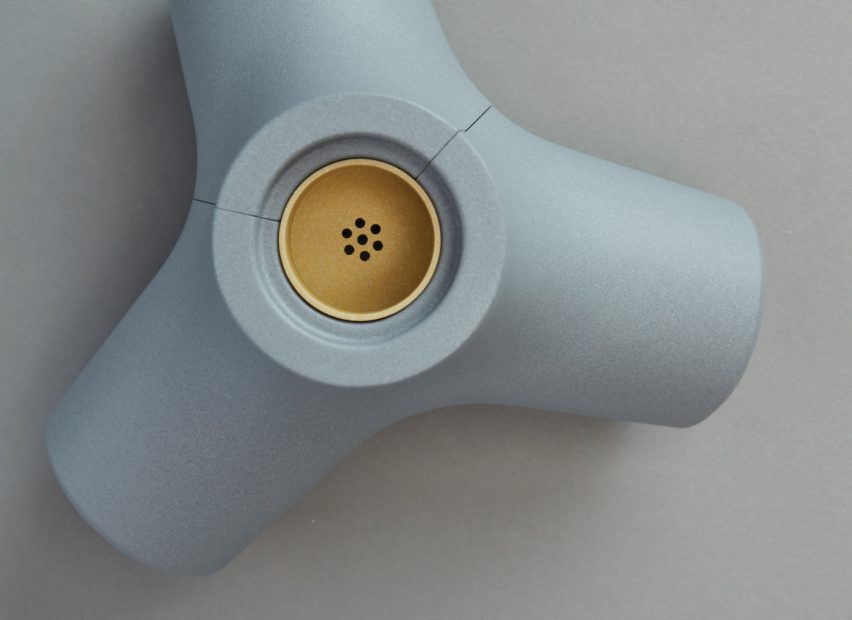
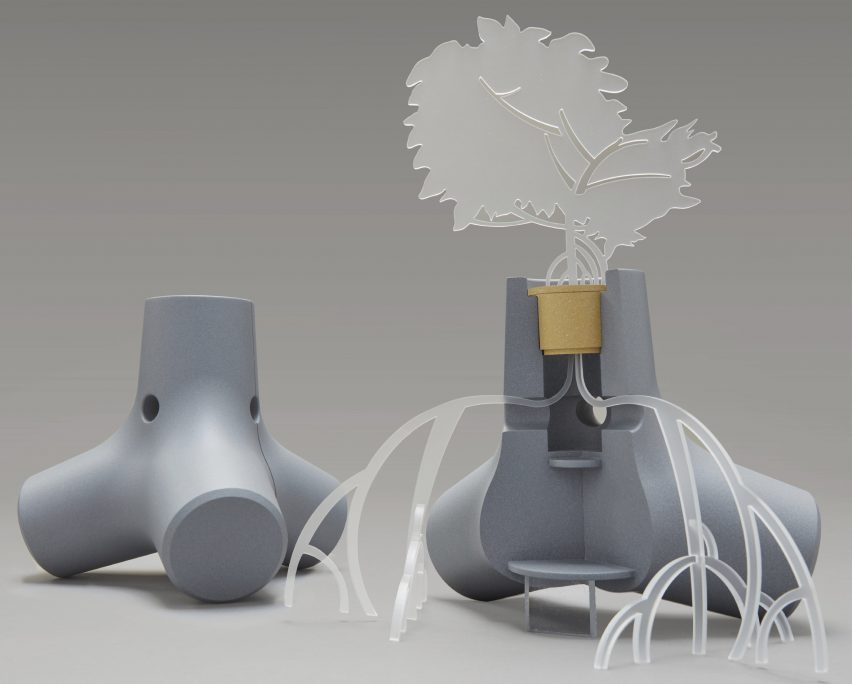
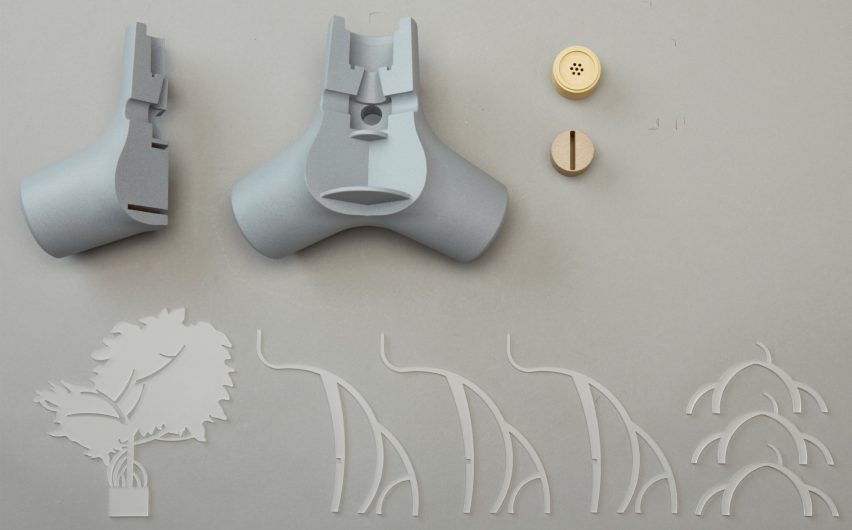
Created as a hybrid between artificial defences and mangrove forests – which are rapidly disappearing as sea levels rise – TetraPOT’s three-pronged concrete shell protects a pre-seeded container, made from compostable material.
Lee describes the design as “a symbiosis between artificial and natural sea defence”.
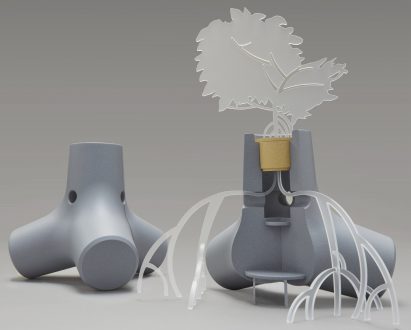
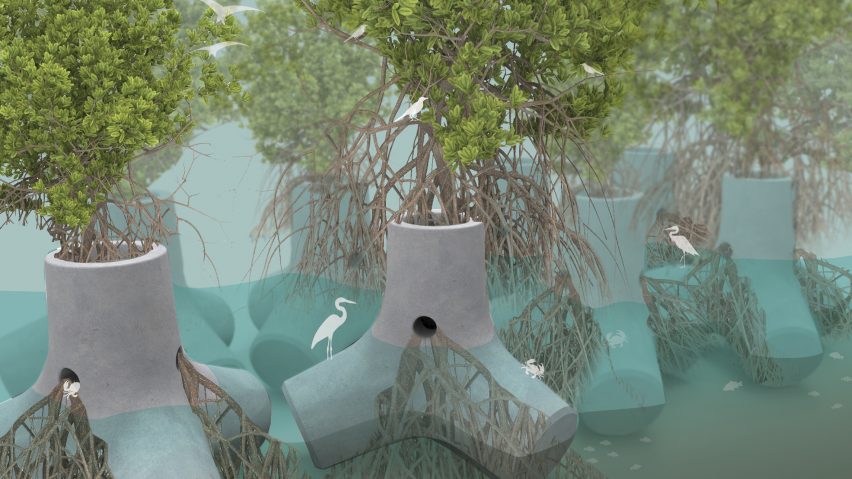
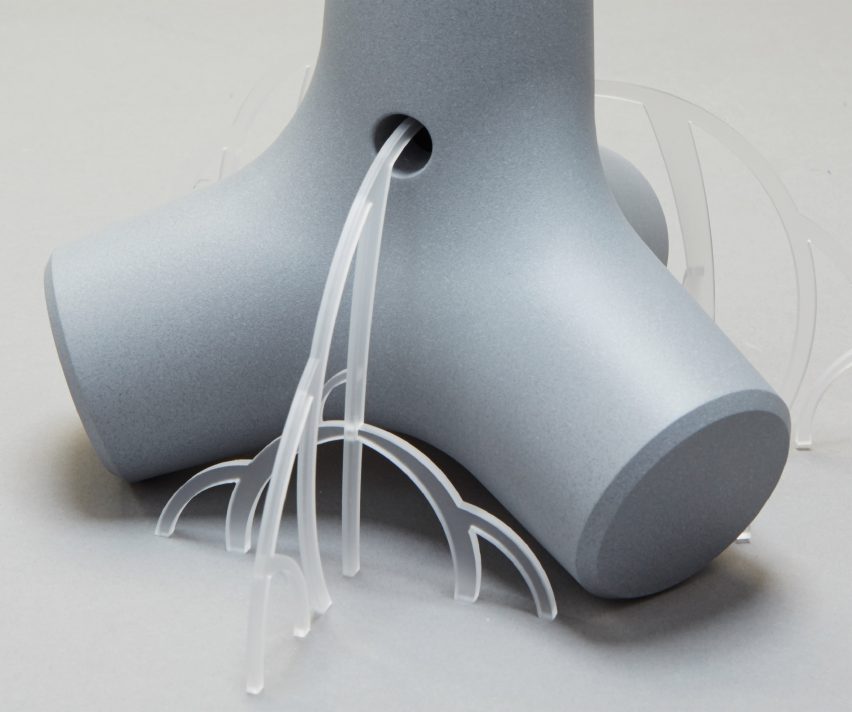
They hope to randomly distribute the one-tonne TetraPOTs along coastlines. As the mangrove seeds inside grow, the designers hope they will eventually create an interlocking barrier made from roots – which can grow through the pot’s pre-drilled holes.
The TetraPOT’s concrete exterior will protect the plants as they’re maturing, while fully grown roots will help anchor each block in place.
The system works on the same principle as naturally occurring mangrove forests, which have complex root systems that help prevent erosion. The designers estimate around 14 months for the roots of each TeraPOT to start interlocking.
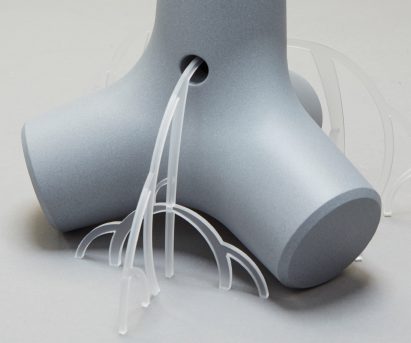
“The shape and placement will enable TetraPOTs to interlock with each other and form a structured web,” said the designers. “The design not only prevents soil erosion, but also helps to protect and create a natural habitat.”
“It’s not only a defence, but also an ecosystem. A home for other living beings.
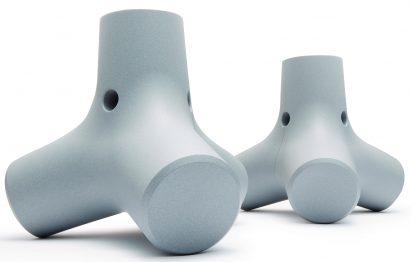
TetraPOT is intended as an improvement on concrete defences, which often move over time with the force of waves and have been criticised for detracting from the natural landscape. It also uses less concrete than typical sea defences, because of the hollow space for mangroves, and takes less time to produce.
The designers are currently still testing the barrier but hope to start distributing TetraPOTs sometime in either 2016 or 2017.
A number of designers are turning their attention towards mitigating human impact on the marine environment. Their ideas have included edible six-pack rings designed to protect wildlife, a floating seabin that sucks rubbish from harbours and an array of floating barriers designed to clear the oceans of waste plastic.
Read more
Recommended stories
Turenscape transforms concrete sea wall into “resilient public space”
Eight Indigenous technologies that could turn the tide on how we manage water
Man-made rock pools at San Diego Bay waterfront double as coastal defences
Observation tower in China topped with moon-shaped viewing platform
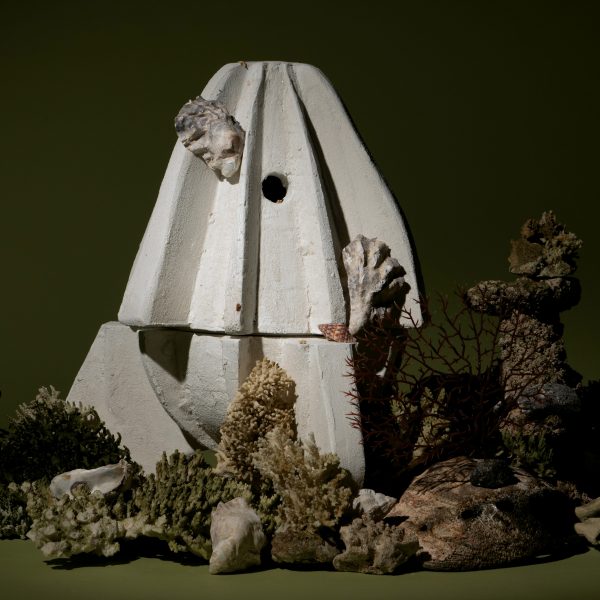
Reef Rocket is a bio-cement reef grown from plant enzymes
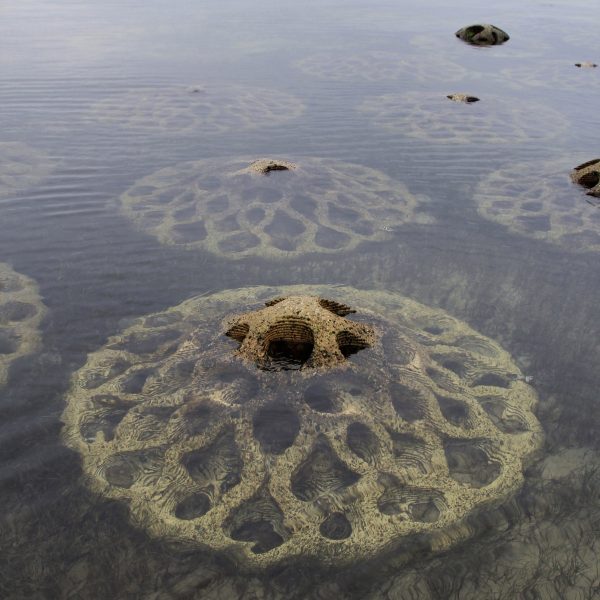
Reef Design Lab crafts Erosion Mitigation Units from recycled oyster shells
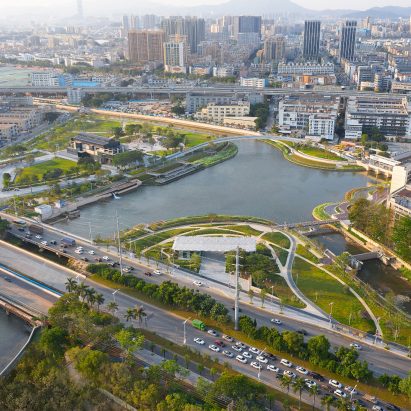
eLandscript converts industrial site in China into an urban wetland