November 5th, 2008

liangzhu-culture-museum-3.jpg

David Chipperfield Architects have completed the Liangzhu Culture Museum at Hangzhou, China.
liangzhu-culture-museum-2.jpg

The museum, which will house a collection of archaeological findings from the Liangzhu period, is part of a new garden town called Liangzhu Cultural Village.
liangzhu-culture-museum-4.jpg

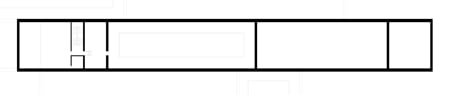
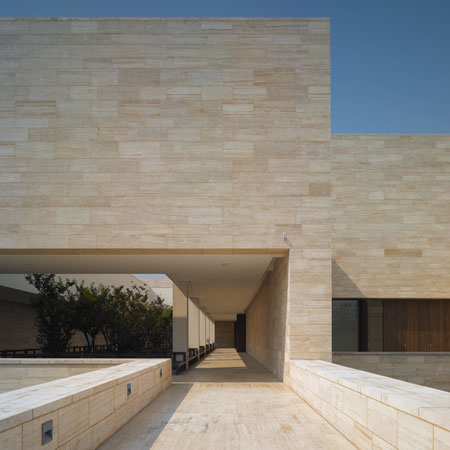
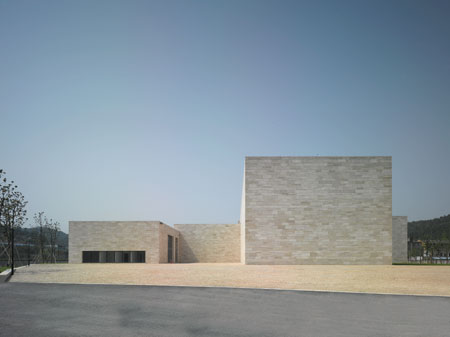
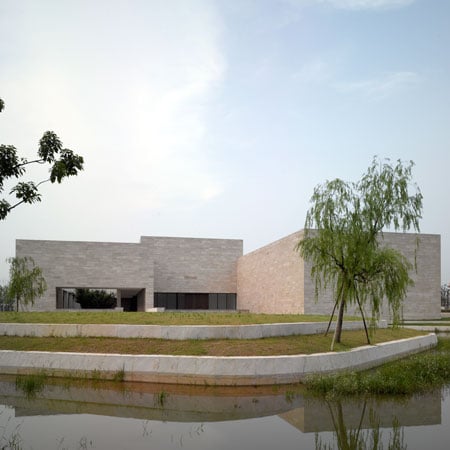
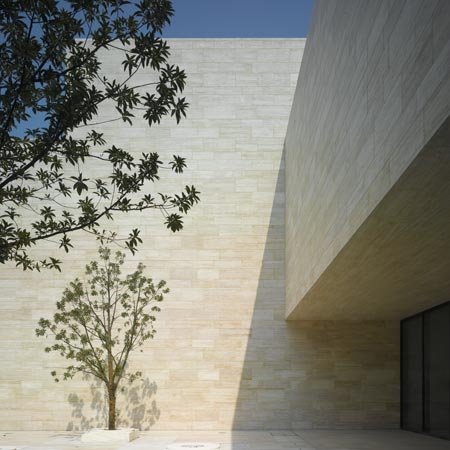
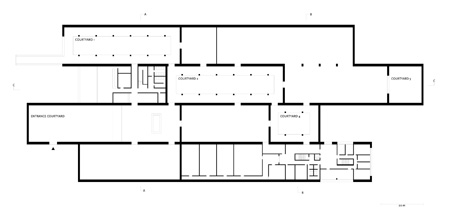
The museum is composed of four parallel bar-shaped volumes, clad in Iranian travertine.
liangzhu-culture-museum-5.jpg

The following is from David Chipperfield Architects:

Liangzhu Culture Museum
Hangzhou, China
2003 – 2008

The museum houses a collection of archaeological findings from the Liangzhu culture, also known as the Jade culture (c3000 BC). It forms the northern point of the ‘Liangzhu Cultural Village’, a newly created park town near Hangzhou.
liangzhu-culture-museum-6.jpg

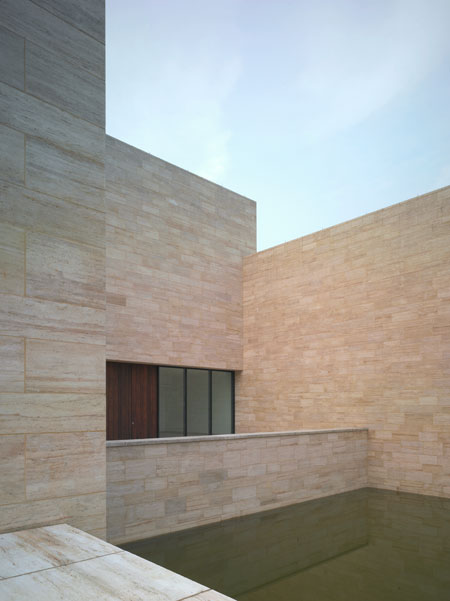
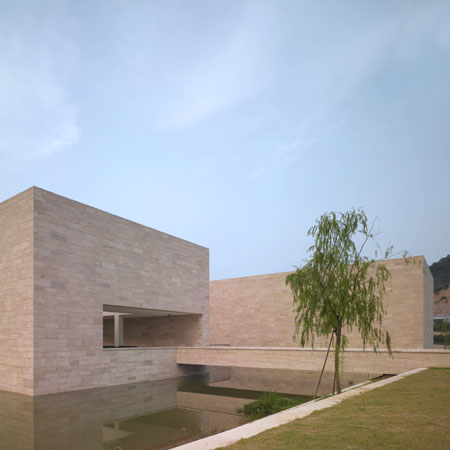
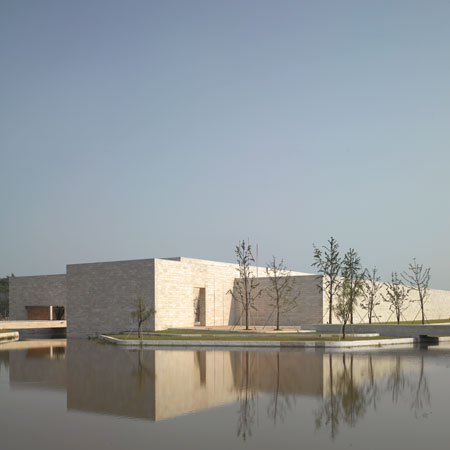
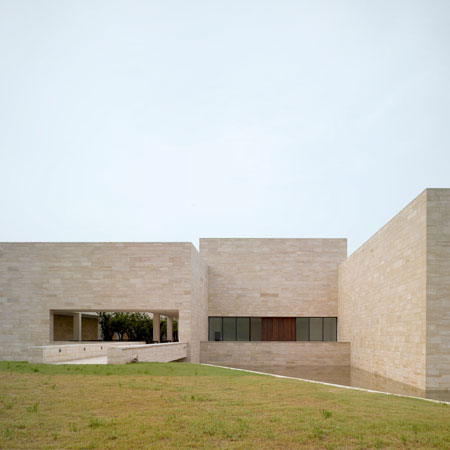
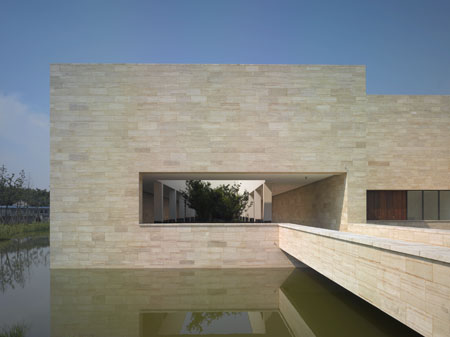
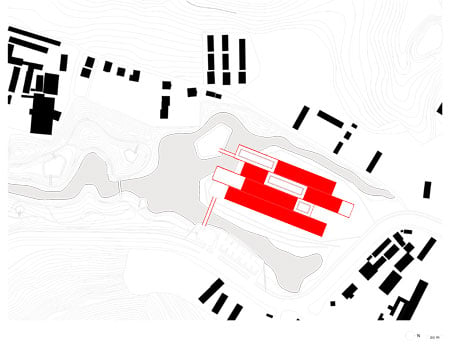
The building is set on a lake and connected via bridges to the park. The sculptural quality of the building ensemble reveals itself gradually as the visitor approaches the museum through the park landscape.
liangzhu-culture-museum-7.jpg

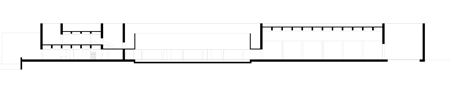
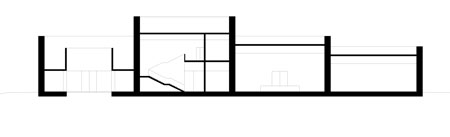
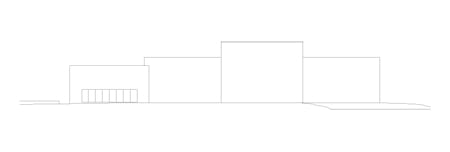
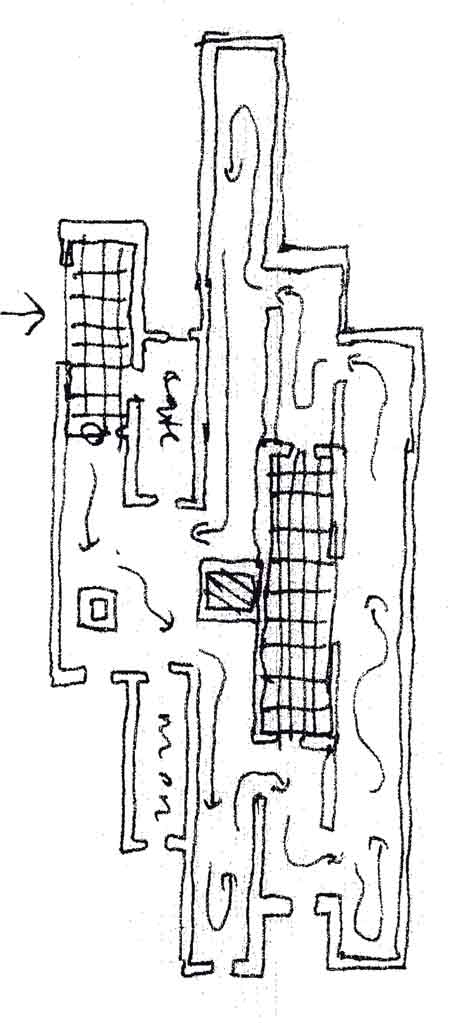
The museum is composed of four bar-formed volumes made of Iranian travertine stone, equal in 18m width but differing in height.
liangzhu-culture-museum-15.jpg

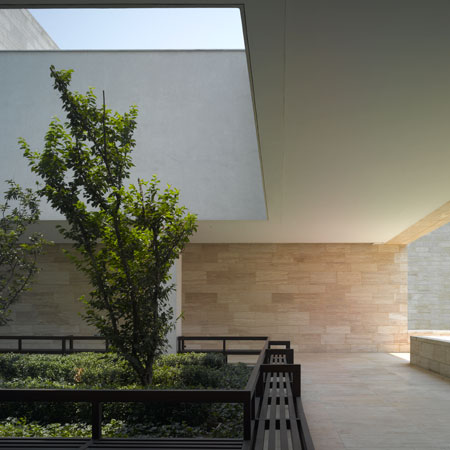
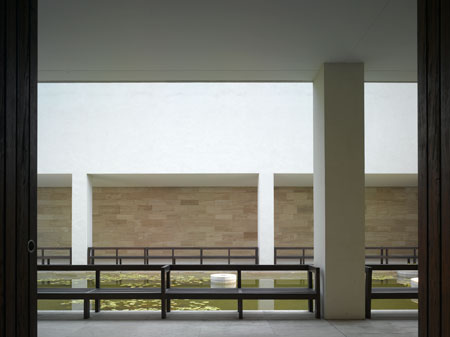
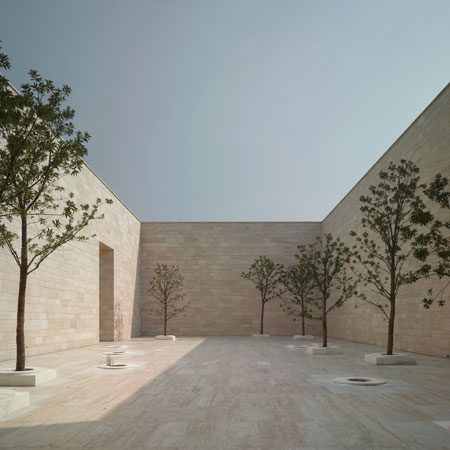
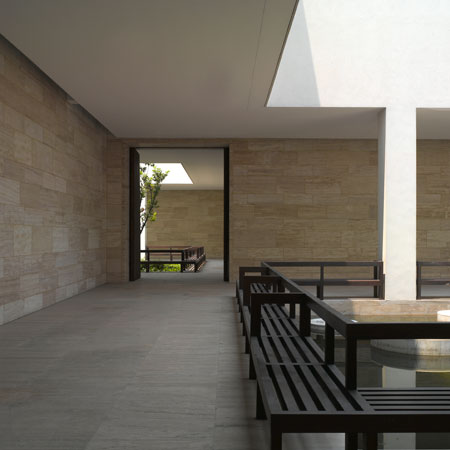
Each volume contains an interior courtyard.
liangzhu-culture-museum-8.jpg

These landscaped spaces serve as a link between the exhibition halls and invite the visitor to linger and relax.
liangzhu-culture-museum-14.jpg

Despite the linearity of the exhibition halls, they enable a variety of individual tour routes through the museum.
liangzhu-culture-museum-9.jpg

To the south of the museum is an island with an exhibition area, linked to the main museum building via a bridge.
liangzhu-culture-museum-11.jpg

The edge areas of the surrounding landscape, planted with dense woods, allow only a few directed views into the park.
liangzhu-culture-museum-10.jpg

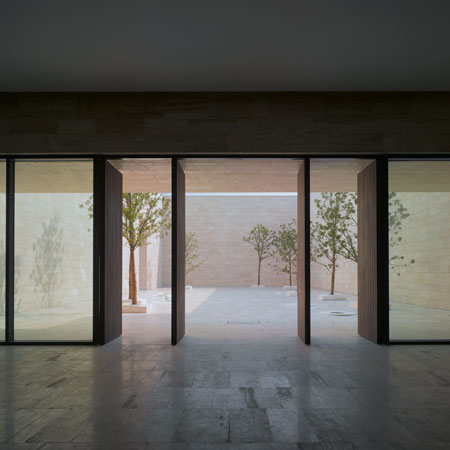
The entrance hall can be reached via a courtyard, the centrepiece of which is a reception desk of Ipe wood, lit from above.
liangzhu-culture-museum-12.jpg

The material concept consists of solid materials that age well, Ipe wood and travertine stone, and extends to all public areas of the museum.
liangzhu-culture-museum-13.jpg

Client: Zhejiang Vanke Narada Real Estate Group Co., Ltd.
Project Date: 2003
Completion: June 2007
Opening: October 2008
Architect: David Chipperfield Architects
Principal: David Chipperfield
Director: Mark Randel
Project Architect: Annette Flohrschütz
Project Team: Libin Chen, Marcus Mathias, Christof Piaskowski, Arndt Weiss, Liping Xu
Gross floor area: 9.500 m²
Landscape Design: Levin Monsigny Landschaftsarchitekten
Exhibition designer: Guangdong Jimei Design and Engineering Co.
Graphics: Ute Zscharnt in collaboration with SV Associates, Andrew Mark Lawrence, Nancy Chen Si Min
Local Architect: ZTUDI The Architectural Design and Research Institute Zhejiang
University of Technology
Photographs: Christian Richters
david-chipperfield-architects-drawing-2.jpg

david-chipperfield-architects-drawing-5.jpg

david-chipperfield-architects-drawing-3.jpg

david-chipperfield-architects-drawing-4.jpg

david-chipperfield-architects-drawing-9.jpg

david-chipperfield-architects-drawing-10.jpg

liangzhu-culture-museum.jpg


Posted by Matylda Krzykowski

33 Responses to “Liangzhu Culture Museum by
David Chipperfield Architects”

  1. HouseCat Says:

    So little “culture” for a culture museum.

  2. rodger Says:

    lovely restrained modernism at its best… though earring on the side of bland.
    nice choice of stone.

  3. One Says:

    Is modernism a minimalism and Fash(0n)ism and culture…?

  4. Alexander Says:

    Too bad there are no people there.

  5. ivan Says:

    muy del estilo de campos baeza

  6. mr. me Says:

    Minimalism has become a meaningless kind of architecture.

  7. Alejandro Says:

    isn’t that the point of minimalism

  8. Edoardo Says:

    it totally reminds to the Holocaust memorial in Jerusalem and the Berardo Museum in Lisbon
    Please stop this architecture!!!! soon or later every new build in the world will look in the same way!!!

  9. 'emCookies Says:

    It helps to know what it means if you picture a completely different type of building next to it. This building says “enduring, respectful, quiet, polite, solid.” It is a kind of backdrop for things as a museum, so that makes sense. The interior courtyards are quite nice. The other photographs of the exterior are like of post-disastrous flooding news photos — look how high the water was! Gasp.

  10. iamreply Says:

    yes yes. this makes sense. i like!

  11. fischer Says:

    “Liangzhu” is very famous story in China,But we haven’t see any culture in this museum.it could be any place….

  12. Tyler Says:

    It incorporates so much that I hate about modernism, but some of these photos are so beautiful, I can’t help but be captivated by it.

  13. yauhollye Says:

    Looks like a very rich & delightful spatial experience. Great to see that the Chinese are willing to embrace an architecture of true substance….at last

  14. Indra Lim Says:

    I thought it’s somewhere in europe………

  15. Matt Says:

    True, cookies, a nice polite solid backdrop to museum pieces. I like the seating around the courtyards. Reminds me a little of the vast spaces that you move through when walking through the forbidden city

  16. nick Says:

    Why landscape round the edges with weird, limp grass? It rather detracts from some nice forms.

  17. Edoardo Says:

    Indra and Fischer are totally right.
    It could be everywhere, where is the link with the place it is built in?
    Modern Architecture is like Zara or H&M, the “casual” wins, and everything else disappears…

  18. Nigel Yang Says:

    I would like to say wow, although this might seem common to most people. Considering the situation here in China, even somewhere as open as Shanghai, Peking or Hangzhou, it is still not easy to persuade people to accept modernism.

    In my point of view, this one is just an exception in China, and i’m afraid, still it is not the final appearance of the museum, as someone has already mentioned above, there needs to be contents, objects, exhibitions, signposts, administrators, visitors, etc. All these may mean trouble to the building, cuz the contents are not designed as a whole thing. The landscape looks a bit weird, unfitted with the building, and the architect would say he doesn’t have the right to administrate the greens in the project. This is the fact here, architecture is broken into pieces. What a pity.

    Still, I would like to say, nice project.

  19. hendrix Says:

    it looked better in the renderings… but anyway, still nice.

  20. Guan Says:

    Maybe it is polite, but not welcoming.
    I can’t see any design response to the Liangzhu Culture and local climate of Hangzhou.
    It is just simply another minimalism product by Chipperfield, as those buildings in Europe.

  21. LOW Says:

    Chipperfield is wicked cool

  22. sc hu yl er Says:

    Not particularly daring, but pretty tasteful. Not all these perspectives are very flattering though.

  23. *MIRTEC* Says:

    typical for chinese culture ;-)

  24. El Greco Says:

    Refreshingly restrained.

    True, there are no hanging red lanterns to indicate “CHINA”, but the lake, the bridge and the courtyard all reference Chinese architecture without being irritatingly ironic in a Post-Modern way.

  25. Farris Says:

    Who knew Chipperfield was doing Meier?!?!

  26. niels Says:

    very monumental, heavy, ever enduring, a sort of new-built ruin. It reminds me of Louis Kahn’s work in a way. I think there’s a lot of cultural references in the work, they’re just not literally which only makes it better for me.

  27. Fling Says:

    Sminimal

  28. Jim Says:

    BTW
    Edoardo, I’m 100% with you.

  29. yung Says:

    Just adding some Chinese on the walls will do…

  30. Sumit Kumath Says:

    cuboid structure

  31. Ben Says:

    extremely beautiful and very nice detailing …

  32. Sumit Kumath Says:

    Very good architecture

  33. hernindya Says:

    feel so cold.it could be placed anywhere in the world.no china scents/ aura smells here.why the clad comes from iran?un-contextual piece of work.

Submit a comment

See our comments policy