web tracker

Flower Street BioReactor by Emergent

flower-street-bioreactor-by-emergent-01.jpg

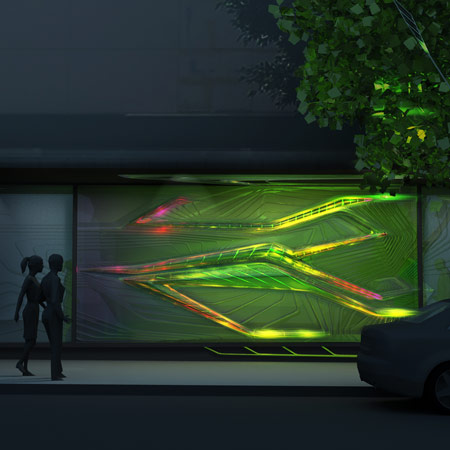
Los Angeles architects Emergent have designed an installation filled with green algae that produce oil by photosynthesis.
flower-street-bioreactor-by-emergent-05.jpg

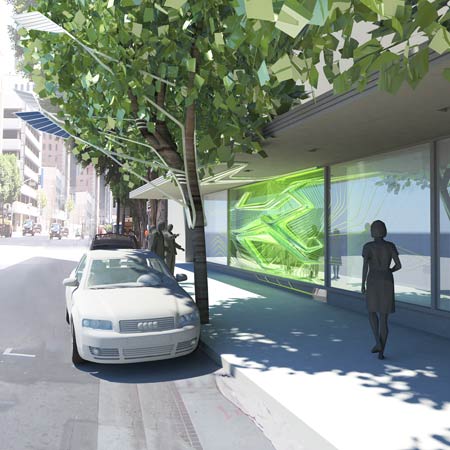
The Flower Street BioReactor will be made of transparent acrylic and contain LED lights that vary in colour and brightness to maintain ideal conditions for the algae.
flower-street-bioreactor-by-emergent-01a.jpg

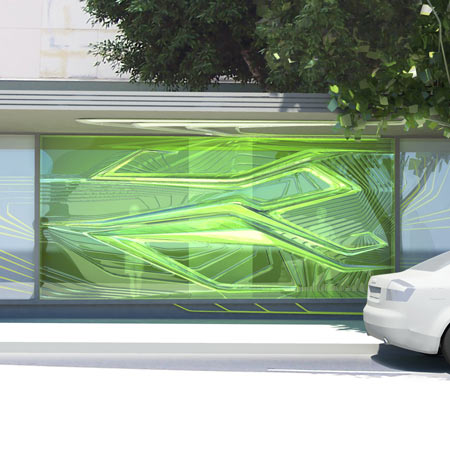
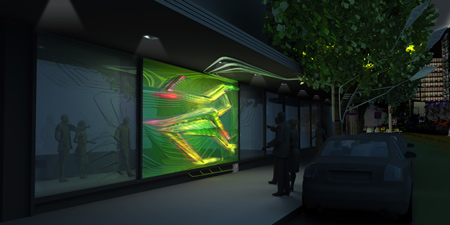
The installation, which will be set up in a shop window on a Los Angeles street, was designed for the Department of Cultural Affairs to raise awareness of alternative fuels. It is intended for completion by 2010.
flower-street-bioreactor-by-emergent-04.jpg

Here’s some more information from Emergent:

Flower Street BioReactor
Los Angeles, 2009

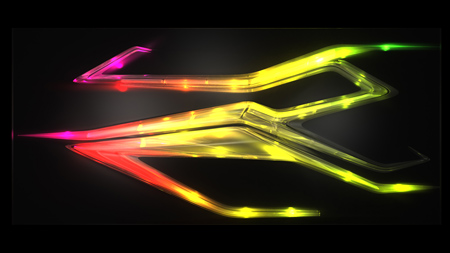
Our point of departure for this project was to engage the nascent cultural paradigm shift from thinking about energy as something which comes magically from distant sources to something which can be generated locally in a variety of ways. Our goal was not, however, to undertake an engineering experiment, or to simply express material processes, although this is certainly one dimension of the project. Our primary goal was to create a sense of delight and exotic beauty around new technologies by decontextualizing them and amplifying their potential atmospheric and spatial effects.
flower-street-bioreactor-by-emergent-07.jpg

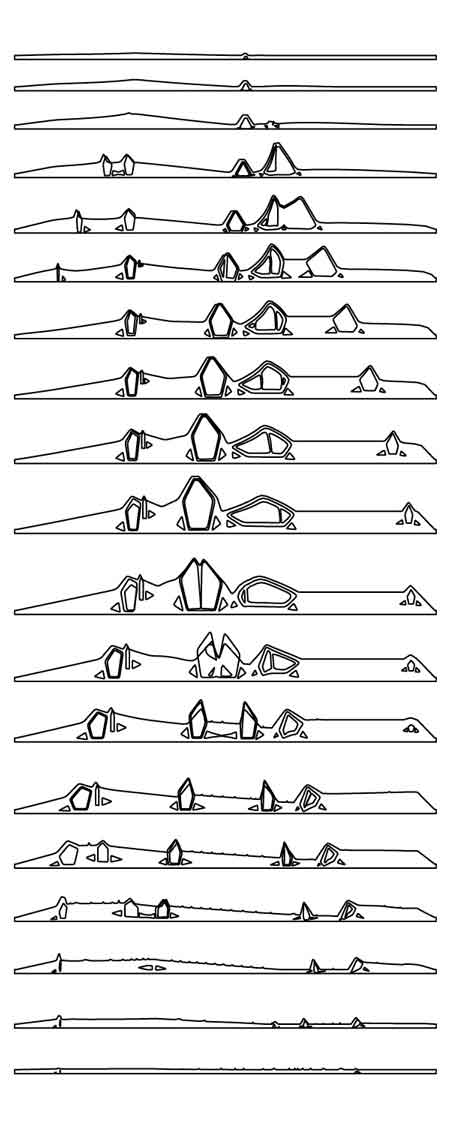
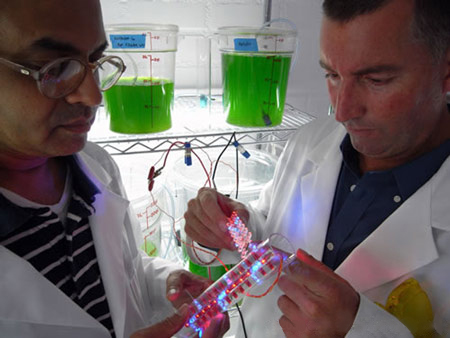
The project is an aquarium-like bioreactor inserted into the facade of the building (our given site), which contains green algae colonies that produce oil through photosynthesis. The aquarium is made of thick transparent acrylic, molded to create the intricate relief on the front. This relief tracks along with and supports an internal lighting armature which is based on the Bio-feedback Algae Controller, invented by OriginOil in Los Angeles in July of 2009. This new type of bioreactor uses tuned LED lights which vary in color and intensity to support algae growth at different stages of development, maximizing output. According to OriginOil, “this is a true bio-feedback system… the algae lets the LED controller know what it needs as it needs it, creating a self-adjusting growth system.” At night, when this system intensifies, it generates a simultaneously urban and jungle affect: glittery reflections on acrylic combine with an eerie élan vital of glowing algae.

flower-street-bioreactor-by-emergent-08.jpg

A solar array, used to collect energy during the day, is spirals and winds up into the branches of an adjacent tree, jungle-style. This energy will be stored in a battery and used during the night to run the various systems.
flower-street-bioreactor-by-emergent-09.jpg

Designer: EMERGENT/ Tom Wiscombe, LLC
Client: Dept. of Culture and the Arts, LA (DCA)

Type: Public Art Installation for 2010
Floor Area: N/A

Design Team: Tom Wiscombe
Bin Lu
Chris Eskew
Ryan Macyauski

Status: In Planning
flower-street-bioreactor-by-emergent-10a.jpg

Above image courtesy of OriginOil.

One Response to Flower Street BioReactor by Emergent

  1. MichaelV says:

    this has to be the least effective way of producing vegetable oil

  2. heath says:

    and, where on flower street are you putting this, thing?

  3. ste says:

    one of zahas early 2k facades can make oil now? wow… impressed! ;-)

  4. bill says:

    Wonder how much oil it produces in relation to the price and formal extravagance . Photsynthesis is a highly rational process, while this doesn’t look very rational by my opinion.

  5. KJS says:

    I’m not understanding how a “shift from thinking about energy as something which comes magically from distant sources to something which can be generated locally in a variety of ways” goes together with creating “a sense of delight and exotic beauty around new technologies by decontextualizing them and amplifying their potential atmospheric and spatial effects.”

  6. gab xiao says:

    can’t this dude produce anything else but the same shape, over and over again?…

  7. nik says:

    I think there’s something refreshing from taking a performative approach to public art. It explores a certain way of implementing a complete and integral system on a small scale. And of course efficiency would improve with lowered formal intent, but the whole point is that it’s a billboard, and supposed to draw attention to itself.

  8. archcritic says:

    they are really obsessed with this ONE form…..

  9. yaniv says:

    i cant believe that you have the nerve to make such comments and not have a clue about design… This is fantastic, it infuses design and environment!! well done.

    Photobioreactors are the most efficient way of producing biofuel! they produce around 200 times more oil/hectare then any other form of biofuel production method. Those of you with no clue… go read something. Emoting expertly does not mean you are an expert!

  10. teddy taset says:

    @yaniv
    sorry, but i guess it doesn’t make a lot of sense to attach solar cells to a tree that will cast shadow on these cells, no?
    next to that – nice form (again).

  11. josh says:

    Would be interesting to see an engineer design this and compare the results. Think the engineer would win…

  12. niwar says:

    good work go on

  13. yaniv says:

    Teddy,

    This seems to me to be a concept design, there by implying that the final form can and will probably adapt. I mean that in relation to the positioning of the PV cells.

    One other point to be made is that pv cells act much like leaves in that they are light dependant. When one looks at a tree one can see that there are hundreds of leaves that distributed in complex fashion in three dimensions, not all of which recieve direct light. The latestes generation of PV cells act in this same fashion in that they are able to efficiently create energy even though they do not recieve direct light. Refer to FX magazine Janurary 2009 p71 DYE SOLAR CELLS (DSC) or directly look at http://www.dyesol.com

Leave a Reply

Your email address will not be published. Required fields are marked *

*

You may use these HTML tags and attributes: <a href="" title=""> <abbr title=""> <acronym title=""> <b> <blockquote cite=""> <cite> <code> <del datetime=""> <em> <i> <q cite=""> <strike> <strong>