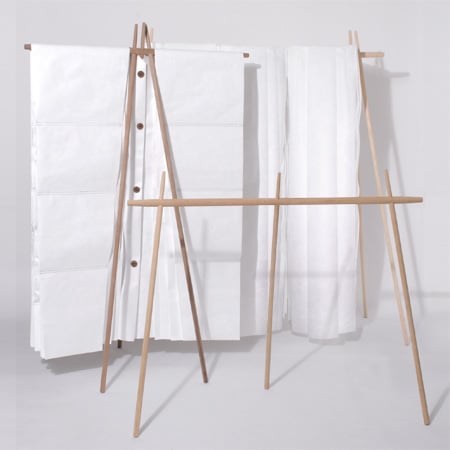
Haori Hakama and Yukuta by NOI
DMY Berlin 2010: at DMY Berlin this week Berlin designers NOI present their first collection of furniture, comprising simple wooden trestles and sewn Tyvek pockets.
The series of temporary clothing storage is inspired by the appearance of Japanese kimonos when presented on a kimono rack and the storage bags found in their sleeves.
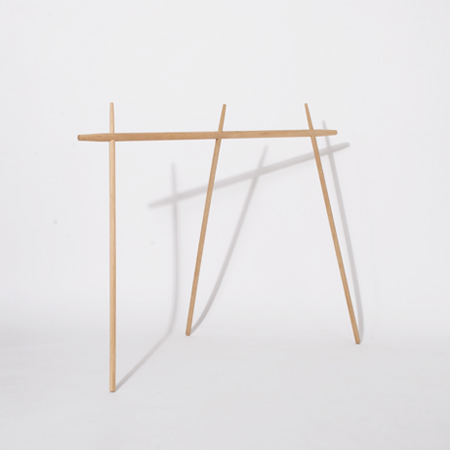
Above: Hakama
The trestles are available in oak, ash or walnut and can be self assembled.
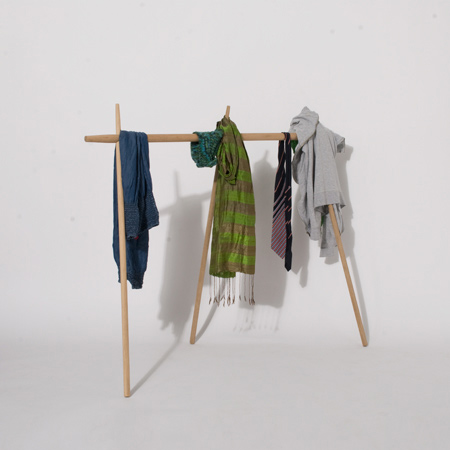
Above: Hakama
The pieces are currently on display at the Youngsters exhibition at DMY Berlin.
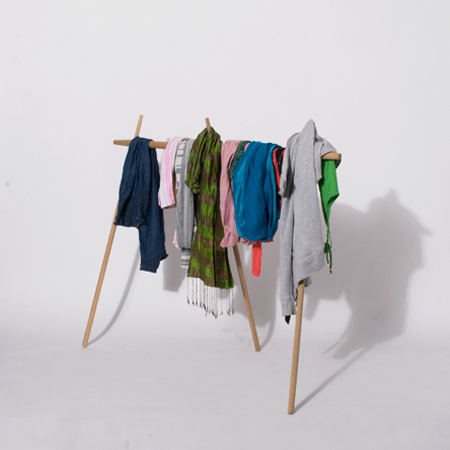
Above: Hakama
DMY Berlin continues until 13 June.
Here is more information from NOI:
Haori
The traditional Kimono is characterised by its long sleeve bags – these are a form of sack used as (secret) storage for personal utensils.
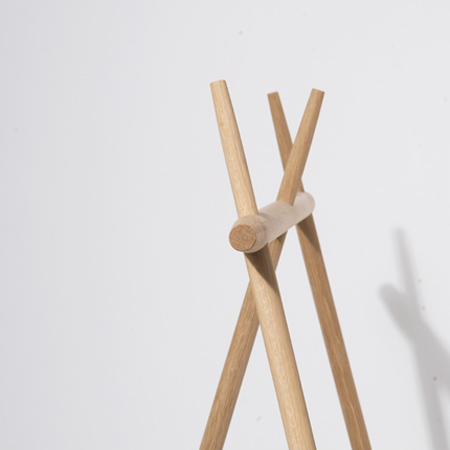
Above: Hakama detail
This expressive image of the Kimono, which is often presented on a typical Kimono rack was one of the starting points of our creative work.
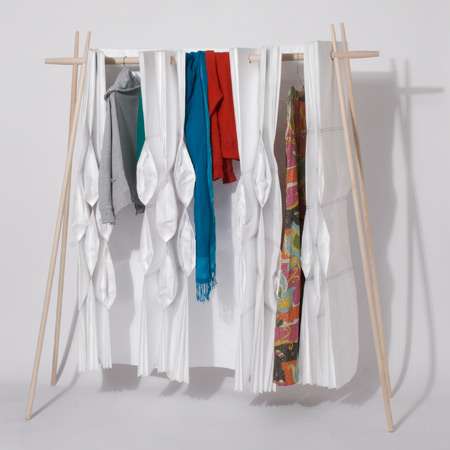
Above: Haori
The series of spatially imposing objects serve for temporary storage and are composed of a minimal amount of materials.
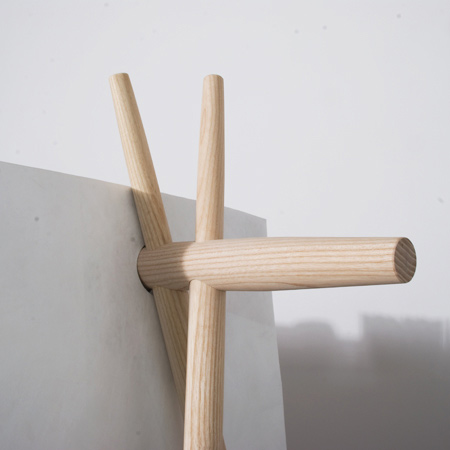
Above: Haori
The feathery flat bag system is made from paper-like Tyvek, which is layered, folded and sewed together to gain volume when filled.
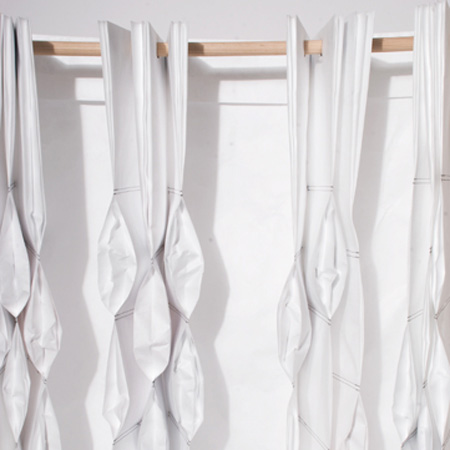
Above: Haori
The minimal wooden structure consists of a simple plug connection and can be assembled by the user on-site.
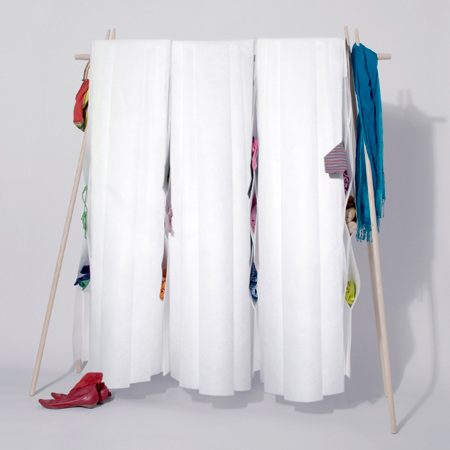
Above: Haori
The minimal wooden structure consists of a simple plug connection and can be assembled by the user on-site.
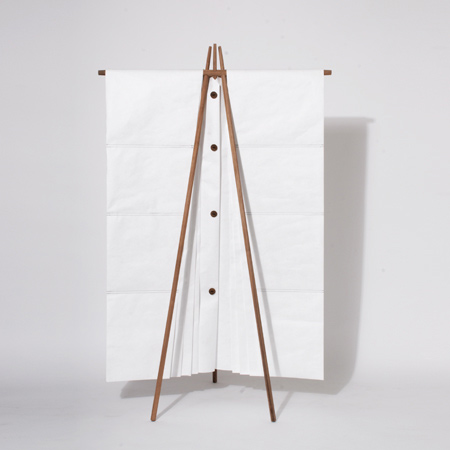
Above: Yukuta
Hakama
Hakama is the smallest piece of the series. It serves as a neat clothes rack and is especially dedicated to those who use to have a mountain of worn but not dirty clothes on the floor. Hakama is made of oak tree, but also available in ash and walnut.
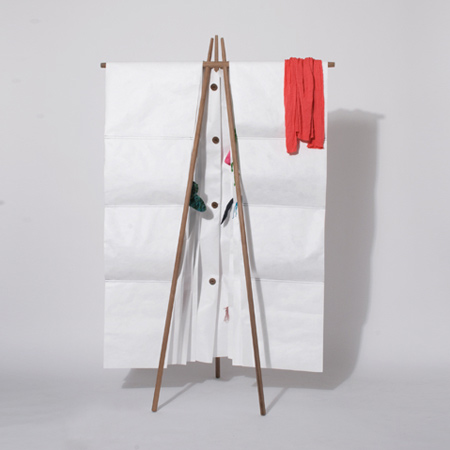
Above: Yukuta
Yukata
Yukata is a coat rack with some additional space for accessories, underclothing or shoes. Clothes are protected and hidden behind the bag system made from Tyvek. Yukata's structure is made from ash tree but also available in oak and walnut.
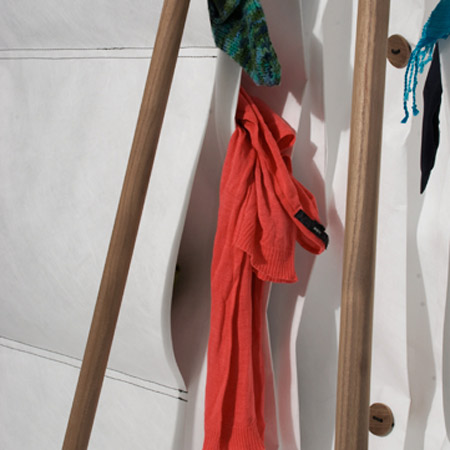
Above: Yukuta
About NOI
After several years of practical experiences Ines Königsmann and Nora Schmidt, both graduates of Bauhaus-Universtität Weimar, founded studio NOI and moved to the atelierhouse Heikonaut in Berlin Lichtenberg in 2009.
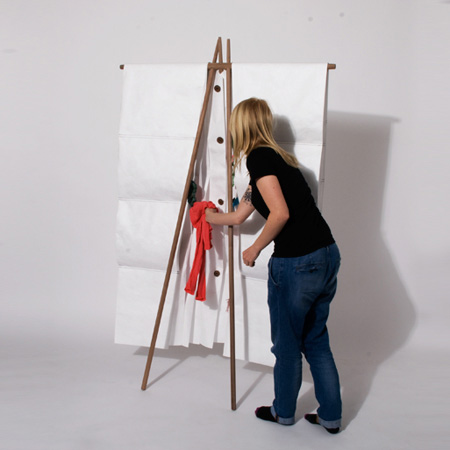
Above: Yukuta
See also:
.
 |
 |
 |
| Branch Out by Studiomama for TEN |
Vaisselier Système D by Matière A |
More furniture stories |