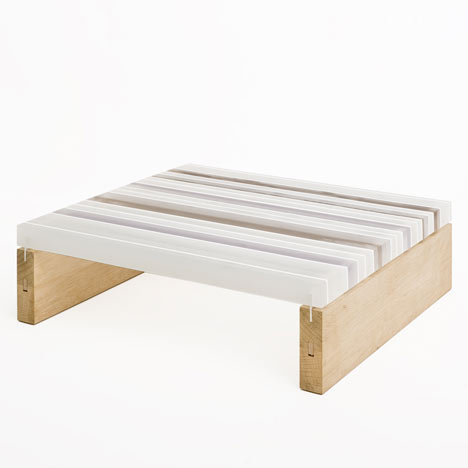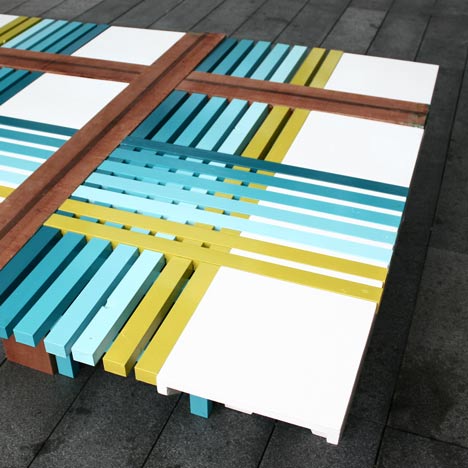
Brazilian designer Brunno Jahara of Jahara Studio has created a collection of furniture made using scrap wood.
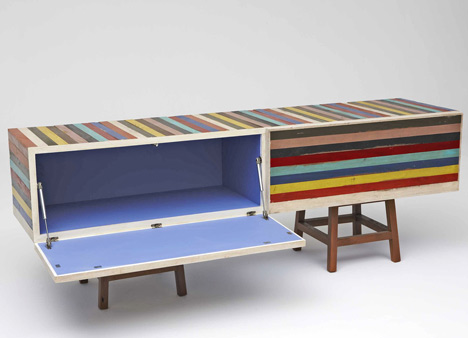
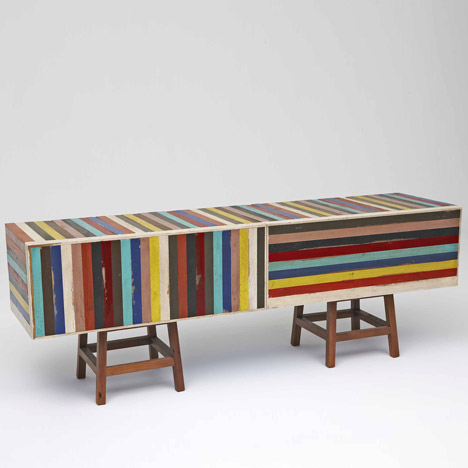
Called Neorustica, discarded strips of wood have been painted in bright colours and joined together to form cabinets.
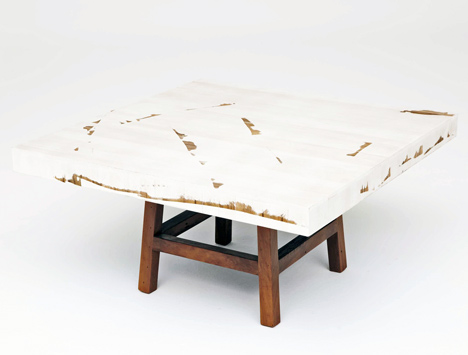
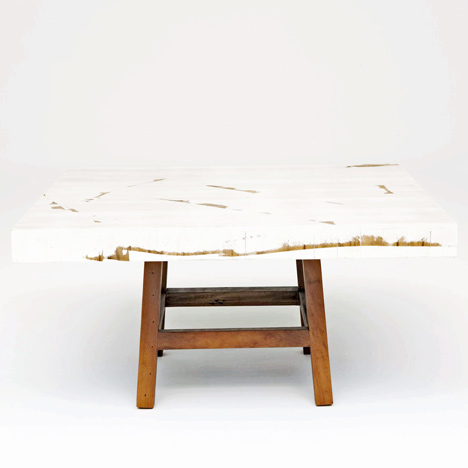
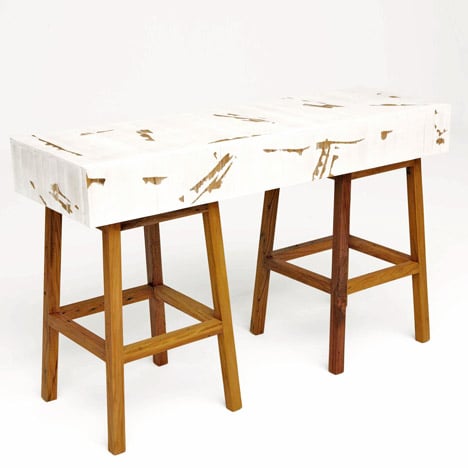
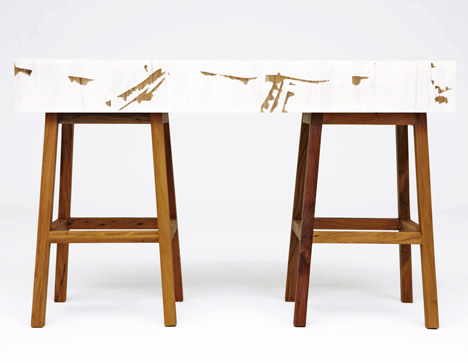
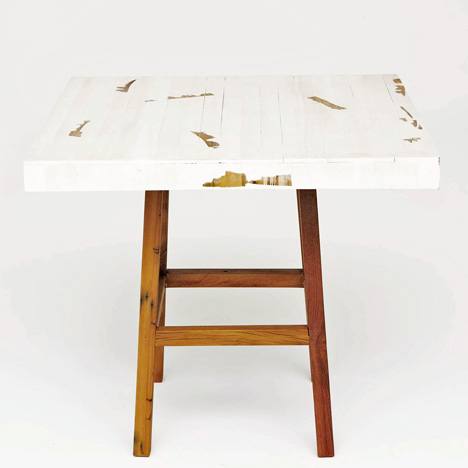
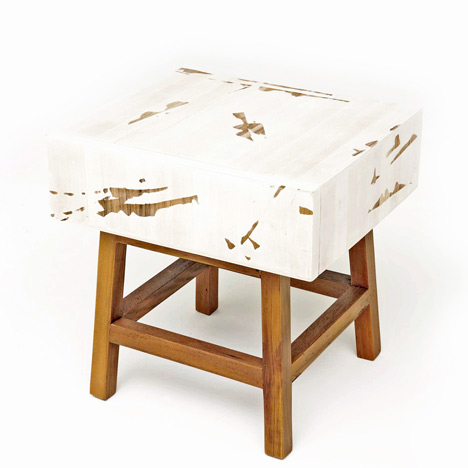
The collection also includes tables, desks and benches which have been painted white, with slithers slivers of the wood beneath showing through.
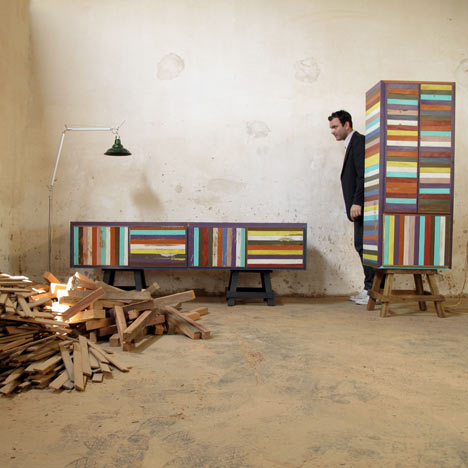
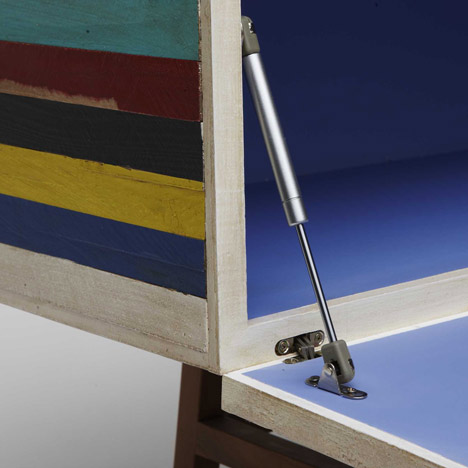
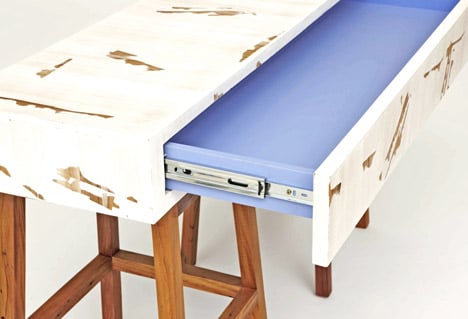
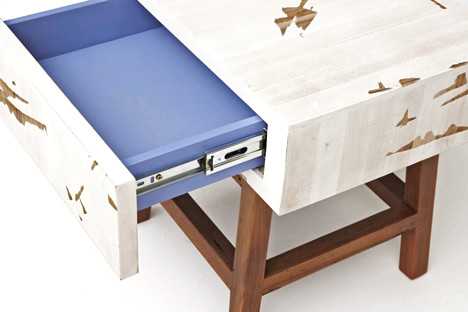
The cabinets and desks are finished on the inside with a laminate made of recycled PET bottles.
Jahara's collection is an homage to Brazil's rural traditions and culture, with the bright colours, and each piece has been named after a Rio de Janeiro shanty town.
The following information is from the designer:
NEORUSTICA FURNITURE COLLECTION
JAHARA STUDIO Brazil
Brazilian designer Brunno Jahara has just finished a collection of furniture made out of scrap wood in Brazil, called Neorustica. It pays homage to the country’s rural background and has the strong colors of the brazilian culture.
This is a collection of 10 items that function as containers, tables and benches. Each piece is named after a shanty town or favela in Rio de Janeiro, which is Jahara’s hometown. The designer wants to highlight the living condition of people that moved from the countryside into big cities searching for a better life (i.e. improvised homes made of scrap).
Using these conceptual elements to develop the pieces, with regards to the materials used, he teamed up with a furniture factory which specializes in working with wood that is left over from construction sites or demolition.
This factory is now launching NDT BRAZIL, an international brand which is committed to working in a sustainable and design conscious way. Specially crafted out of rough wood, the slates are carefully painted in bright colors making every piece unique and full of character due to the natural texture of aged wood.
The result is bridging the distance between object and user, by inviting one to touch and feel the texture of the pieces. The pieces have names such as Vidigal, Rocinha, Dona Marta, Tuiuti, Caricó, Vila Canoa, Uribu and Pavão.
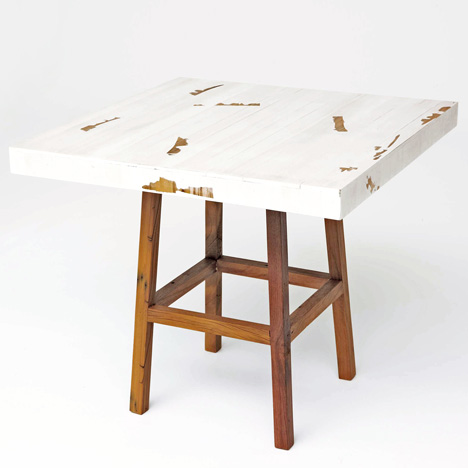
They are built with a feel of improvisation, with low tables and dining tables in two sizes, a vertical and a horizontal cabinet, a compact desk with a long drawer, a bench with a roof and a side table. The varnish chosen is non toxic and water based paints were used.
The inside of each container is made of a special laminate made out of recycled PET bottles. This laminate is both durable and easy to clean.
NDT BRAZIL will also produce another series of furniture by American designer Harry Allen and as well as their own collection designed by owner Ricardo Augusto, an architect from Bady Bassit, Brazil.
NDT will have their international launch at this year’s at the week of Miami Design/Basel and will happen the 29th November at the Ornare Showroom, also in joint venture with ViaLight that will show a new table lamp in aluminum from Brunno Jahara.
See also:
.
![]() |
![]() |
![]() |
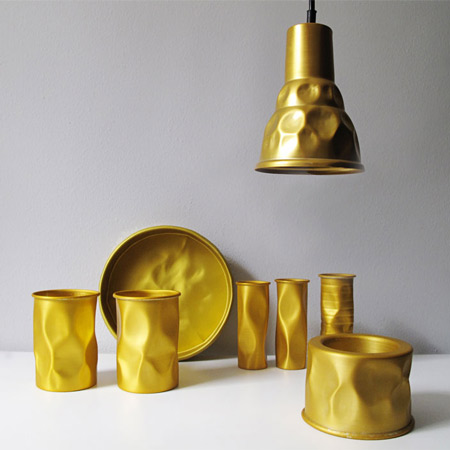
| Batucada collection by Jahara Studio |
PLET Table by Reinier de Jong |
More furniture on Dezeen |


So beautiful. I want them all.
thats what ive been doing at home..but theirs looks much more newer..haha..
brave to make scrapwood furniture when you know it'll have 'Piet Hein Eek' written all over it.
Not sure about the chair-like bases, but the colours are really good
Piet Hein Eek makes really beautiful furniture (form wise as well as colours / materials), but I really think it's unfair to name him as some kind of innovator in doing this. Using scrap wood to make furniture is not at all innovative in this day and age, and claiming that one man owns this corner of production is ridiculous.
If they think it's pretty, they should run with it too.
I'm a bit more curious about how one makes a 'slither' of wood. [sic]
Piet Hein Eek + Richard Woods & Sebastian Wrong (Wrongwoods for Established & Sons) + Campanas = this. How original. And really, naming a piece of furniture after a Rio favela – is that your added value? If so, I wonder if the forthcoming office suite will be called Complexo do Alemão, now that it's been taken back from the druglords. For how long will the Brazilian poor keep on being exploited by high-end "international" designers and brands?
I just returned from Amsterdam yesterday where I was able to view in person a lot of Piet Hein Eek's furniture, especially at a shop called "The Frozen Fountain" (http://www.frozenfountain.nl/?pageAlias=geschiedenis). The thing that really surprised me about his work was the overall poor craftsmanship of the majority of the pieces I saw. Absolutely no sophistication in joinery etc. And the new material that he uses in conjunction with the "scrap wood" is the poorest quality soft white pine you could find. I didn't see one of his pieces that I think would last long enough to pass down to the next generation. Also, spend any time in Amsterdam and you will see this style of furniture absolutely everywhere. I must have seen this type of "scrapwood" furniture in 50% of the cafes I visited. That being said I think there is definitely room for similar styles, especially if they have the skills to make quality furniture and not just screwed together junk. I also think the use of the random patches of wood on the white pieces are quite attractive overall. I agree with other comments about not being sure of the "chair frames" and both the names of the individual pieces and the collection as a whole are a bit lacking in forethought.
JRH – don't you get it? The paucity in construction and materials is a means of building into their design the very fact that they won't last so the next generation can actually use the broken useless remnants after they've fallen apart to RECYCLE the wood to make new furniture in exactly the same way that Jahara did. Genius! (Oh please don't let there be someone here taking this seriously…)
Meanwhile in praise of Andre Silva's comment above, if the designer, quote: "wants to highlight the living condition of people that moved from the countryside into big cities searching for a better life (i.e. improvised homes made of scrap)", would it be too much to suggest he actually puts his design skills where his mouth is to create simple yet effective affordable furniture to help towards that better life? A more cynical statement I have yet to read. We don't know what their sale price is going to be of course – are they to be seen as practical budget items or high-end designer items for the uber-trendy? I know on which I would place my money…