Massive Attack stage graphic creates “illusion of data being harvested” from audience

London studio United Visual Artists mocks the surveillance software of controversial spy-tech company Palantir in its graphics created for trip-hop duo Massive Attack’s latest run of live shows.
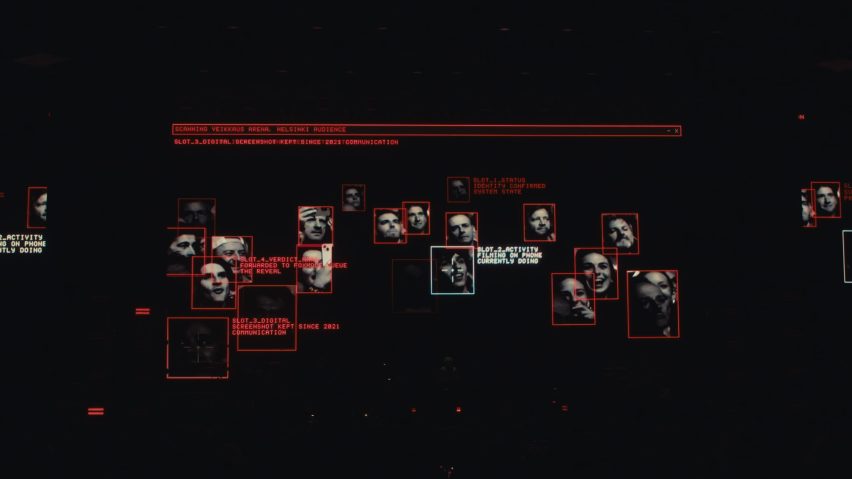
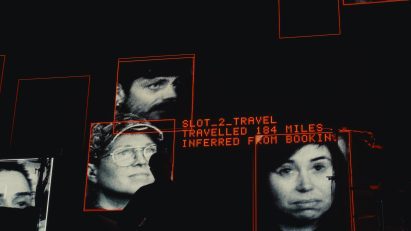
The visuals, originally designed for the duo’s cancelled set at the Primavera festival in Barcelona, use custom-made facial recognition software to pick out audience members in real time and display data about them.
Ranging from geographical descriptors, such as “row 14, seat 22”, to satirical labels including “11 weeks no time off, burnout”, the data itself is fake.
But the visuals, created at the direction of Massive Attack frontman Robert Del Naja and fused with montages by filmmaker Adam Curtis, aim to confront people with just how much personal information Palantir allows private companies and government agencies to compile about them.
“It’s interesting to see how people respond to the live facial detection moment, where we film the audience and create the illusion of data being harvested based on their facial features and behaviour,” UVA’s Matt Clark told Dezeen.
“Some people fully embrace the moment and interact with being a part of the show. Others, you can tell, are a little unsure about what’s happening,” he added. “It’s that tension of enforced digital participation, that uneasy feeling, that to me, sums up the times we seem to be living in.”
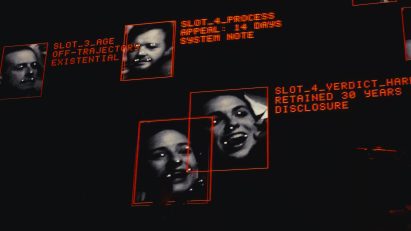
Elsewhere during the set, the same facial recognition picks out “targets” in the crowd, mimicking how Palantir systems are reported to be used in military contexts, such as Israel’s bombing of Gaza, to outsource target identification to AI.
By juxtaposing the simultaneous intimacy and violence of Palantir’s technology, Del Naja said he hopes to “suggest a dark irony to the audience, that any commercial identity could be given access to vast amounts of personal data that is essentially designed to keep people well and alive, while simultaneously creating AI systems that essentially aim to kill people”.
Palantir, which was co-founded by libertarian tech billionaire Peter Thiel and originally funded by the CIA, currently has more than £500 million worth of contracts in the UK alone, including with the National Health Service (NHS), the police and the Ministry of Defence.
In the US, the company’s military and law enforcement systems have already been implicated in several alleged human rights violations – forming the backbone of ICE’s mass deportation drive and being blamed for the accidental US-Israeli bombing of a girls’ school in Iran that killed 168 children.
Since this software is sold directly to governments and large companies, the public has little oversight over how they work – or indeed how they look.
“We don’t have access to those programs; it’s all very opaque,” Clark explained.

That’s why UVA developed a dummy computer interface that attempts to replicate what little we know about how Palantir systems operate and what they can do.
“Typographically, it feels like a digital information board, the sort you might see at a train station or an airport,” Clark said. “It creates the feeling of something functional, even though what you’re looking at is fictional.”
“It’s about creating a feeling of the audience being watched, of information being processed, of a program at work.”
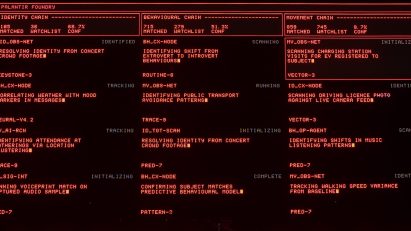
All this fictional data is generated on the spot, allowing it to be localised to the live show’s location by drawing on local consumption and behaviour patterns, enhancing the feeling of watching a real system at work.
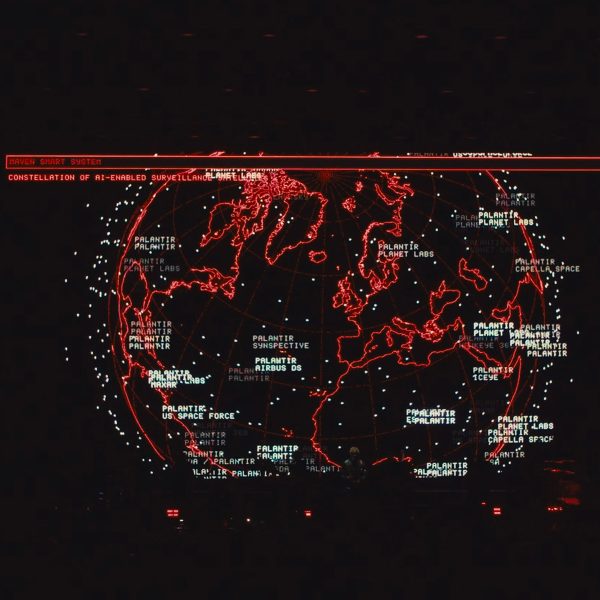
While all the audience data is fake, UVA also visualised real data about the amount of government contacts and private investment flowing into Palantir, and the company’s AI-enabled surveillance satellites, superimposed over a spinning Earth.
Beyond highlighting the scale and functionality of Palantir’s operations, the visuals also foreground the political ideology of the company’s leadership.
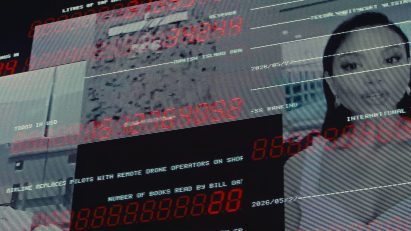
The show starts with videos of influencers, AI-generated by United Visual Artists, in which they recite phrases from the Palantir manifesto recently posted online by CEO Alex Karp.
The manifesto, which members of the UK parliament have compared to “the ramblings of a supervillain”, champions US military dominance and the use of AI weaponry.
Elsewhere, a Thile quote is splashed across the globe, declaring: “I no longer believe that freedom and democracy are compatible”.

However, Del Naja is quick to point out that Palantir is likely only one of many companies working in this space.
“They’re a topical, hi-vis identity representing a wider sector that very likely has less scrutinised, even worse actors,” the Massive Attack frontman said.
“The sector as a whole is simultaneously capturing our personal data and permeating the decision-making processes of the governments we elect; few, if any, of whom have bothered to put this irreversible choice on a ballot paper for citizens to express a view.”
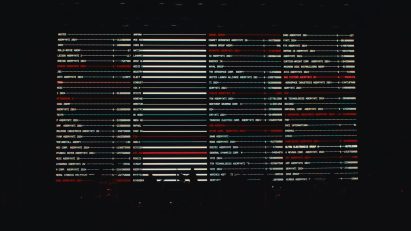
UVA originally created the stage visuals for Massive Attack’s headline show at Primavera Barcelona, but the set was cancelled on the day when a severe thunderstorm rendered several stages unsafe.
The graphics will now have their main-stage moment at Primavera’s Porto edition later this week, after debuting in a smaller capacity in Helsinki (pictured).
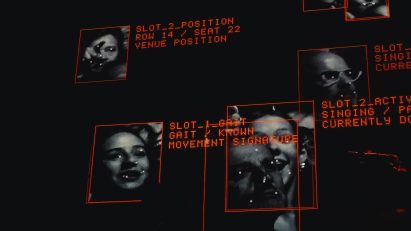
“Climate scientists have warned for decades that severe weather events will become more common,” Del Naja said. “And we see that now quite vividly in live music.”
“The reality of Prima Barcelona, watching infrastructure shake, huge screens swing above your head, i-mag towers untether, steel pegs falling to the ground, damaging instruments and endangering the crew and the chaos experienced by the audience – it brings into sharp focus the need to re-design how major festivals are planned and built.”
UVA has been working with Massive Attack for more than 20 years, creating visual environments for the band’s live tours and exhibitions. Outside of the collaboration, the studio has created lighting installations for Burberry and Sou Fujimoto’s Serpentine Pavilion.
Other set designs recently featured on Dezeen include Stufish’s laser-shooting piano for Dave and Bad Bunny’s Super Bowl stage that was designed as a “surreal journey” through Puerto Rico.
All imagery courtesy of UVA and Massive Attack.
Read more
Recommended stories
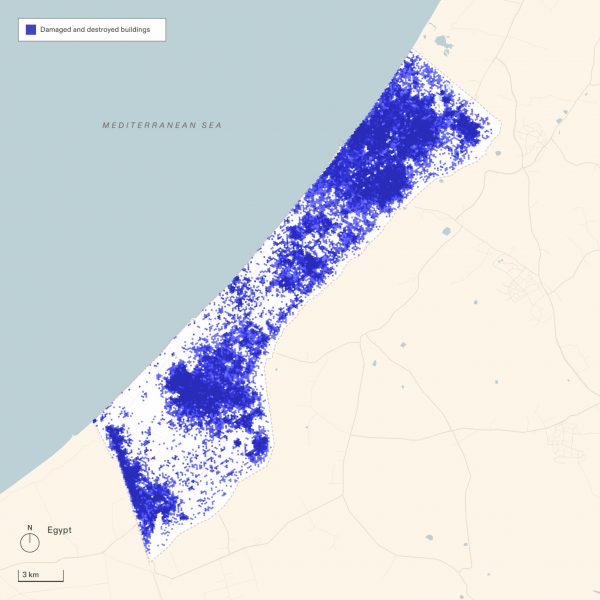
Forensic Architecture creates interactive map to show the “compounding effect” of attacks on Gaza
Forensic Architecture’s normal approach “meaningless” in face of Gaza war says Eyal Weizman

Architecture educator Jeremy Till arrested at Palestine Action protest in London
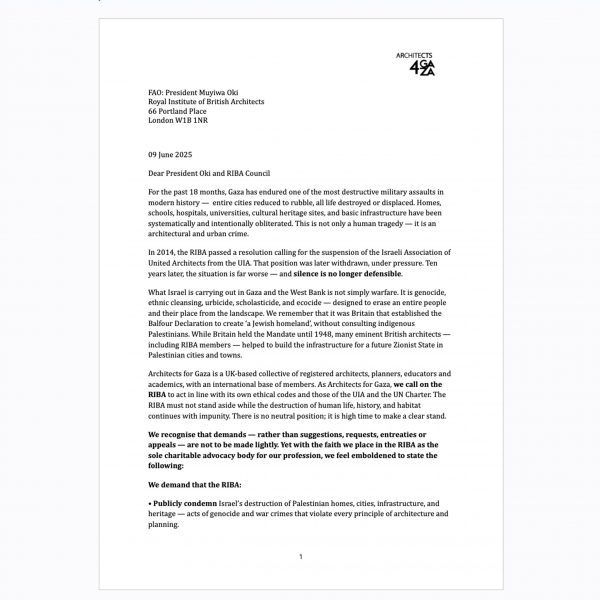
Architects for Gaza demand RIBA call for an “expulsion of Israel” from International Union of Architects

Architects Climate Action Network “condemns the ongoing genocide in Gaza”

“Your action matters” says Together for Palestine set designer
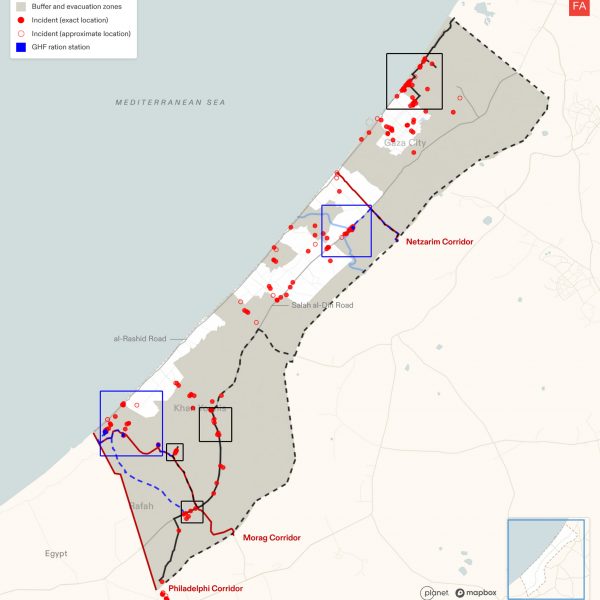
Israeli-backed aid in Gaza “deadly by design” according to Forensic Architecture report