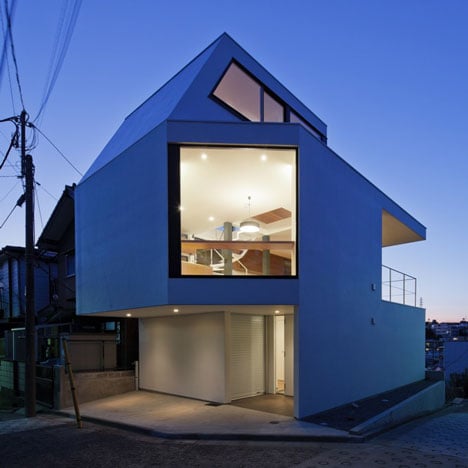
Vista by Apollo Architects & Associates
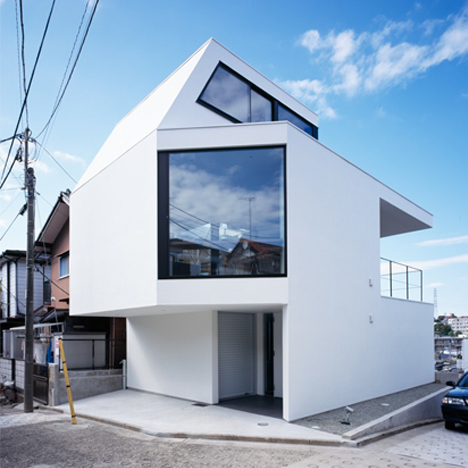
The top floor of this Tokyo house by Japanese architects Apollo appears to be caving in.
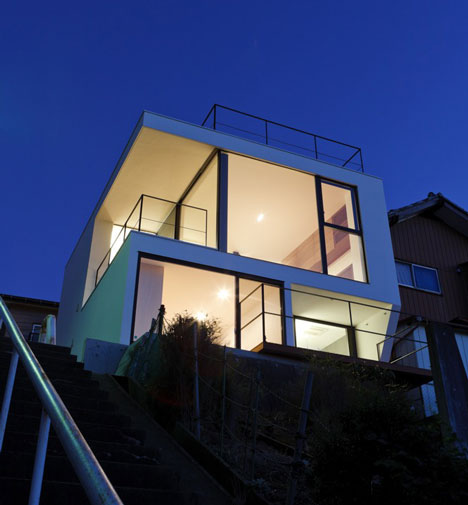
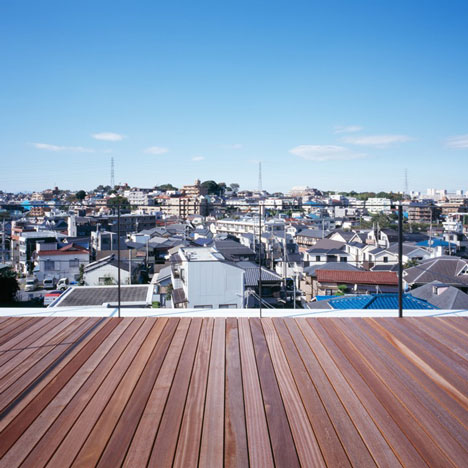
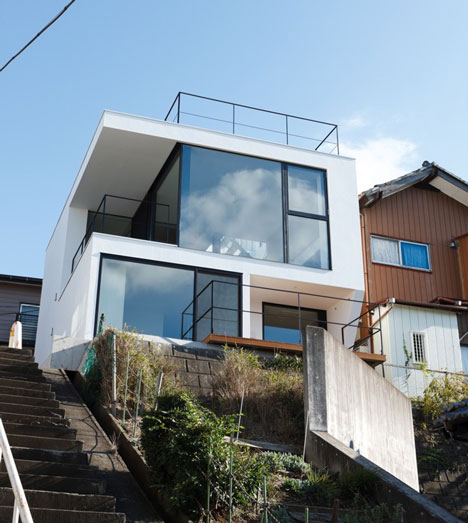
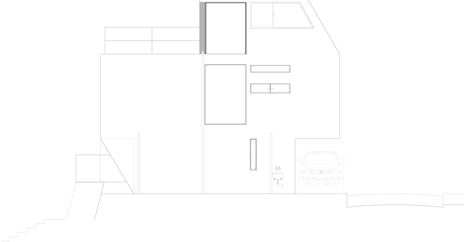
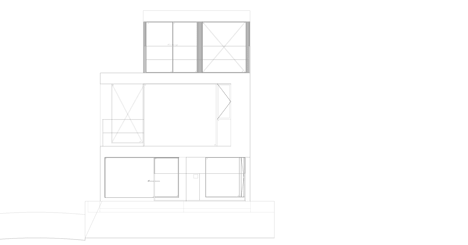
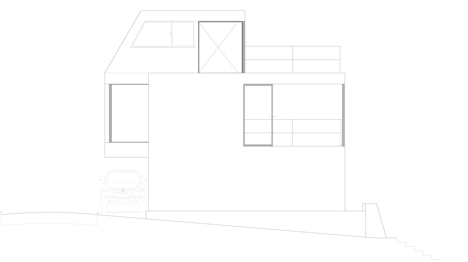
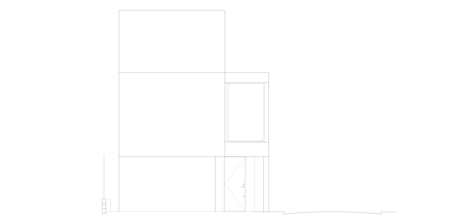
Located on a hillside, the three-storey residence has a large roof terrace and oversized windows that overlook the city.
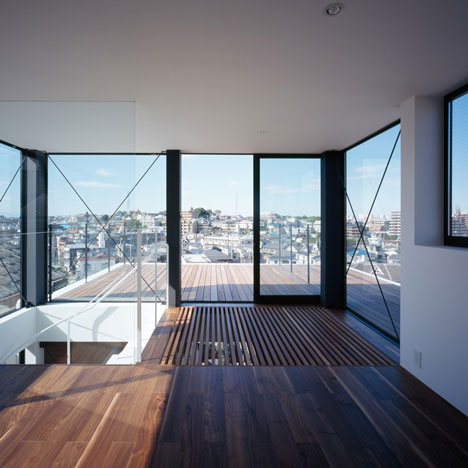
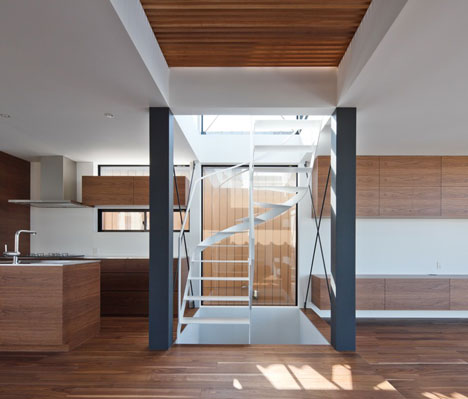
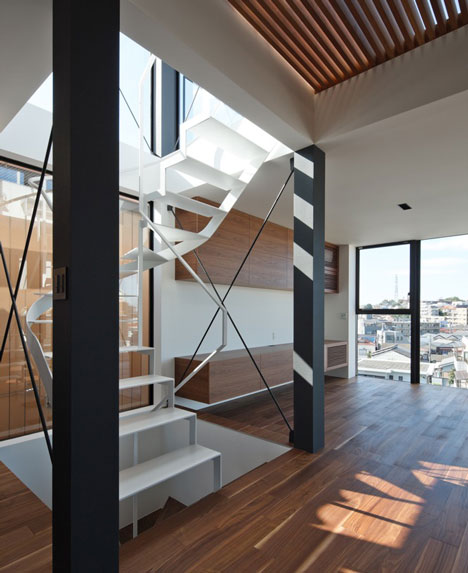
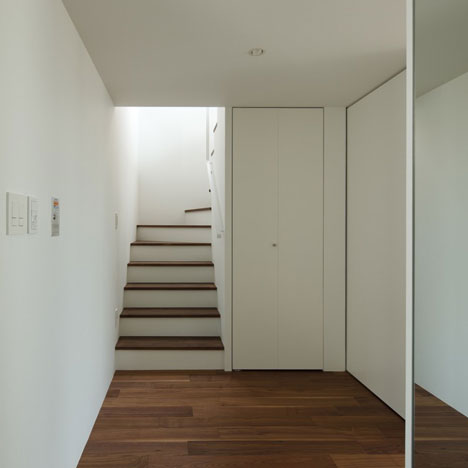
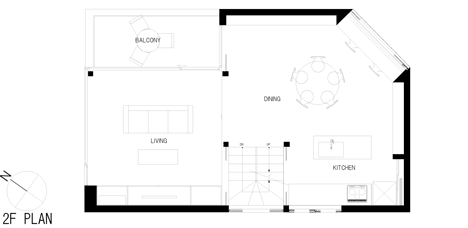
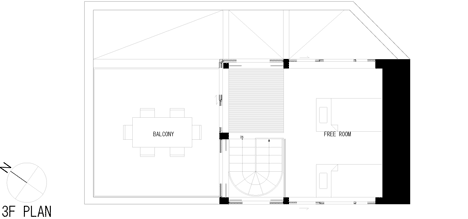
The angled second floor walls slope around a children’s bedroom, whilst a lightweight metal staircase winds down to a living room and balcony on the floor below.
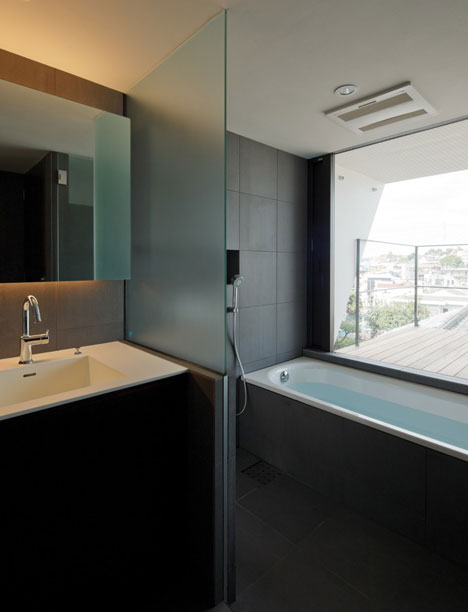
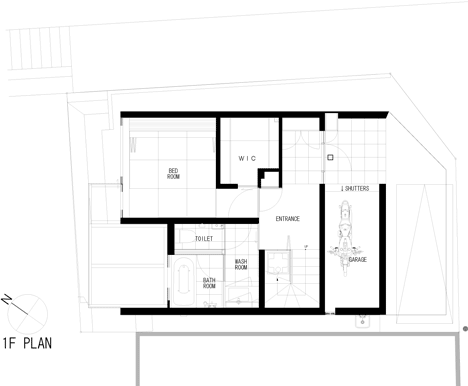
A master bedroom and two bathrooms occupy the ground floor, alongside a garage for storing and repairing the client’s motorcycle.
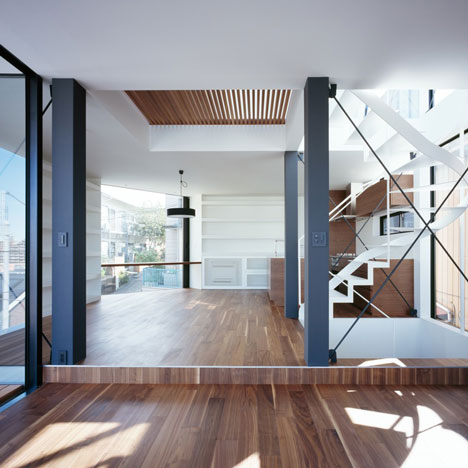
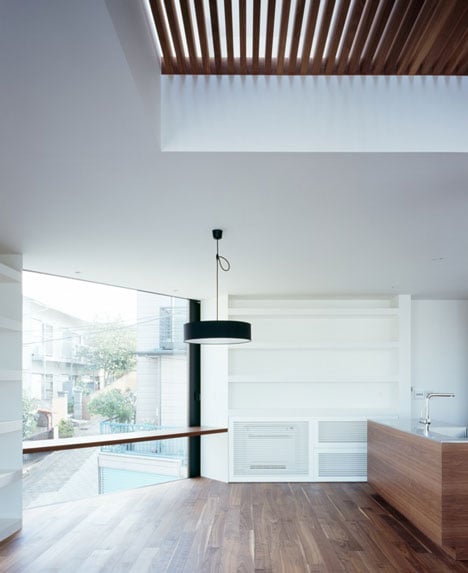
Floors throughout the house are surfaced in dark walnut, as are cabinets in the living room and kitchen.
Apollo Architects & Associates have completed a few houses with angled walls - see all our stories about them here.
Photography is by Masao Nishikawa.
Here's some more text from the architects:
Vista (Nishidai Itabashi ward Tokyo)
The clients were a husband-and-wife couple. He works as the director of an advertising agency, while she works in the food business.
The couple purchased a plot of land that faces the cliff of a plateau and commissioned us to build a wooden three-storey residence for themselves and their child.
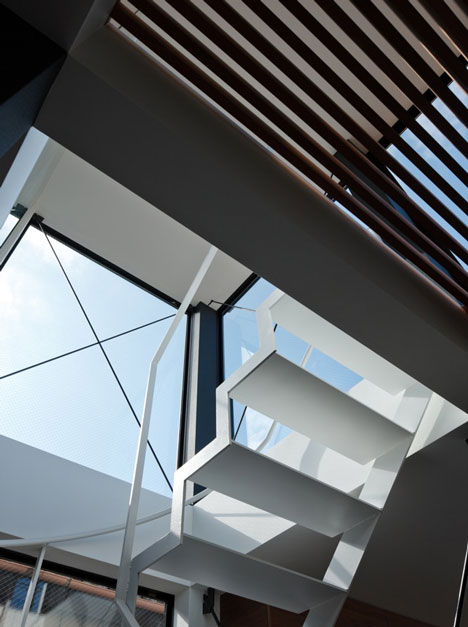
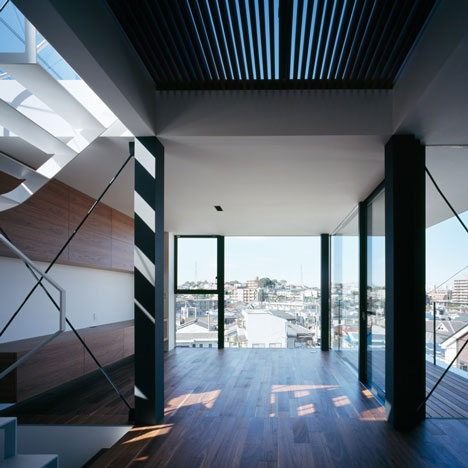
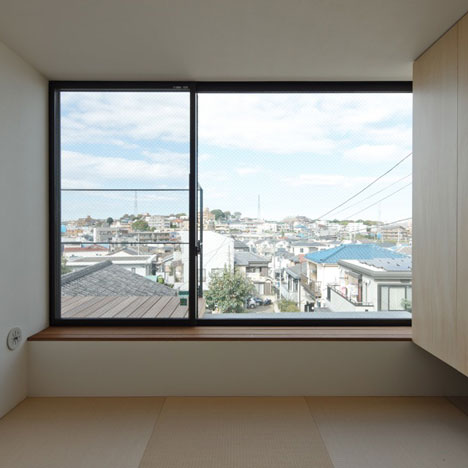
In order to make the most of the magnificent view overlooking the north side of the plot, we decided to activate the latent potential of the location by installing panoramic windows inside the house that would give the residents an unobstructed view of the scenic surroundings.
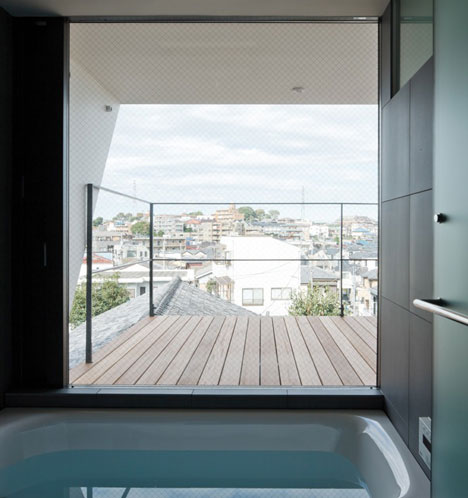
The first floor was compactly outfitted with a small, Japanese style straw-matted bedroom, as well as a bathroom and dressing area with an attached terrace.
Each of these spaces commanded a handsome view of the landscape outside.
The second storey was configured as a single, open room with an attached roof balcony.
Bookshelves were also installed on the structural walls, while a table at the edge of the dining area provides a comfortable space for reading, creating a library-like atmosphere.
In addition, we made an effort to emphasize the impression of diving downwards that results from the height difference between the dining room and the living area.
The child's room and a large outdoor living space are located on the third floor, which also offers the residents a full, untrammeled view of the beautiful landscape surrounding the house.
Although the scenery visible from the terraces located on each floor is identical, the varied character of each space ensures that a different impression of this single landscape is created each time.
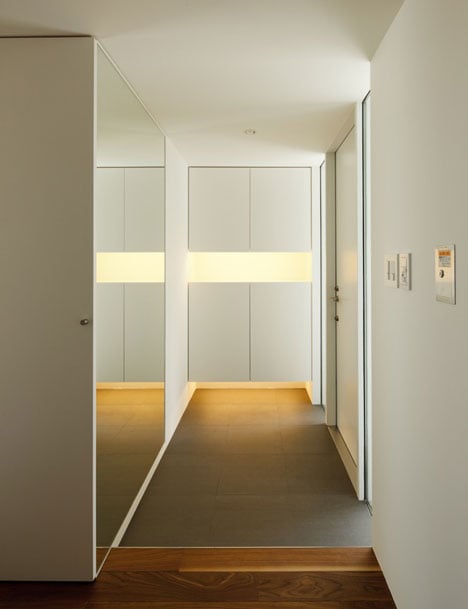
In addition to a car-sized parking space, the entrance to the house also includes a built-in bike garage for the owner's beloved Ducati motorbike that offers ample room for maintenance and cleaning work to be carried out.
Standing at the foot of the slope and looking up at this sleek, white mass that seems to float on top of the hill, the viewer is struck by this symbolic, monumental presence - an impression that contrasts sharply with the closed appearance presented by the front entrance.
The spatial character of this house, which embodies elements that are both mundane and extraordinary, demonstrates the wealth of possibilities that can be realized in urban residential architecture.
Architecture: Satoshi Kurosaki/APOLLO Architects & AssociatesProject Outline
Location: Nishidai Itabashi ward Tokyo
Date of Completion: 2011.8
Principal Use: Private housing
Structure: Timber structure
Site Area: 54.86㎡
Total Floor Area: 111.78㎡ /1F(42.02㎡),2F(47.41㎡),3F(22.35㎡)
Structure engineers: Masaki Structure Laboratory, Kenta Masaki
Facility engineers: Shimada Architects, Zenei Shimada
Construction: Honma Construction
Material Information
Exterior Finish: hydrotect colorcoat eco-ex
Floor: Walnut Flooring
Wall: Wall paper
Ceiling: Wall paper