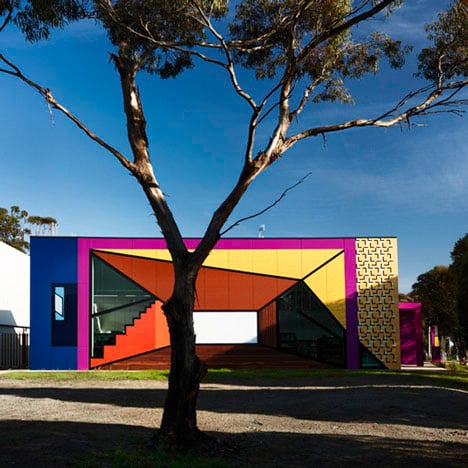
Avondale Heights Library & Learning Centreby H2o Architects
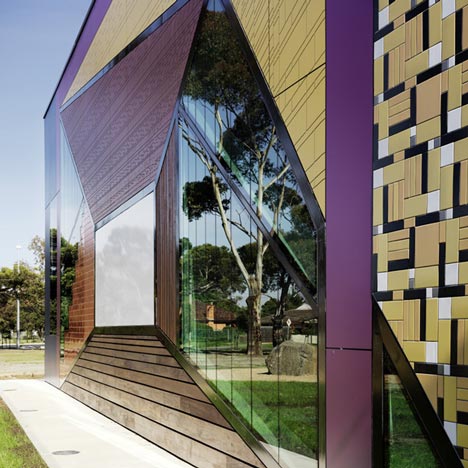
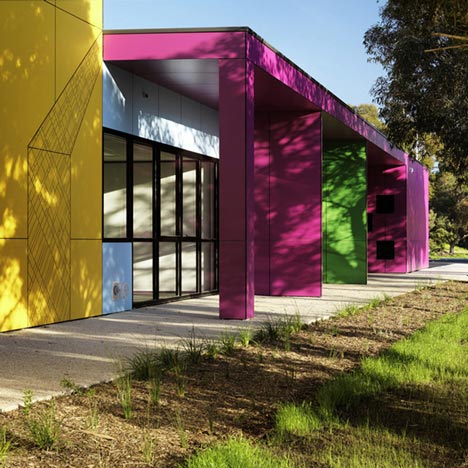
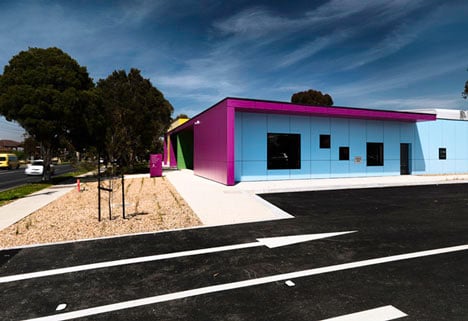
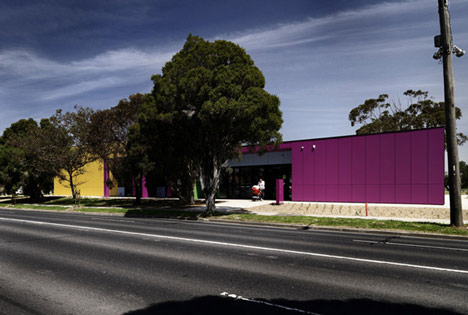
Brightly coloured and patterned panels chosen by different groups in the local community adorn a new library and learning centre in Melbourne, Australia.
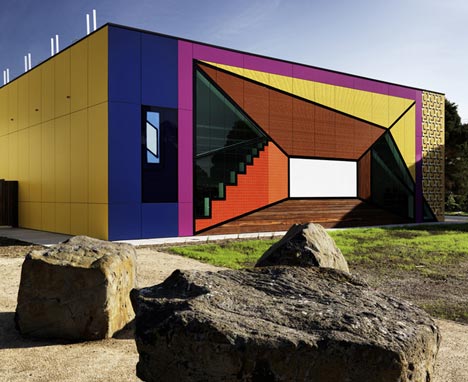
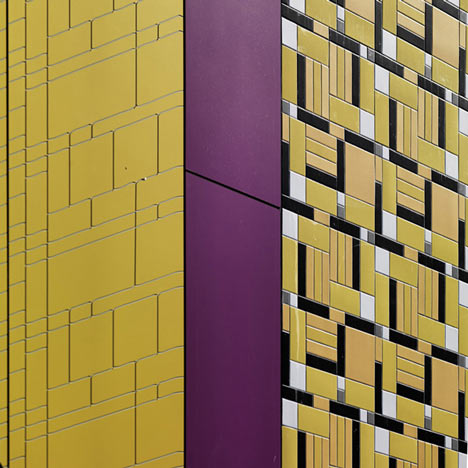
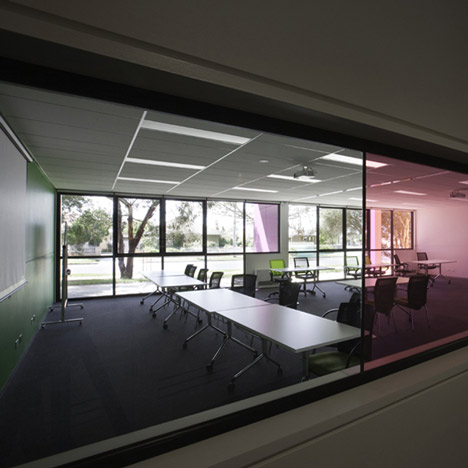
The combinations of ceramic tiles, timber, powder-coated steel, fritted glass and composite panels were selected in consultation with the centre's intended users, many of them Middle Eastern.
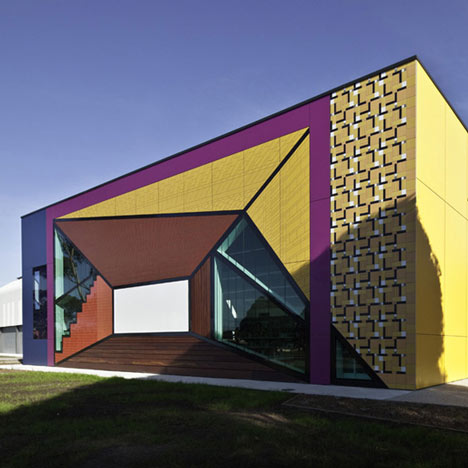
Designed by H2o Architects of Australia, the project offers an upgrade to the existing gymnasium on the site plus a new building to house the library and learning centre.
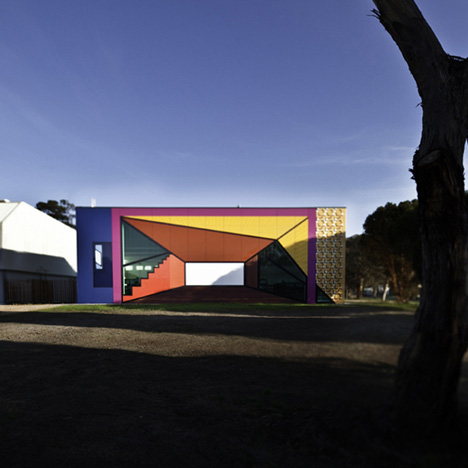
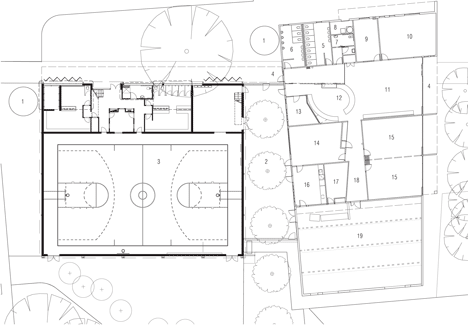
The main, larger block contains the library while a more compact adjoining volume contains study rooms and a foyer.
Photography is by Trevor Mein.
Here's some more text from the architects:
Avondale Heights Library & Learning Centre
Form
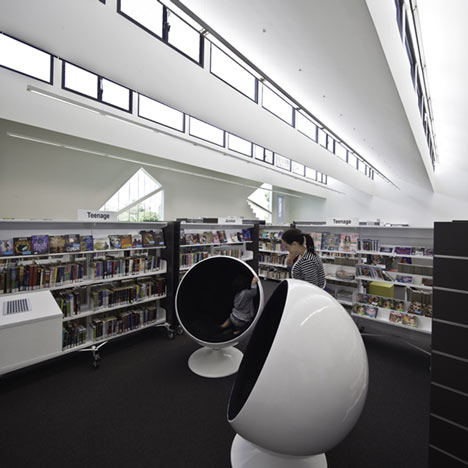
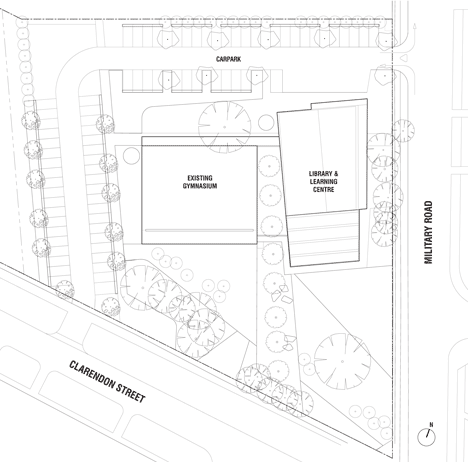
Twin-conjoined volumes -one high for the taller and much larger library space and the other low mostly containing cellular rooms plus foyer - define the form. The new building is surrounded by adjacent car parking and landscaping and linked to the existing upgraded gymnasium.
Sustainability
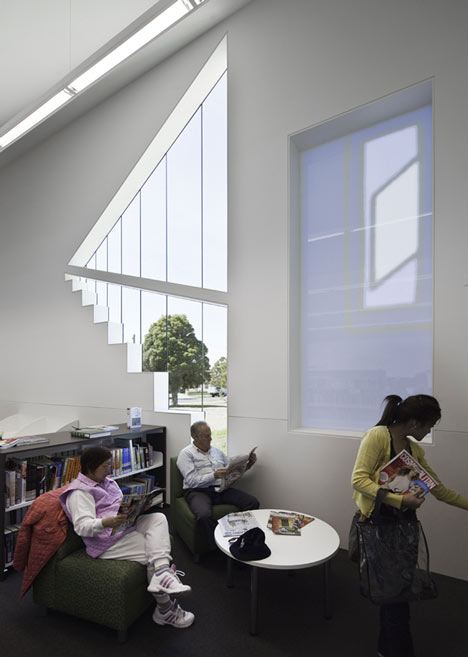
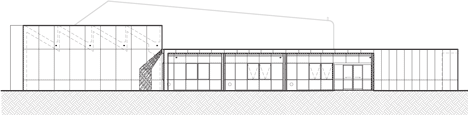
The building was conceived as being low-energy, naturally-ventilated, heated and cooled, thermally efficient and utilising appropriate materials with low or no off-gassing. The saw-tooth roof form allows maximum south light with no sun penetration into the library.
Contexturalism
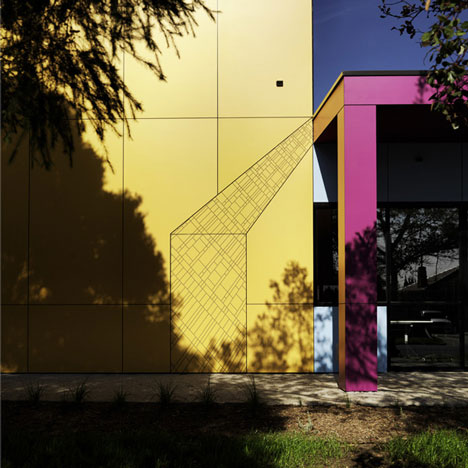
The site is a highly public one. Opposite is a MacDonald's restaurant en route to the local shopping strip including rows of brightly coloured garages. The adjacent intersection carries high volumes of traffic. The design reflects its eclectic neighbourhood and attempts to recall atypical Anglo Saxon imagery for its mostly immigrant local residents.
Special qualities
The specific building type of the centre evolved in an unusual manner. The facility was originally briefed as a Community Centre with two principle components - a 200 seat flat floor Multipurpose Hall for hire by local community groups and associated staff areas, foyer, amenities and flexible, wireless classrooms.
Mid way through construction the brief changed to a Community library. The high ceilinged south lit MPR simply adapted to reading and reference area, support spaces generally maintained the same functions and one classroom was converted to a Computer Lab.
Originality
Deliberate choices were made of brightly coloured Trespa panelling as the primary cladding and the feature end wall palette of ceramic tile, timber, powder coat steel, alucobond and fritted glass to reflect the material choices and vivid colourings of the largely Middle Easern users.
We felt strongly that public acknowledgement of the built form aspirations of these cultures by Melbourne designers had been largely ignored.
Innovation
Materials and colours were selected from examples amongst local building stock.
Site plan
The buildings innovative and iconography reinterprets the lurid colourings and exaggerated realities of well-known Australian artists, Barry Humphries and Howard Arkley in their depictions of the 'Oz' suburb.
Ground floor plan

Section
East elevation
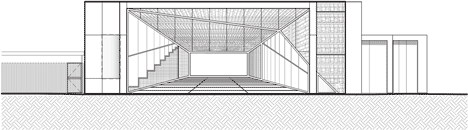
South elevation
Designer: H2o Architects
Architects: Tim Hurburgh, Mark O'Dwyer
Project Team: Natasha Wheatland, Matthias Ott, Vanja Joffer, Soizic Bernier, Anne-Claire Deville, Adriana Stelmach, Julie Buckton
Structural Engineer: Felicetti Consulting Engineers
Services Engineer: Fryda Dorne Associates
Landscape Architect: Rush Wright Associates
General Contractor: Ireland Brown Constructions
Client: Skills Victoria
Project Manager: Coffey Projects
User: Moonee Valley City Council
Location: Corner of Military Road and Clarendon Street, Avondale Heights, Victoria, Australia
Built Area: 1,625m2 / 835m2 (new building), 790m2 (existing gymnasium)
Completion (date): October 2010
Finishing Materials:
Facade: Trespa Meteon high pressure laminate from HH Robertson
Feature wall (south elevation): Vogue System Ceramic tiles from Classic Ceramics, grey ironbark recycled timber with expressed joints, digitally printed glazing from Digiglass, CNC routed Trespa custom-designed routed panels from Alclad Architectual, Alucobond composite panel cladding