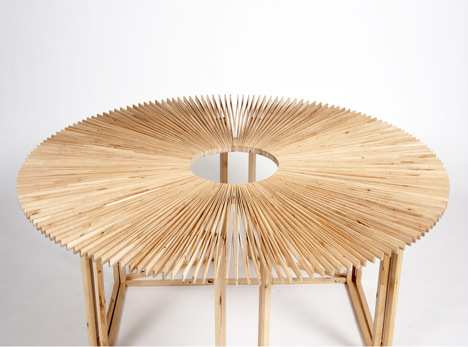
Fan Table by Mauricio Affonso at Ventura Lambrate
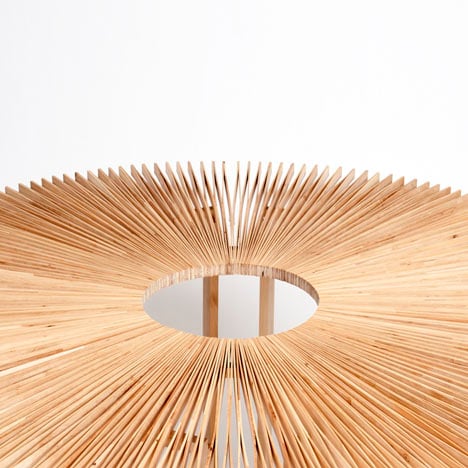
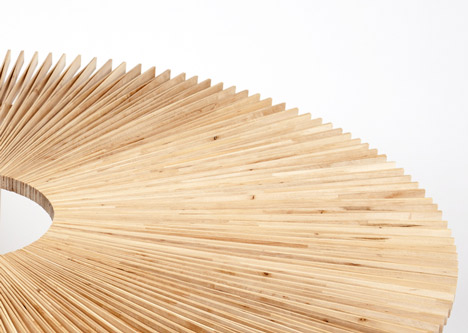
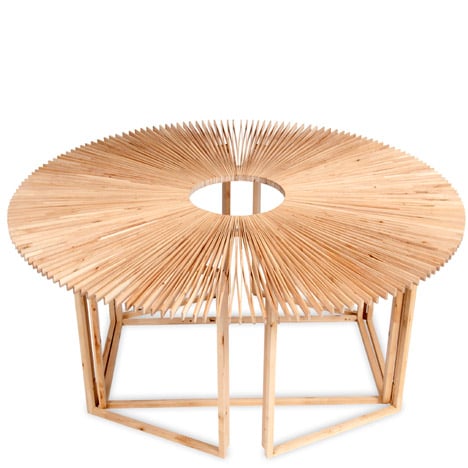
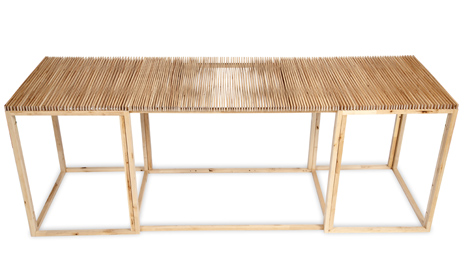
Milan 2012: the 400 wooden slats of this table top by Mauricio Affonso allow it to expand, contract and fan out into a full circle.
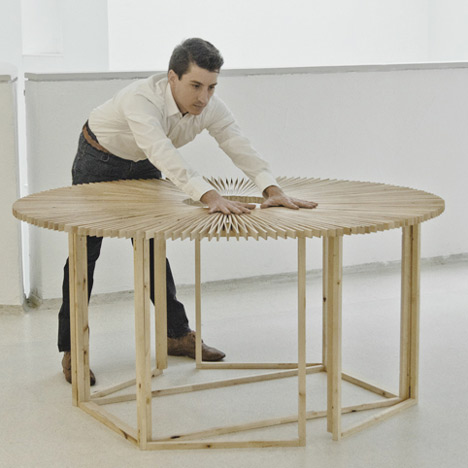
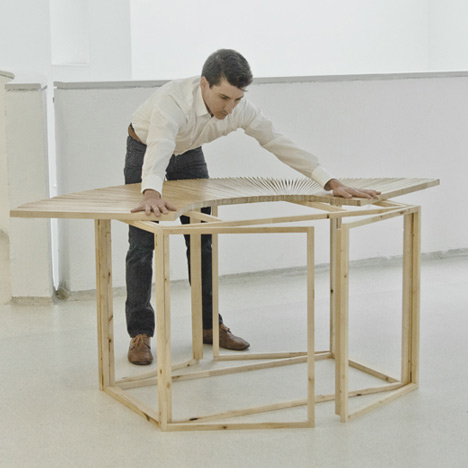
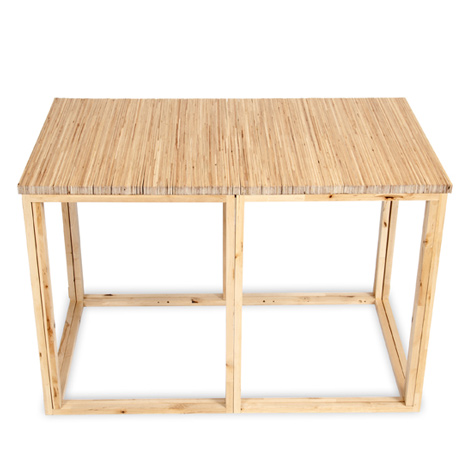
It has a birch base with gate legs that fold out or tuck away as it changes shape.
The Fan Table is on show at Ventura Lambrate as part of Paradise, a show of work from the Royal College of Art in London.
The Ventura Lambrate design district is open from 17 to 22 April. Download the free map and guide here and see all our stories about Ventura Lambrate 2012 here.
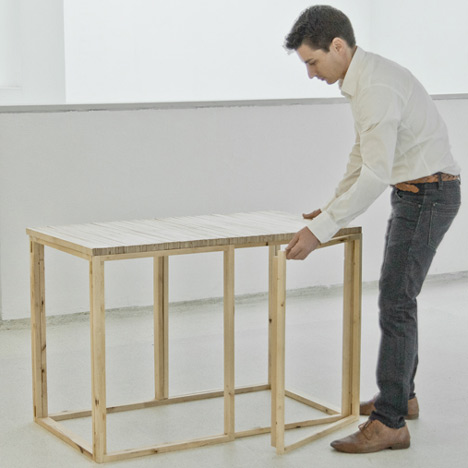
Here are some more details from Affonso:
Mauricio Affonso’s Fan Table will be exhibited during the Milan Furniture Fair in Ventura Lambrate as part of the Paradise exhibition organised by the Royal College of Art, 17-22 of April, 2012.
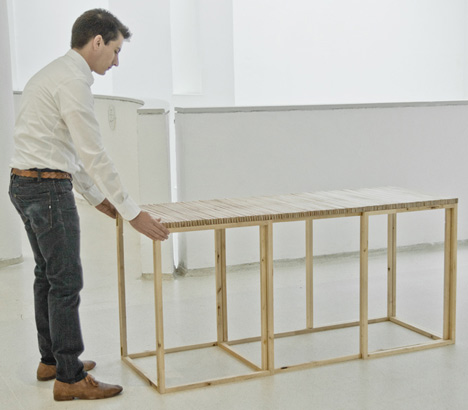
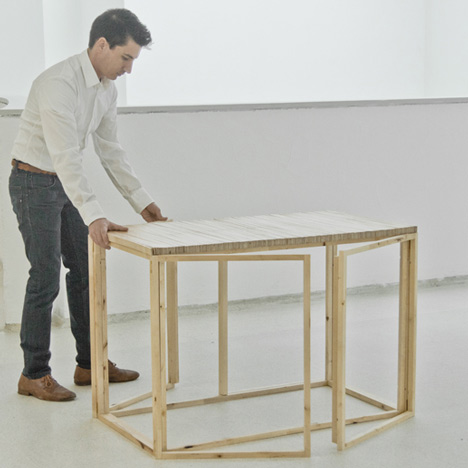
The Fan Table explores the role of tables as the infrastructure for social interaction. The surface can freely expand, contract and revolve in an effortless fan like movement of the hand.

Mauricio Affonso is interested in designing with a deep understanding of the situations in which furniture find themselves in the world. In this case, he was driven by the idea of investigating the reciprocity between table and context.“Furniture can be quite limited sometimes,” explains Affonso, “I wanted to move away from the table as an static object and create a self-transforming table that can spontaneously adapt itself to play a new role in the fabric of a situation.”
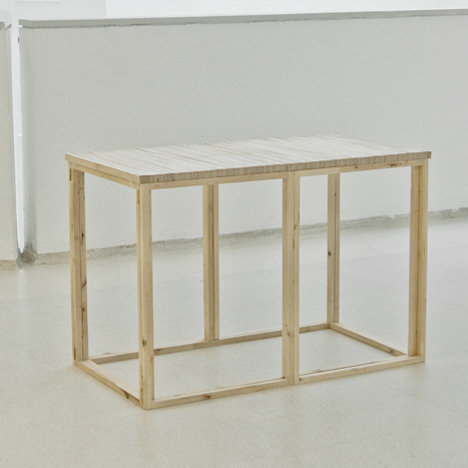
Hence, the Fan Table can be quickly transformed into an array of different shapes and sizes to suit its context or use.
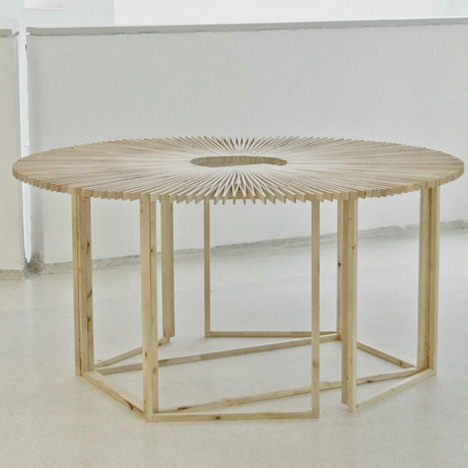
The table surface is created from over 400 slats that rests on a geometric base both in which are constructed out of birch wood.
Paradise features the work of Royal College of Art students selected by Professor and Head of Design Products Programe Tord Boontje and tutor Onkar Kular.
“PARADISE contemplates the discovery of something or somewhere more wondrous. Rallied by the desire for change and compelled by a dissatisfaction with the present, RCA students author their own atlases of Paradise, landscaped by different paths in the quest for a better future.”
Brazilian-born Canadian designer Mauricio Affonso began his career after earning a degree in Industrial Design from OCAD University. While based in Toronto he also worked as Creative Lead for home accessories company Umbra.
Mauricio has shown his work internationally and has been featured in many major design publications worldwide. He has also participated in numerous design workshops led by acclaimed designers such the Campana Brothers and Patricia Urquiola to name a few.
Mauricio has recently relocated to London where he is pursuing a Master of Arts degree from the renowned Design Products program at the Royal College of Art.