Wakefield Street Townhouses by Piercy & Company
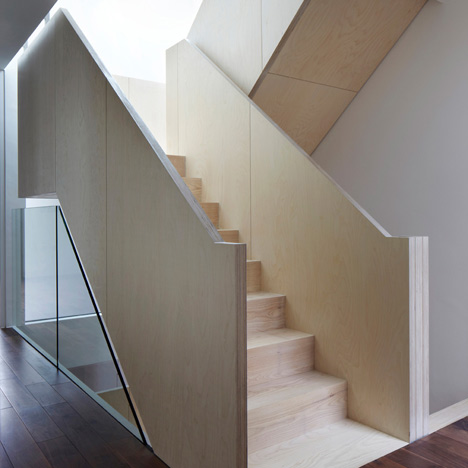
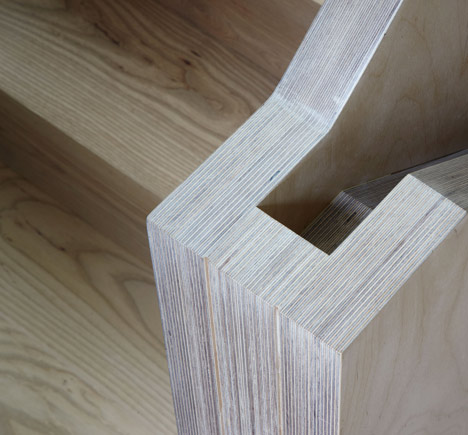
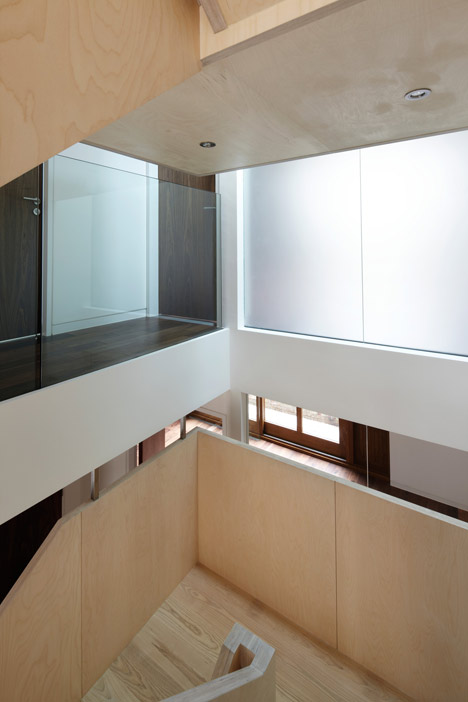
These London townhouses by architects Piercy & Company have chunky banisters formed from thickly layered birch plywood.
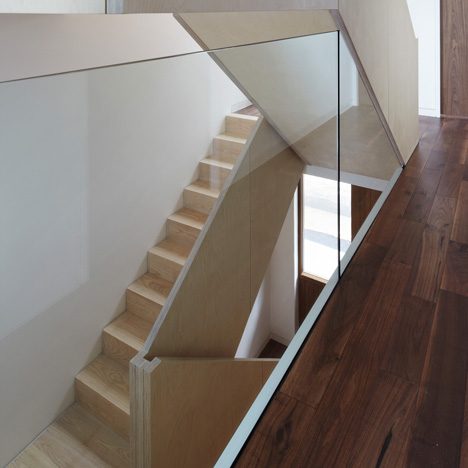
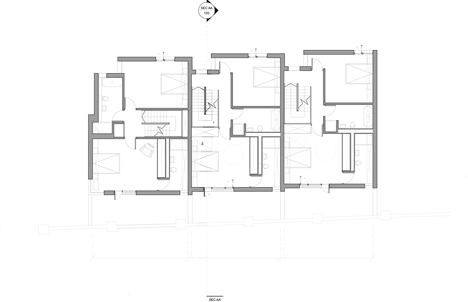
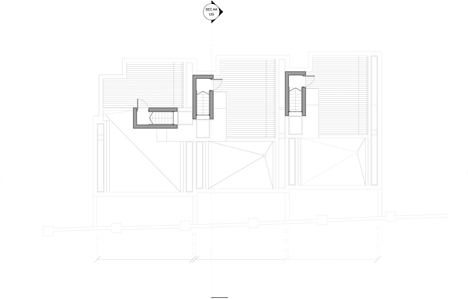
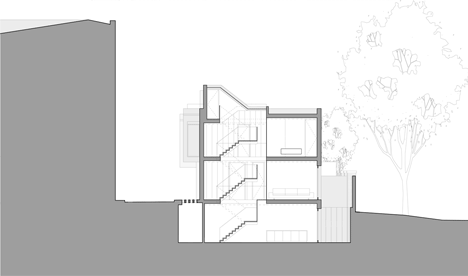
The stairs zigzag up from the basement floor to the second floor roof terraces of each of the three residences, which are located behind a listed wall within the conservation area of Bloomsbury.
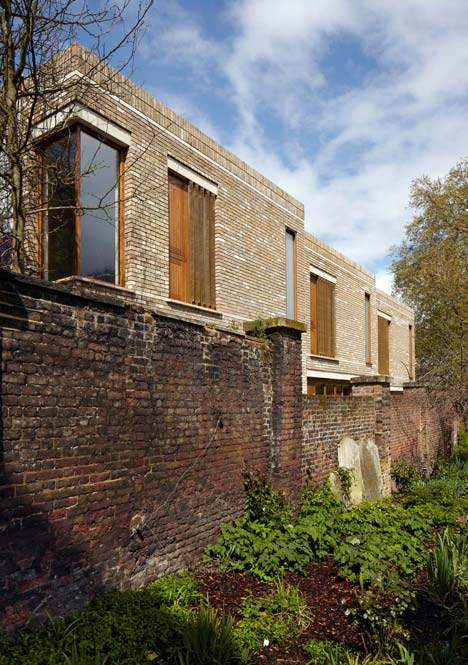
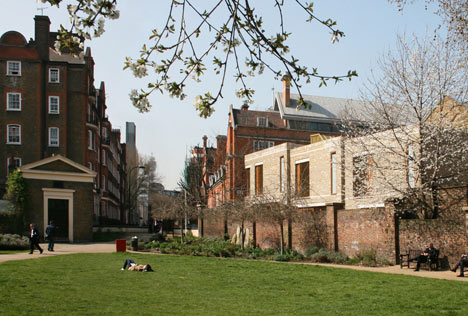
The two-storey-high facades of each house are constructed from a sandy-coloured brick that is lighter in colour than the brown and red brickwork of the surrounding historic buildings.
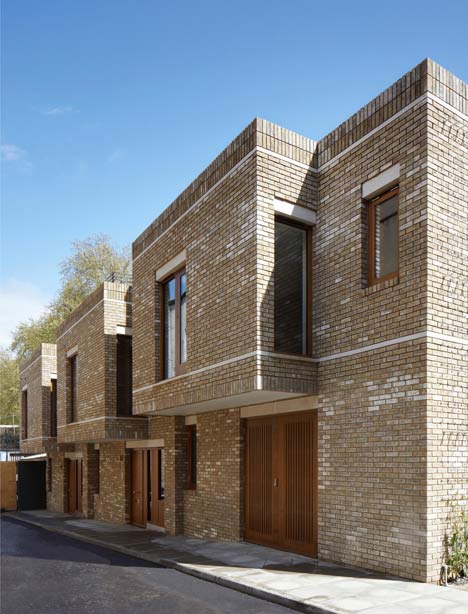
The heights of the buildings intentionally line up with their neighbours, while window sills and lintels have been designed with matching proportions.
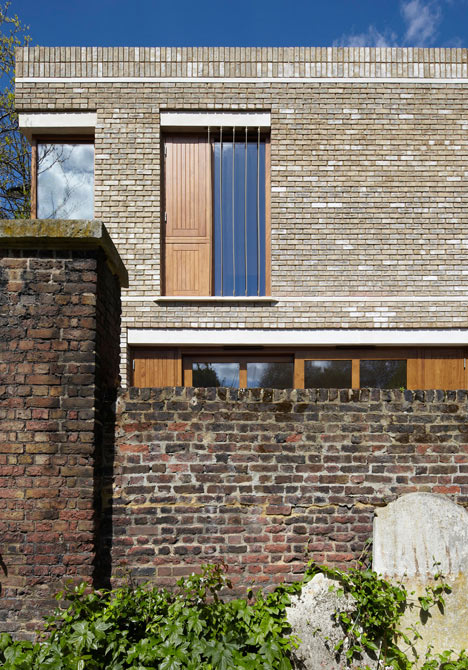
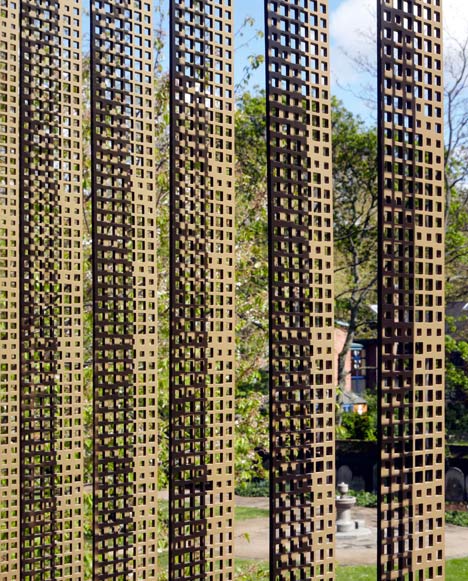
Perforated steel louvers shade the windows and skylights bring daylight into each house from above.
Other projects with interesting staircases include an empty tower and an Olympic Museum. See more staircases on Dezeen »
Photography is by Jack Hobhouse.
Here's some more information from Piercy & Company:
Three contemporary townhouses in London's Historic Bloomsbury
London, UK: Three contemporary townhouses have been completed in Bloomsbury, Central London. Designed by Piercy&Company for Great Marlborough Estates and located within the Bloomsbury Conservation Area, the townhouses marry contextual sensitivity with contemporary urban living.
The townhouses are adjacent to a number of Grade II listed buildings, a Grade II* listed Historic Gardens and bounded on one side by a Grade II listed wall. The buildings’ design echoes the materials, proportions and forms of the surrounding conservation area.
Heavily textured masonry and finely detailed stone cills, lintels and stringer courses create a contextually sensitive skin whilst the window proportions and generous floor to ceiling heights reflect those of the surrounding Georgian buildings. These fine grain details and proportional references interpret the existing language of the Bloomsbury Conservation Area into a contemporary idiom.
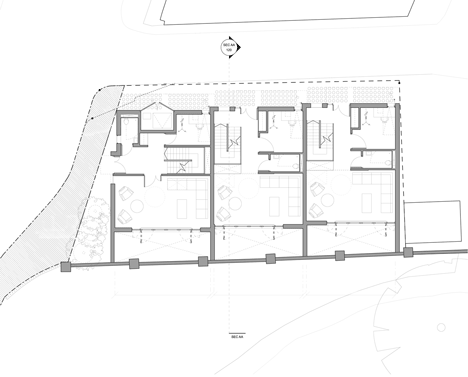
Inside, the layout of the internal spaces is highly flexible. The houses can be configured as 2, 3 or 4 bedrooms. In addition to upper floor bedrooms, the ground floor can be a lounge + study, or bedroom + study, or two bedrooms to make it a 4 bed house. This spatial fluidity responds to contemporary conditions of urban living where household compositions are varied and family living arrangements change over time.
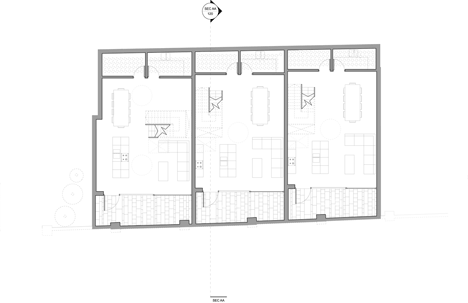
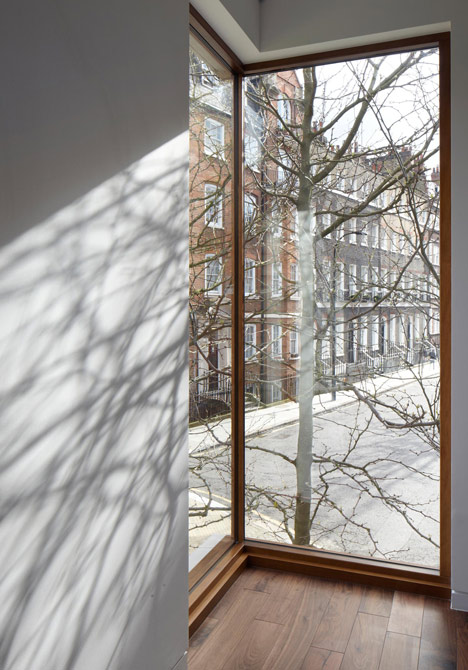
The penetration of light down into the lower levels of the houses informs many aspects of the design; from the skylight playfully positioned above the top floor bath to the large corner windows and sliding glass doors which feature throughout. An open-plan kitchen and dining area at lower ground floor level leads onto a light-filled sunken courtyard which also provides private outdoor living and dining space beneath the historic listed wall.
A key architectural statement in each townhouse is a bespoke staircase, handmade in birch and ash. The staircase is fully revealed with open landings and internal glass partitions, naturally lit from above, allowing light to penetrate from roof to basement. This open staircase is only made possible through sophisticated fire engineering, including the use of domestic sprinklers.
Views over St Georges Gardens provide a green backdrop for many of the living/bedroom spaces. Careful alignment of laser cut shutters and louvres provides privacy to residents whilst preventing visitors to St George’s Gardens feeling overlooked.
As Piercy&Company’s Stuart Piercy describes:
“The site presented many issues with a beautiful grade II * garden and listed buildings to all sides - so it was very sensitive with an extremely vocal residents group. The key was to introduce a finer grain to the facade interpreting motifs from the conservation area in a contemporary language, while on the inside the opposite is true - we wanted large volumes of flexible light filled engaging spaces. For me the project’s success is that the spaces feel light and generous while the houses sit very gently in the context of the 300 year old gardens.”
Project Address 8, 9 and 10 Wakefield Street, London WC1N
Project Team Members
Client: Great Marlborough Estates
Architect: Piercy&Company
Project Manager: Paragon LLP
Structural Engineer: Pringuer-James Consulting Engineers
Mechanical and Electrical Engineers: Martin Design Associates
Main Contractor: Forcia Limited