


Ahead of the opening of the Obama Presidential Center in Chicago next week, we take a look at 13 of the completed presidential libraries in the US.
The term presidential library has become shorthand for the sprawling campuses dedicated to the life and legacy of US presidents after they leave, or are asked to leave, office.
The campuses often contain a museum, an archival library and other buildings that contain memorabilia and formal documentation of a president's tenure and life. Traditionally, they are located in a place relevant to their life or political career, including a hometown, college campus, or particular state.
The first formalised library was established by President Franklin D Roosevelt in the late 1930s, during his four consecutive terms. At the time, he also established the US National Archives and Records Administration (NARA), the federal agency that would go on to oversee each official library.
Later, in 1955, Congress passed the Presidential Libraries Act, which encourages, supports, and helps secure archives for the building of presidential libraries.
Each president is allowed to select an architect for their library, and must fund its building through private donors before NARA steps in to help manage the campus.
The choice of architect and styles of the libraries communicate a lot about each president's legacy, with a majority of Republican presidents going for more traditional firms and Democrats opting for modernism, with many featuring blends of styles.
While thirteen official presidential libraries are built, three are underway or in development. These include President Trump's skyscraper library in Miami, Obama's recently opened library in Chicago, and Biden's library, which, for now, remains solely digital.
Snøhetta is currently nearing completion on the Theodore Roosevelt Presidential Library in North Dakota. However, it is not affiliated with the NARA, and so, is not officially counted in the agency's list of sixteen.
Read on for the thirteen completed Presidential libraries across the US.

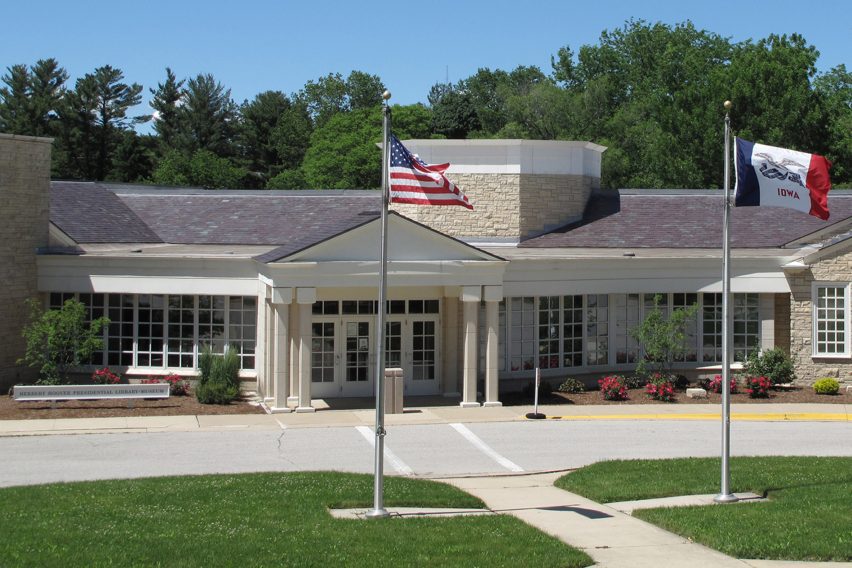
Herbert Hoover Presidential Library and Museum, Iowa, by Eggers and Higgins
Located within the 187-acre Herbert Hoover National Historic Site park in West Branch, Iowa, the Herbert Hoover Presidential Library and Museum was dedicated on the president's 88th birthday in 1962.
The library was the fourth presidential library to be built, and was an expansion of a museum plan already underway by Hoover in his hometown. It is currently closed for renovation.
It is a simple building with gestures towards a civic neoclassicism and colonial revival, featuring a low-slung roof and stone turrets.
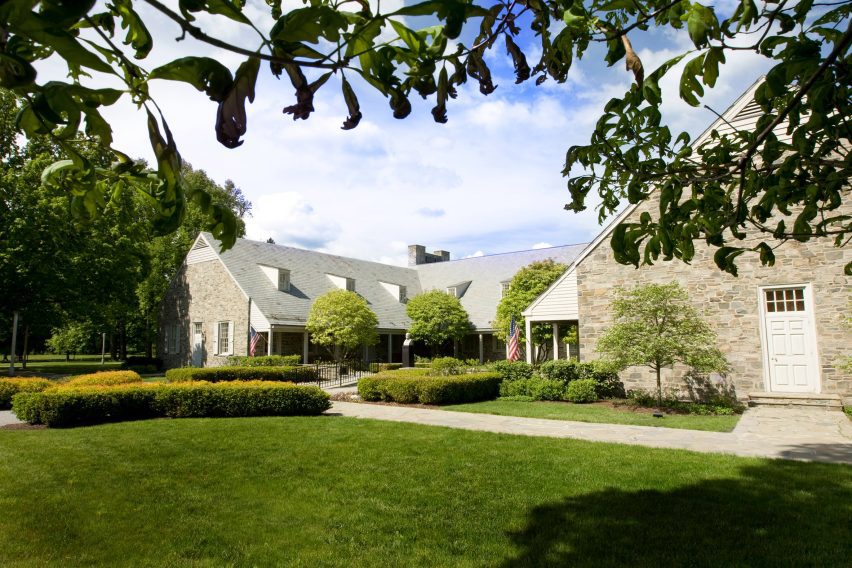
Franklin D Roosevelt Presidential Library and Museum, New York, by Henry Toombs and Louis A Simon
Located in New York's Hudson Valley, the Franklin D Roosevelt Presidential Library and Museum was dedicated in 1941, and has undergone expansions and renovations throughout the years.
It was the first formalised presidential library, catalysed by Roosevelt himself, who desired a place to store his presidential documents for public access while he simultaneously established the country's NARA agency around the same time.
It has a subdued, traditional style with riverstone siding and deep gables that give it the appearance of a residence.
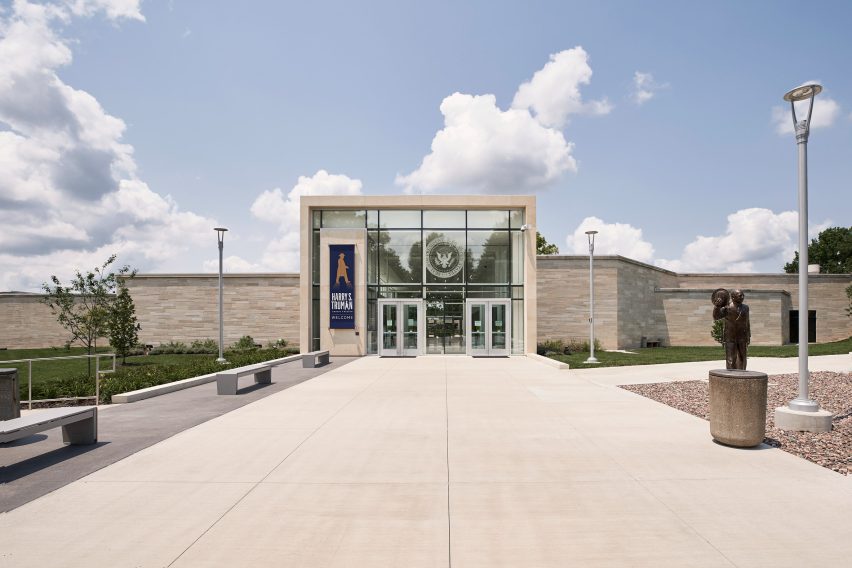
Harry S Truman Presidential Library and Museum, Missouri, by Edward F Neild and Gould Evans
The Harry S Truman Presidential Library and Museum was dedicated in 1957 and is located in Independence, Missouri.
It was the first Presidential library built under the Presidential Libraries Act, which was passed in 1955 by Congress to encourage US presidents to donate their historical materials and documents back to the government for public access.
It was also the first consciously modern design for a presidential library, with linear geometries and a pavilion-like entrance clad in glass.
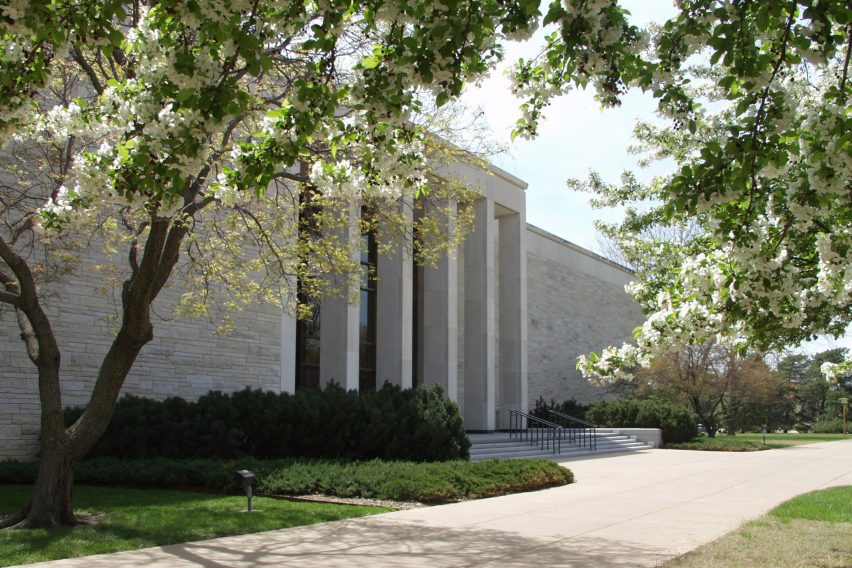
Dwight D Eisenhower Presidential Library and Museum, Kansas, by James Canole
Located in President Dwight D Eisenhower's hometown of Abilene, Kansas, his eponymous library was dedicated in 1962 and sits on grounds that also include his boyhood home, which can be toured by the public.
It is one of two presidential library centres where most of the construction preceded the completion of the presidency – supporters of Eisenhower decided to honour his World War II service with the beginnings of a museum in the 1940s, which eventually became the site of his library and multiple other buildings on the site, including a chapel. The main library's style takes cues from both neoclassicism and modernism, with a geometric colonnade at the entrance, utilising Kansas limestone for its vast walls.

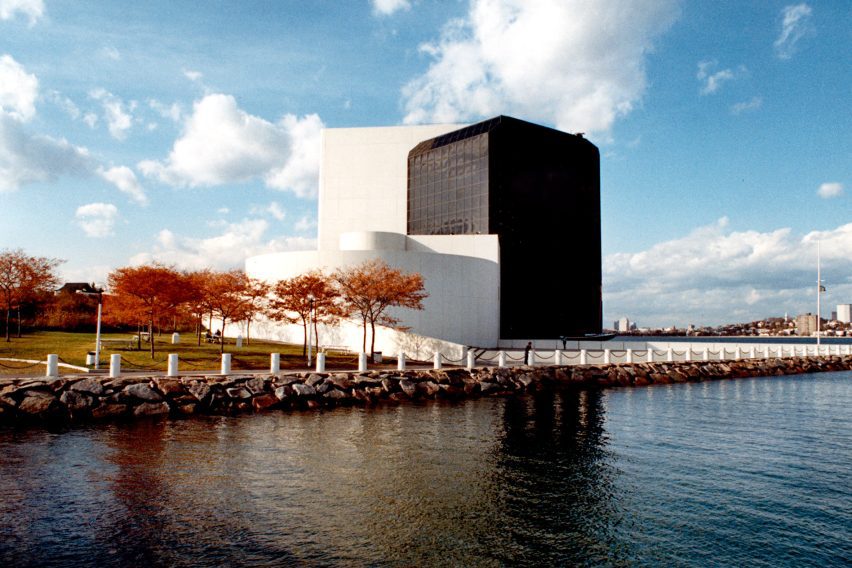
John F Kennedy Presidential Library and Museum, Massachusetts, by IM Pei
First Lady Jacqueline Kennedy Onassis selected Chinese-American architect IM Pei to design the library of her late husband, which is located adjacent to a University of Massachusetts campus in Boston's Dorchester neighbourhood.
Work on the project began in 1961 under President Kennedy, but the John F Kennedy Presidential Library and Museum was completed and dedicated years later in 1979, following his assassination in 1963.
The library is daring in form, with a space-age structure of white-coloured concrete and a glass pavilion that provides views of the city.
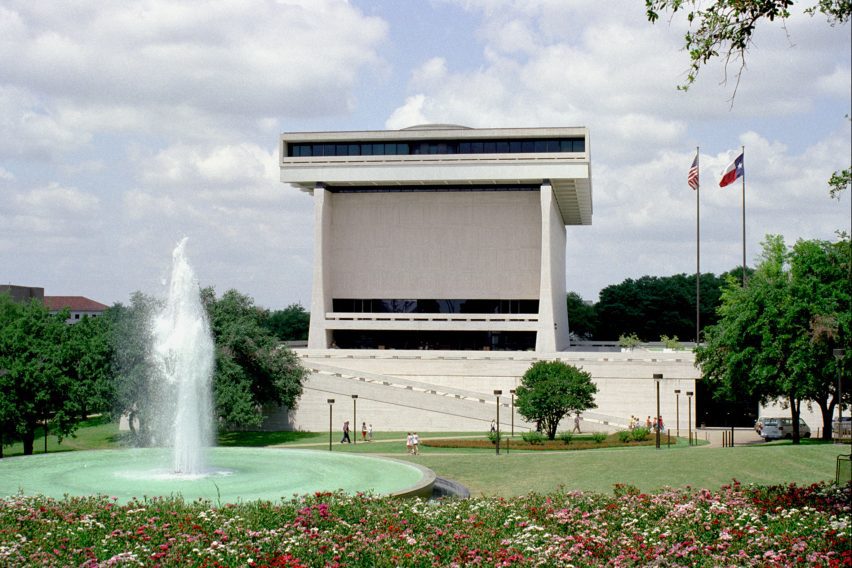
Lyndon Baines Johnson Presidential Library and Museum, Texas, by Gordon Bunshaft
Located at the University of Texas at Austin, the Lyndon Baines Johnson Presidential Library and Museum was opened in 1971.
President Johnson began planning work on his library soon after his election in 1964. First Lady Claudia Alta Johnson presented her husband with three architects after touring other presidential libraries and universities, and he eventually selected Gordon Bunshaft of Skidmore, Owings & Merrill (SOM).
The result is a building typical of Bunshaft's brutalist work at SOM, with massive concrete structural elements supporting cantilevers and an unadorned exterior.
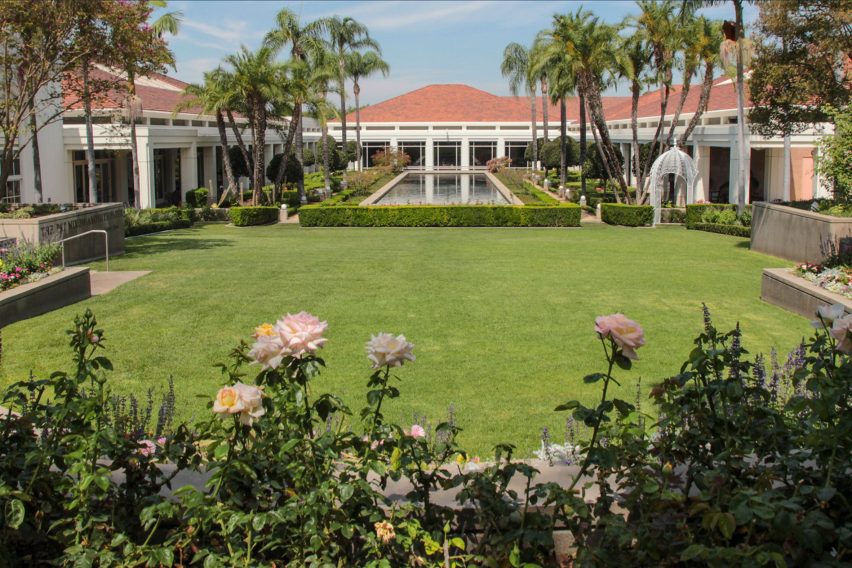
Richard Nixon Presidential Library and Museum, California, by Langdon Wilson Architecture Planning
The Richard Nixon Presidential Library and Museum is located in the President's hometown of Yorba Linda, California and was dedicated in 2007.
Although the centre is now jointly operated by the NARA and the Richard Nixon Foundation, Nixon's impeachment complicated ownership of his materials – his infamous Watergate tapes were repossessed by the federal government before he could destroy them, and are located at the National Archives in Washington, DC.
The structure adheres to popular building forms in California, with a mix of neoclassical and Spanish revival elements. Spanish tile clad the low-lying forms, with a loggia that surrounds a reflection pool.
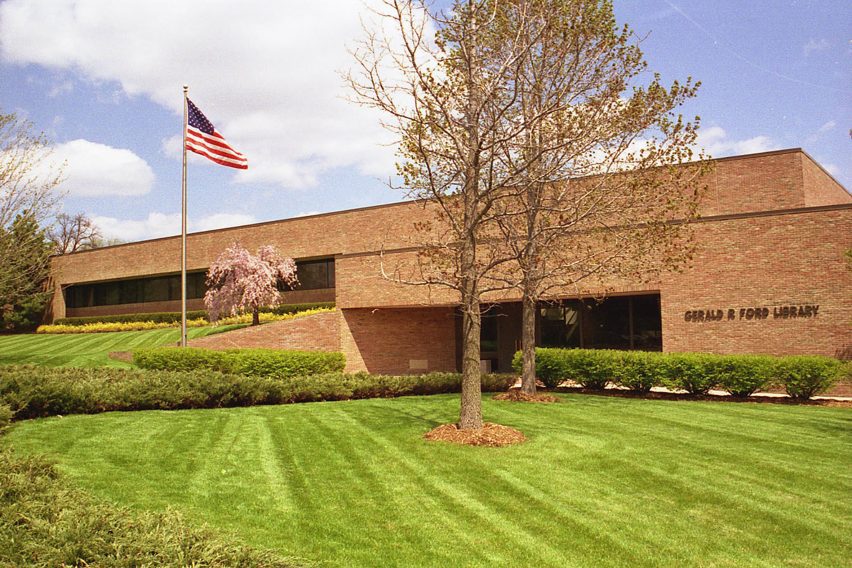
Gerald R Ford Presidential Library, Michigan, by Jickling, Lyman and Powell Associates
Construction on the Gerald R Ford Presidential Library began in 1979 and was completed in 1981.
Located at the University of Michigan in Ann Arbor, it is the only presidential library that is separate from its museum, which is located 130 miles northwest in Grand Rapids, although the buildings share the same director.
The mostly brick structure features clean lines and light orientation typical of midwestern mid-century modern architecture.
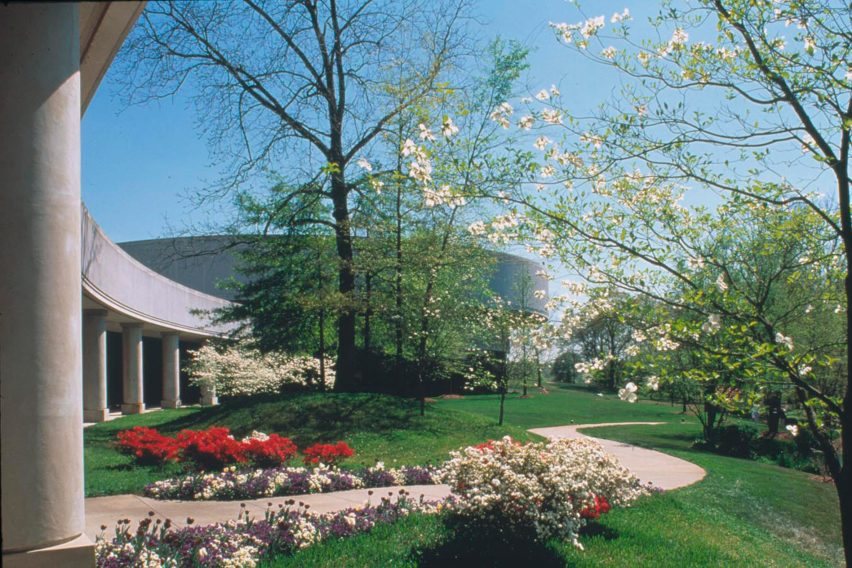
Jimmy Carter Presidential Library and Museum, Georgia, by Jova/Daniels/Busby with Lawton, Umemura and Yamamoto
The Jimmy Carter Presidential Library and Museum is located in Atlanta, Georgia, and was opened on the President's 62nd birthday in 1986.
The building is made up of a series of interconnected circles, symbolising the president's worldview of unity, according to the Society of Architectural Historians.
It has a mix of styles that recall postmodern design and is one of the first to explicitly express sustainable design objectives, especially in the prairie-style garden and its parking.
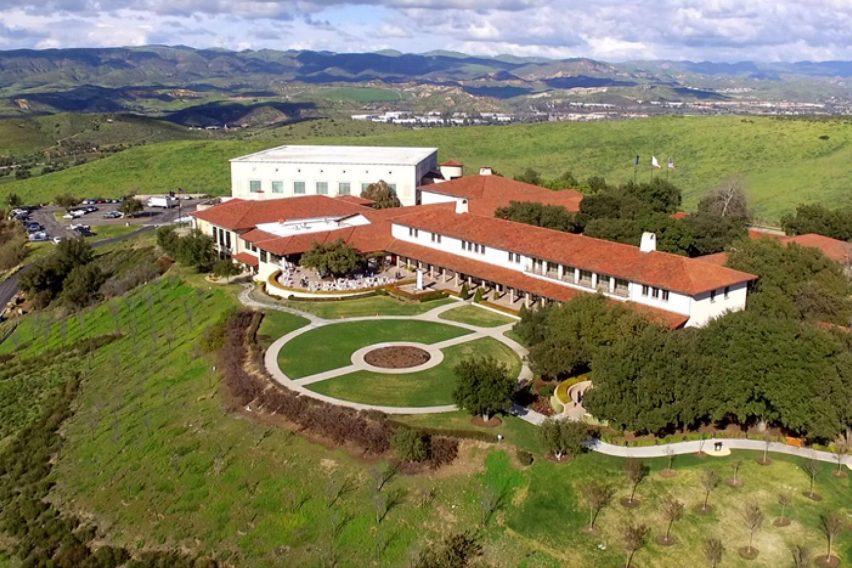
Ronald Reagan Presidential Library and Museum, California, The Stubbins Associates
Opened in 1991 and designed in a distinct Spanish Mission style, the Ronald Reagan Presidential Library and Museum is currently the largest presidential centre by square feet, including an interconnected pavilion building that houses a retired Air Force One aircraft.
Its dedication ceremony in 1991 had five US presidents and six first ladies in attendance, which was the largest collection of presidents and first Ladies assembled in one place at the time.
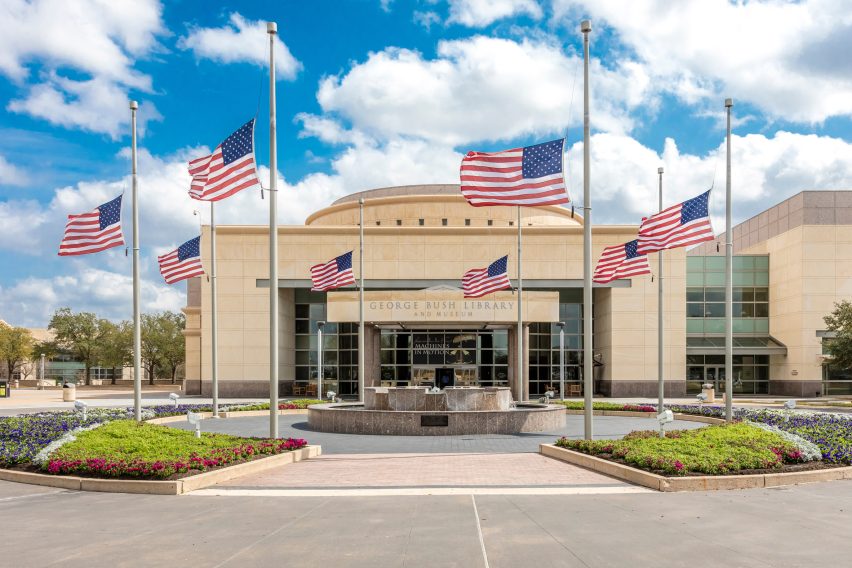
George H W Bush Presidential Library and Museum, Texas, by HOK
Located on a 90-acre site on the west campus of Texas A&M University, the George Bush Presidential Library and Museum was dedicated in 1997.
Like most other presidents, Bush, along with his wife Barbara Bush, is buried at his presidential library site. It has a neoclassical style, seen in its massive rotunda, mixed with modern elements, such as spans of glass connecting the different elements and unadorned surfaces.
The architecture studio sought to utilise local materials, seen in the reddish stone cladding, aligning it with the dominant materials of the adjacent campus.

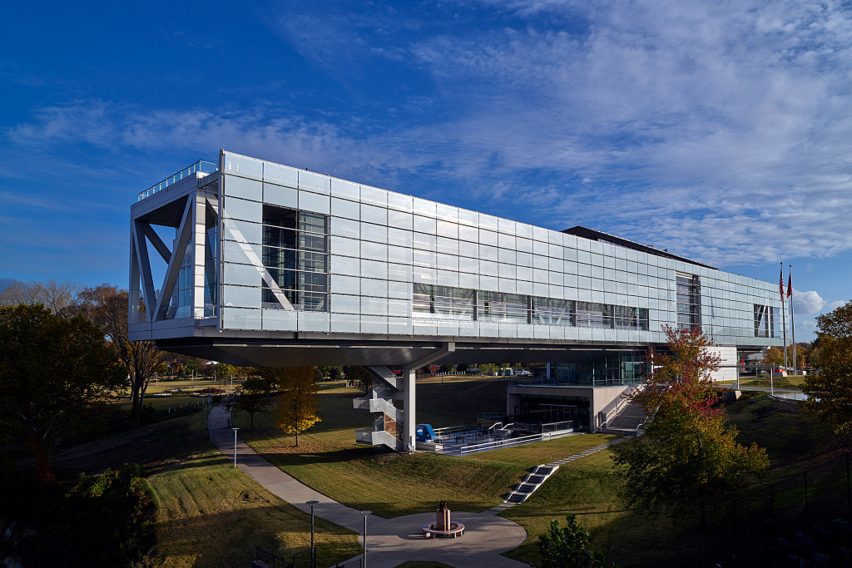
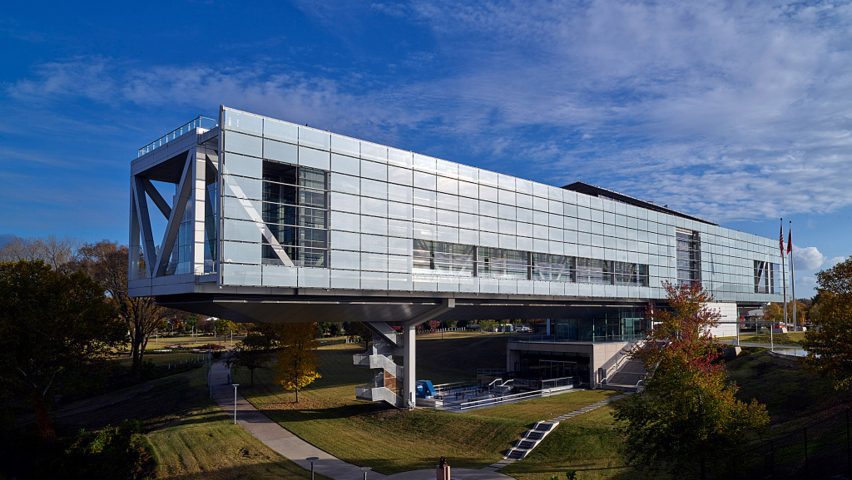
William J Clinton Presidential Library and Museum, Arkansas, by James S Polshek
Located in Little Rock, Arkansas, the William J Clinton Presidential Library and Museum was opened in 2004 and contains the largest archives of any presidential library, according to reports.
President Clinton's words to "build a bridge to the 21st century" served to inform its design, a building made of a steel frame and glass that cantilevers over the nearby edge of the Arkansas River.
Its highly technical architecture can be seen in its exposed steel structural elements and the glass envelope that wraps the primary structure.
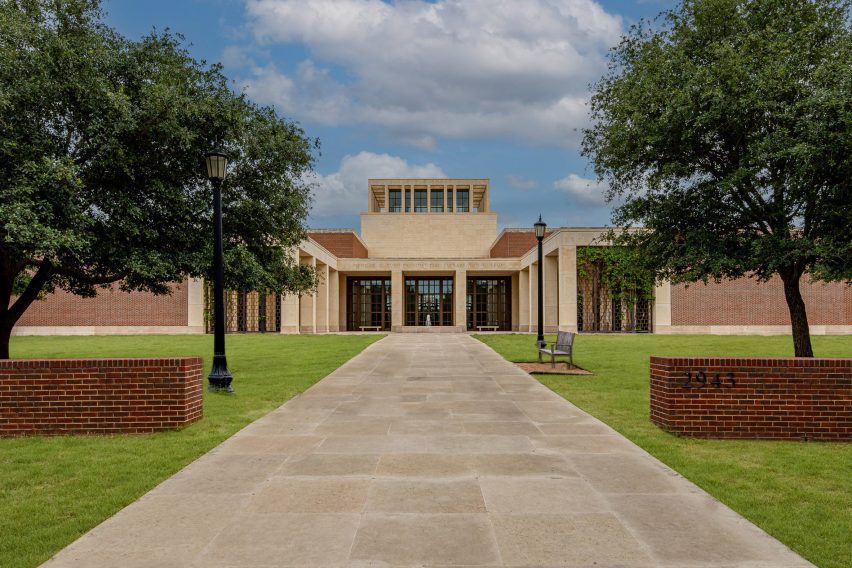
George W Bush Presidential Library, Texas, by RAMSA
George W Bush opened his library in 2013 on a Southern Methodist University campus in University Park, Texas, near Dallas, after several Texas universities had placed bids to be the library's official site.
Much of the exhibition space is dedicated to Bush's decisions surrounding September 11, while the library also contains his personal paintings.
It combines elements of RAMSA's unique neoclassical style with Georgian university architecture, with limestone and brick referencing the adjacent campus.