Vacant supermarket in Portland converted into library facility by Hennebery Eddy
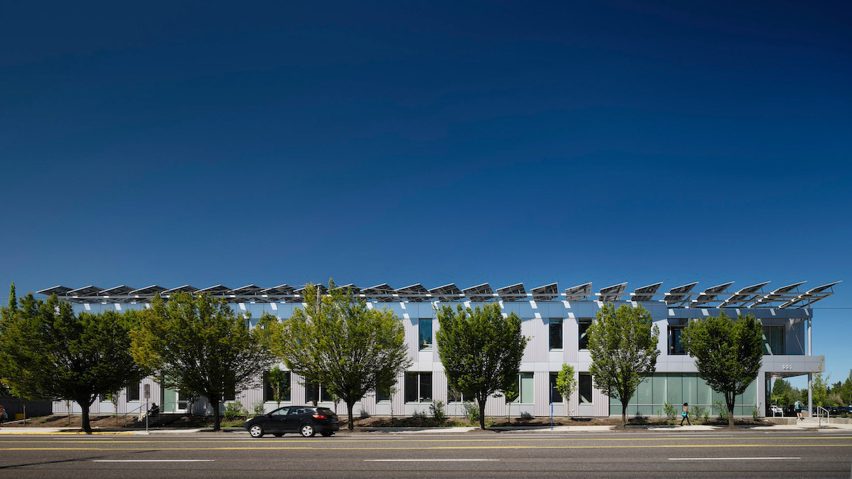
A large, empty store in Oregon, USA, has been transformed into a net-zero library operations centre by Hennebery Eddy Architects, which incorporated an abundance of solar panels and colourful artwork.
The building – officially known as the Multnomah County Library Operations Center – is located on the east side of Portland.
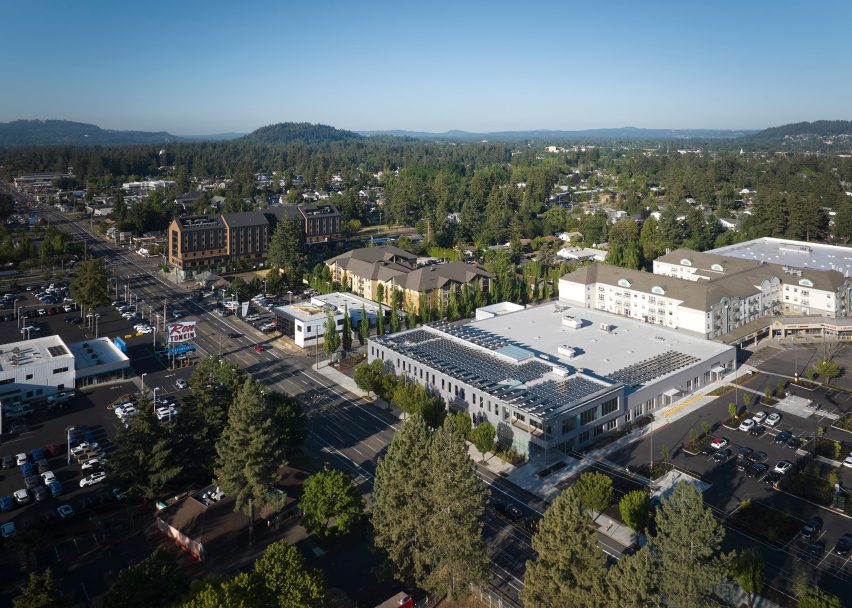
Designed by local firm Hennebery Eddy Architects, the adaptive reuse project involved transforming a vacant 1995 building, which formerly held a grocery store, into a workplace and storage facility.
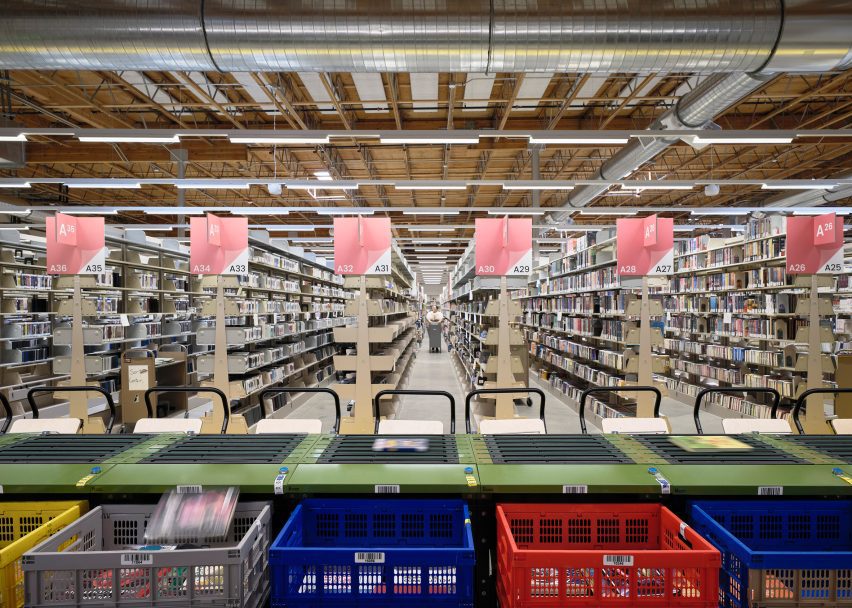
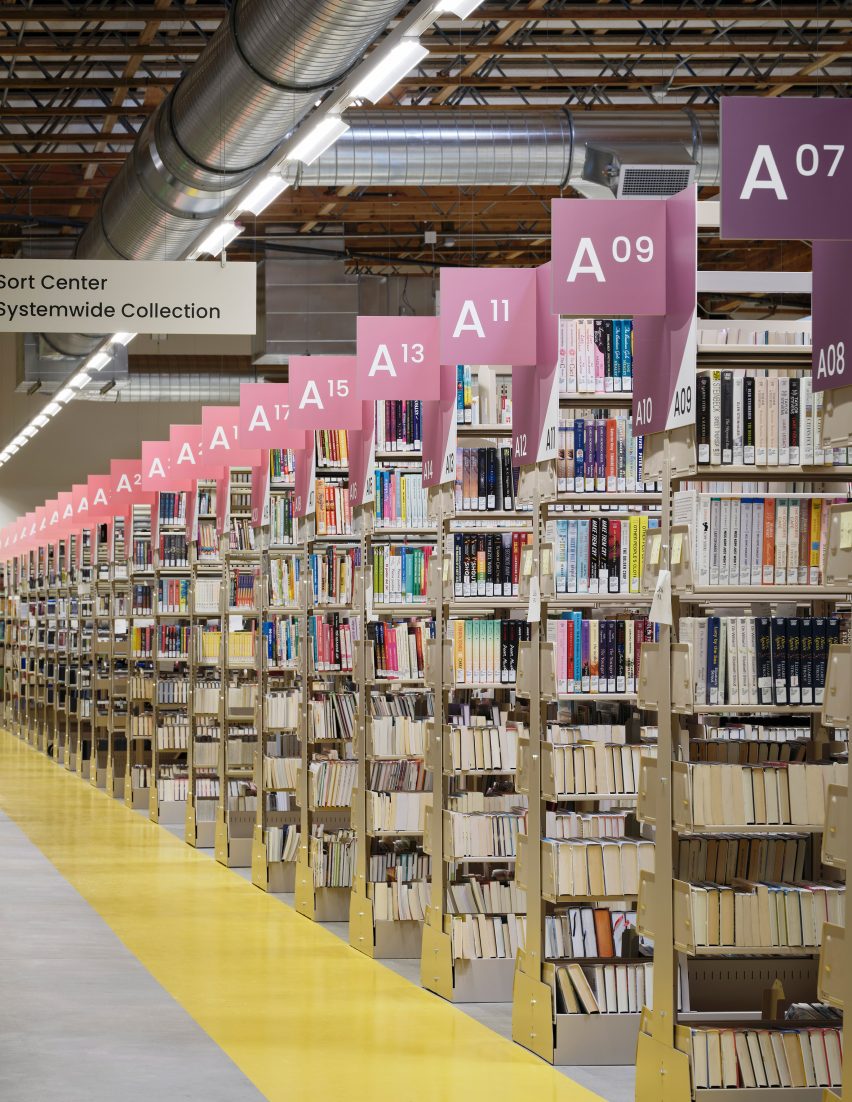
The Operations Center is considered the "beating heart" of the county's library system, as it serves the numerous libraries spread throughout the county, which encompasses the Portland metropolitan area.
The facility brings together material that was formerly spread across multiple locations.
"The new Operations Center is essential for effectively managing more than 500,000 catalogue materials and outreach services," said the team.
Rectangular in plan, the building consists of the original 52,000-square-foot (4,831 square metre) grocery store and the a 21,000-square-foot (1,951 square metres) addition.
As well as work and storage space, the building contains a used bookstore run by the Friends of Multnomah County Library.
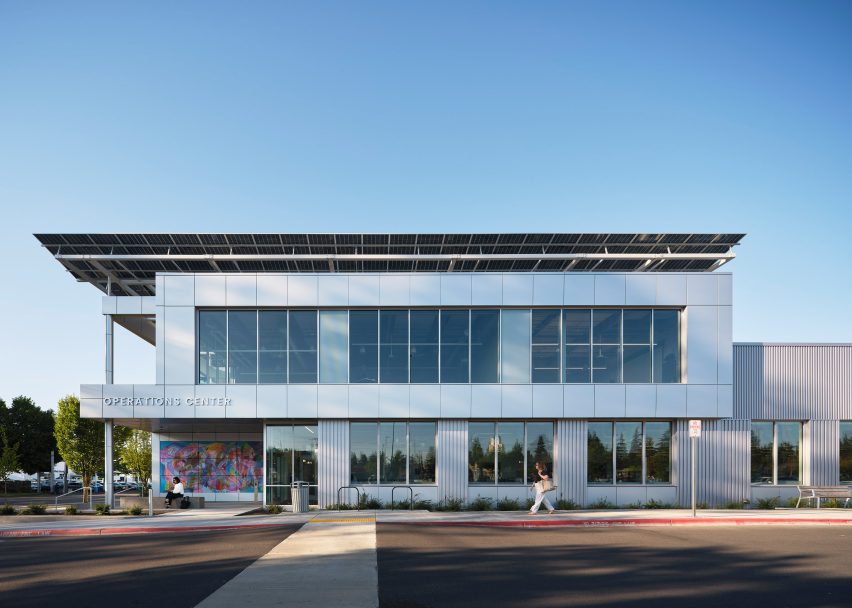
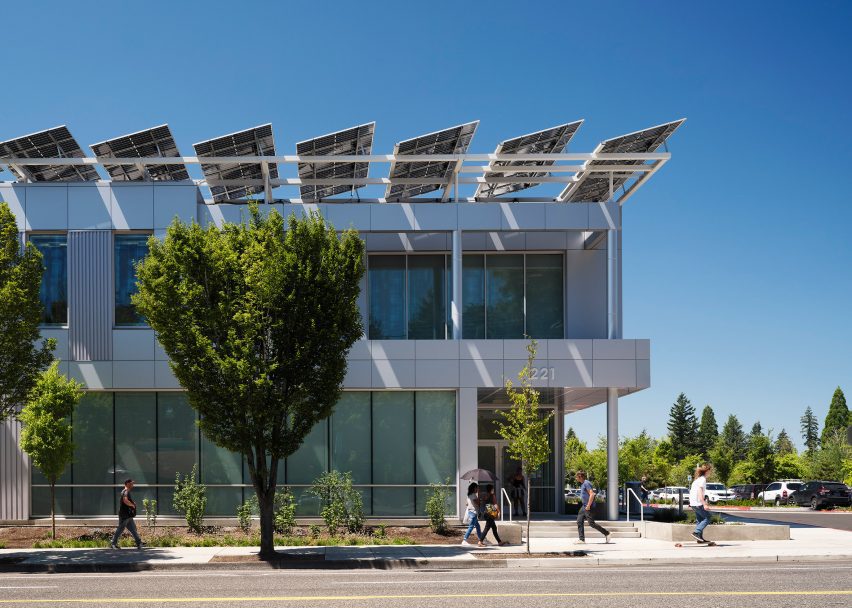
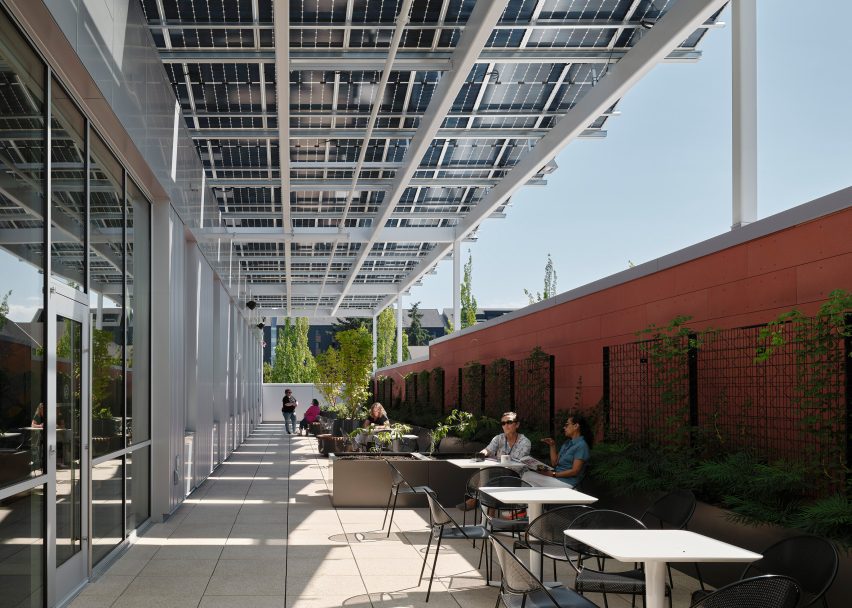
The exterior was clad in grey metal panels that contain up to 80 per cent recycled content and were made locally, within 145 miles of the site. The exterior also features deep-set windows with ceramic-fit glazing and photovoltaic panels used as shading devices.
The facility has a total of 600 solar panels, which "fully offset the building's energy use", according to the team. The panels are estimated to produce 353,000 kilowatt-hours (kWh) per year.
Inside, the team sought to create spaces that "prioritize the well-being, health and safety of the 130 employees who keep the library system running".
Ample glazing brings in daylight, with offices, meeting rooms and workstations placed on the perimeter of the floor plan for maximised sunlight and views. Skylights illuminate a central collections area.
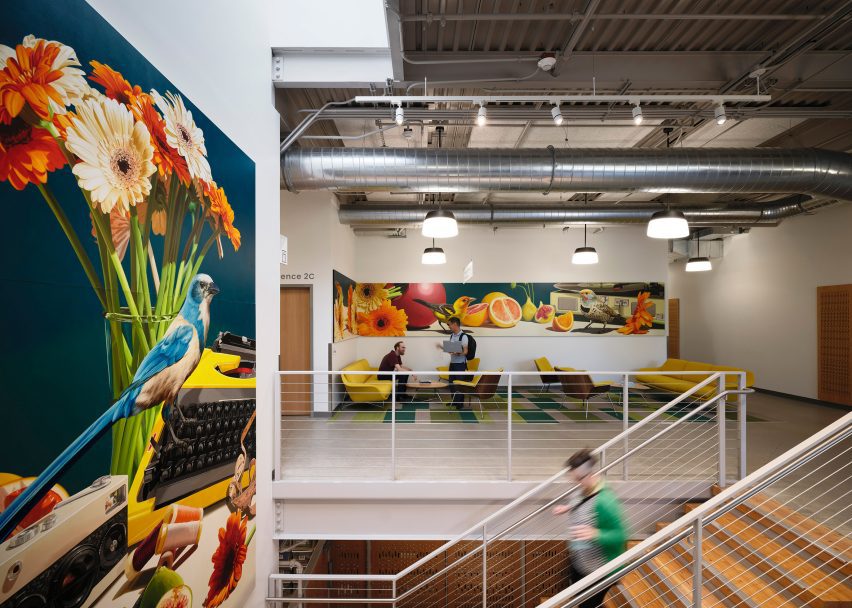
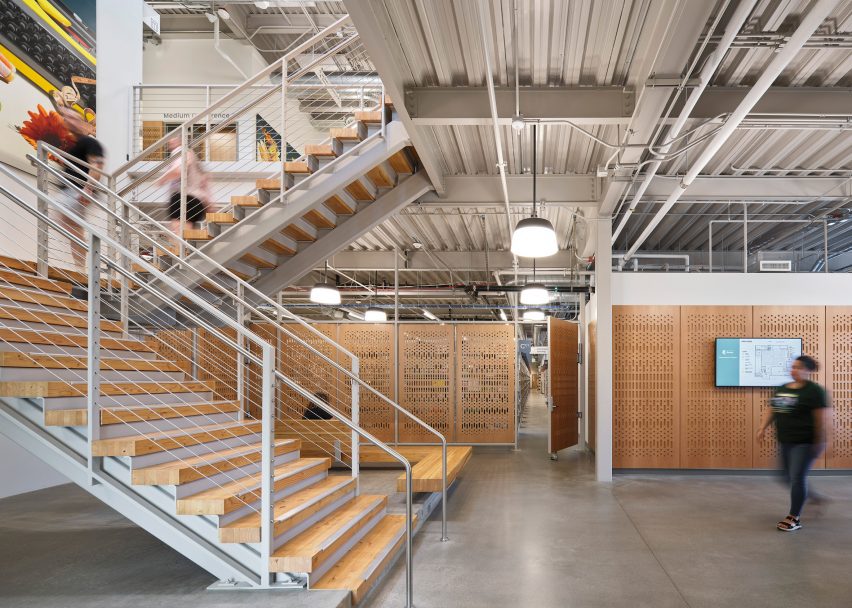
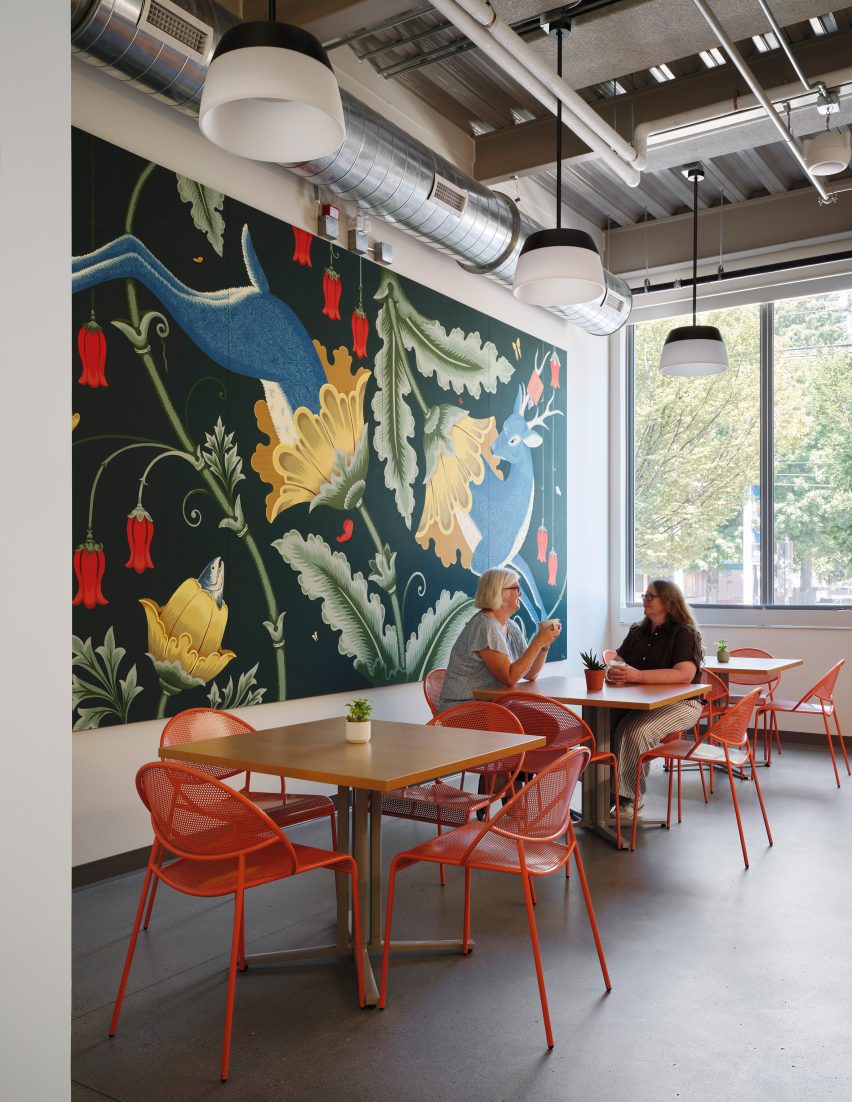
Natural materials such as wooden wall panels are found throughout, as is nature-inspired artwork.
"Common spaces are energized by large-scale, biophilic murals conceived by community artists with the Portland Street Art Alliance – to enliven the office and materials storage space," the team said.
A terrace on the upper level offers workers access to fresh air. The shaded outdoor space features outdoor furniture, potted plants and climbing vines.
The building was designed with natural disasters in mind. An enhanced air filtration system reduces pollution and seasonal wildfire smoke, and the structural system is designed for increased resilience in the case of an earthquake.
According to the team, sustainability was a guiding concern for the design.
To help reduce energy consumption, the building features a high-performance building envelope and high-efficiency MEP systems with heat recovery ventilator units.
The materials found throughout the building, including the exterior metal panels, are durable and low-maintenance. Some are made of recycled materials, such as the lobby stair and benches, which were fabricated using salvaged glue laminated beams.
Great care was put into the responsible disposal of material during the demolition and construction process.
The team estimates that by re-using an existing building, the amount of embodied carbon was reduced by 66 per cent compared to a new facility. The project is expected to achieve LEED Gold certification, along with zero-energy certification from Living Future.
Moreover, it is the first project to align with Multnomah County's commitment to eliminating the use of fossil fuels in all new buildings and major renovations.
Other projects by Hennebery Eddy include an Oregon fire station with a burnt-wood facade and a Seattle chapel with walls made of concrete and rough sandstone.
The photography is by Kevin Scott.
Project credits:
Design architect and architect of record: Hennebery Eddy Architects
Architecture team: David Wark (principal in charge), Meg Matsushima (project manager), Tereza Wiest (project architect), Alexis Wilson (interior designer), Alexander Lungershausen (specification writer), Haley Teske (staff designer), Bianca Baccarini, Dan Petrescu and Patrick Turina (staff team)
Contractor: Fortis Construction
Civil engineer: KPFF Consulting Engineers
Structural engineer: James G Pierson
Mechanical engineer: Arris Consulting
Electrical engineer: Interface Engineering
Landscape: Place Studio
Lighting: Biella Lighting Design
Acoustical engineer, theatrical, A/V: The Greenbusch Group
Sustainability consultant: Project Pivot