PAU designs Penn Station revamp to meet “political realities of the moment”

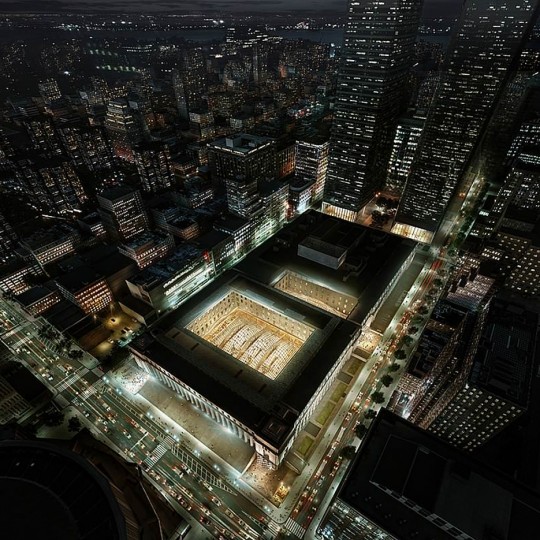
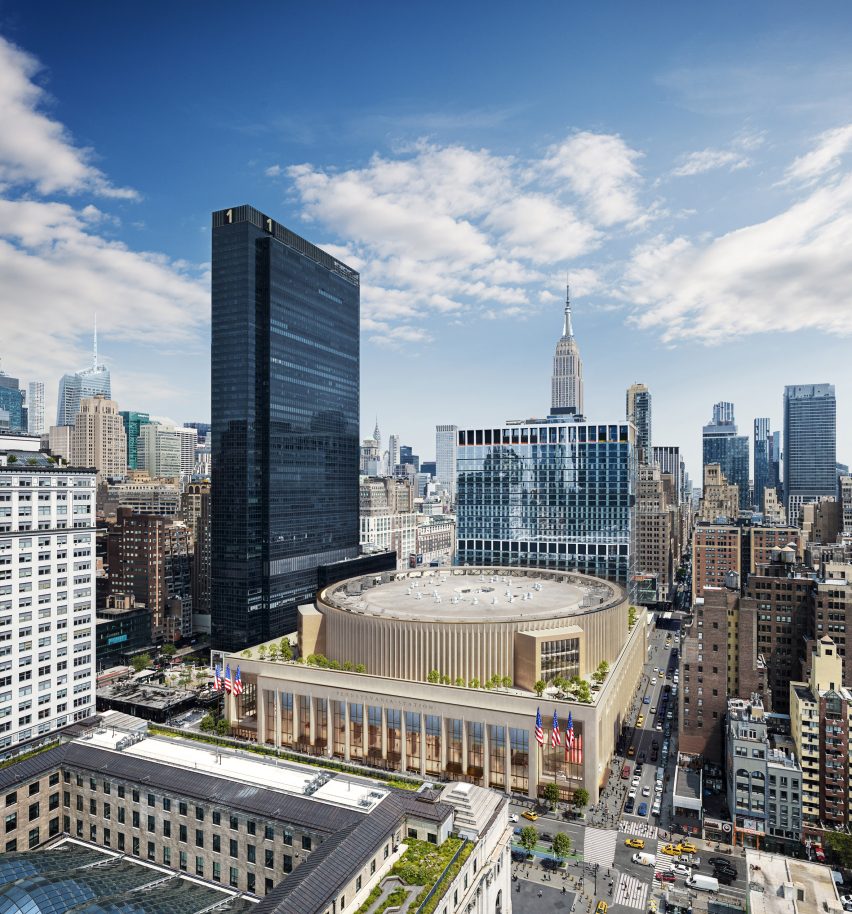
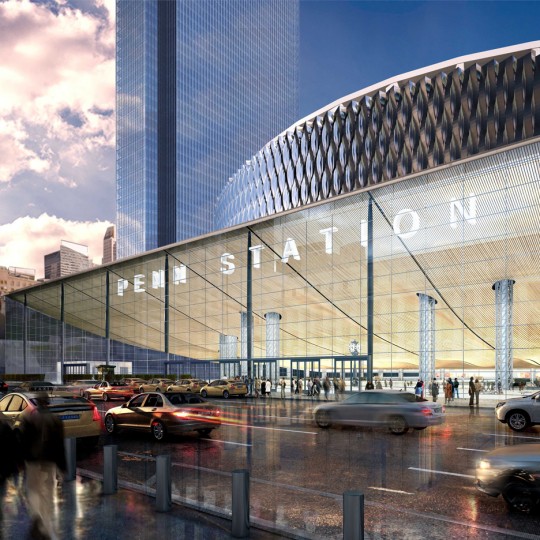
Architecture studio PAU has designed a renovation for New York’s Penn Station, adding a new colonnade and integrating the Madison Square Garden arena while brightening the congested internal spaces.
After years of debate over the design, a consortium called Penn Transformation Partners (PTT), led by private developers Halmar and Skanska, was selected to renovate the building by the Federal Department of Transportation and Amtrak.
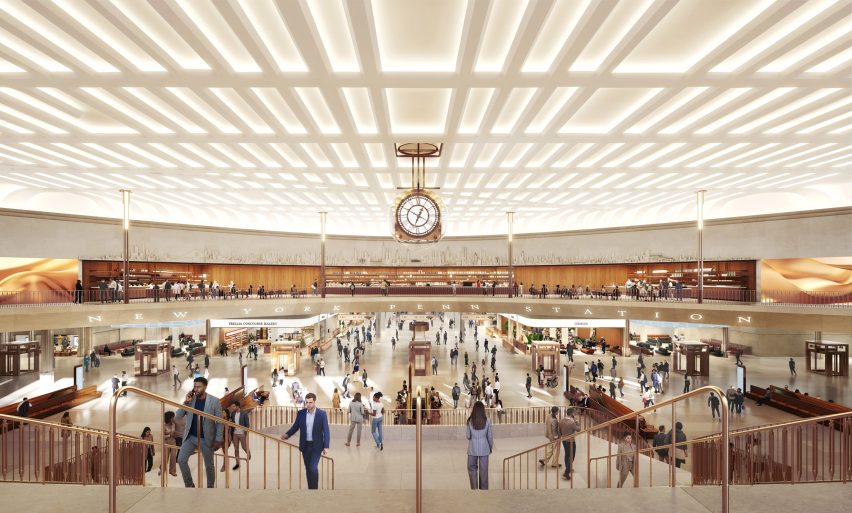
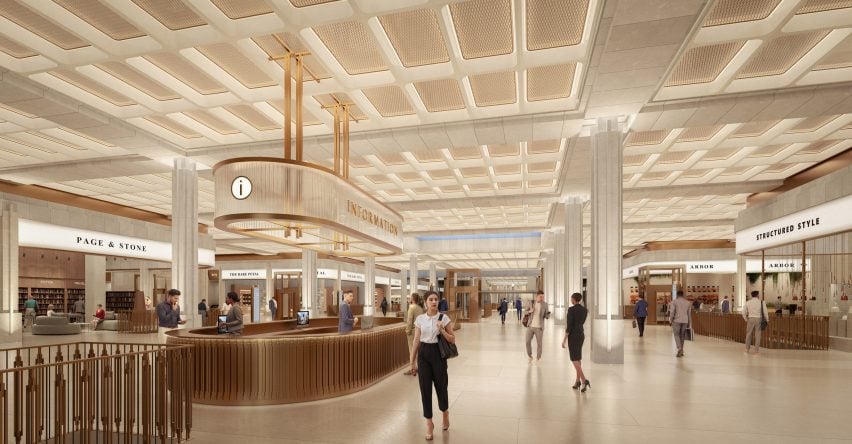
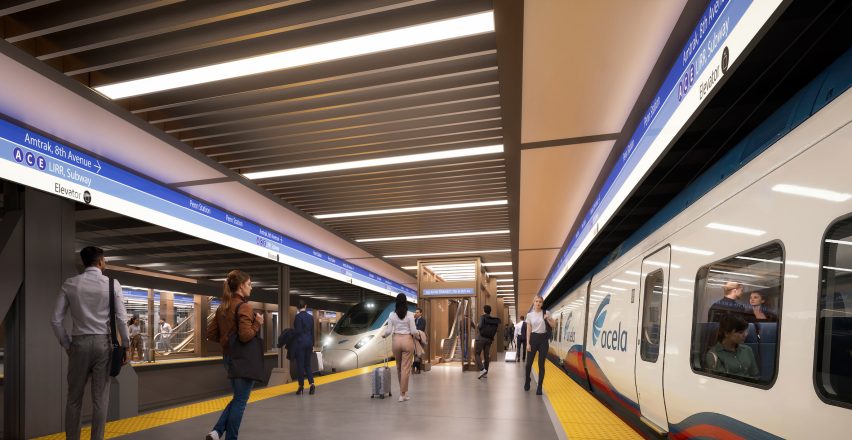
PTT’s plan features a design by PAU and HOK that references the original beaux-arts station – unceremoniously demolished in the 1960s – and retains Madison Square Garden (MSG) on the site. Overall, it brings in additional light and integrates wayfinding into the currently dark and labyrinthine station.
Former Transport for London commissioner Andy Byford will act as project lead and special advisor for Amtrak on the project, which has been stalled for years.
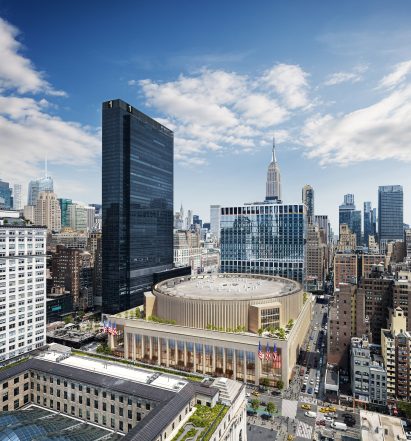
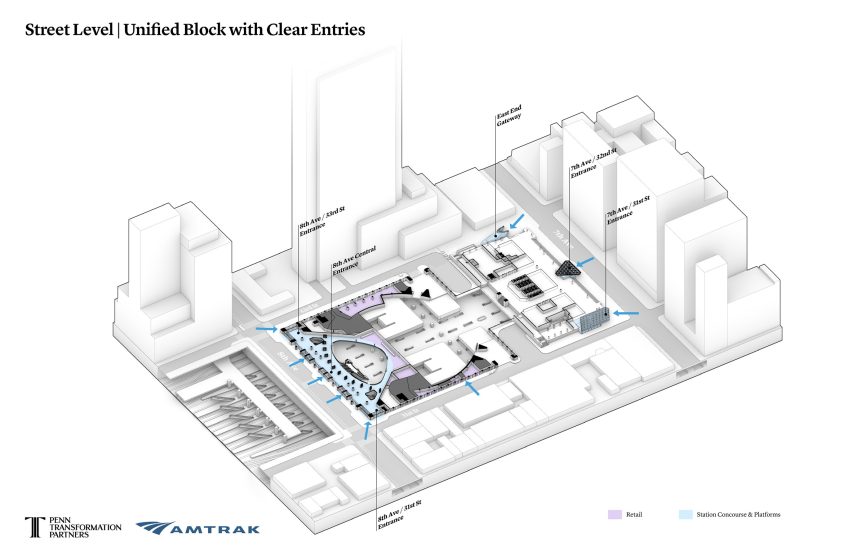
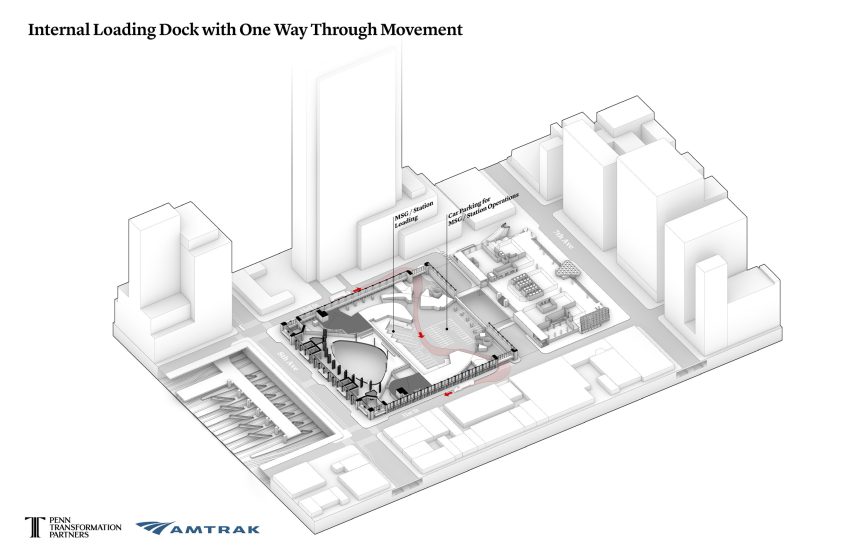
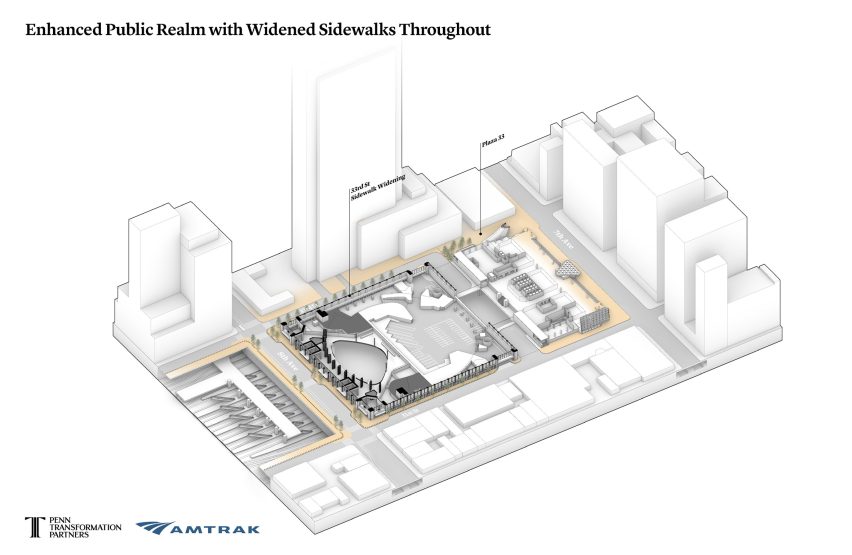
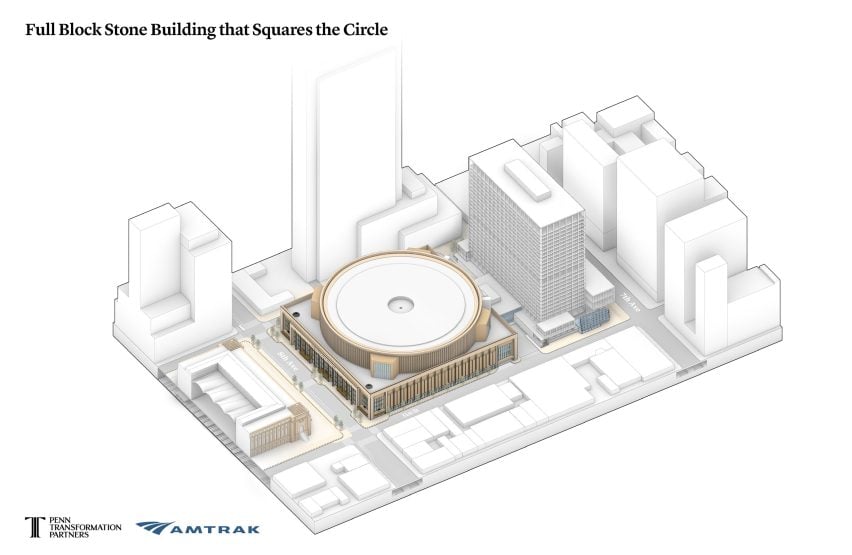
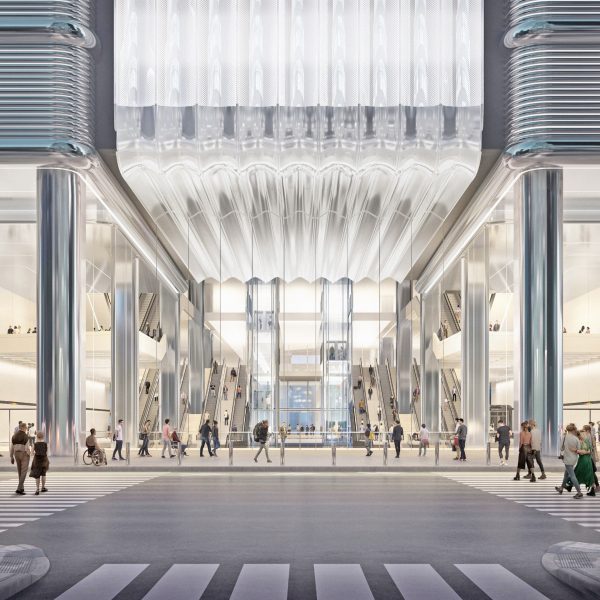
The general urbanism of the site remains close to designs put forward by PAU and HOK in 2023, including expanding the envelope to the street, using the resulting enclosure to create a station entrance atrium, and recladding MSG.
According to PAU, in the two years since the original design was released principal Vishaan Chakrabarti redeveloped the concept towards “civic architecture that is monumental, inspiring, and rooted in place”.
Art Deco and WPA-era references
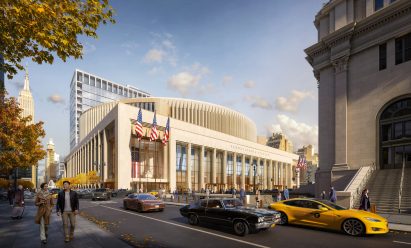
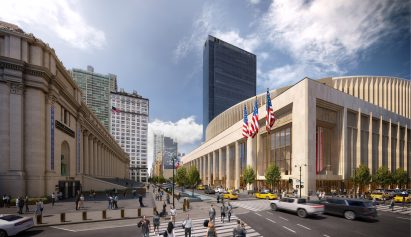
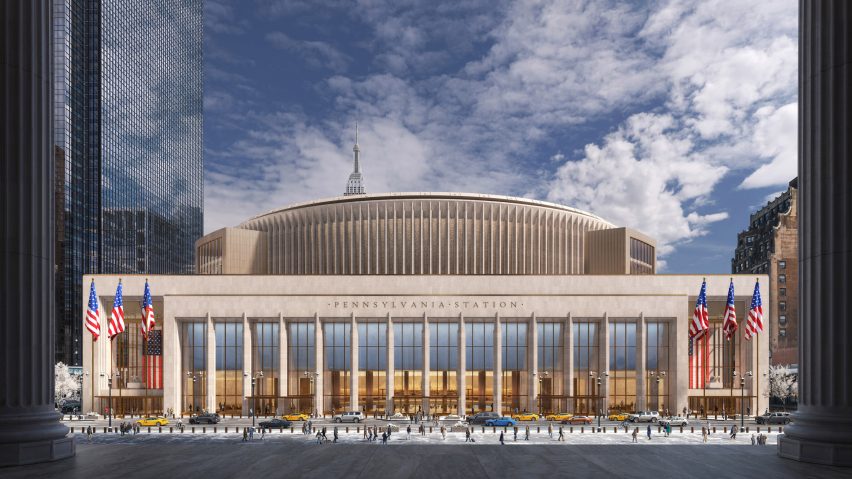
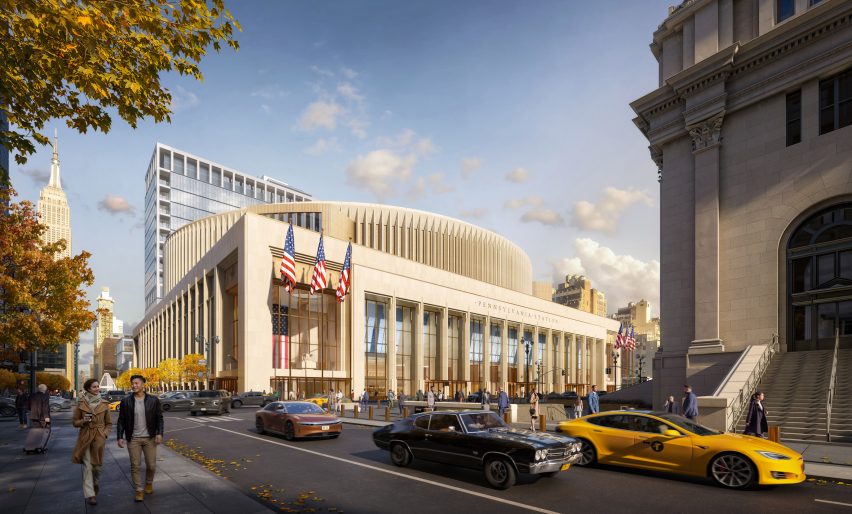
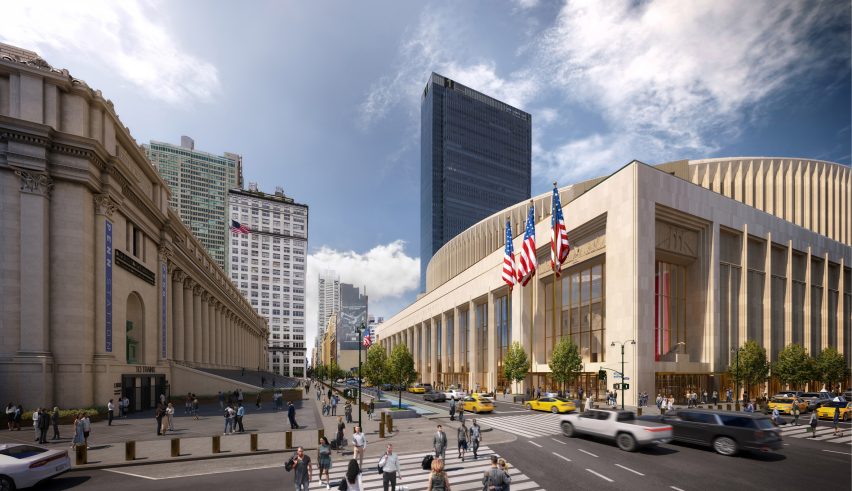
In the updated scheme, the entrances to MSG will be moved to the sides, allowing for a 450-foot-long (137 metres long) colonnade along 8th Avenue.
The studio dropped the minimalist geometries of the 2023 design for one that references art deco, WPA-era federal buildings and the “classical civic architecture” of Washington DC.
“The design meets the architectural, engineering, finance, and political realities of the moment,” said PAU.
“Rather than pursuing historical imitation, the team created a contemporary building that engages both New York’s architectural heritage and the demands of modern transit infrastructure.”
The facade will be treated with stone, bronze and “layered entablatures”. PAU noted the lack of any gilted details.
The project is being carried out “under the leadership” of US president Donald Trump and US transportation secretary Sean Duffy. Last year, Trump made waves in the architecture community with the Making Federal Architecture Beautiful Again executive order, promoting classical and traditional architecture for federal buildings.
While not included in the official image release, local publication Gothamist obtained images in late May showing a relief of Trump’s name in the interior of the station.
PAU’s scheme was chosen over the more explicit “classical” design put forward by the Grand Penn Community Alliance. It represents a middle way between the overtly nostalgic and the government’s preference for the traditional.
PAU “cognizant” of Trump executive order
When asked about the design changes in light of the executive order, Chakrabarti said they were informed by it.
“We were of course cognizant of the president’s executive order, which in its best reading calls for regionally responsive architecture, and we were equally aware of precedents from the WPA, New York’s art deco heritage, and the work of classical modernists like Paul Cret, Eero Saarinen, Carlo Scarpa and Aldo Rossi,” he told Dezeen.
“We synthesized these influences into the new design while contemplating the extraordinarily charged history of this site. Our studio is unanimous in our pride for and belief in this design – most importantly because it will finally deliver a safe, functional and dignified station for the public.”
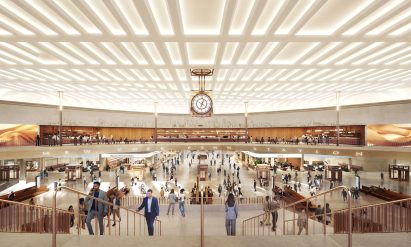
The present interior includes a central “parabolic” 50-foot-tall train hall with a grand staircase with higher ceilings for the concourses, shown in the renderings as coffered, with metal railings and details.
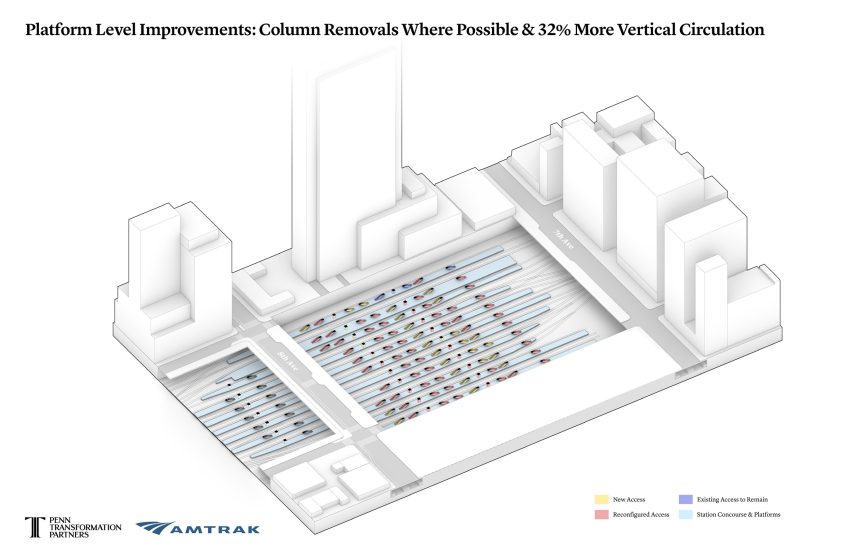
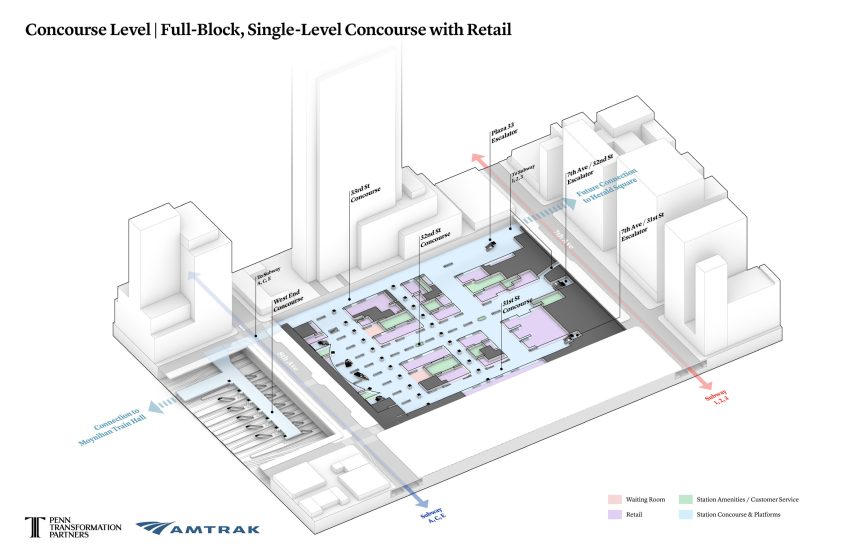
Retail programmes, egresses and more space in general are set to improve the experience of the hundreds of thousands of passengers that pass through the station daily.
PAU’s scheme also includes restored aspects from the demolished station.
“Public art and craft are embedded throughout the project, including restored eagle sculptures from the original Penn Station and new stone and terra- cotta ornamentation intended to reinforce the building’s civic identity and permanence,” said the studio.
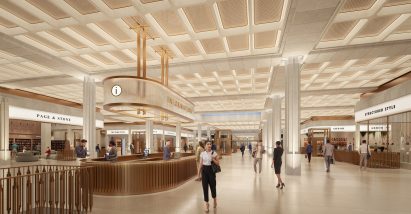
Though proposals in the past have sought to rebuild the station entirely, the reused elements of the current structures will be substantial.
“Consistent with the philosophy of radical reuse that defines this design, structural elements tied to Madison Square Garden are integral components of the transformed building,” said PAU.
“Existing columns are incorporated into a series of stone entry porticos known as the ‘McKim Vestibules,’ while the arena’s mast columns are clad in ribbed bronze and integrated into the train hall’s monumental interior geometry.”
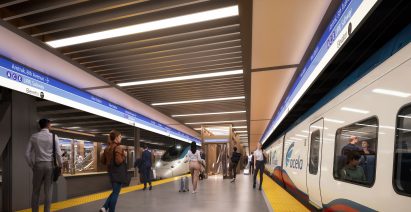
Works are planned to commence in 2027, with completion set for 2034. Along with support from HOK, structural Severud is part of the project team.
Across the street, the restoration of the Daniel Patrick Moynihan Train Hall, which includes a massive glass roof, was completed by SOM in 2021.
PAU has been involved with other significant reuse projects in New York. In 2023, it installed a glass structure inside the historic brick envelope of the 19th-century Domino Sugar Refinery to create a new office building.
The imagery is by PAU unless otherwise stated.
Read more
Recommended stories
US government and Amtrak select team for Penn Station redevelopment
Proposal calls for “rebirth of classical architecture” at Penn Station in New York
HOK and PAU unveil latest designs for Penn Station renovation
Four architects reimagine New York’s Penn Station
New York’s Pennsylvania Station renovation and expansion plans revived
New York City pledges $51 billion for Midtown West architecture projects
Foster + Partners set to redesign New York transit terminal around central atrium