RAMSA completes sensitive extension of New York Historical museum
Architecture studio Robert AM Stern Architects has completed an extension to the New York Historical museum in New York informed by the building's original design from the early 1900s.
The Tang Wing for American Democracy (The Tang Wing) contains new galleries and exhibition spaces, and is affixed to the back of the main New York Historical building along W 76th Street in the Upper West Side.
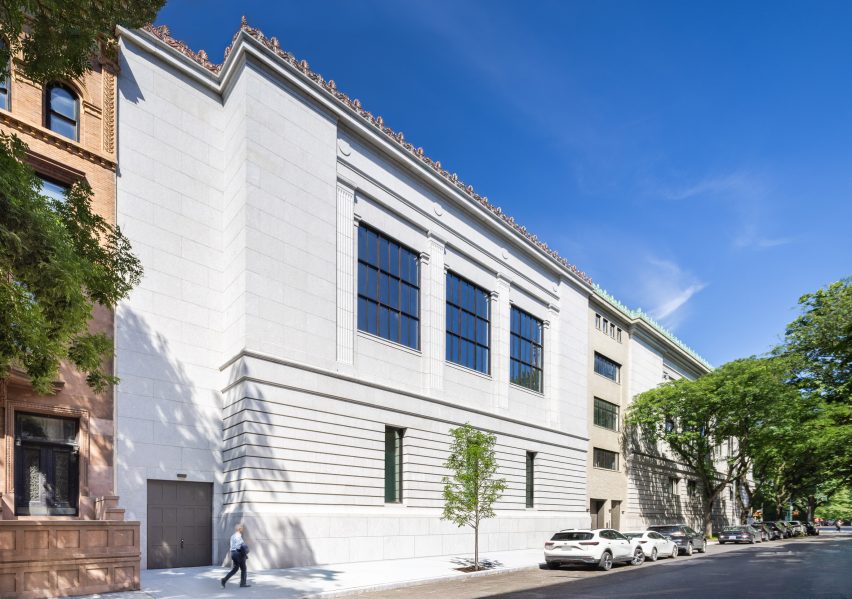
It is the first expansion to the museum in 75 years, building upon a core designed by York & Sawyer and constructed in the early 1900s and an expansion in 1938 by Walker & Gillette, which added two end pavilions.
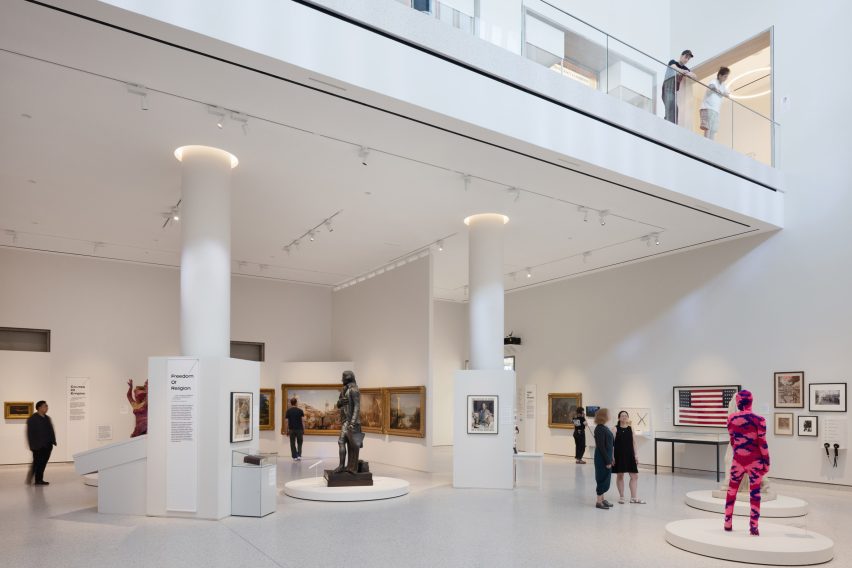
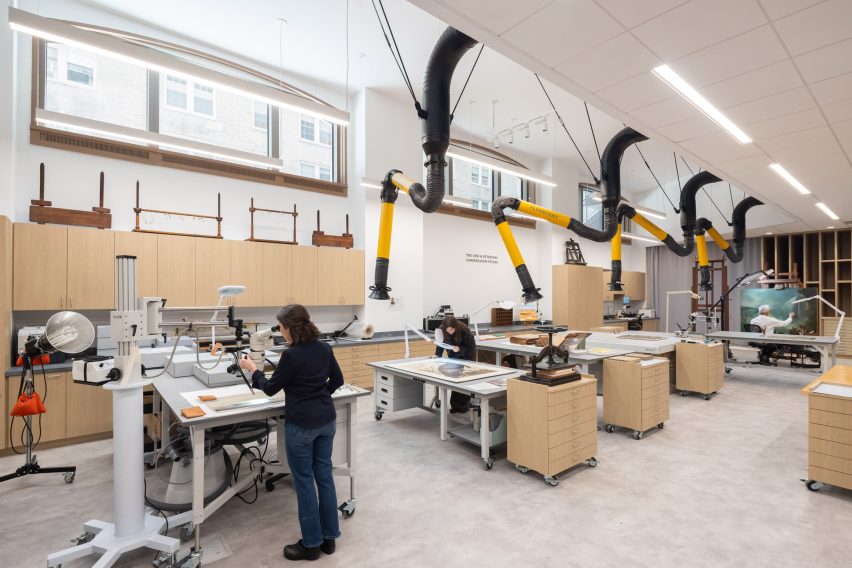
The Tang Wing connects to the main building via interior passageways, and opens up into the main triple-height Klingenstein Family Gallery, while smaller exhibition spaces, outdoor areas, and a basement-level conservation studio designed by Sam Anderson Architects surround this central space.
Its facade is largely neoclassical, and clad in the same granite from a quarry in Deer Isle, Maine that supplied the original structure nearly 120 years ago, while the bronze windows and a copper cornice also mirror the existing museum building.
RAMSA partner Graham S Wyatt told Dezeen that these choices were informed by the original drawings by York & Sawyer and Walker & Gillette.
Wyatt explained that, based on the team's research, Walker & Gillette designed "a very sympathetic" expansion to the core building, and RAMSA decided to follow suit in their approach.
"We did a proportional analysis of York & Sawyer, which, interestingly, Walker & Gillette had clearly done, because when we analysed their buildings side by side, there's a consistent set of proportions that both firms used," said Wyatt.
"For us, our decision was to do something that was as much as possible an extension of what we think York & Sawyer might have done, but go beyond that."
"So for example, we used the Ionic order, which they used, but we didn't use it in exactly the same way they did. We used the antas version, which those who are insiders of classical architecture know is a slightly different declension," he continued.
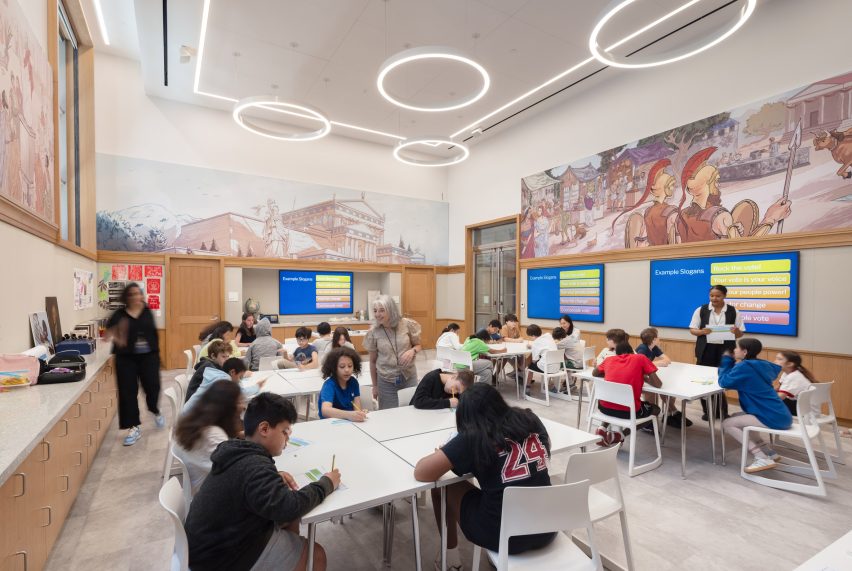
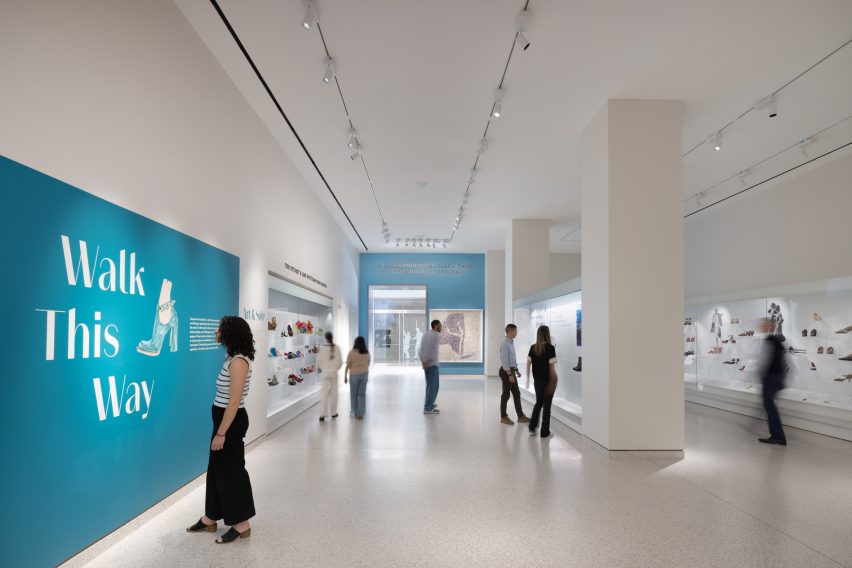
The Tang Wing's main exhibition hall is dedicated to a rotating display of the museum's collection of American art, while it also contains classrooms for the museum's educational programming on the second floor.
The fourth floor contains unfinished spaces that will eventually become the first permanent home for the American LGBTQ+ Museum, slated to open in 2028.
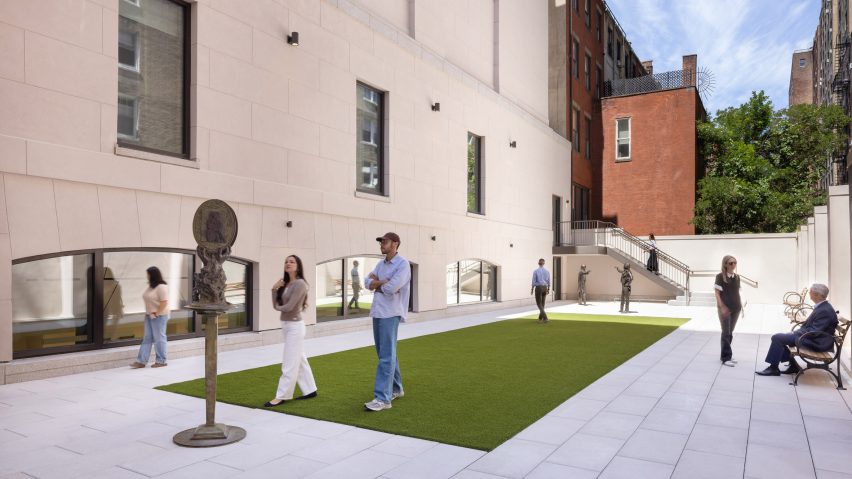
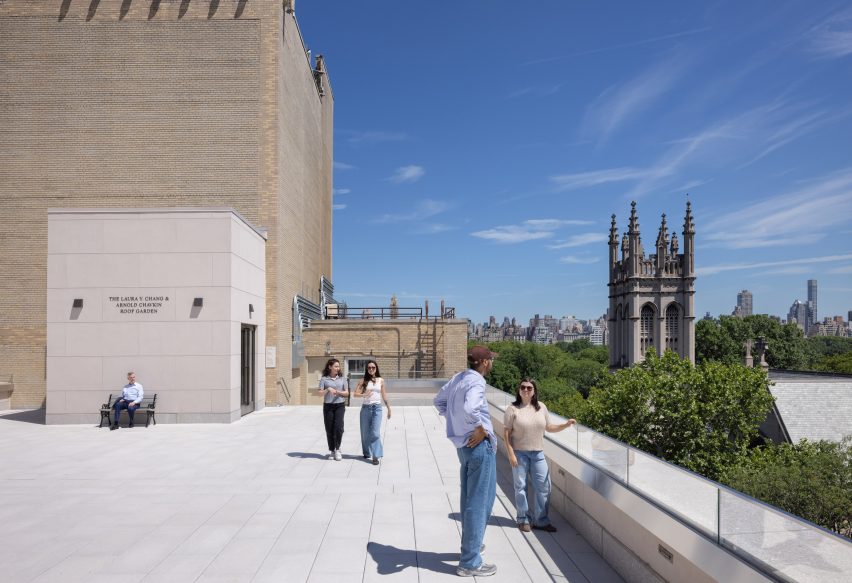
The expansion also includes outdoor spaces, such as a courtyard sculpture garden, and the addition of a rooftop garden on top of the Tang Wing, designed by Nelson Byrd Woltz Landscape Architects and set to be completed later this year.
Wyatt said that the building's designation as a "triple-landmark" by the Landmarks Preservation Commission and the West 76th Street and Central Park West historic districts also deeply influenced the building's design, as many different groups weighed in on the building.
"There is a question when you're doing a new building that is an addition to a historic building that is – do you consciously contrast or do you do something which consciously fits in?" said Wyatt. "And I use the word consciously, because both of those things need to be thought about very carefully."
"If you're going to fit in, it's not a casual undertaking. You have to really know and study the historic architecture, so that what you do is really well considered and scholarly, and a meaningful extension of what was done originally."
Last year, RAMSA collaborated with Maya Lin on a Washington DC building. The studio's founder, Robert AM Stern, also passed away at 86 late last year.
The photography is by Bridgit Beyer