Cubitts' first dedicated headquarters take over Victorian stable in King's Cross
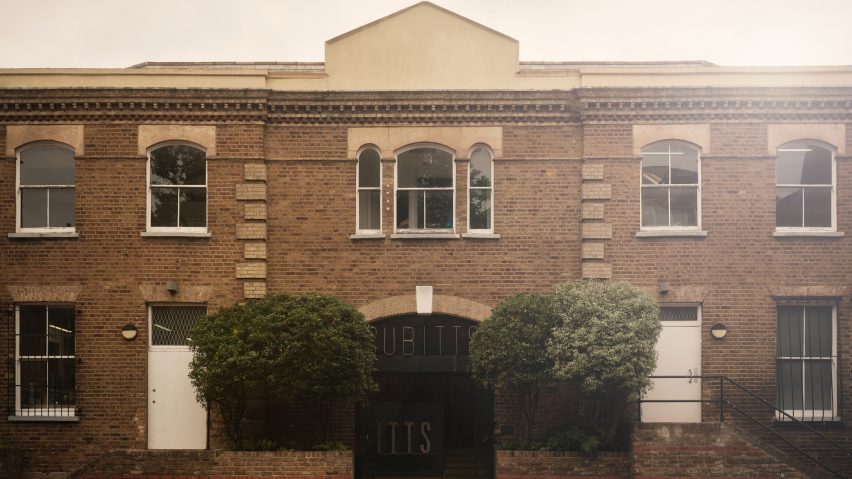
British firm 51 Architecture has converted the former stables of a vinegar brewery into a head office for local eyewear brand Cubitts, now home to "the only spectacle-making workshop in central London".
The Victorian mews complex, just off Caledonian Road in King's Cross, originally served as a working stable for the Crosse & Blackwell Vinegar Works in the 1880s before being repurposed to form an office for a publishing house in 1985.
Now, the 13,000-square-foot site has been reimagined as The Yard – the first dedicated headquarters for Cubitts, bringing together its design studio, factory and training academy under one roof.
Although set in an area that was once home to pioneering British retail opticians like Dollond & Co – credited with inventing bifocals and achromatic lenses – Cubitts founder Tom Broughton believes its HQ might now be central London's "only spectacle-making workshop".
"As far as I'm aware, Cubitts is the only place in the UK bringing together frame design, frame making, lens glazing, repair, training, and archive under one roof at this scale; and one of only a small handful in the world," Broughton told Dezeen.
"It is a revival of the old manufacturing optician: the person who tested your eyes might also understand the lens, grind the glass, make the frame, fit it, adjust it, and repair it."
Set just north of where Dollond and Co was founded in 1750, the mews originally consisted of two long stable buildings flanking a cobbled courtyard. But in the 1980s, the pair were connected by a post-modern extension, with a skylit atrium used to bridge the gap between them.
Instead of adding more elements to this architectural cacophony, Cubitts and 51 Architecture set about peeling away the many layers of extraneous finishing and carpet that had been added over the building's 140-year life.
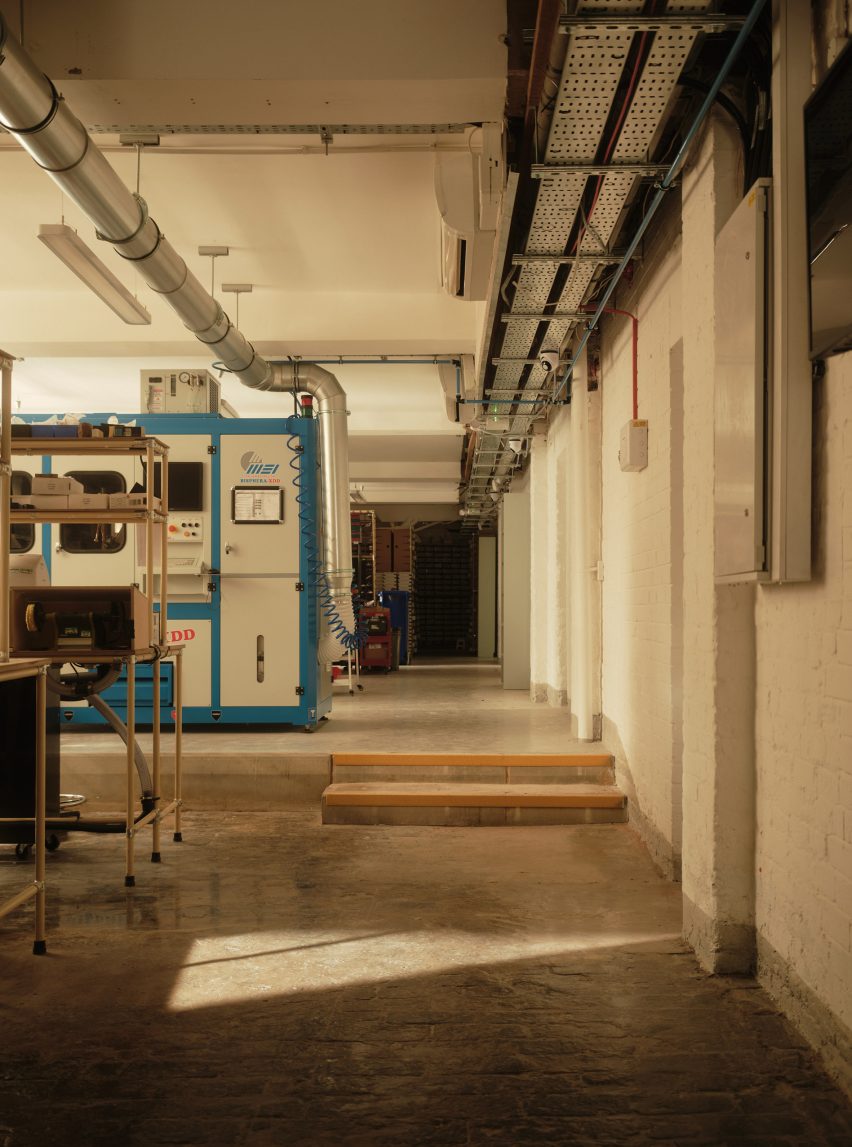
"We've stripped away the paint and the lipstick, and let the building speak for itself," Broughton explained. "The London stock brick, the Victorian stable fabric, the original cobbled floor, the pine boards, even the 1980s post-modern concrete and purple ducting – all of it is part of the story."
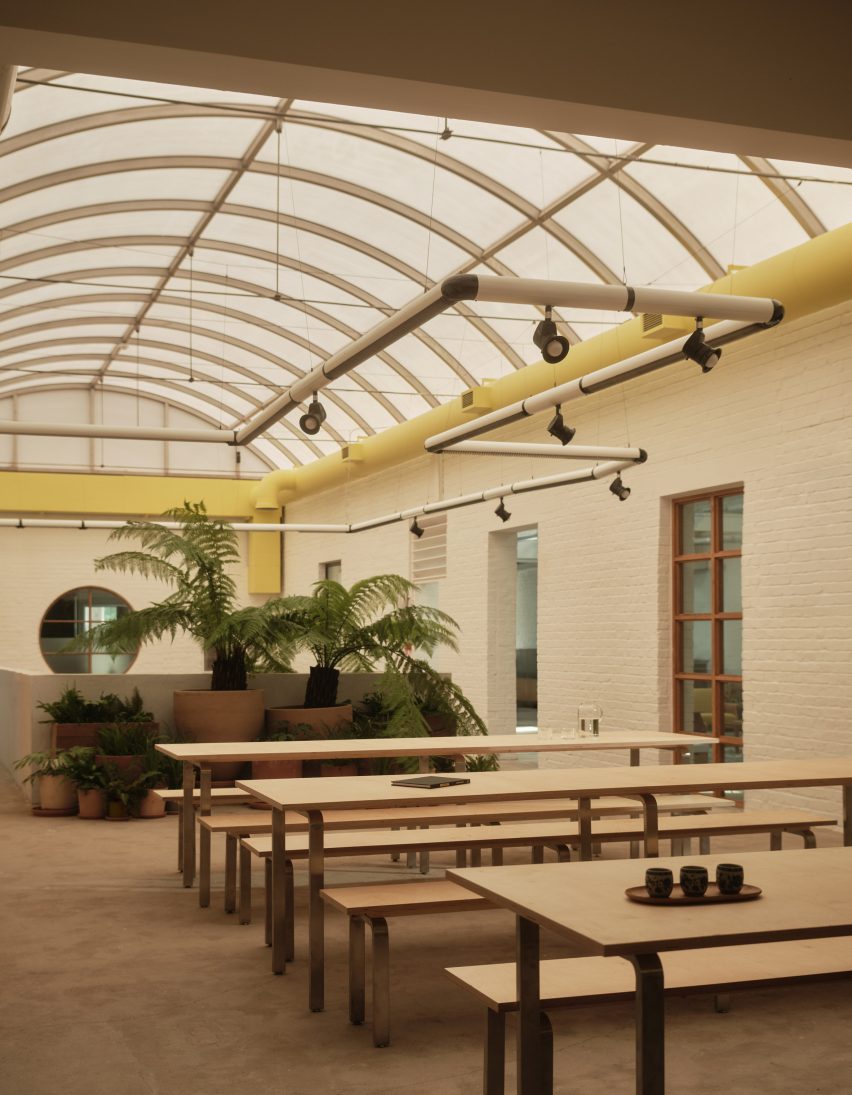
51 Architecture's primary task lay in revealing this history while reconfiguring the layout to accommodate the building's many new functions, 60 staffers and the transformation of glass and plastic into functional spectacles.
"The building already had a 140-year life when we met," explained founders Peter Thomas and Catherine du Toit. "At the core of its long and varied life were robust construction decisions that we respected and reframed to clarify and support Cubitts' brief."
"The building fits Cubitts' vision for a facility under whose roof the whole organisation is able to be together for the first time."
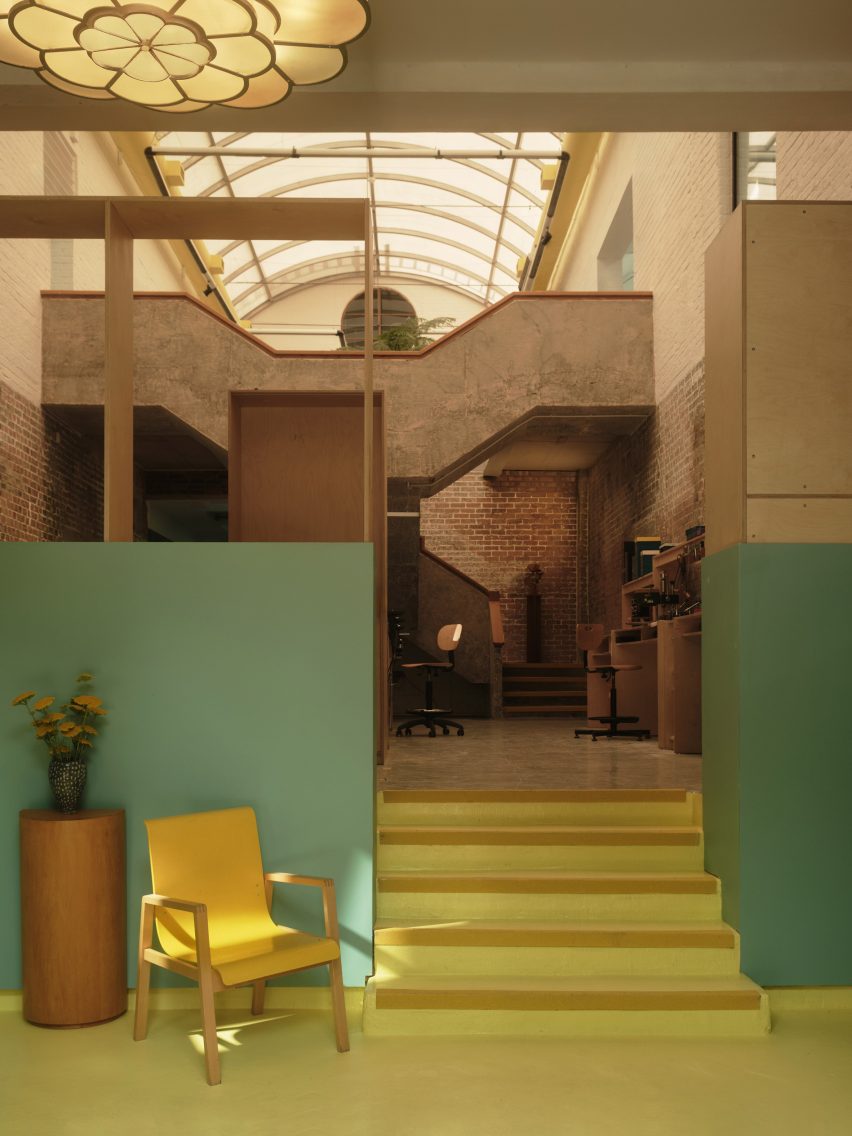
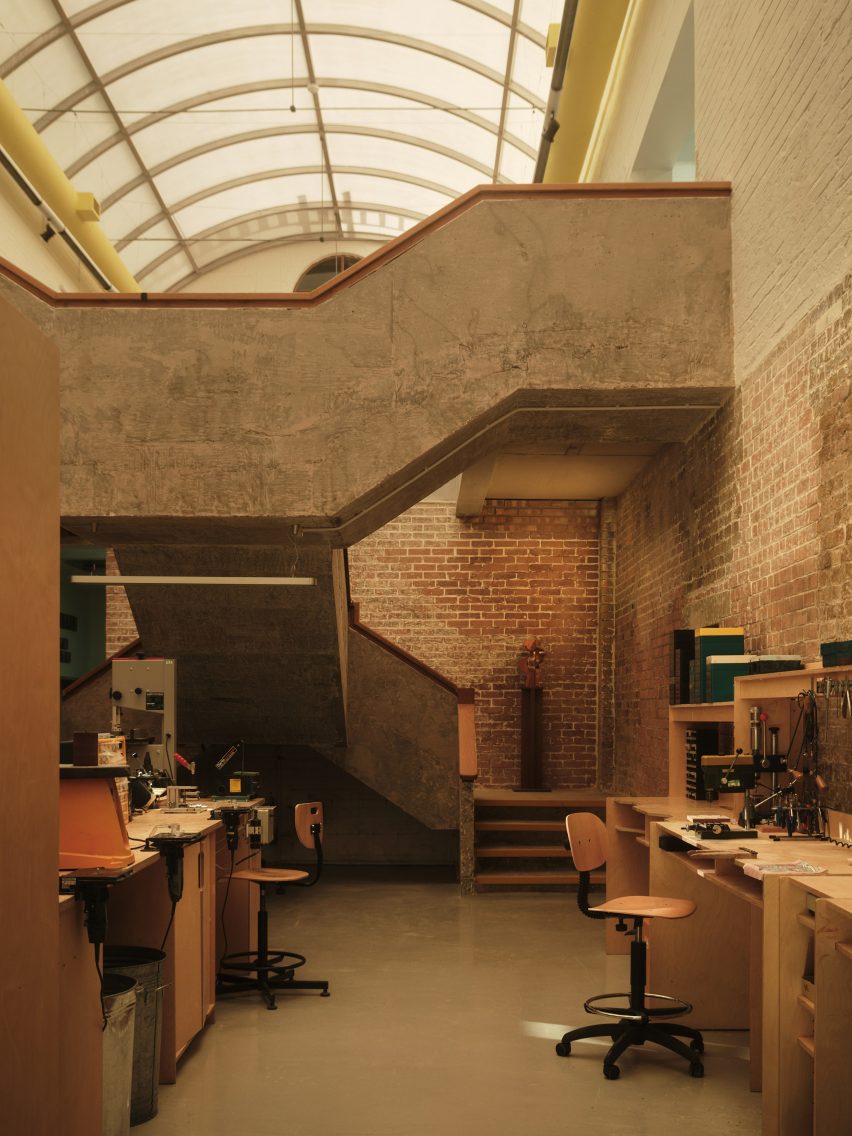
At the centre of the plan, in the light-filled double-height atrium, the studio positioned the workshop, with rows of light wooden workstations where craftsmen finish and assemble glasses by hand.
51 Architecture buffed back the lower half of the whitewashed walls and the central concrete staircase leading up to a mezzanine, revealing the raw brick and concrete.
And the staircase itself was slightly trimmed back so that Cubitts could fit in its heavy production machinery – the five-axis CNC machines used for cutting spectacle frames out of acetate sheets, plus the equipment for glazing and milling lenses, housed in the adjoining optical laboratory.
All other areas lead off from this central atrium in a bid to place production at the heart of the experience for both employees and customers, who can visit the HQ to have bespoke spectacles fitted in a consultation room accessed via the central stairs.
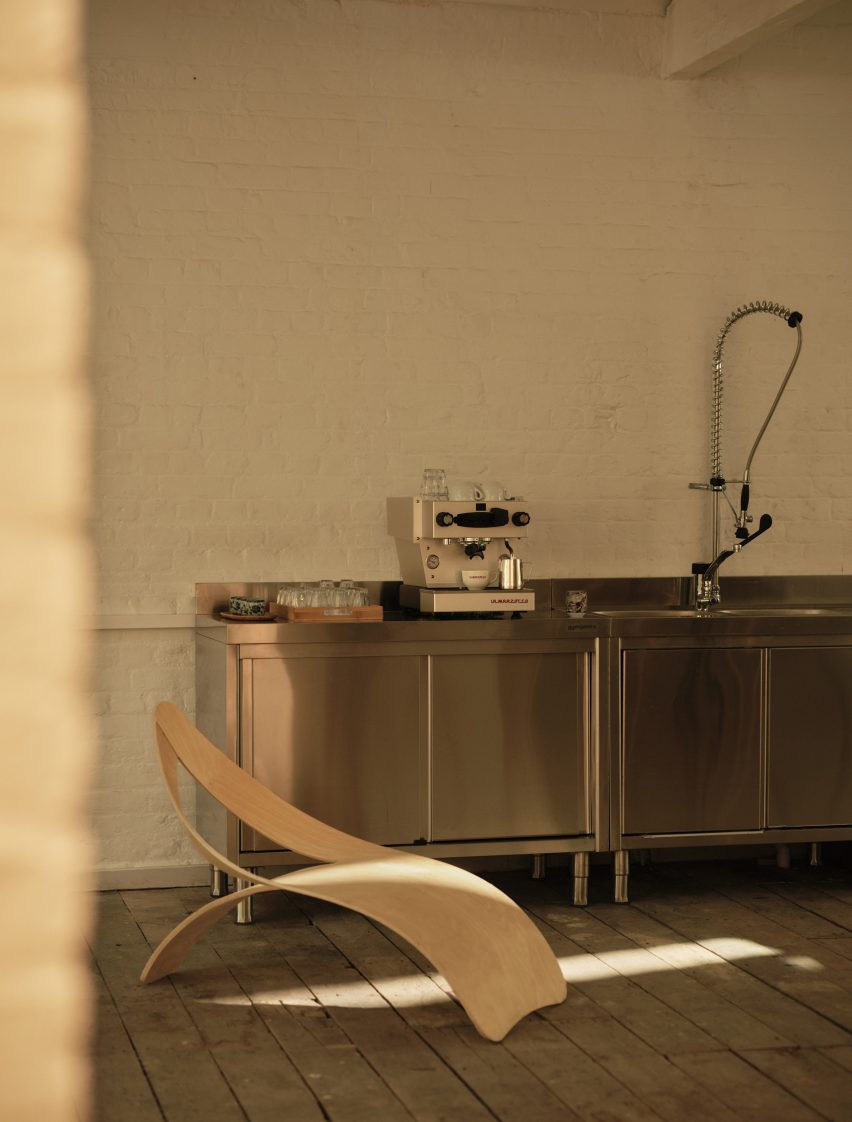
One floor up on the mezzanine, 51 Architecture added a canteen with a stainless-steel kitchen and wood-topped tables and benches that can be used for both staff meals and more formal occasions such as talks, workshops and industry events.
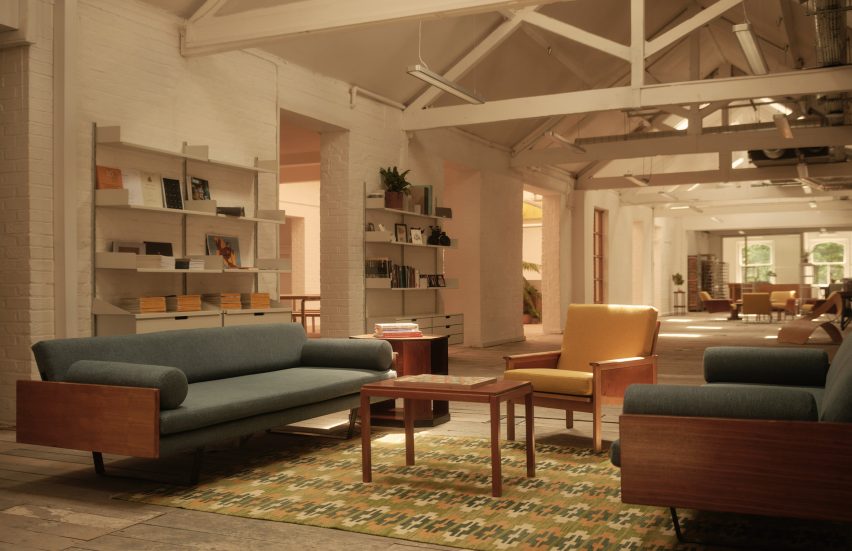
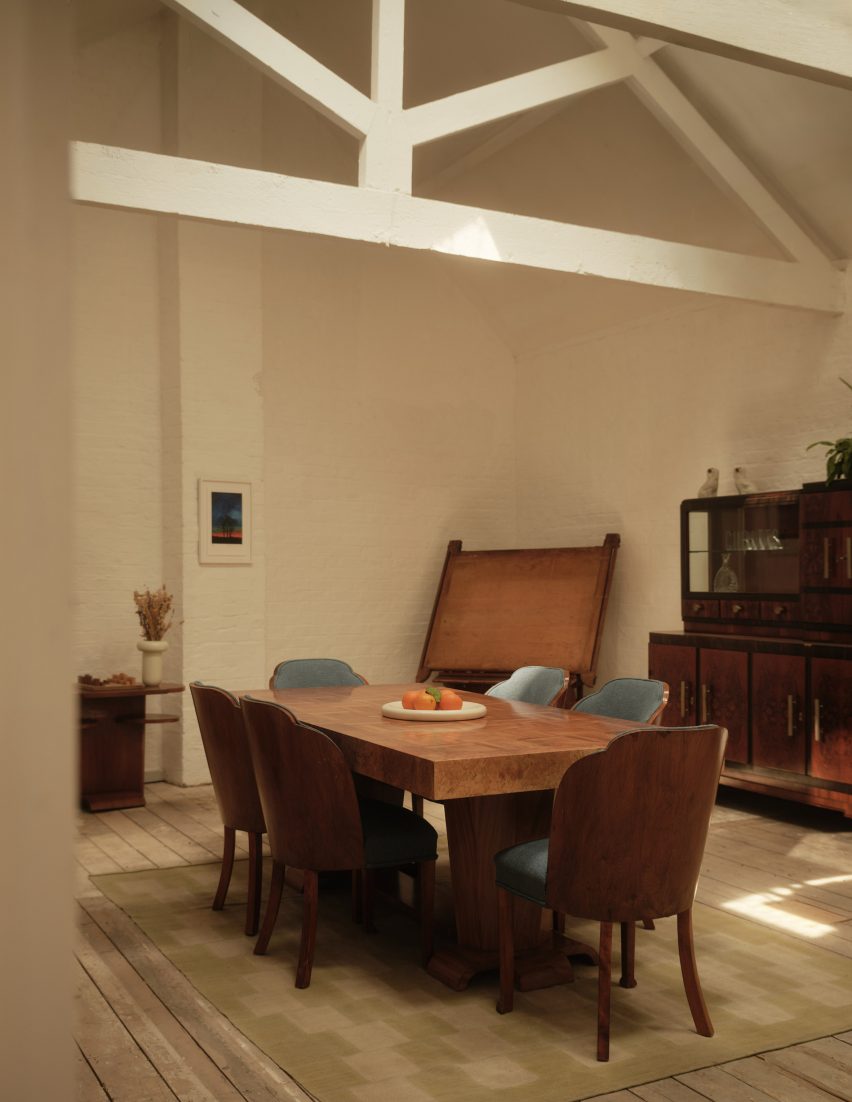
From here, wood-framed doorways lead off into the old stables, where centuries-old pinewood floors and exposed roof beams frame a boardroom and various meeting rooms filled with early modernist and 1930s furniture.
The lower levels house a tightly packed stock room as well as Cubitts' growing archive. This includes the company's own experimental creations as well as historically significant spectacles from the last two centuries, with examples made of gold, shell, horn and casein – an early plastic derived from milk protein.
To bring a sense of levity to the raw building fabric exposed in the renovation process, Cubitts enlisted Simon March of independent paint shop Colorville to colour-drench doors, joists and other key architectural elements.
"Most of the building remains largely white and neutral and a bit beaten up, so these coloured frames act as deliberate features to discover and seek out," March explained.
The building's symmetrical layout, with the old stable buildings on either end, allowed him to develop a colourblock palette, with green tones used on the left and red on the right – a playful reference to the duochrome test used by opticians to fine-tune a prescription.
Following this same optical logic, the atrium at the heart of the plan brings in elements of butter yellow applied across furnishings and the formerly purple ducts, which March described as "wonderfully naff".
"Yellow became the natural dividing colour, sitting between them on the colour spectrum," he explained. "The yellow wavelengths hit exactly on the centre of your retina, the macula, where we perceive colour. Purple, having a red bias, felt less neutral as a divider."
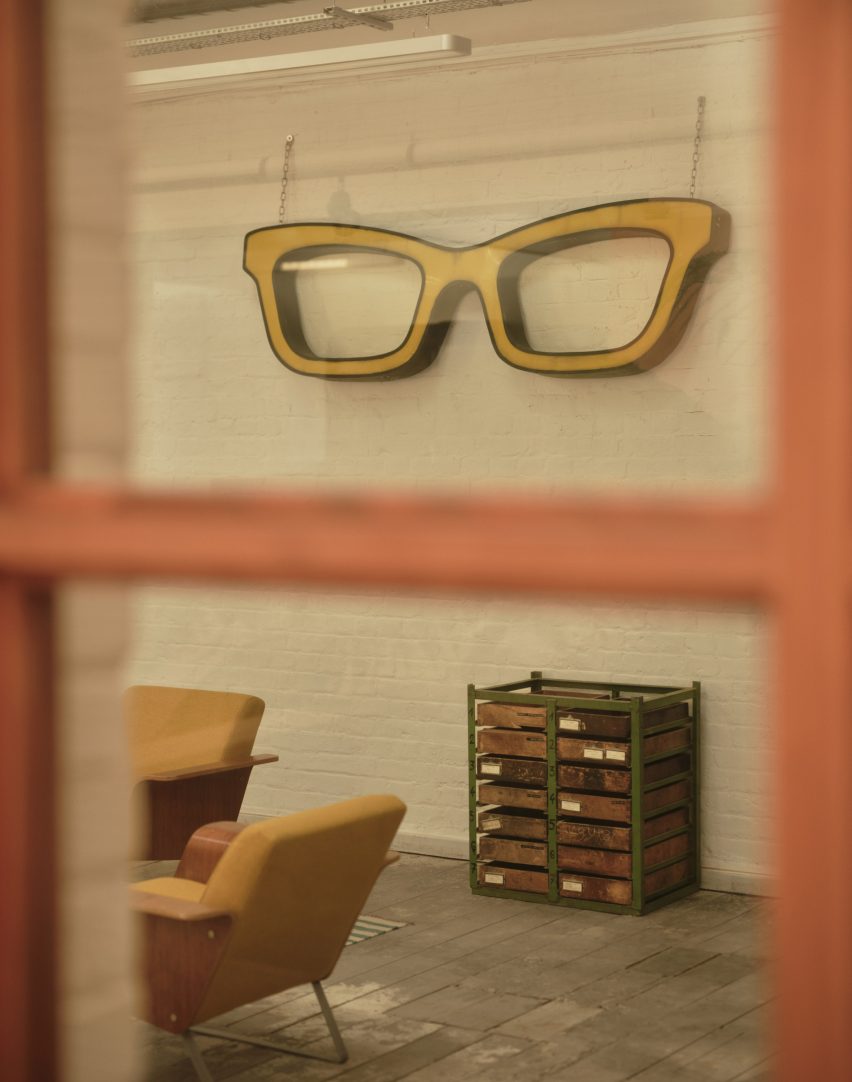
Other touches of whimsy found across the building include a vintage 1970s opticians' sign and a floral pendant light salvaged from an art deco cinema by master spectacle maker Lawrence Jenkin, who taught Broughton how to make frames and now has his workshop in The Yard.
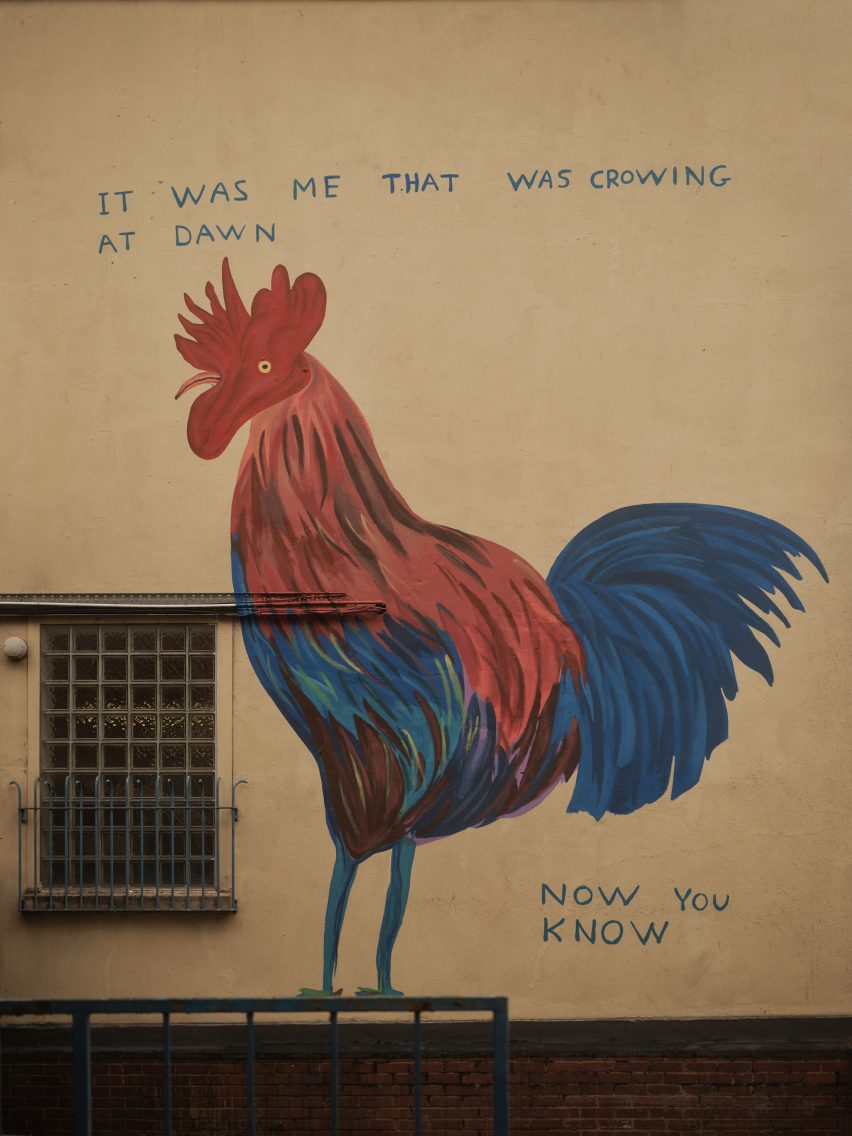
British artist David Shrigley, a longtime collaborator who previously created custom specs for a Cubitts charity auction, also painted a giant rooster mural on the building's west-facing facade.
"It was me that was crowing at dawn. Now you know," it reads in Shrigley's customary childlike lettering.
Founded by Broughton in 2013, Cubitts is no stranger to reviving historic interiors, having previously set up shop in a Belgravia townhouse and a jellied eel restaurant.
The photography is by Felix Speller.