


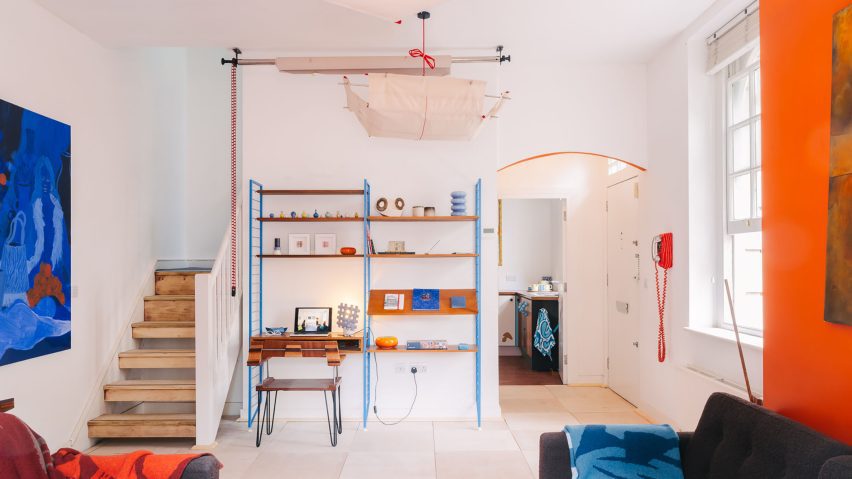
The University of the Arts London has transformed a drab guest quarters at one of its colleges into a colourful showcase that lets visitors eat, sleep and bathe in student and graduate design.
The two-bedroom Atterbury Flat – located on the Chelsea College of Arts campus, a Grade II listed former Royal Army Medical College building – has been used to host visiting professors and dignitaries since the university moved into the premises in 2005.
But University of the Arts (UAL) lecturer Zoë Tynan-Campbell saw an opportunity to turn it into something more – a living and "live-in" archive of student work that had so far gone largely uncollected by the university.

UAL is the second top-ranked university for art and design in the world, with six colleges including Central Saint Martins under its banner, allowing her to draw from a deep well of talent.
Working with alumni Abigail Rigby and Bhairavi Yogasivam as co-curators, Tynan-Campbell engaged more than 400 students and graduates from 58 courses across all colleges in the endeavour, ultimately purchasing 117 works for the first round of acquisitions.
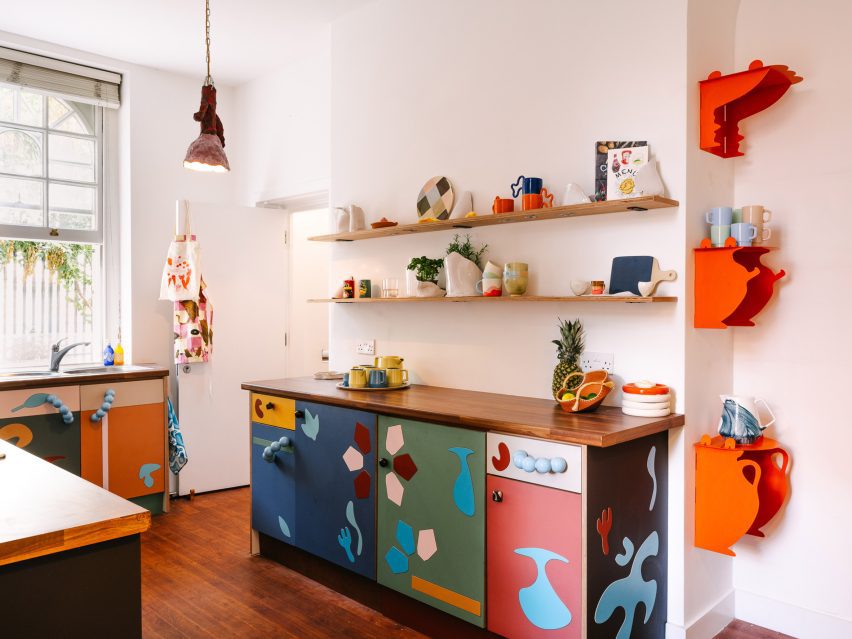
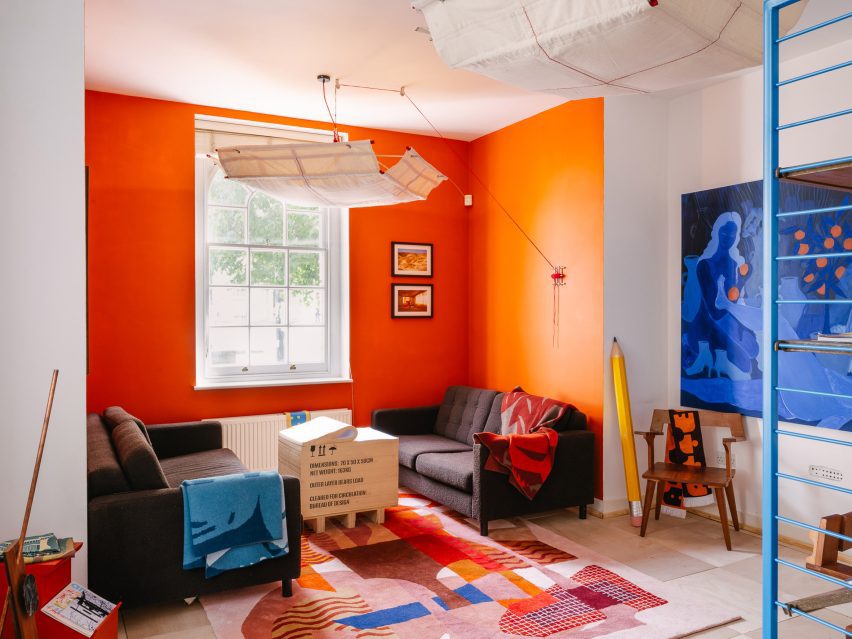
These range from fantastical pieces that attracted attention at graduate shows – like a colour-changing chair and a conceptual coffee table made of 160 kilograms of stacked paper – to widely available products from companies established by UAL veterans.
The latter category includes refillable soap by Blackmarket, foldable clothes hangers by Easy Hang and cookware hand-moulded from Indian river clay by Tiipoi.
Many of the pieces were made specifically for the flat, including bathroom tiles and a matching sink in a gradient of greens by ceramicist and County Hall Pottery director Emma Louise Payne, as well as a giant pencil by multidisciplinary designer Neha Ratanchand for signing the guestbook.
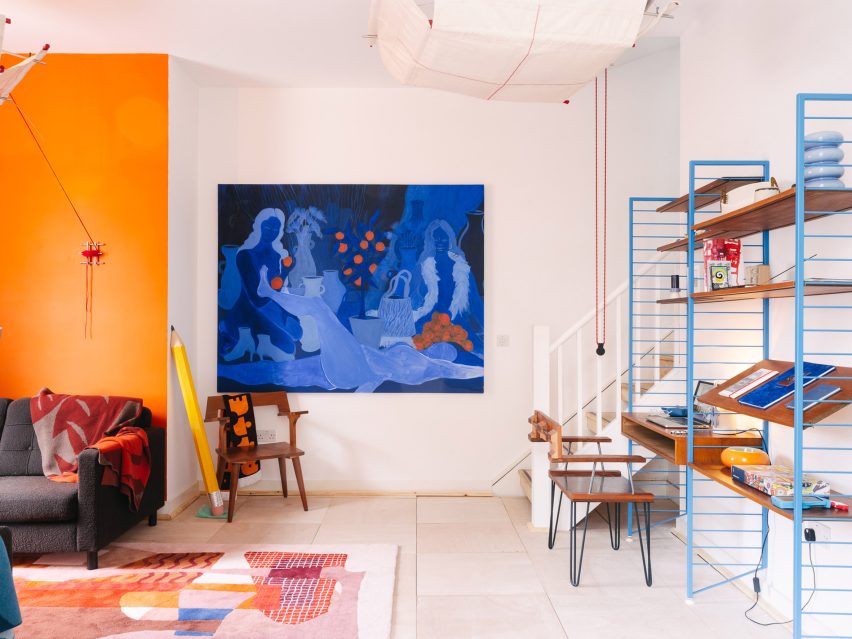
No object is too small to be unworthy of creative attention – a pair of scissors, a pack of tarot cards, several tea towels and a recycling bag made of recycled bags are among the alumni contributions – but some ordinary furniture from the old flat remains, awaiting replacement as the archive expands.
"Part of the intention is asking questions around what we collect and what we value," said Tynan-Campbell. "Because we have a fine art collection as an institution... but most of it is paintings and photographs and 2D work, basically."

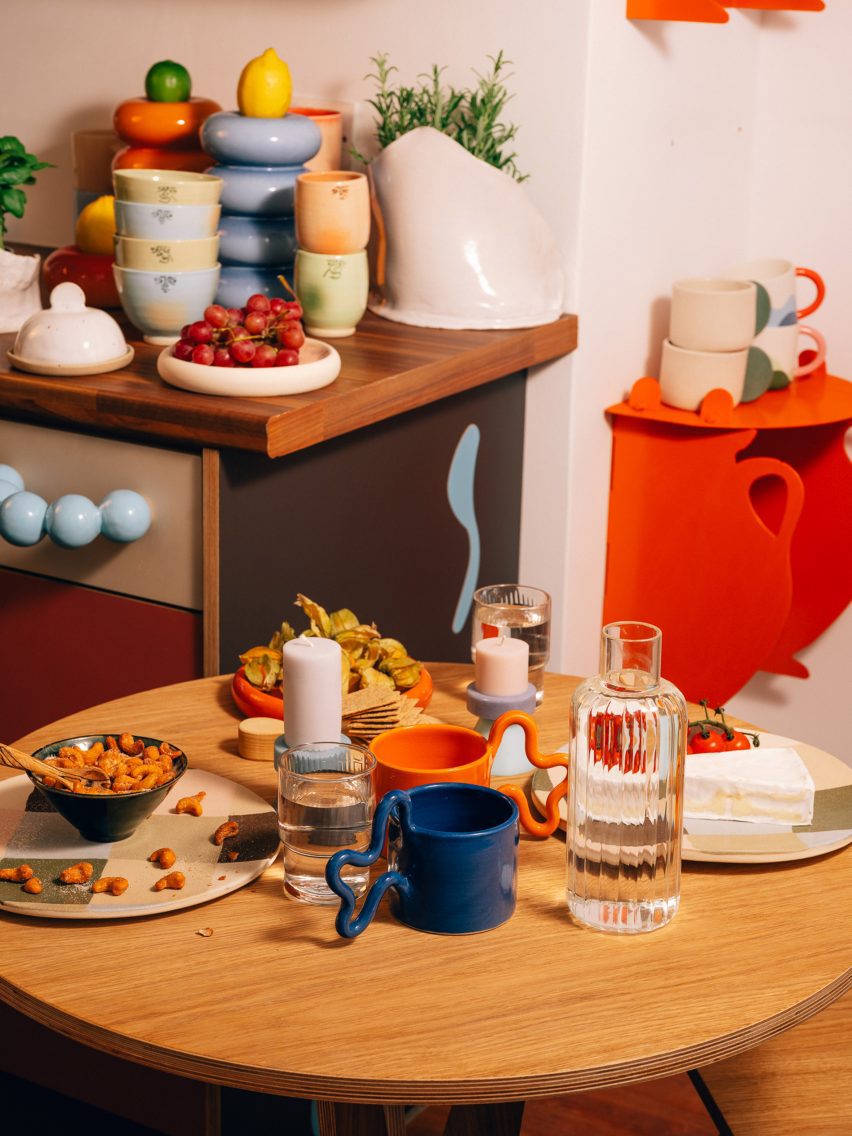
"So this is us saying, okay, well, we have six universities, we have so many different disciplines, why is only fine art worth collecting?" she continued. "Why are we not collecting the narratives, the stories, the objects that all these other courses are producing?"
"And of course, there's loads of practical reasons why not. One is space, which is why this is perfect, because we didn't have to build a space. This was here, and it was a blank canvas."
The Atterbury Flat was unveiled last week at the London Design Festival and will continue serving as a temporary home for visiting professors and other guests now that the event is over.
Dezeen had the pleasure of a night's stay during the festival and can report that the mismatched wooden door handles by product design student Nora Hinsch function, the precisely honed mugs by architect-turned-ceramicist John Robertson are perfect to cradle, and the softly psychedelic 3D-printed botanical bedside lamps by Yichun Lu are soothing to watch alone in the dark.
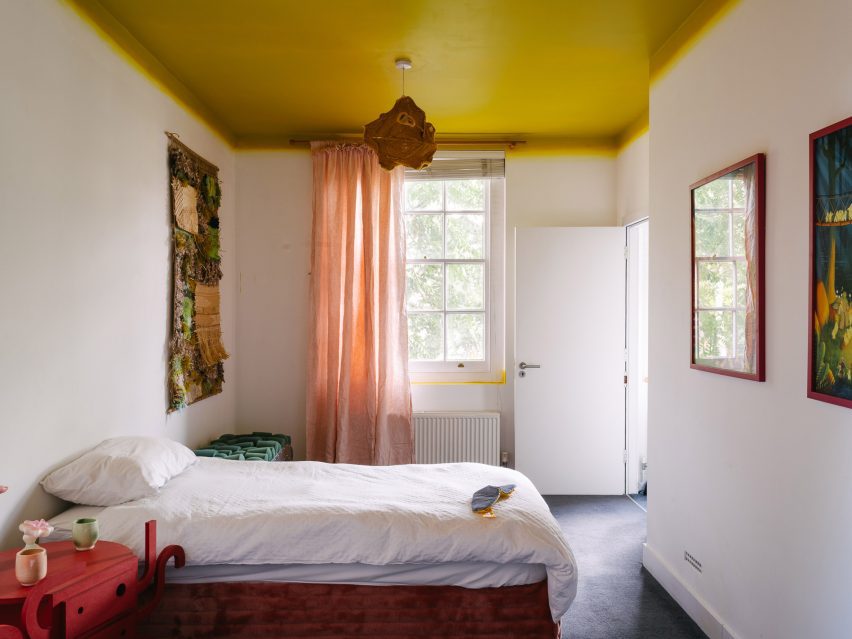
Tynan-Campbell sees the takeover of the Atterbury Flat as a new model for commissioning and archiving student work. As far as she is aware, it is the first archive of this type, doubling as a residence at a university.
The project saw £61,686 paid directly to students and grads for their work – 91.98 per cent of the total budget.
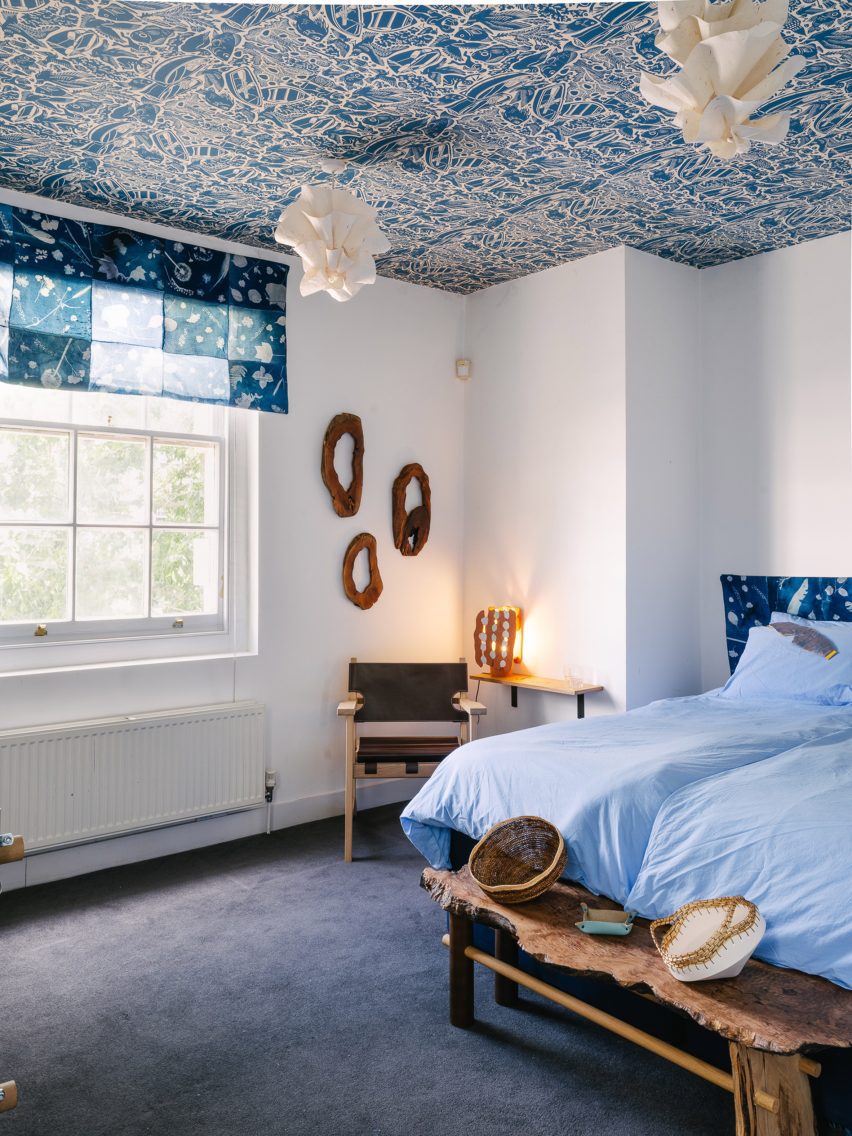
In addition to selecting the pieces and shepherding new commissions to completion, Tynan-Campbell and her co-curators took charge of the interior and spatial design, using a colour palette adapted from a work by Molly Cook as a jumping-off point.
Tynan-Campbell had discovered Cook in the first room at the first degree show she scouted, where the multidisciplinary designer presented a project that involved the careful study of a location through photography, drawing and listening to arrive at its idiosyncratic colour palette.
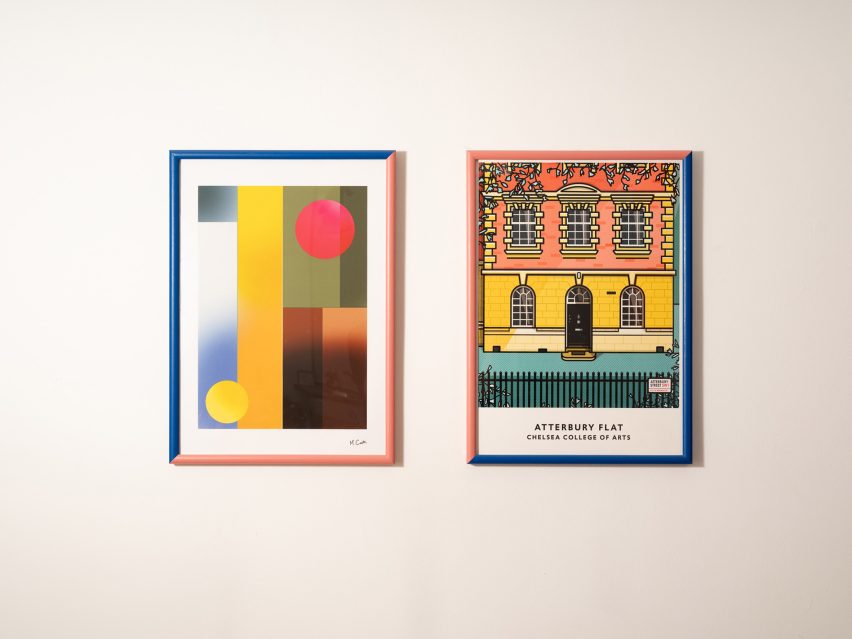
The graphic print she made using the same methodology for the Atterbury Flat hangs in the kitchen and was provided as a reference to the other participants.
"We set out [on this project] saying, this is an act of radical trust in what your students can do," said Tynan-Campbell. "Give them the opportunity, not an external agency or firm. I feel like literally every one of them really rose to the occasion."
The Atterbury Flat was on show from 12 to 20 September as part of London Design Festival. See Dezeen Events Guide for more architecture and design events around the world.