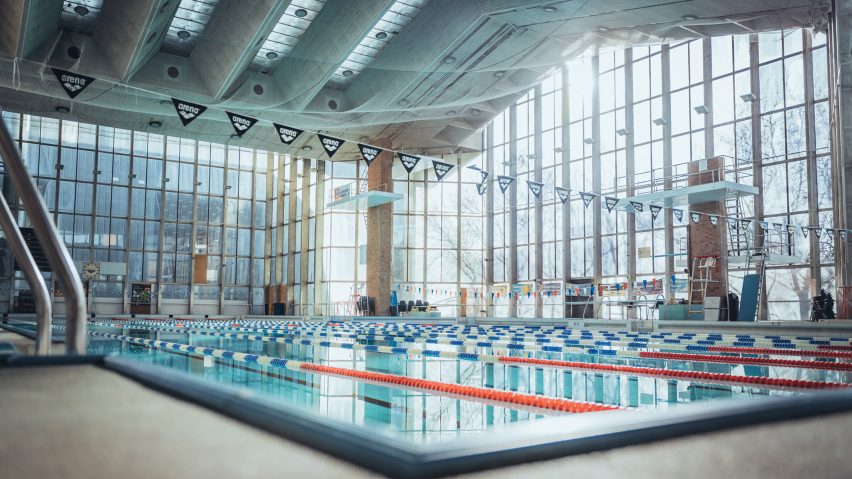
"Opportunity missed" as Coventry's post-war swimming pool set for demolition
The UK government has officially approved the demolition of the Grade II-listed, 1960s Coventry Central Baths in Coventry.
Coventry City Council is set to demolish the Olympic-size swimming pool after Secretary of State for Housing, Communities and Local Government Steve Reed granted Listed Building Consent for works to begin.
Opened in 1966, the pool was designed by Coventry City Architect's Department and is one of the most significant post-war buildings in the city.
"What a tragedy"
The pool has been closed since 2020, when the council built a new Olympic-sized pool, which conservation group Twentieth Century Society said made the building redundant.
It is set to be demolished despite Historic England describing it as "amongst the most ambitious baths built anywhere in Britain" when it was listed in 1997.
The council chose to demolish the building due to reported maintenance costs of around £400,000 a year since it closed.
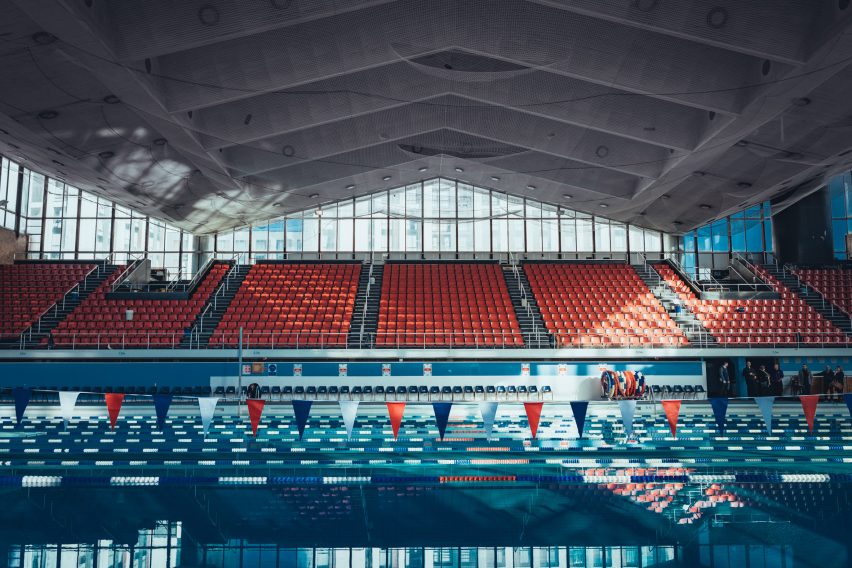
"What a tragedy that a building of such ambition and a major part of Coventry's post-war heritage, located right next to the world-class cathedral and in the heart of the city centre, will now be destroyed," said Twentieth Century Society director Catherine Croft.
"The common misconception is that listed status prevents a building being demolished, but this is unfortunately not always the case," she continued.
"Here, the building-owner – the local authority – effectively made the baths redundant by building a new swimming pool without acting responsibly and securing an alternative use for the one it already had, thereby sealing its fate."
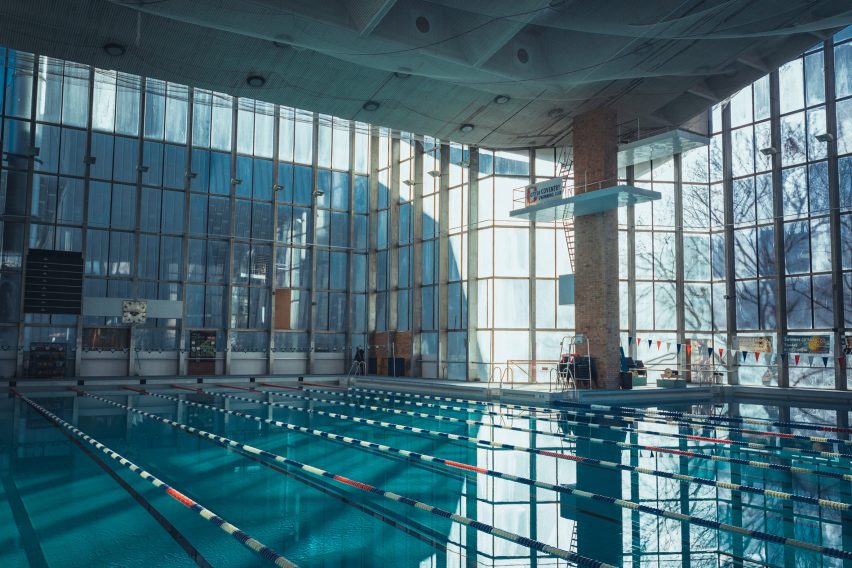
Both the Twentieth Century Society and Coventry Society objected to the demolition, highlighting that there were no plans in place for the site. It described the decision not to reuse the structure as "an opportunity missed".
"The society would have welcomed a pragmatic approach to retain the radical W-shaped roof structure – described at its opening as 'like a great garden-pavilion roof afloat above glass walls' – while creating a space for bold alternative uses beneath," said Croft.
"Private operators had proposed an artisan food hall, meeting space, conferencing, padel centre, among other uses, though sadly none of these were taken forward by the council. It's even more depressing to learn there are as yet no plans for any replacement building or use of the site, just an 'area of hard standing'," she continued.
"What an opportunity missed to showcase a radical yet respectful reinvention of the city's post-war heritage."
Elephant sports hall remains under threat
According to the Twentieth Century Society, the site was viewed by seven parties since it closed, with two formal bids received. However, the council classified the bids as "unviable".
The Twentieth Century Society also highlighted the fact that an Olympic-sized swimming pool in London from the same era is about to be renovated. According to the group, this demonstrates the disparity between the protection of historic buildings in the capital and the rest of the country.
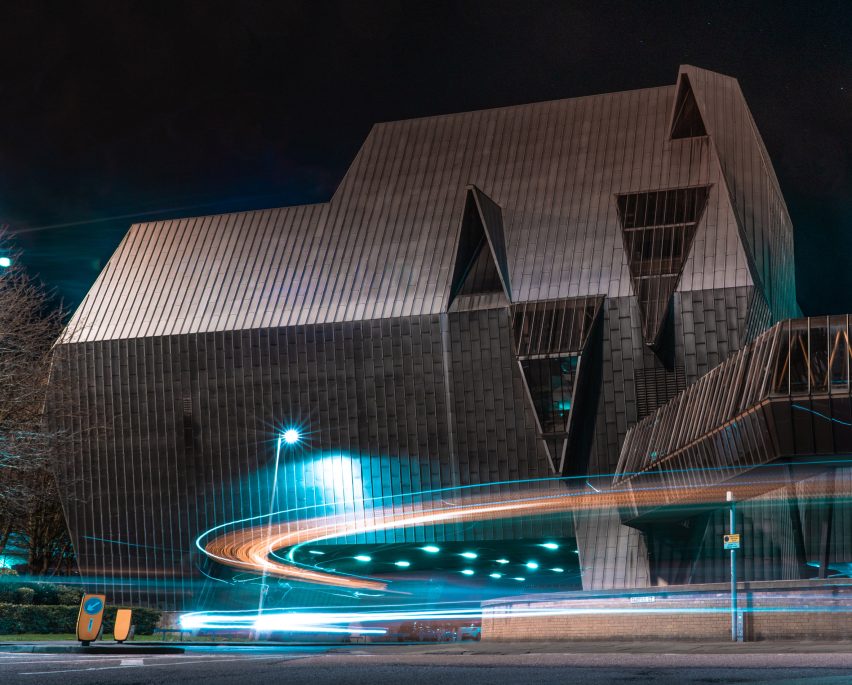
"While the historic Crystal Palace Sports Centre in south London – built at the same time as Coventry Baths, in the early 1960s – is soon to receive a much-needed £130 million refurbishment, Coventry Baths is to be demolished," added Croft.
"That speaks volumes about the regional inequalities rife in UK heritage."
The swimming pool is connected to the Elephant sports hall, which was added in 1977. Although this structure will not be demolished as part of the plans, it remains unused.
Elsewhere in the UK, the Twentieth Century Society has submitted a listing application to protect David Chipperfield's first major building, which was closed last year. It also recently highlighted 10 buildings turning 30 that it said deserved to be nationally listed.
The photography is by Dylan Parrin.