“IKEA has challenged the rest of the design world”
With the gap between cheap and expensive furniture wider than ever, IKEA’s new PS collection is a timely reminder that affordable design can also be joyful, writes Debika Ray.
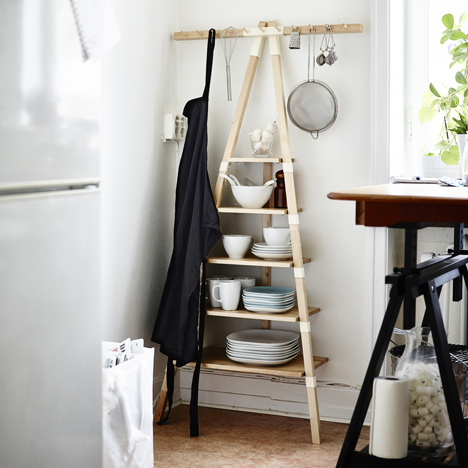
IKEA didn’t invent the notion of “democratic design”, but it did flat-pack and sell it. In 1995, at Milan design week, the Swedish furniture behemoth used the slogan to launch the first iteration of its PS collection – short for “post scriptum”, to indicate that the range was an addendum to its standard offer.
A coffee table with hidden storage and shelves that double as room dividers, as well as sofas, vases and textiles, were among the 40-odd products created in partnership with Swedish designers – a capsule collection that was more aesthetically adventurous and slightly pricier that its usual fare, but still functional and affordable.
IKEA is made for times when people tighten their purse strings
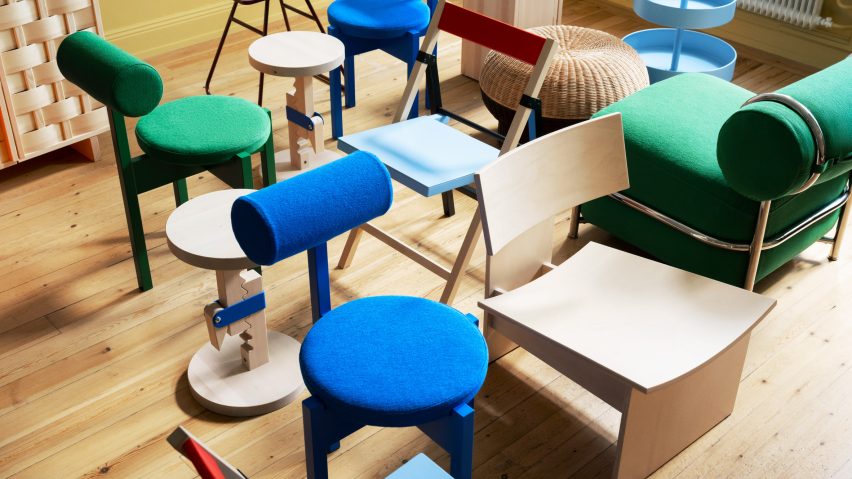
Thirty-one years later – and after a 10-year gap – PS is back. The 10th edition, unveiled in Milan in April, includes multi-functional lamps designed by Lex Pott, a gently rocking wooden bench by Marta Krupińska and an inflatable chair by Mikael Axelsson – the latter combining the 90s’ enthusiasm for all things inflatable with today’s need for products that minimise material use and are light to transport.
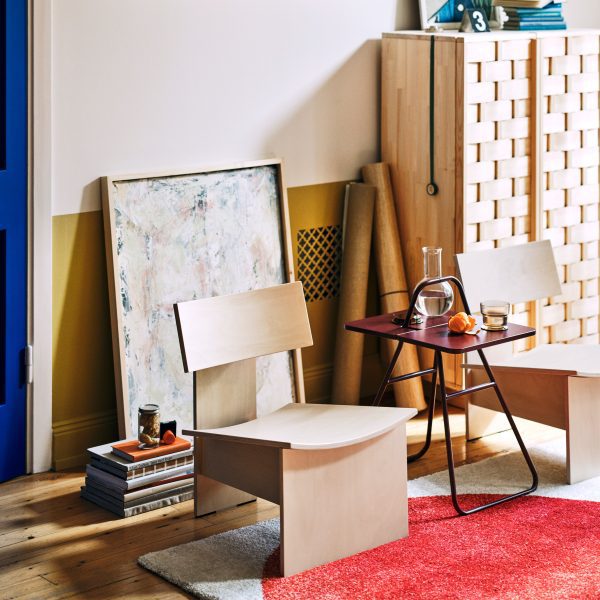
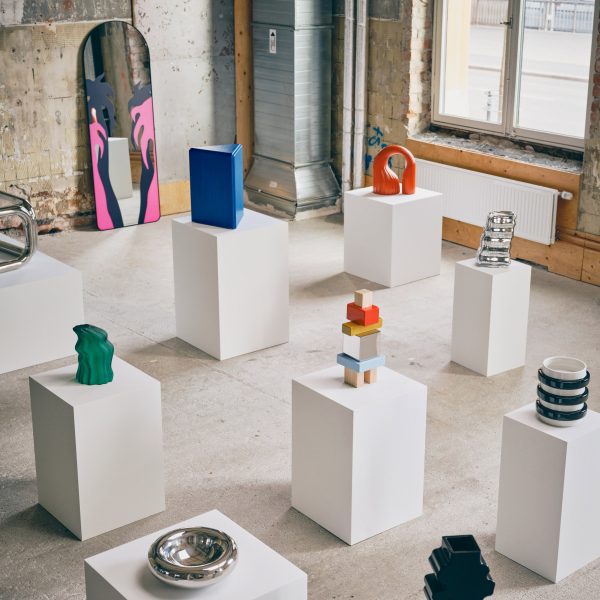
The collection is by no means avant-garde – more a trendy mix of the familiar: a bit pomo, a bit modern, a bit art deco. But they are cheerful, functional conversation pieces. More remarkably, the most expensive item in the collection is only £400, and the smaller lamps cost just £22.
The idea is the same as it was in the 1990s, but the context is wildly different. The original range emerged at a time of economic and political optimism in much of western Europe – in the post-Cold War, pre-financial crash era of free-market confidence, many felt things could only get better. We were wrong, and are now in the middle of a severe cost-of-living crisis, which comes after decades of economic stagnation.
As a consequence, an entire generation is accepting precarity as a permanent condition. In the UK, home ownership or even upsizing is out of reach for many, while inflation and wage suppression has reduced purchasing power far beyond the lowest income brackets.
IKEA is made for times when people tighten their purse strings, though even its profit margin has suffered the impact of recent trade disruption and inflation. Nonetheless, it has doubled down on its traditional market in recent years by lowering prices for many of its basic items.
But the return of the PS range – as well as the relaunch last year of its craft-led Stockholm collection – suggests it’s not just courting the usual occupiers of student flats, starter homes and small spaces, but also those who might have previously had disposable income to spend on more expensive brands.
The furniture market feels increasingly polarised
It’s an opportunity that’s there for the taking. Just as the gulf between rich and poor has widened over the past few decades, the furniture market feels increasingly polarised: at one end, the super-lux and, on the other, unbranded items sold online for pennies.
The former are by definition disinterested in affordability, while the latter offer little information about quality, sustainability or labour practices. There are exceptions, but mid-market furniture retailers tend to be style- rather than design-led: offering well-considered collections that cater to current tastes, commercial trends and lifestyle shifts, rather than proposing new ideas for what objects for the home could or should be.
The result is that few designers or brands operate in the space most of us actually live in. IKEA, with its gargantuan amounts of consumer data, has no doubt identified this gap and is filling it.
What has also changed since the first PS collection is our consumer culture. In the 1990s, bargains, thrift, grunge and cheap knock-offs carried a visible, sort-of anti-luxury social cachet. Now, though financial security feels out of reach for so many people – and even as second-hand platforms such as Vinted boom – luxury is more aspirational than ever.
This is partly because genuine concerns about poor quality and exploitative, unsustainable manufacturing have grown as we’ve become more aware of the global and environmental impact of our purchasing choices – higher prices imply better standards.
But it’s also reflective of how expensiveness has been sold to us as a virtue, regardless of its ethical implications: of an era in which influencers riding private jets gain millions of followers, branded content passes for culture, and exclusivity is celebrated without irony.
The PS collection is a timely reminder that affordability is not a compromise
Our age of inequality has bred a yearning for lifestyles most of us will never have – amid which, cheapness feels like a failure. Where does that leave the notion of democratic design?
IKEA is a business, after all, so invoking “democracy” is less a political statement than a way of expanding its market to encompass, well, everyone. But the PS collection is a timely reminder that affordability is not a compromise, but rather a fundamental measure by which we should judge design.
Of course, IKEA is at an advantage. Its vast scale – the sheer volume of its sales, and the savings it makes packing and shipping millions of cheaper items across the world – no doubt offsets the cost of commissioning the likes of Pott and paying for crafted detailing in a way that few others can.
Nor can its sustainability claims be taken entirely at face value: it has faced its share of criticisms about its material sourcing and the throwaway culture that its very business model encourages.
Not that expensive brands are necessarily more ethical. And regardless, the point is not the merits of any particular retailer. IKEA – or any brand for that matter – is a product of the economy we are all a part of. It’s up to us as consumers and citizens to push manufacturers and regulators to prioritise affordability and ethics, alongside style – and for designers to create the business models that deliver the democratic products their discipline once promised.
Perhaps most radical is the PS collection’s focus on playfulness, embodied in everything from the saw-toothed height adjustment mechanism of Axelsson’s stool to Maria Vinka‘s anthropomorphic blown-glass vase. In times of austerity, beauty and joy are often abandoned – treated as nice-to-haves for those who can afford them, not basic needs.
We do not stop caring about colour, form, humour, culture, tactility or provenance if we have less money
But democracy is not just about survival and utility, but also emotional wellbeing, dignity and pleasure. We do not stop caring about colour, form, humour, culture, tactility or provenance if we have less money – we simply can’t always afford it. Similarly, democratic design can accept the pragmatism of self-assembly or a certain uniformity, but when it comes to emotional value, it should insist on more.
Wealth and taste are not correlated, and financial constraint should not mean sacrificing the joy we derive from being in an environment we love. IKEA has proved that those qualities can be created affordably – and challenged the rest of the design world to do the same.
Debika Ray is an arts and design journalist based in London. Her writing has appeared in the Financial Times, The Guardian, The Independent, Al Jazeera, Wallpaper*, Elle Decoration, Architectural Digest and Kinfolk, among others. She was previously interim programme director of the London Design Biennale’s Global Design Forum, editor of Crafts magazine and head of editorial and communications at the UK Crafts Council. Before that, she held editor roles at Icon and Disegno. She is the founder of Clove, a magazine and online platform about South Asian culture, and the associated creative agency Clove Press.
The photo is courtesy of IKEA.
Dezeen In Depth
If you enjoy reading Dezeen’s interviews, opinions and features, subscribe to Dezeen In Depth. Sent on the last Friday of each month, this newsletter provides a single place to read about the design and architecture stories behind the headlines.
Read more
Recommended stories
Dezeen picks the eight most covetable products from IKEA’s latest PS collection
IKEA launches collectible design objects “at a price that people can afford”
Swedish design is “bold, explorative, conscious and f***ing amazing”

IKEA releases portable furniture designed to be moved without a car
IKEA launches inflatable chair “trapped within a metal frame”
Our favourite products from Stockholm Design Week 2025
Jenny Nordberg creates office furniture from “library” of unwanted parts