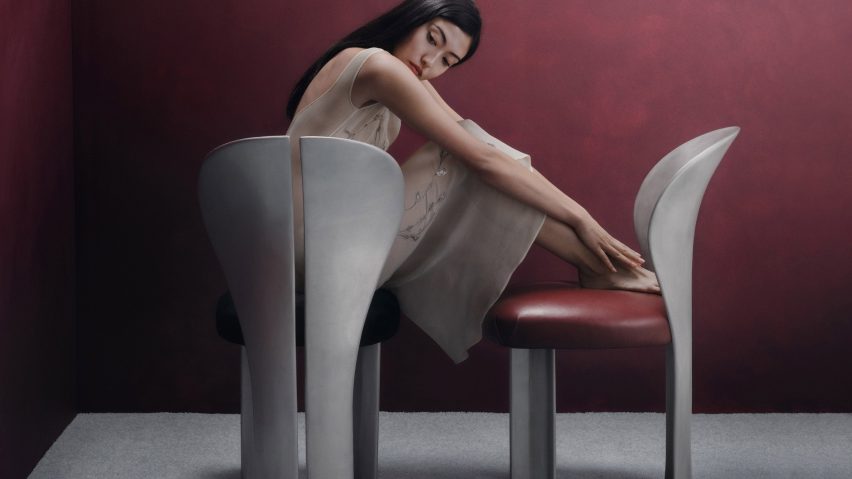
Studio NRG designs Lilium Chair out of recycled metal car rims
Colombian designer Nicolas Riano Guerrero of Studio NRG has unveiled the Lilium chair made using aluminium salvaged from car rims.
The limited-edition furnishing reflects the soft shape of a flower petal with the aim of revealing how metal and other industrial materials can become approachable.
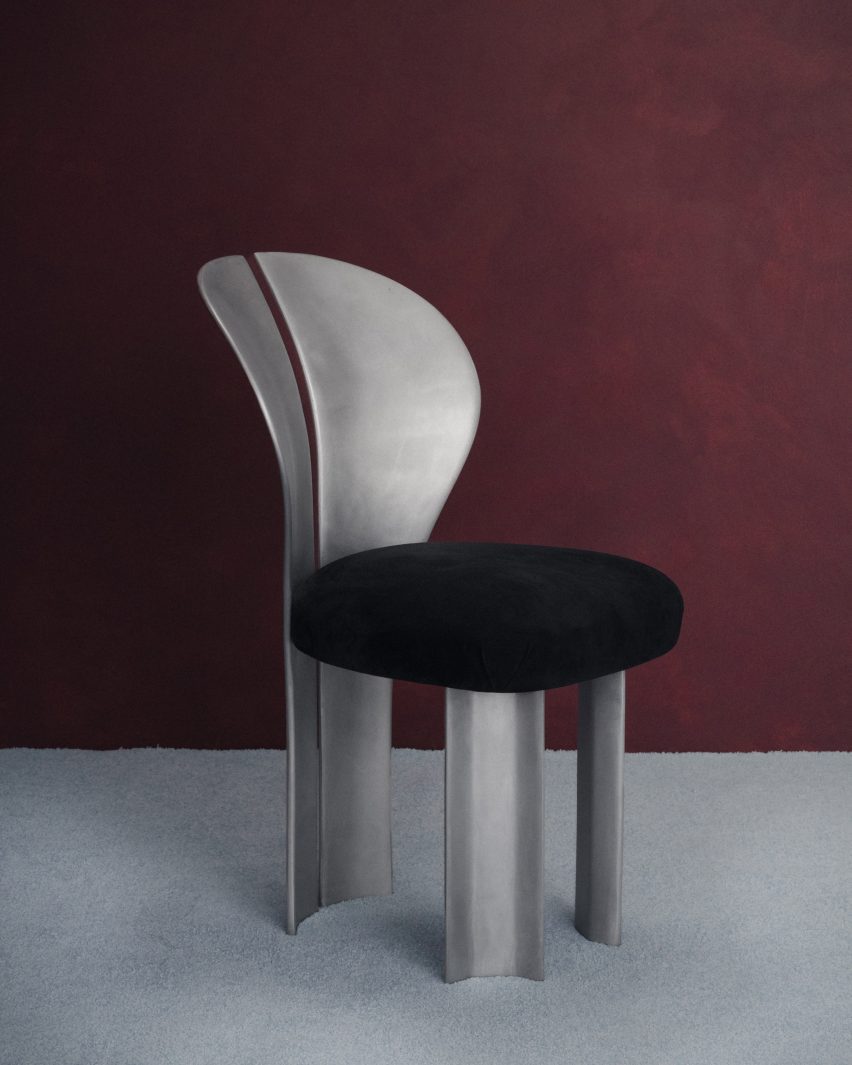
"The idea came from wanting to take one of the most industrial materials there is and change its identity and feel," said Studio NRG founder Guerrero, who is based in Los Angeles.
"Metal is almost always treated with a sharp, aggressive form and I wanted to see if by combining traditional forming processes with more modern digital fabrication, I could achieve the opposite," he continued. "It started as a question of how I could make metal inviting and even comfortable."

The designer studied petal geometry and measured sitting positions to find the right dimensions for the chair's backrest so that it could support a slight recline.
"I felt particularly moved by the curvature and softness of flowers and felt it tied in with my mission of forming metal into something warmer," said Guerrero.
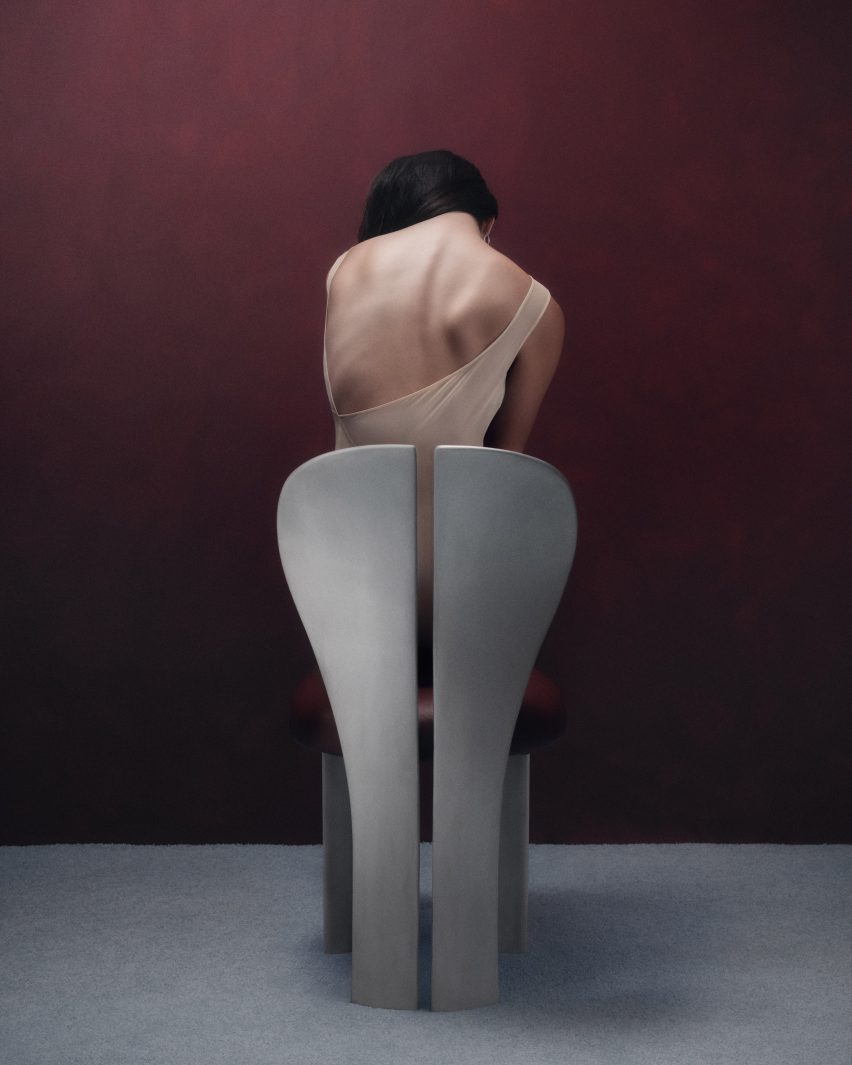
The Lilium chair was produced using recycled high-grade aluminium form car rims that have been diverted from landfill, melted down, and cast into its shape at the South Gate foundry in Los Angeles.
"It feels exciting to take this material out of the industrial loop and give it new identity within furniture, essentially reconceptualising its use," said Guerrero.
According to the designer, sand casting the material and creating texture surface finish, a process done by hand, is a way to show how craft can complement industrial production but also how the latter cannot replicate the former.
"I was drawn to sand casting as it is one of the oldest casting methods in the world," Guerrero said. "Through this process I'm able to highlight qualities that typical industrial processes don't include: imperfections, variations, and history."
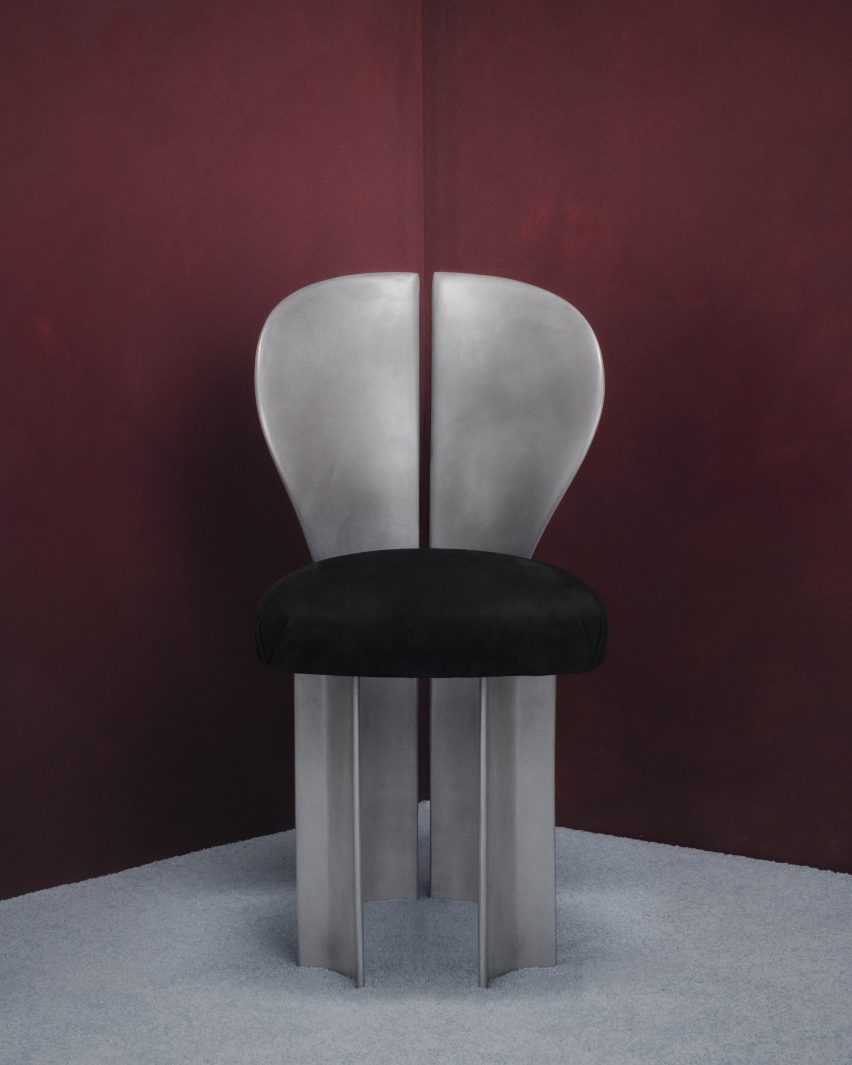
The recycled material Guerrero used is less expensive than standard aluminium, which allows him to produce the Lilium chair more competitively. Still, he has chosen to develop Lilium Chair as a piece of collectible design.
"This market gives a new generation of designers an opportunity to enter the conversation," Guerrero said. "It's allowing us to make work that is expressive and will endure rather than another mass-produced piece of furniture."
"It's allowing me to make bold statements as a young studio," he added.
Other collectible design made with upcucled materials includes wearables, decor and furniture made from the Kevlar fabric from the roof of the Montreal Olympic Stadium and USM modular furniture adapted with found objects designed by a group of Norwegian designers.
The photography is by Sophia Maguire