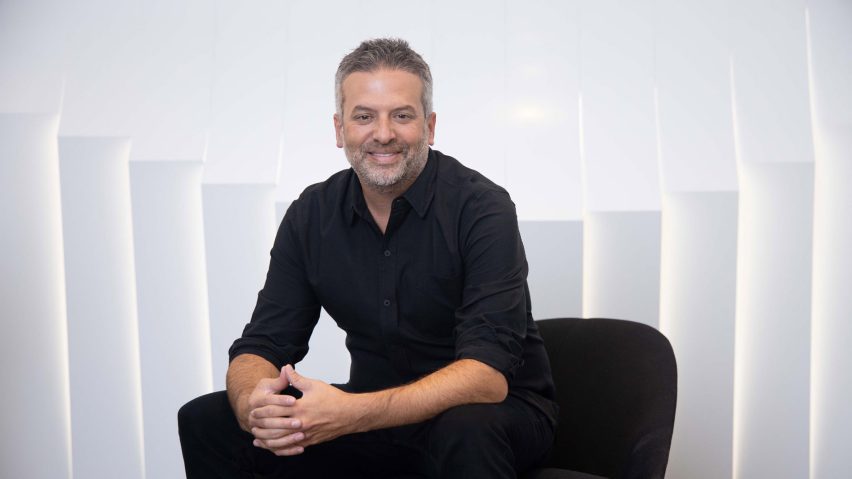
Heavily stylistic approach to stadium design "should die down" says Populous global director Jonathan Mallie
Continuing our Future Stadium series, we interview architect Jonathan Mallie about the combination of urban planning, computational design and economics behind Populous, the studio driving global stadium design.
If you attend professional sporting events, there's a good chance you've sat in a stadium designed by Populous.
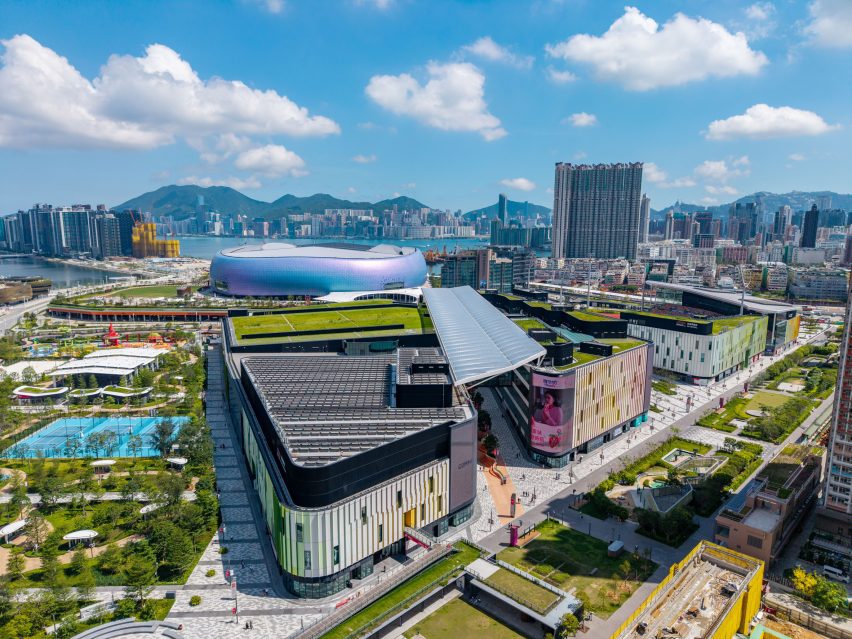
The Kansas City-based architecture studio, which operates globally, claims more than 3,500 projects across the globe, from Hard Rock Stadium in Miami to the Kai Tak Sports Park in Hong Kong.
But for Mallie, Populous' work goes beyond stadiums, towards designing for "the experience".
"Cathedrals for memories"
"It's way more than sports," Mallie told Dezeen from Mexico City, where he was waiting to watch a World Cup match at Estadio Banorte, recently revamped by Populous.
"We need those experiences in our lives, and especially today. These venues are social catalysts for experience."
For Mallie, the buildings function as secular places of gathering to experience something greater, and the combination of scale, technology and the age-old congregation of people contributes to the impact.
"I think of these buildings as cathedrals for memories," he said "Any way you can devise an experience that's layered with technology and connectivity, through physical space, you're contributing to that environment. When something happens in the match, it triggers this atmospheric response."
Populous began as the sports division of HOK in the 1980s in Kansas City. Even today, the midwestern American city remains to sports architecture what Silicon Valley is to technology, likely due to the studios spurred on by HOK Sports.
In 2009, management bought out the division, renaming it Populous. At the time, senior principal Joe Spear cryptically told Kansas City Business Journal that "[a]s the world becomes more populous, and ever-advancing technology separates us into audiences of one, our expertise becomes more relevant".
History appears to have realised Spear's predictions for the studio. Populous operates in multiple countries and employs more than 1,700 people, making it not only the most prominent sports architecture studio, but one of the biggest design firms in the world in general.
Changing directions in stadium thinking
Now, according to Mallie, who got his start in New York studio SHoP Architects, where he worked on Brooklyn's Barclays Centre arena, stadium buildings are powerful tools not just to bring people together but to rethink urbanism.
"Just from scale alone, they're so impressive in nature," he said.
"But the industry is migrating, thankfully, towards the idea of district. There's a bit of a course correction."
"If you go back 40 to 50 years, stadiums were designed in parking lots, and they were technical marvels, stoic in nature. They didn't have additional design elements and features to create new experiences within the buildings, or total environments around the venue, which is what we're focused on today."
Though it's difficult to pinpoint a single project that spurred this shift from the suburban, standalone stadium, Mallie said that Atlanta's Battery, an urban district built around the Braves' professional baseball stadium in 2017, "turned heads".
This shift towards development around the stadium prompted other owners to leverage the stadium building process, bringing in development partners to create more complex environments around the stadium while generating income, which Mallie is honest about as the key driver in the process.
"You start to change the nature of these places. Of course, the large building will be the anchor, and it should be – it's what gives a city and its community and its fan base identity, but then it's also about activating everything around it."
Now, Populous is designing entertainment complexes integrated with some of the most dense environments in the world, as in Hong Kong's Kai Tak Sports Park, where multiple stadiums are flanked by parks and abut a series of high rises.
This multi-functional aspect is reflected in the diversification of Populous's business structure as well. In the last year, the studio has acquired Houston-based OJB Landscape Architecture and Fentress Architects, known for its design of the monumental Denver airport.
In early 2026, it even launched a real-estate strategy department.
"We are thinking about this idea of total environments, and we develop the economic strategy for our clients, so that when we go to sketch something, it's already thought through in terms of its economic viability relative to the venue that's anchoring the district, so that's step one," said Mallie.
And as always with stadium design, the technical requirements are top-of-mind.
"There's an expertise and a craft to what we do. These are some of the most highly technical buildings in the world," said Mallie.
"That social contract is important to maintain"
Then there's the question of who's footing the bill, when massive structures like these often require subsidies from local governments.
The integration of the entertainment district can work to mitigate this, according to Mallie.
"With the experiential district being developed, there is even more economic vitality to these locations, and I think that creates a better argument for the public," he said. "That social contract is important to maintain."
"It's always controversial before the big stadium or arena is built, but once it opens, it more often than not transforms and creates vitality in a city."
"That's what gets us excited. It draws people together, and you contribute to the experience economy that we live in."
On top of the complex requirements of economic and district developments, the appearance of these stadiums themselves is a matter of public scrutiny, given their size.
And, as with other global studios and international movements – think the mid-century Miesian office towers – there are concerns about homogeneity in stadium design,
Populous stadiums tend to differ from the flashiness of a ZHA or MAD project, with their daring shells and expressionistic style.
According to Mallie, there is a logic behind this. He cited the sense of place and reference to historical form-making – so common in architecture today – as a way to differentiate stadiums. This means adhering to the style of cities while designing for the standardisation necessitated by the rules of sport.
"The stylistic approach should die down because people want authenticity, especially in the age of AI," he said.
"Stadium architecture should be about how a building can connect with the history of the city, the materiality, and then also propel the team."
"There's a healthy tension there – how you can be relatable to the people within a specific city and community, but also give them something to get really excited about, for the future?"
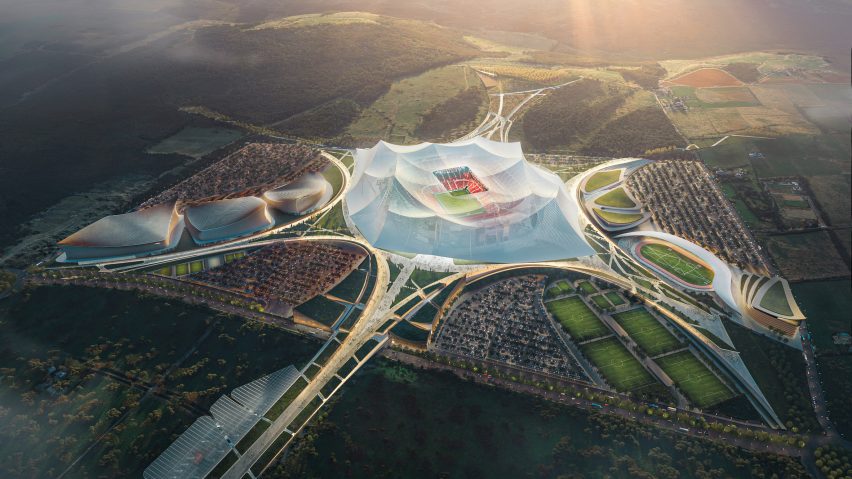
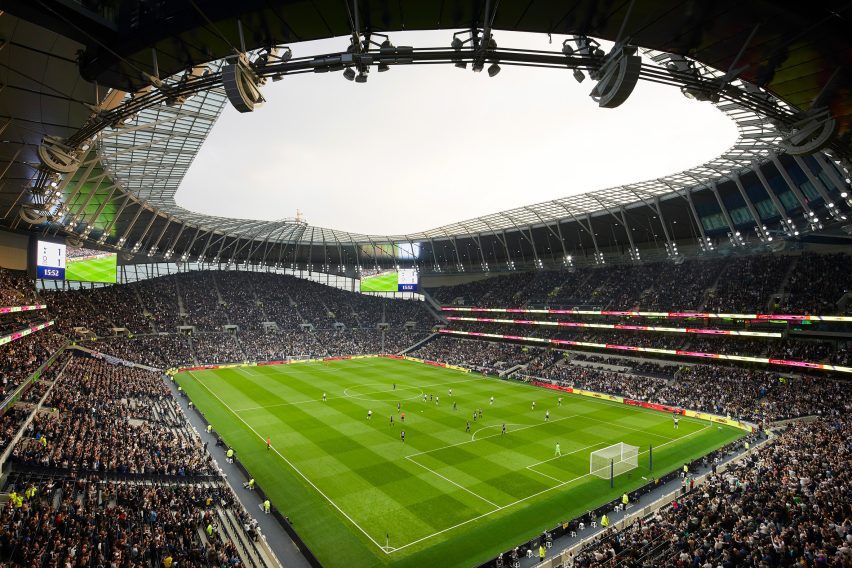
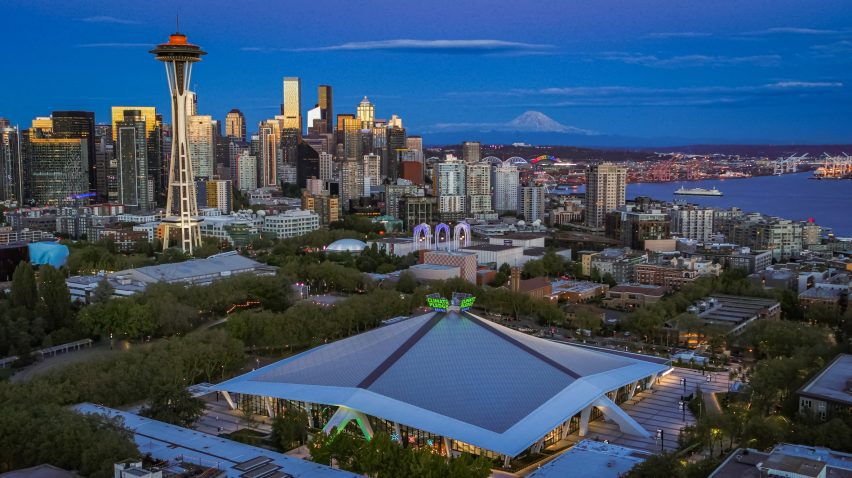
Mallie used the distinction between the metal-clad wind breaks of Buffalo's recently opened Highmark NFL stadium; the alignment between Tottenham and the heights of structures around it; and Climate Pledge Arena in Seattle, which is dug into the ground, as reference points for these subtle differences in form between cities.
Stadium design increasingly means balancing the interests of capital with that of city governments and the emotional connection between a fan and their team.
Still, Mallie insists that simply getting people to come out is the ultimate goal for these buildings.
"How can we create an environment that's intimate and intimidating at the same time?" he asked. "Because that's what's going to keep people off the couch."
"I think that's part of our social contract – to bring people together. We want them to actually come to the venue."
"I guess I would just call it fun."
Future Stadium
This article is part of Future Stadium, our series exploring the growing role of monumental sports buildings in architecture and urbanism around the world.