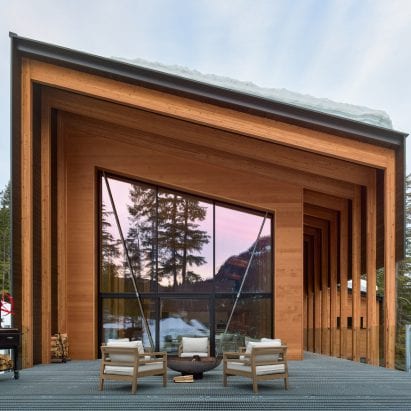
Are trees on buildings more than a greenwashing gimmick?

Main photo by Dimitar Harizanov
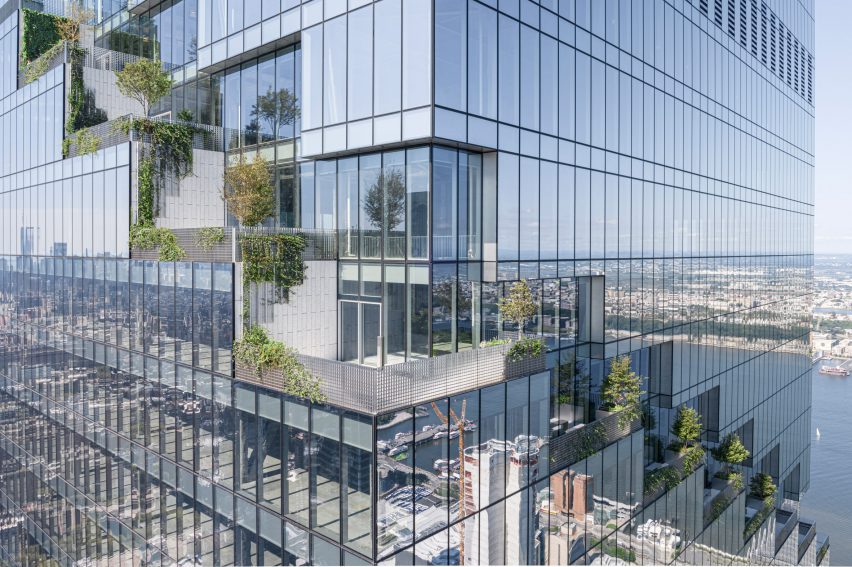
For more than a decade, buildings bearing trees have been sprouting up all over the world, from New York to Paris to Shanghai to Sydney.
It has arguably become one of the defining architectural trends of our era, taken up enthusiastically by top studios including BIG, MVRDV, MAD and Ateliers Jean Nouvel.
And yet, not everyone is a fan. Almost every time Dezeen publishes an arboreal structure, a volley of comments crying greenwashing and gimmickry soon follows.
So, are the haters right on this one? Or do the arguments stack up in favour of wooded buildings?
The root of the issue
To proponents of the approach, some of the benefits of putting trees on buildings are indisputable.
“I’m totally in favor of not only trees on buildings, but any type of natural habitats on buildings wherever it’s possible,” said Fernando Scherner, an associate director in the nature and biodiversity team at engineering firm Buro Happold. “There are a few things that I think we can’t even argue about anymore.”
There is, Scherner told Dezeen, strong evidence that vegetation on buildings bolsters biodiversity. And, he says, “there’s no discussion” that done right, shade and evapotranspiration from leaves can effectively keep homes cooler in hot weather, reducing the need for air conditioning – and therefore energy use.
But this second point gestures towards the crux of the debate about trees on buildings.
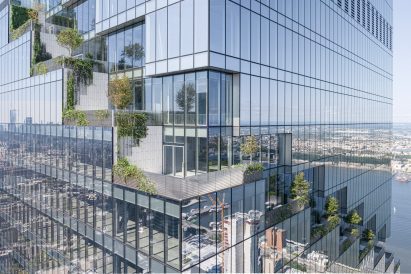
Such buildings require extra structural material to support the weight of the trees and soil, increasing the carbon cost by more than what the trees themselves will be able to sequester. Critics therefore argue that any carbon savings from reduced energy use are a red herring, because a similar benefit could be achieved through much simpler passive cooling measures such as awnings and shutters.
“I think that criticism is entirely legitimate, particularly if carbon sequestration is being used as the main justification,” said World Green Building Council technical lead for sustainable buildings Carolina Montano Owen.
“Trees do sequester carbon, but relatively slowly compared with the upfront emissions that can arise from additional reinforced concrete or steel needed for large planters, supporting structure and associated systems.”
Even Dutch architecture studio MVRDV, one of the most fervent incorporators of trees on buildings, admitted in its Carbon Confessions exhibition held earlier this year that it would take hundreds of years to offset the climate impact of its La Serre project in Paris, currently under construction. MVRDV declined to contribute to this article.
A place to grow
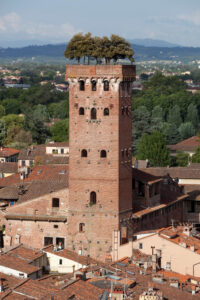
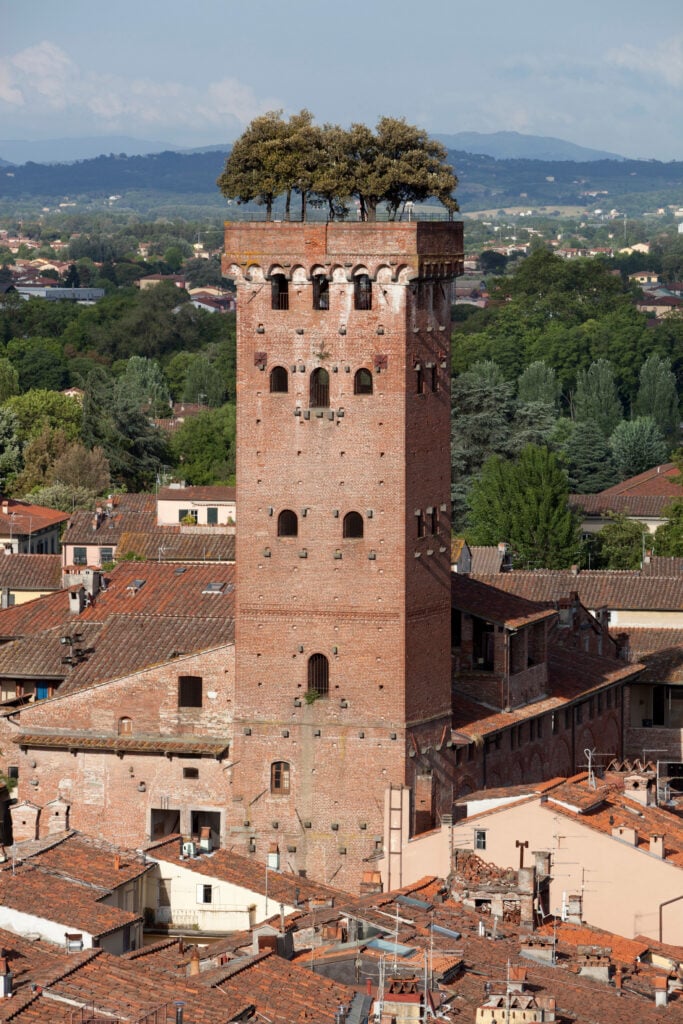
While the phenomenon of trees on buildings goes back hundreds of years, to the Guinigi Tower in Tuscany, the undisputed poster child for the current movement stands at the other end of Italy.
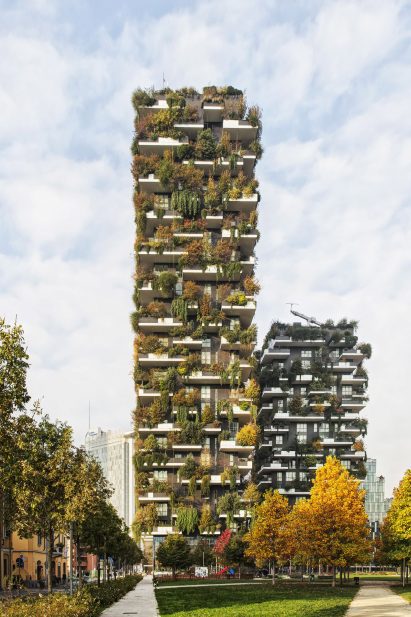
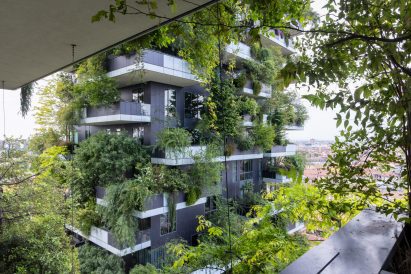
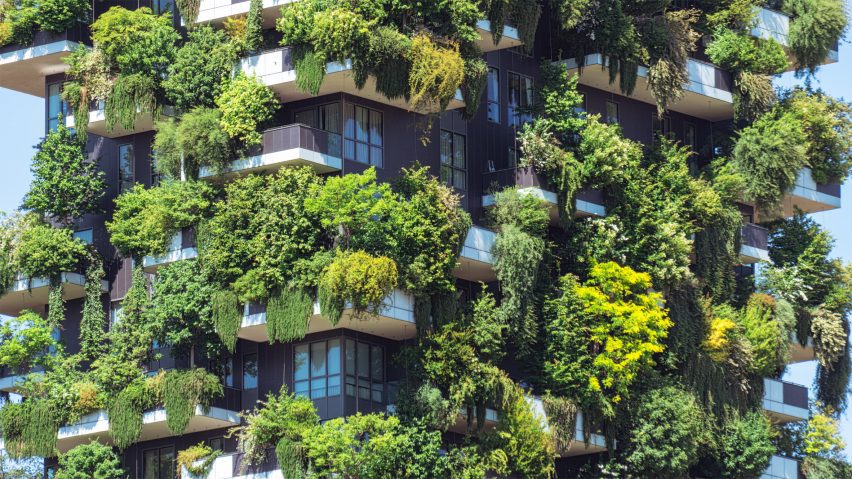
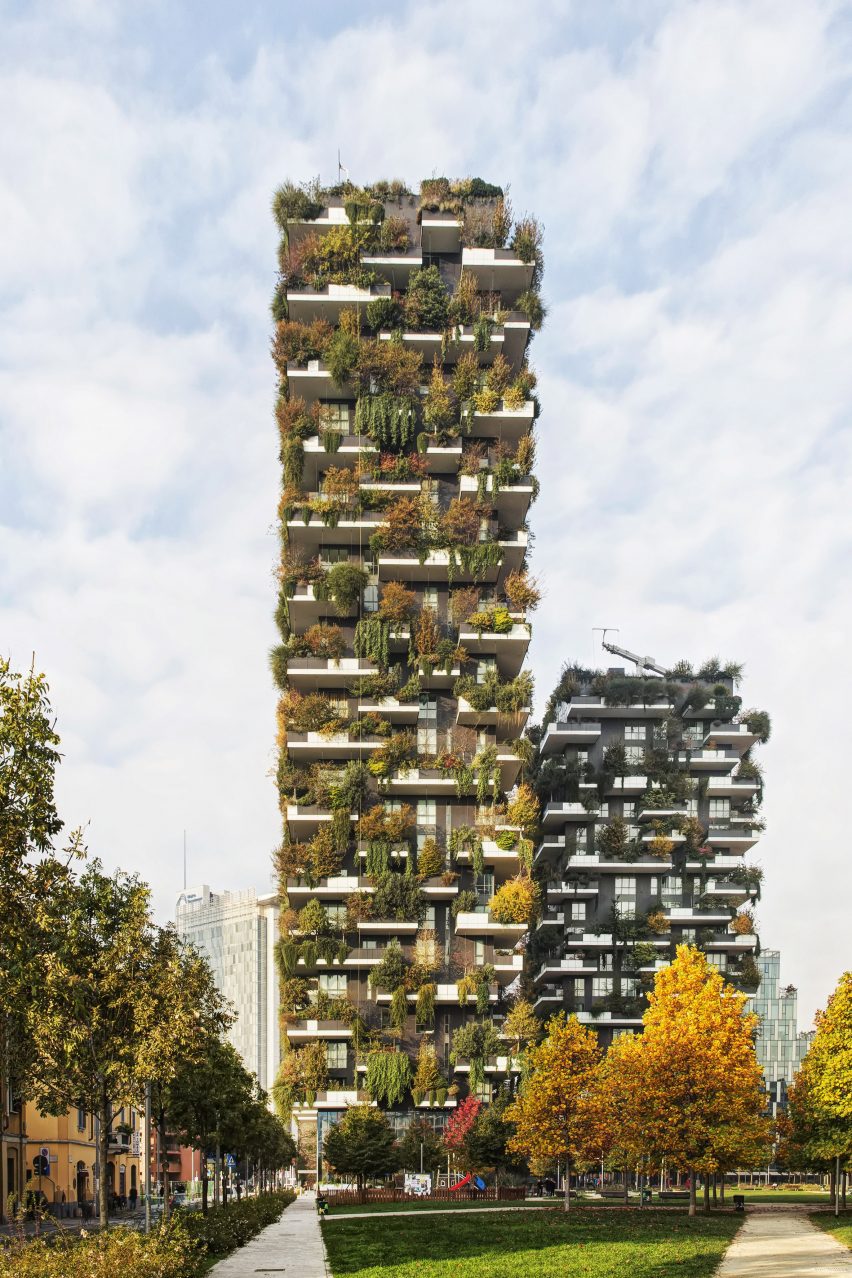
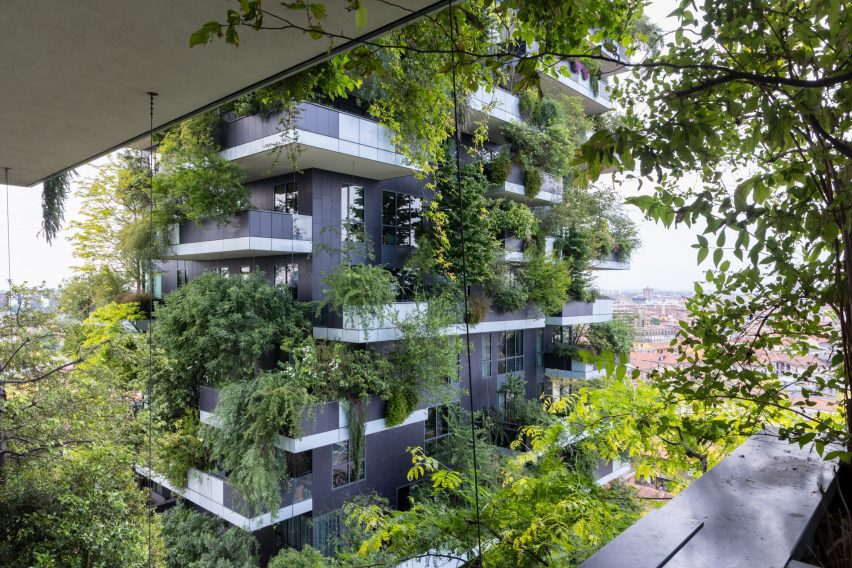
Bosco Verticale in Milan is a pair of residential high-rises covered in 21,000 plants, including 800 trees up to 20 metres tall. It caused a sensation upon its completion in 2014, and was later selected by Dezeen as that year’s most significant building in the world.
The architect behind Bosco Verticale, Stefano Boeri, has since delivered other “vertical forests” in Eindhoven, Huanggang, Tirana and Utrecht, with several more on the way.
As you’d expect, he is bullish about the benefits of putting trees on buildings. He points to analysis by Arup, which concluded that the embodied carbon of Bosco Verticale is just one per cent greater than a comparable building with balconies of the same depth without vegetation.
“The load of the greenery, including the soil, trees and so on, really only slightly exceeds the variable loads that, in any case, must necessarily be taken into account in the structural design of cantilevered space,” he told Dezeen.
Boeri argues that changes to the construction process – such as the use of prefabrication methods or mass timber – promise to cut the embodied cost further in future vertical forest projects.
Even so, Philip Oldfield, head of the University of New South Wales’ School of Built Environment, is not convinced.
“I think the equation is pretty challenging to make the case that trees on buildings are beneficial from a greenhouse-gas emissions perspective,” he told Dezeen.
However, Oldfield points out, that’s not to say that architects adorning their buildings with trees are necessarily acting in bad faith.
“I’m a fan of Bosco Verticale,” he said. “I think it’s a really inspiring building, but not from a carbon perspective.”
“What inspires me about Bosco Verticale is it says, ‘hey, look: you can have a hint of suburban lifestyle in a high-rise urban building,’ which could make high-density living more attractive to a greater socio-economic spectrum, and then that may be more sustainable in the long run.”
Though harder to measure than carbon, it’s generally acknowledged that incorporating greenery into dense urban settings has positives for human wellbeing.
For instance, when Oldfield helped to conduct a post-occupancy study of the social housing development Pinnacle@Duxton in Singapore, he witnessed children sitting under trees to do their homework 50 storeys in the sky.
“Singapore’s been able to add trees and green across its built environment, and it has fundamentally changed the experience of the city, I think for the better,” he said.
Branching out
With a very high-rise urban landscape, year-round hot weather, lots of rain and low wind speeds, Singapore is the perfect setting for buildings bearing trees, and the construction industry here has become adept at making it work.
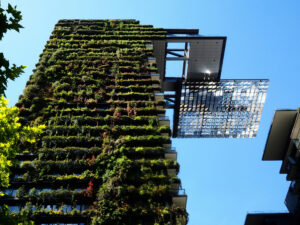
But in other parts of the world, things have gone less successfully. Jean Nouvel’s One Central Park in Sydney, for example, had to undergo emergency repairs after one of its heavy planter boxes fell to the ground in 2022.
And in Chengdu, there were reports that barely any of the 826 apartments at Qiyi City Forest Garden were occupied a few years after its completion due to a mosquito infestation.
Even the most ardent fans of trees on buildings agree that it’s not always the right solution.
“I’m totally positive about it, but I think it should be taken case-by-case,” said Scherner. “There may be cases where the purpose or the objective of the project are not really realistic.”
“If the right multidisciplinary team is not there from the start – and I’m talking about ecologists, horticulturalists, together with engineers, structural engineers, architects, landscape architects and all that – then many things can go wrong.”
“There are many flops,” said Boeri. “If you decide to follow the approach that we have, you take several risks, so it’s very important to be aware of the risk and to run all the technical issues and tools that you need if you want to do it properly.”
“Botany is not a superficial discipline – it’s very complex, very rich, and so when you want to realise a building where trees are acting as live subjects, you have to study a lot.”
Bosco Verticale was subject to a huge amount of strategic planning in collaboration with botanists, from the selection and preparation of the plants, to soil chemistry, to developing systems for irrigation and maintenance.
“Flying gardeners” now scale the buildings twice a year, while thousands of ladybirds were purchased to control pests and cranes were installed on top of the towers in anticipation of removing larger dead trees. In the event, Boeri claims fewer than 15 trees have died at Bosco Verticale, and the cranes have never been required.
When to leave it
Sceptics’ early predictions of mass plant deaths at buildings bearing trees have, in general, not come to pass.
But concern about whether some of these buildings are more interested in making a visual statement than being ecologically responsible has lingered.
For Montano Owen, this is the crucial test of whether the approach is justified.
“The difference is whether planting is an integrated environmental strategy or primarily aesthetic,” she said.
“A poor example is essentially decorative: oversized concrete or steel planters added to achieve a ‘green’ aesthetic, substantial additional structural loads, high irrigation requirements, inappropriate species, difficult maintenance access and high tree mortality.”
Boeri agrees. “I believe that what we have done works because we were not considering plants as an ornamental presence, and this is very important for me,” he said. “What we are doing is really to create buildings for trees, a house for trees.”
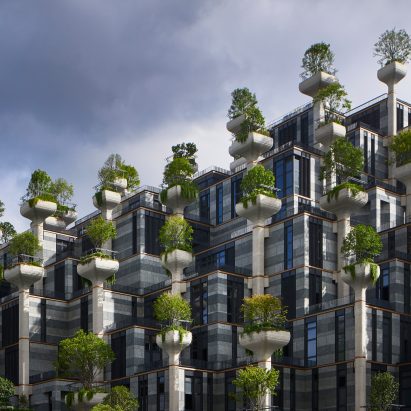
Among the most high-profile projects accused of using trees as mere decoration is Heatherwick Studio’s 1,000 Trees shopping centre in Shanghai, completed in 2022.
Soon after the finished building was unveiled, Oldfield criticised the design in a piece on Dezeen.
“The trees are a one-liner, contributing to a sense of urban drama, but with little substance as to how they might provide tangible benefits to the environment, or the community,” he wrote.
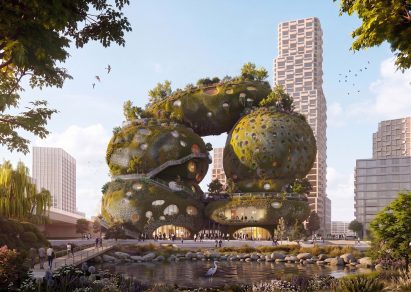
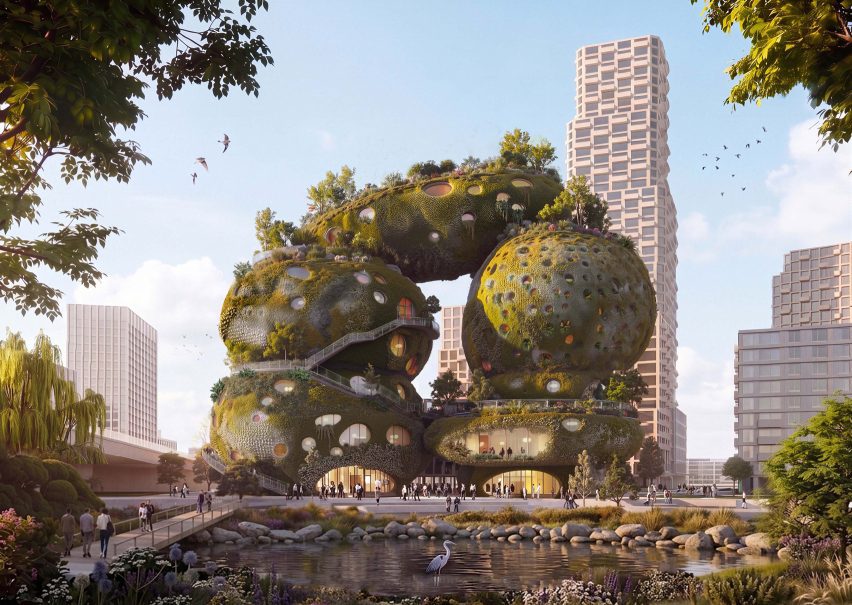
Subject to similar criticisms recently was MVRDV’s design for the upcoming Rotterdam Rocks!. Writing on Dezeen, architecture historian Barnabas Calder called for the project to be scrapped, saying that “putting plants on a building doesn’t make it sustainable, any more than dropping a basil leaf on a steak makes it vegan”.
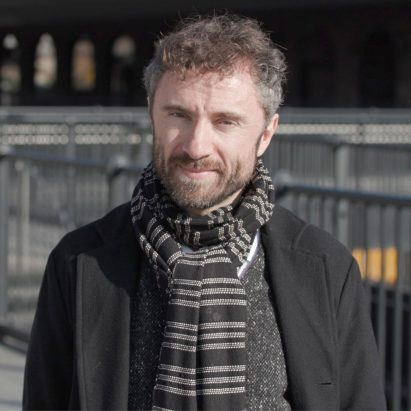
These studios may argue – as Heatherwick Studio leader Thomas Heatherwick has previously done – that there is intrinsic value in designing buildings that capture the imagination of the public.
That in turn feeds into a broader debate about whether the priority for architecture should be to minimise up-front carbon, or maximise the chance that buildings are retained by future generations.
In any case, with the trees-on-buildings trend showing little sign of abating, Montano Owen has a checklist for architects taking up the approach.
“Start with the local context and environmental needs,” she said. “Choose species that are suited to the location. Minimise extra structure, materials and loads. Consider water and maintenance needs from the start. Plan for vegetation to survive, grow and mature long term. Avoid solutions that need heavy structures, intensive irrigation or frequent plant replacement for limited environmental benefit.”
“The key question is this,” she added. “Is this the best place and most resource-efficient way to achieve the environmental benefits we want? Sometimes trees on buildings could make sense. In most cases, trees at street or ground level may provide greater benefits with fewer resources.”
Dezeen In Depth
If you enjoy reading Dezeen’s interviews, opinions and features, subscribe to Dezeen In Depth. Sent on the last Friday of each month, this newsletter provides a single place to read about the design and architecture stories behind the headlines.
Main photo by Dimitar Harizanov
Read more
Recommended stories
“We must do better than 1,000 Trees”
Claims that planting trees won’t slow climate change are “absolute garbage” says commenter
“Trees aren’t a novelty” says Thomas Heatherwick

Plant trees in cities to curb deadly heatwaves says Arup’s Dima Zogheib
“We can’t detox our built environment by swapping out fossil-fuelled building materials for timber”
Five designers planting trees to highlight climate change
“Taking credit for trees planted elsewhere is a whole lot of embodied irony”