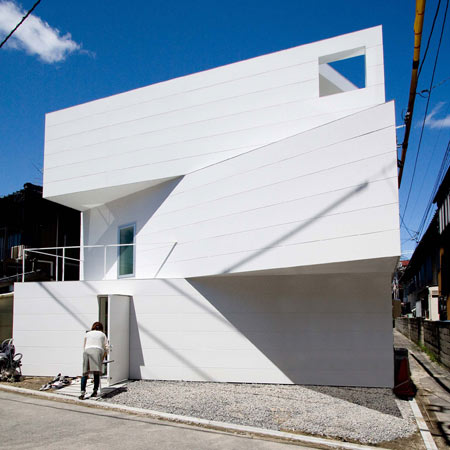
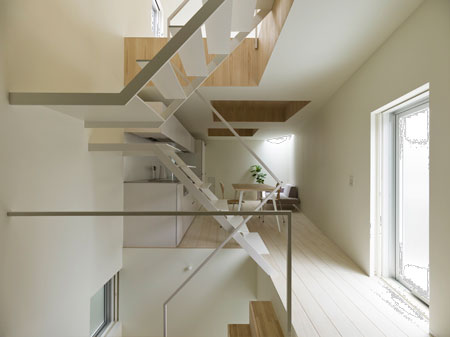
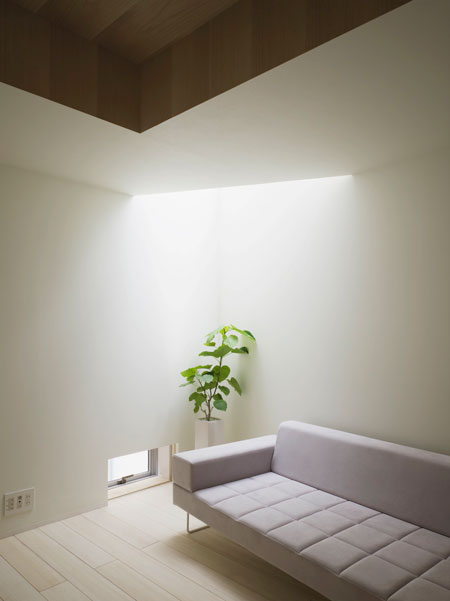
Japanese architects Suppose Design Office have completed a residence in Hiroshima, Japan, with offset floors allowing natural light from above to penetrate each level.
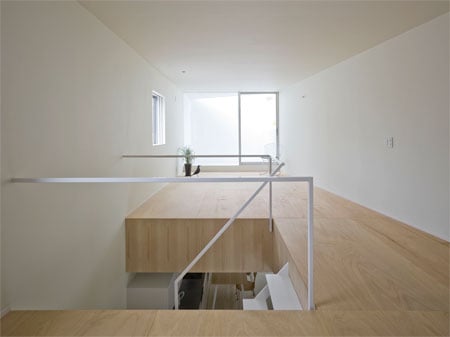
The house can can be naturally illuminated while maintaining privacy on a small, crowded plot of land.
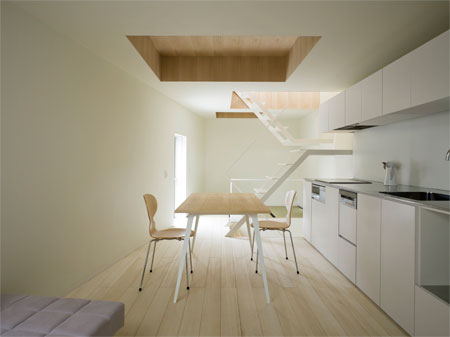
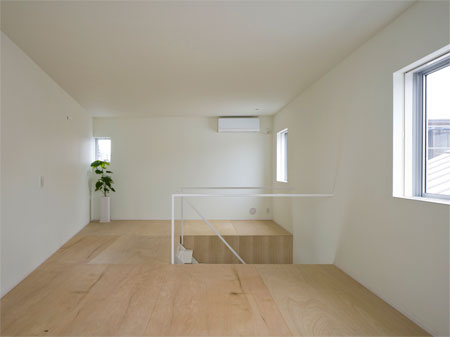
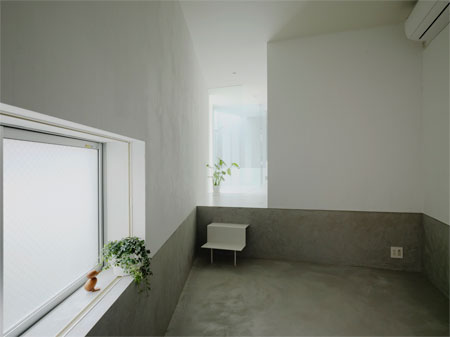
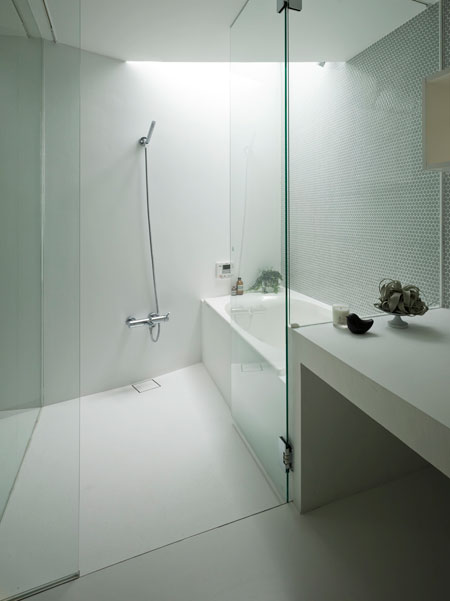
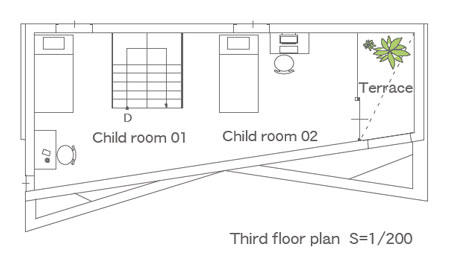
The interior comprises a series of terraces, each shaped differently according to its intended purpose.
See more Dezeen stories about Suppose Design Office:
House in Matsuyama
House in Nagoya
House in Saijo
House in Jigozen
House in Sakuragawa
House in Kamakura
Here is further info from Suppose:
--
House in Minamimachi
During the process of designing for a small plot of land, there are a lot of times in which the form of the building is steered by legal constraints.
If you are thinking of how you can have the most floor space, the outer shape of the building is automatically decided by how the permitted ratio of square footage to property size, so the architectural design comes out of the number of stories built just to increase the floor space.
Here, I’m thinking about the possibility of space that can be made by subtraction.
This building was made to slightly exceed its allotted coverage ratio, so each floor fluctuates in shape.
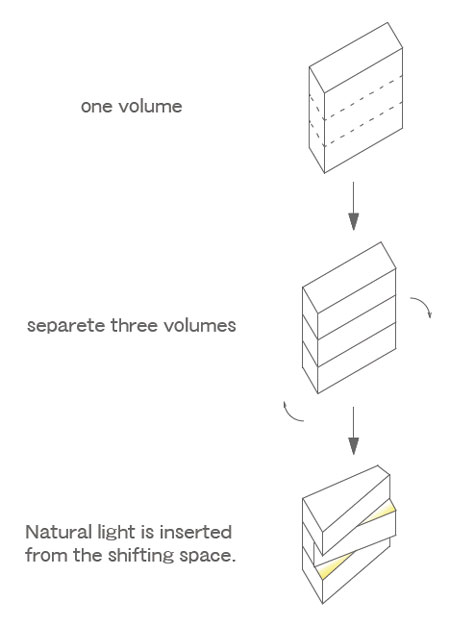
The sections that slide out function as lighting design elements, bringing in the outside environment.
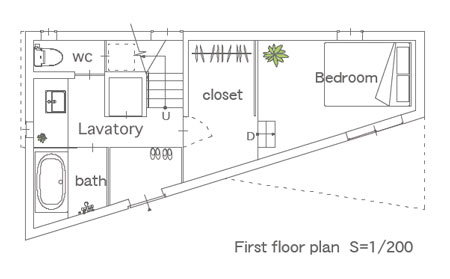
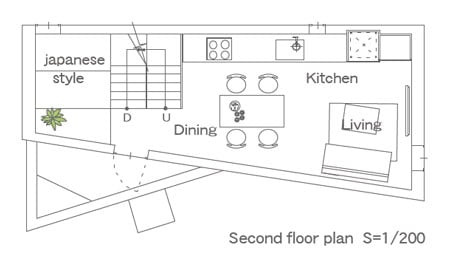
I’ve changed the shape of each floor freely according to its intended purpose and features, turning them into spaces with a sense of distance and perspective, maintaining privacy even in crowded urban areas where housing units are close together, creating a bright, well-lit living space.
Before you know it, design that starts from the rules, from the legal restrictions, can become stronger restrictions than the rules.
By starting the design away from the legal constraints, by designing the way we start to plan, we can have buildings that possess a degree of freedom. Just by changing the bottom line a little, I want to pinpoint the things we’ve overlooked, the elements of richness, and design richness around that subtraction.

I like this very much.
I Suppose I love !
great concept with the natural light from above – maybe the room height should be bigger …
im not convinced by the horizontal bands for the façade..or the strong use of white either. but the interior seems wonderful. the entry door is awfully mundane, why no plants or something?
I am still always surprised by contemporary architects who choose for their buildings to deny a facade view between the interior and the exterior. Yes aiming views away from certain eye sores is a good idea, but denying the visual relationship between the house and its front approach completely? I could understand the first floor though
the concept and formation are really simple , I like it
with the very small twist? (not sure if thats right word) they seem to have created some thing more than just a box type house, a bit more of an inventive, individual space, plus a couple of out door balconies with (it seems like) very little extra materials for the balconies,
The skylight play is made at the expense of function, just look at the big bed, there’s no place for night tables, or even an acces from both sides.
highly efficient in a constrained space.. NEAT
Small plots in big cities always bring natural lighting problems. The architect brings this light in an delicate way. Simply wonderful!
I’ve always admired the Japanese for using small amounts of space in the most creative and efficient ways. This home is a perfect example. I absolutely LOVE it.
the Japanese are masters
game-over!!!
too much randomness – it hurts !
I really love the concept, but I’m hating this shiny-white minimalism. I think the concept gets a bit lost in the final atmosphere of the interiors.
I guess the function is not well as the concept
I really love these japanese housing projects. While I do like the use of white in many of these schemes, I wonder if the architects should be more experimental with their building materials as they are with their plans and sections.
Quick question; anyone know what ‘japanese style’ means on the second floor plan, it seems a rather vague label.
Who space planned this?!?
So much to improve.
The architecture exterior wise is nice.
So you come in looking at the bath and after you pass through the closet while looking towards the master bedroom you have to pass the lavatory to go upstairs towards the living room?!
Very nice stair between the first and second floor. Like the way how the two halves are completely separated and the height difference between the two forms another step.
Beautifully simple and great economy of space, but dont the japanese have any kids or grandparents?
Look, I love the creative design of small homes in Japan, but am I the only person to notice that they usually seem to contain staircases that are so steep and poorly railed that are simply elegant death (or at least injury) traps – especially for children, the elderly, or even me after some sake? Honestly, the ones in this design are just incredibly dangerous looking.
this is one of the architecture that lift me higher… the exterior really lifted my senses.
Places always look good when they don’t have the necessary furniture to make it livable…..try imagining the sofa and other necessities and the place quickly turns ordinary
I’ve seen this before…. where? where?
oh yeah!!! here:
http://www.uni-a.com/project_xs.html
so cooL…
nice concept ^^
just keep doing it. honest . not expensive. good concept. ecological. even if you dont like it… you must respect.
como juega con los volumenes sin prejuicios
It is a very comfortable house.
Moreover, we will obstruct it. Akio.