
Skeleton by Roger Arquer
London designer Roger Arquer’s Skeleton project allows several shirts to be held on the same clothes hanger.
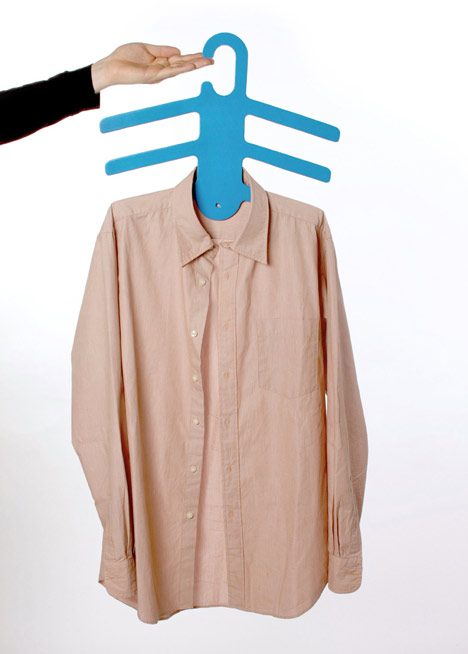
"Cities are becoming more populated, flats smaller and consequently wardrobes," says Arquer. "It is a reflection how our everyday lives can be alternated and adapted due to globalisation."
More about Roger Arquer on Dezeen:
Dramprom light (July 2009)
Non-lethal mousetraps (October 2007)
Fish bowls (August 2007)
Here's some more information from Arquer:
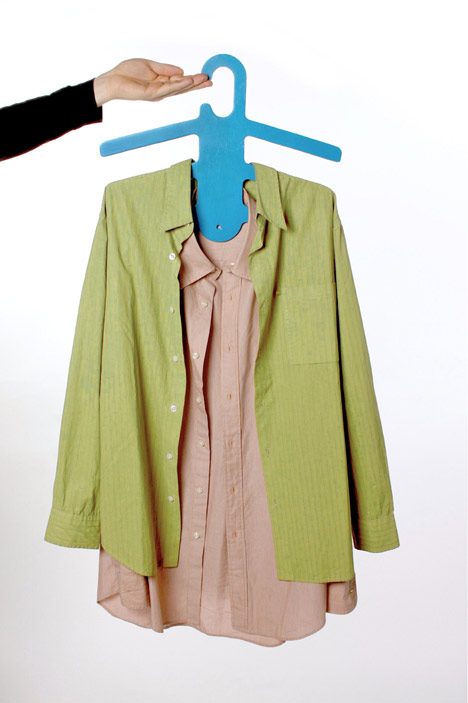
Skeleton (2010) is a cloth hanger. Inspired by the need to save space in our wardrobes, we propose a friendly and practical solution to hang different cloth using the same hanger.
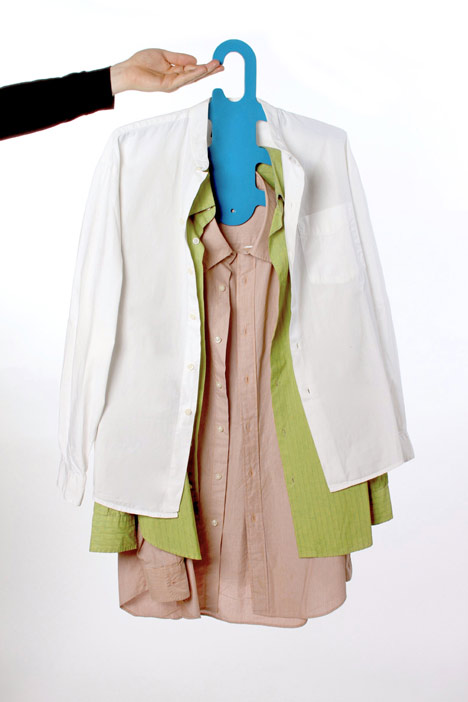
Skeleton addresses a common issue with no compromises: shirts or blouses are still properly hanged while it’s easy to go through the different items –adding and removing them from the hanger.

This project is inspired from the observation of an everyday behaviour. Shirts and blouses are often piled up on the same hanger. This is due of the amount of space in our homes has reduced, and the amount of purchased clothing has increased. These facts are clearly based on the way we our society has change on the past decade. This coat hanger adapts to an existing situation and encourages embracing it.
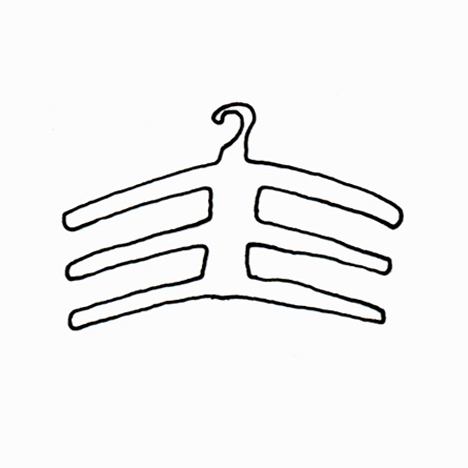
Also, Skeleton’s aesthetics adds a charming and pleasant note to an object we use on a daily bases.
Dimensions: 33x 40x 0.5 cm
See also:
.
 |
 |
 |
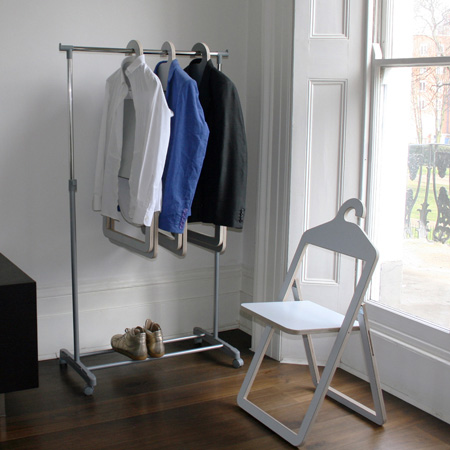
| Hanger Chair by Philippe Malouin |
Ingibjörg Hanna at DesignMarch |
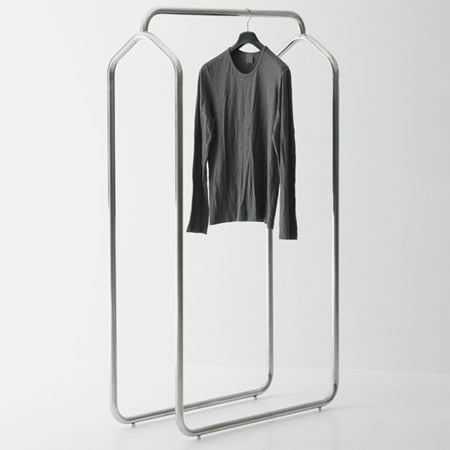
Axis by Ramei Keum |