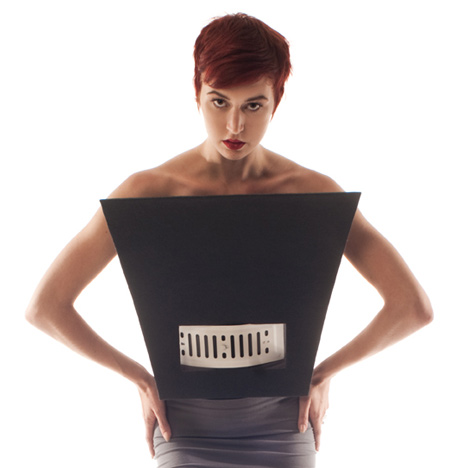
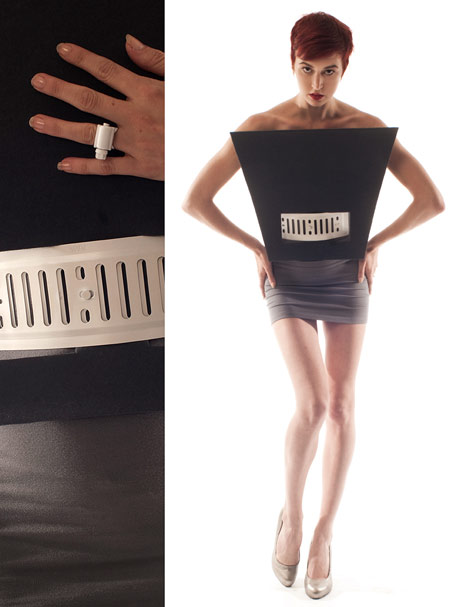
Designer Mridu Sahai has created a collection of dresses that incorporate architectural fittings like this ventilation grate (above).
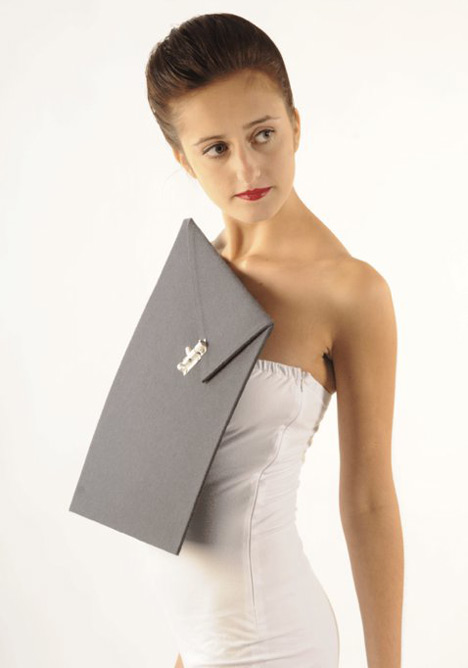
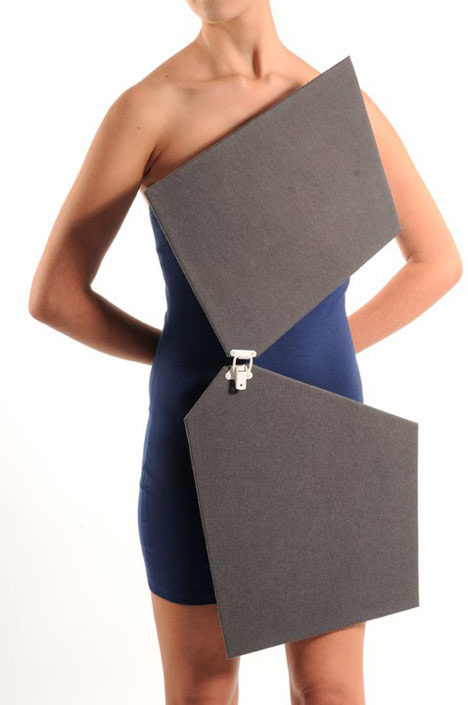
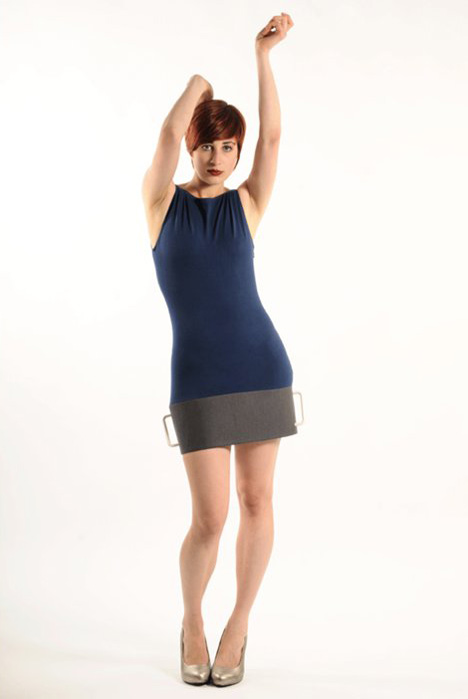
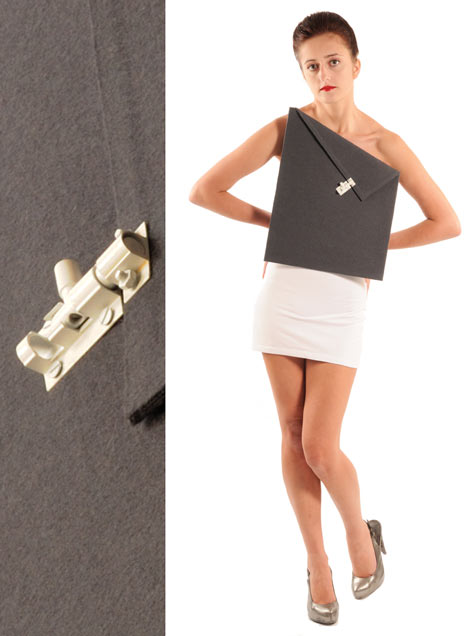
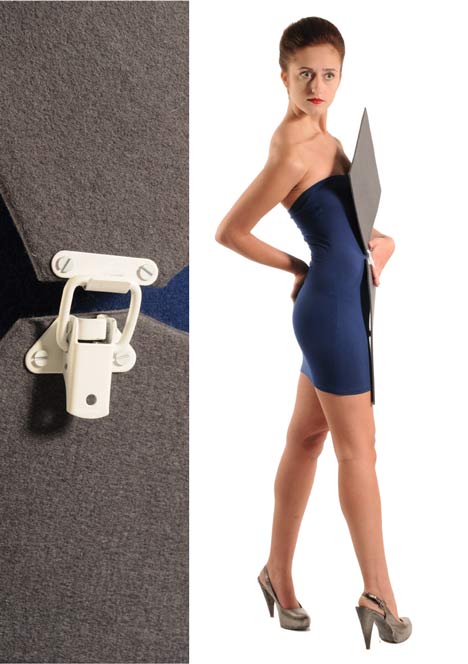
Called Fittings, the garments are made of jersey fabric and felt, and have different objects such as handles, bolts and latches affixed.
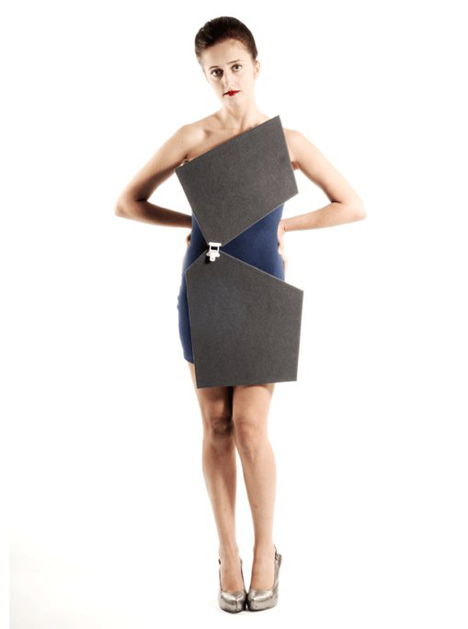
Photographs are courtesy of Herman Haye & Nikitas Almpanis.
Here's some more information from Sahai:
In relation to the notion- to reveal the extraordinary in the ordinary - my collection -FITTINGS, celebrates OBJECTivity as it attempts to radically transform the context of simple objects like handles, bolts and latches used in architecture, which have not been applied in a design milieu.
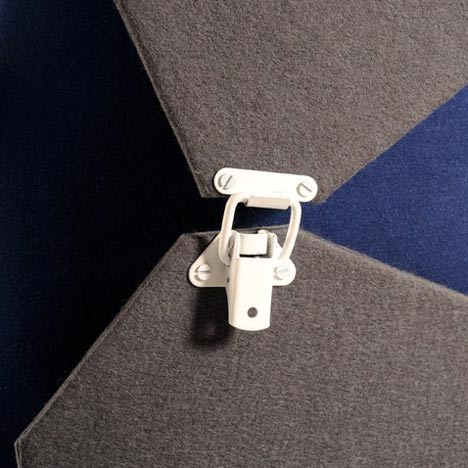
This is done by re-inventing their functionality and using them in a fashion collection, so that they are appreciated clearly for the statement they make.
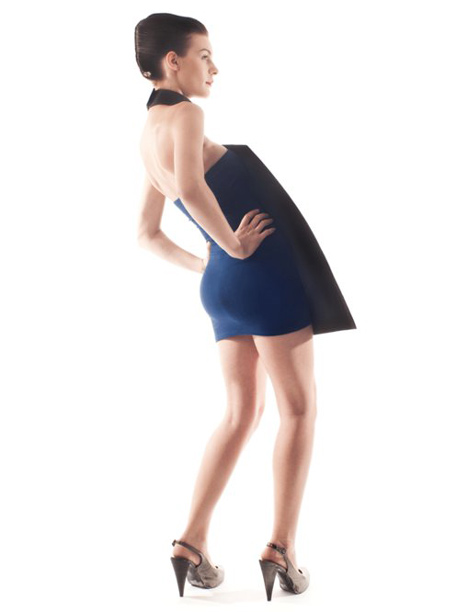
This is achieved by playing with the idea of stereotypical gender roles.
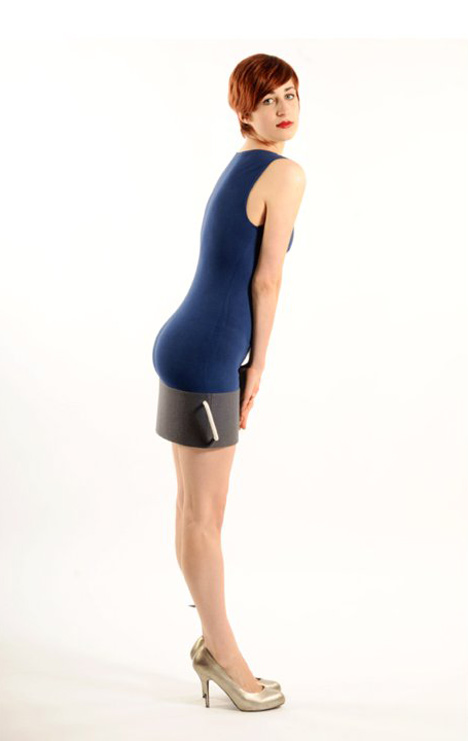
Fittings, which are usually considered masculine and are now being used in a women's wear collection, thus displaying an obscure status which is shown by the usage of materials like felt with jersey in combination, thus representing the conventional characteristics of masculinity and feminity – the unrepentant male and yielding female.
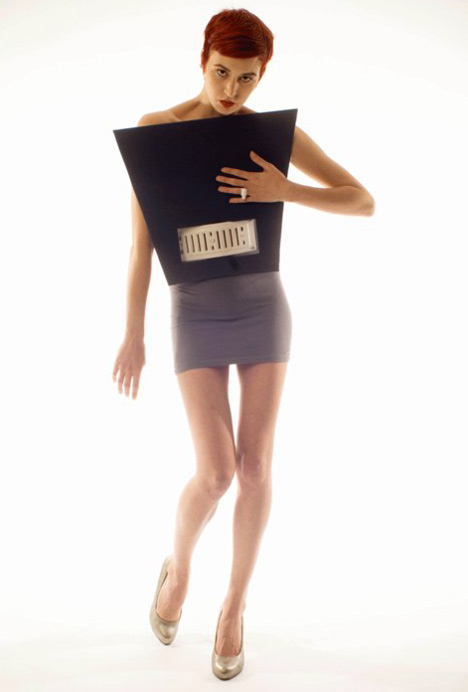
I have tried to inculcate the element of humor and surprise by the strategic juxtaposition of fittings on garments.
Mridu Sahai
Despite being trained as a fashion apparel designer, and specializing in leather design, I will not call myself a fashion designer, as my work is adequately driven by architecture and product design.
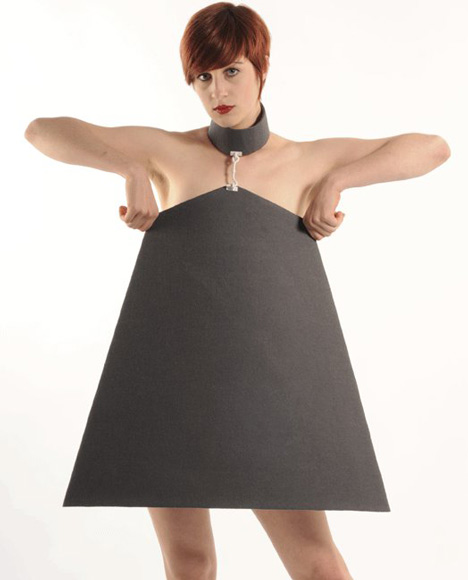
I am constantly looking for inspirations further away from the realm of design, drawing comparisons, finding resemblances, questioning differences, excavating relationships, redefining their contexts and causing relocations in the roles and associations of entities.
See also:
.
![]() |
![]() |
![]() |
| In No Time by Sandra Backlund |
Shell by Julia Krantz |
CLASH at FASHIONCLASH Maastricht |


and i dont think gender roles can be addressed with a bit of foam board wrapped felt with an allgood door latch superglued to it
Its not foam board wrapped with felt.. it felt bonded with interfacing.
and the door latch isn't super glued, but screwed on with a nut and bolt.
what a cool idea done so badly. why on earth are the huge pieces of felt in there?
could have been really successful project simply by comparing the organic shapes in the fittings to the organic shapes of the human body… so what made the design go down this route?
the skirt with handles is the only piece that remotely works
The silhouette has been determined by scrutinizing the shape of the simple barrel bolt , one side of the bolt is flat and structured while the top is moulded around a central latch stick, the central latch was replaced by the human body form in order to make the front look absolutely structured (masculine) but let the backs be totally molded and body hugging representing femininity , the stereotypical image of the genders, and then join the two together, which is challenging both technically as well as in a gender context.
ok, the barrel bolt idea makes some sense as you describe it here, but I don't see that thinking represented in the design. If the dress and felt are part of the same object then why are they different colours and materials? if the barrel bolt and its representation of gender are the design generators, then what about the other fittings you've used? What do the different shapes of felt represent?
personally I would have executed the barrel bolt idea with the felt on the back of the dress, spreading around the sides. you could have then played with the notion that the bolt is the part you touch, which has become the person.
Very simple dresses with some felt surfaces attached to it. There is no merit in this.
that is the most vulger way of combining architecture with fashion, this collection literally insulted both fields of design
Or perhaps it's stating that the two forms of design should not blend…
fashion unlike architecture is dynamic. A normal person in his entire lifespan purchases many t-shirts, fewer tables and even fewer houses.If we attempt to combine these, it is critical to keep their lifecycles in mind, as the consumer perceives and consumes each category differently. A piece of clothing is used individually, whereas a piece of furniture or a house is used by multiple beings, the very reason why these two forms should not blend.