Hut on Sleds by Crosson Clarke Carnachan Architects
As the tides erode the northern coast of New Zealand, this house on a sled by architects Crosson Clarke Carnachan can be towed off the beach and out of harm's way (+ slideshow).
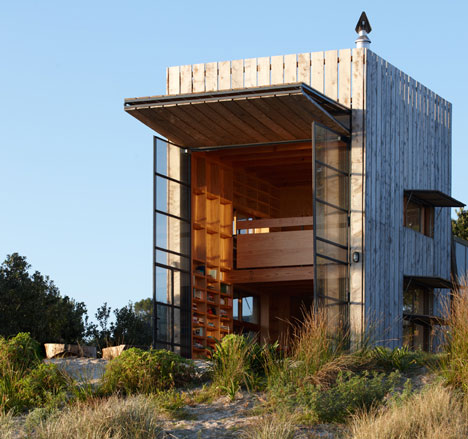
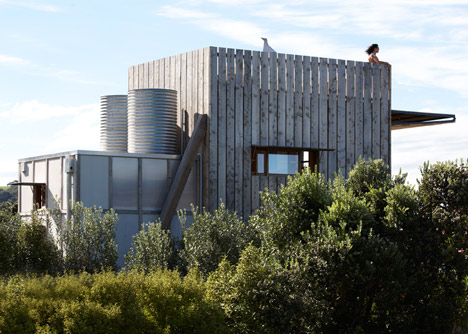
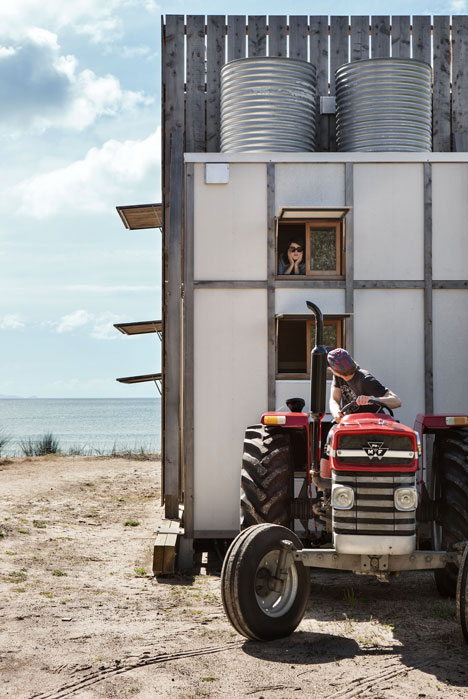
Located within a designated erosion zone on the Coromandel Peninsula, the house was designed as a mobile structure to satisfy a planning condition requiring that all buildings in the area be removable.
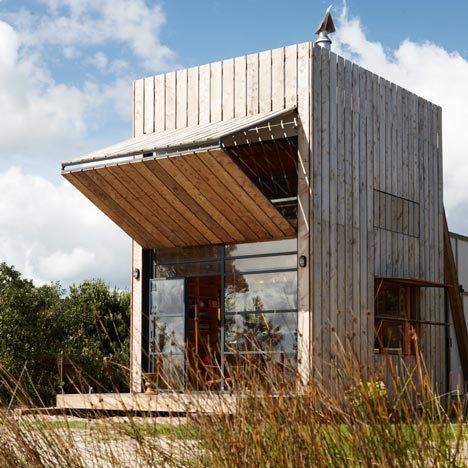
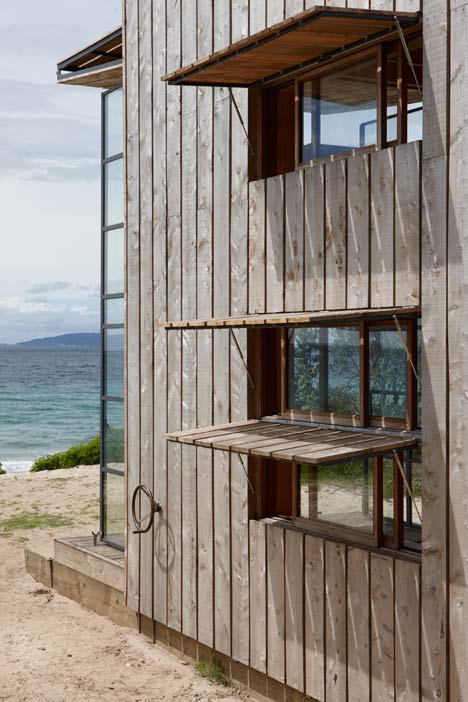
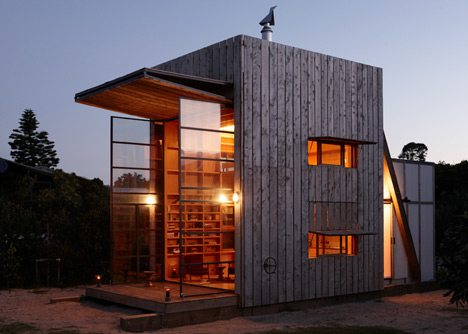
A huge shutter folds up across the exterior to reveal and shade a two-storey glazed facade, which has an open-plan living room and mezzanine bedroom behind.
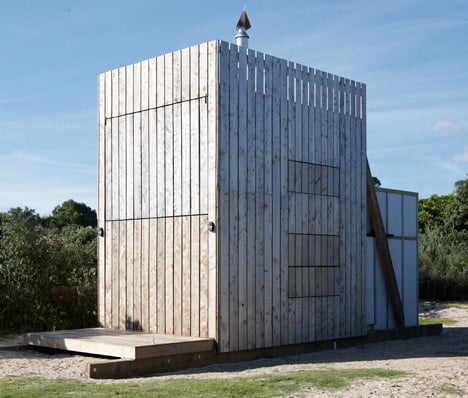
More shutters lift up to uncover windows on each side of the house, and a roof deck is hidden behind the parapet walls.
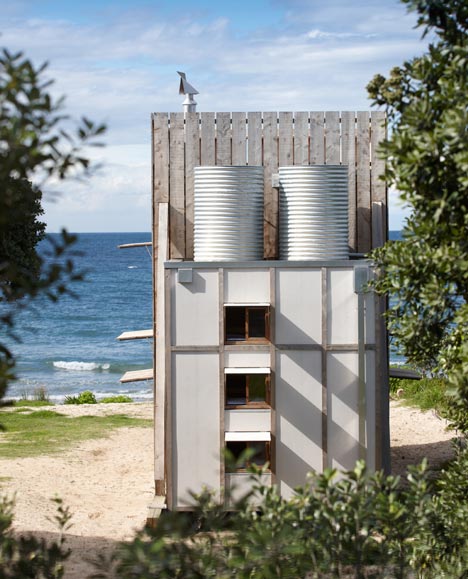
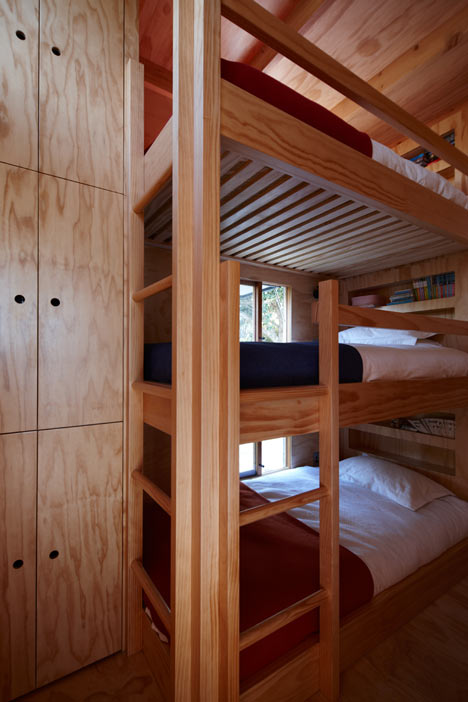
A family of five use the hut as a holiday home and the three children sleep in a three-tiered bunk bed in the back room.
Crosson Clarke Carnachan Architects also recently completed a charred wooden cabin - take a look at it here.
Surprisingly this isn't the first building on a sled we've featured. The first was a sauna on a Finnish island.
See all our stories about mobile architecture »
Photography is by Jackie Meiring.
Here's a description from Crosson Clarke Carnachan Architects:
On the shore of an idyllic white sandy beach on New Zealand's Coromandel Peninsula rests an elegant hut. The site lies within the coastal erosion zone, where all building must be removable. This is taken literally and the hut is designed on two thick wooden sleds for movement back up the site or across the beach and onto a barge.
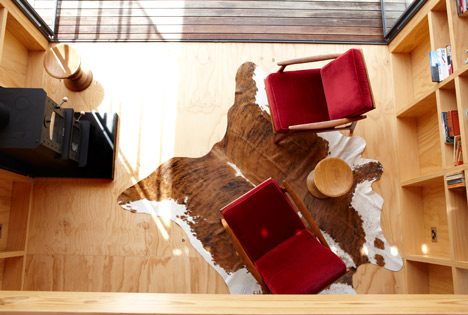
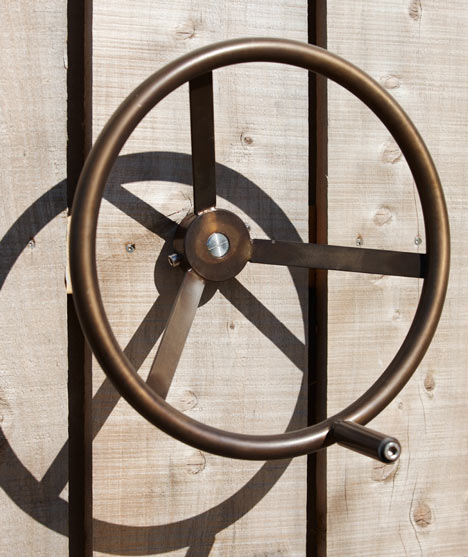
The hut is a series of simple design moves. The aesthetic is natural and reminiscent of a beach artifact/perhaps a surf-life-saving or observation tower. The fittings and mechanics are industrial and obvious, the structure is gutsy and exposed.
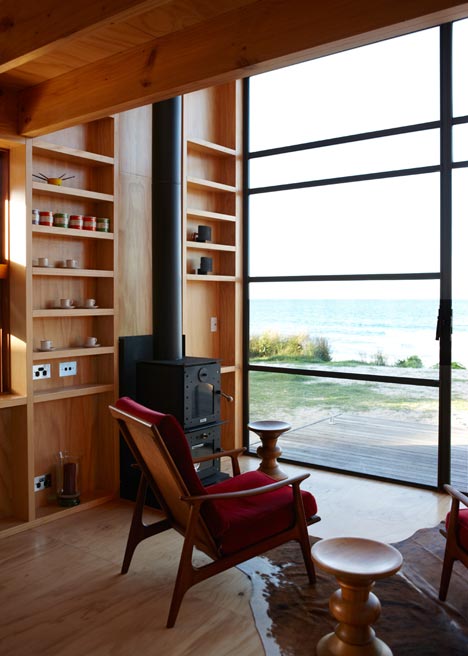
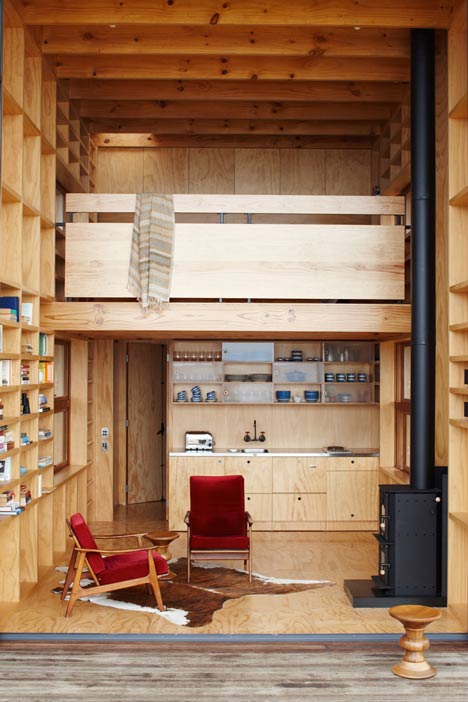
The holiday retreat is designed to close up against the elements when not in use, and measures a mere 40 square meters. It accommodates a family of five in a kitchen/dining/living area, a bathroom and two sleeping zones, the children's accommodating a three tiered bunk.
Closed up, the rough macrocarpa cladding blends into the landscape and perches unobtrusively on the dunes. The rear being clad in "flat sheet" a cheap building material found in many traditional New Zealand holiday homes.
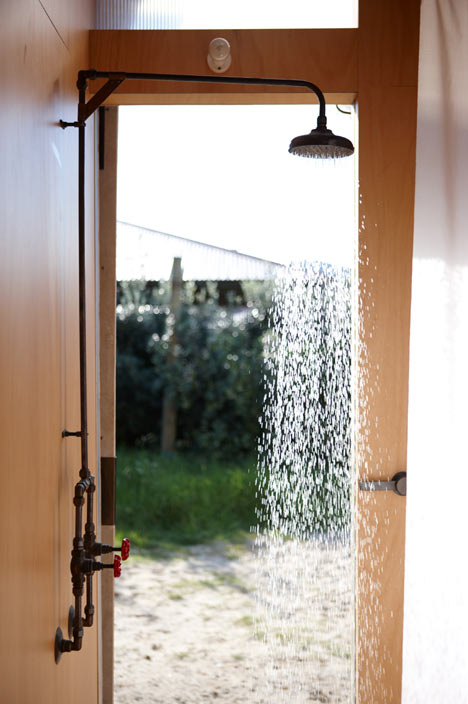
These clients sought to explore the real essence of holiday living; small, simple, functional. The normal rituals of daily life; cooking dining, sleeping and showering all being done connected to the outside.
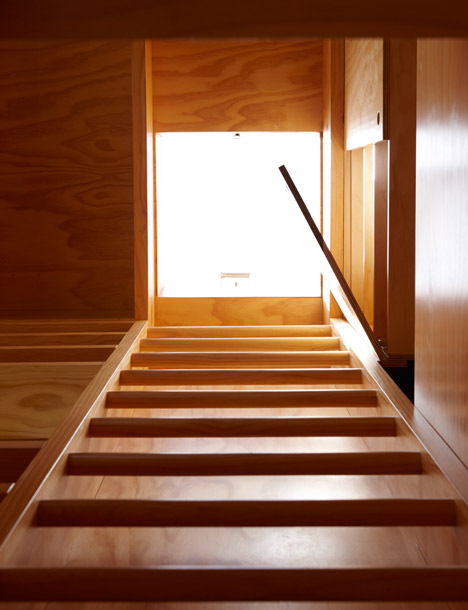
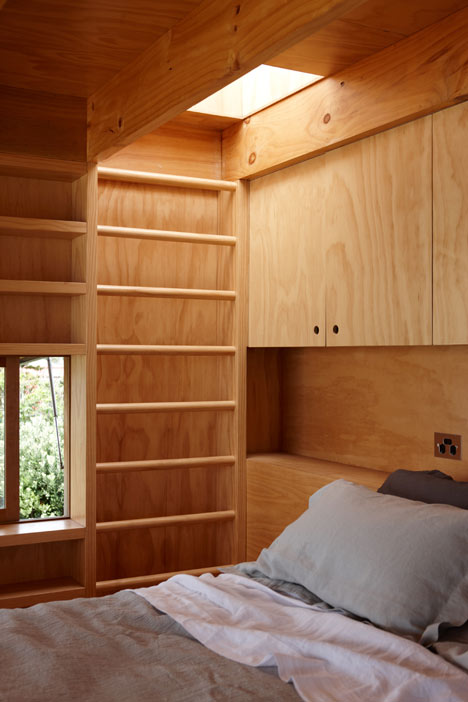
The two storey shutter on the front facade winches open to form an awning, shading the interior from summer sun while allowing winter sun to enter. It reveals a double height steel framed glass doors that open the interior much like the tent flap, connecting the living and the ladder accessed mezzanine bedroom to the extraordinary view.
Within, the interior is the epitome of efficiency, every available space is utilised from cabinetry toe spaces to secret cubby holes within the children's bunks.

The hut is totally sustainable from its modest size to the use of timber in its cladding, structure, lining and joinery and from its worm tank waste system to the separate portable grey water tanks. This is a new way of looking at holiday living in this sensitive dune environment.
Engineering: CMR Engineers Ltd
Contractor: D.F. Wight Builders Ltd
Completed: 2011
Area: 48.8m2