Eggwave by WertelOberfell for Neff
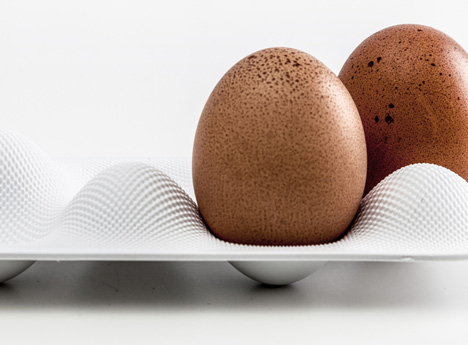
Product news: new Neff fridges will come with this golf-ball-textured extendable egg tray by German design studio WerterlOberfell.
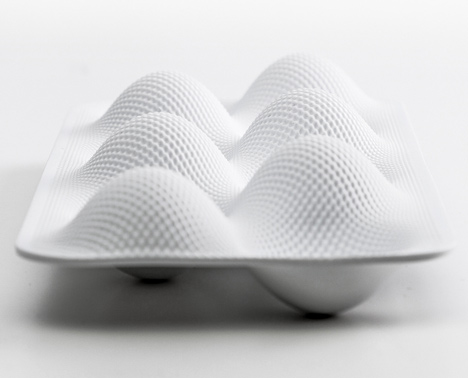
WertelOberfell designed Eggwave in collaboration with Tobias Schmidt from appliance-maker Neff.
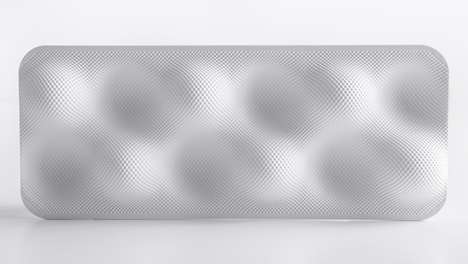
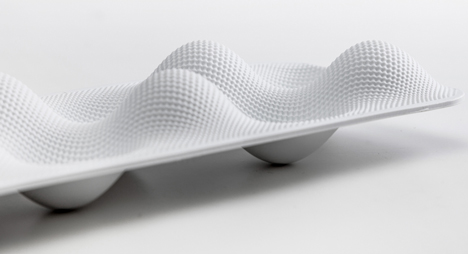
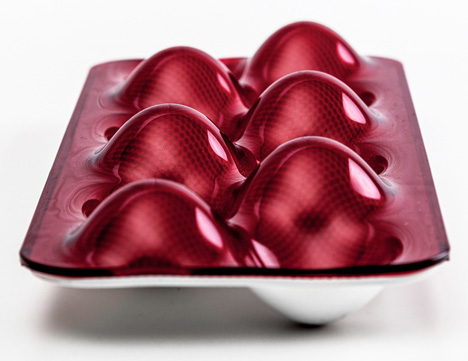
The egg tray comprises two interlocking layers, one in white plastic and the other transparent, which can be clipped in three positions to store six, eight or ten eggs.
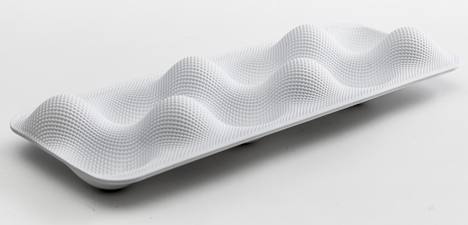
"It was a bit of work to get the rippled surface right," said designer Jan Wertel. "We initially tried to digitally generate it, but it still needed a lot of 'manual' work in the CAD software, so it was almost like digital sculpting."
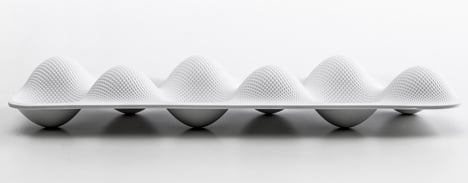
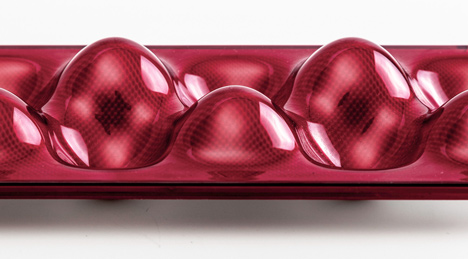
The first Eggwave trays have a translucent red plastic layer, as pictured below in the story, but the final version will use clear plastic.
WertelOberfell was founded in 2007 by Gernot Oberfell and Jan Wertel, both former students of Industrial Design at the State Academy of Arts in Stuttgart.
We previously published on a table by WertelOberfell that mimics fractal growth patterns found in nature.

Other eggy projects we've featured on Dezeen include a bread roll baked to hold a boiled egg and an exhibition in Liverpool where visitors were invited to roll eggs down seven timber follies.
See all our stories about kitchenware »
See all our stories about products »
Here's some more information from the designers:
Eggwave is an accessory for storing eggs in the fridge. It has been designed for Neff by WertelOberfell, in collaboration with Tobias Schmidt of Neff in-house design, and is shipped with all new Neff fridges. It consists of two undulating, interlocking layers, one in white plastic with a surface structure, the other transparent, that can be clipped onto the base in three positions to allow the storing of six, eight or ten eggs.
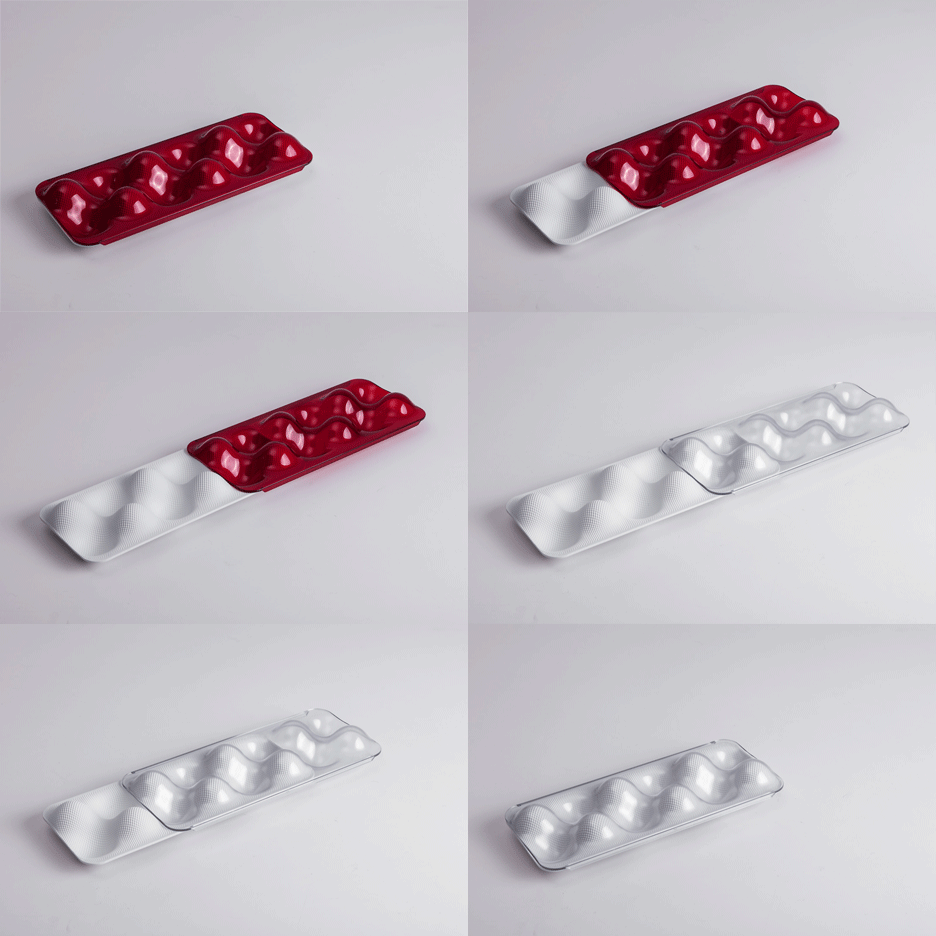
The aim was to give an ordinary everyday product that costs only a few cents in production and often gets thrown away, an almost sculptural quality whilst retaining and improving its functionality over its predecessor.
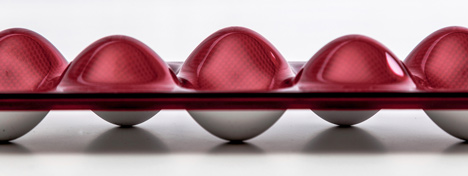
Eggwave demonstrates that a relatively uninteresting product typology can become quite exciting. It embodies our digital design process and shows that "digital design", which is kind of a synonym for crazy shapes, can become a mass-produced mainstream product that has an almost invisible serving function.
The dimensions are 90 X 220 X 35 mm.