House of Silence by FORM/Kouichi Kimura Architects
Japanese studio FORM/Kouichi Kimura Architects designed this concrete house in Shiga to be deliberately alien to its neighbours (+ slideshow).
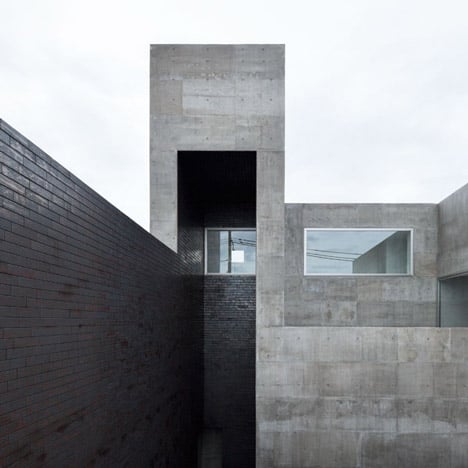
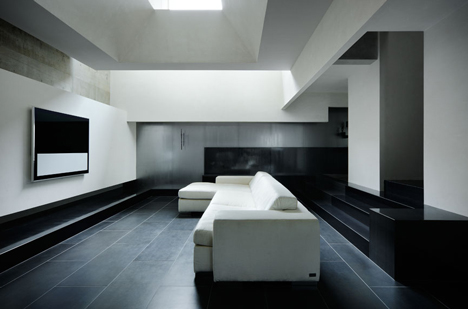
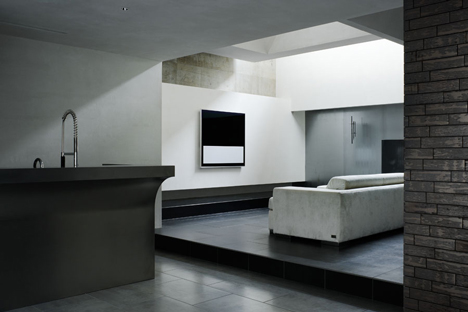
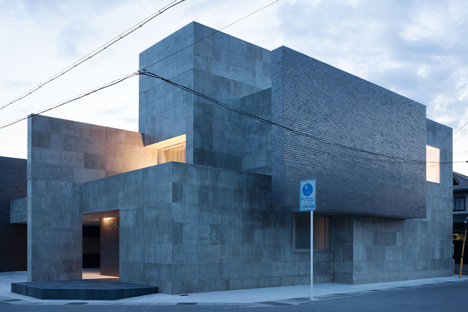
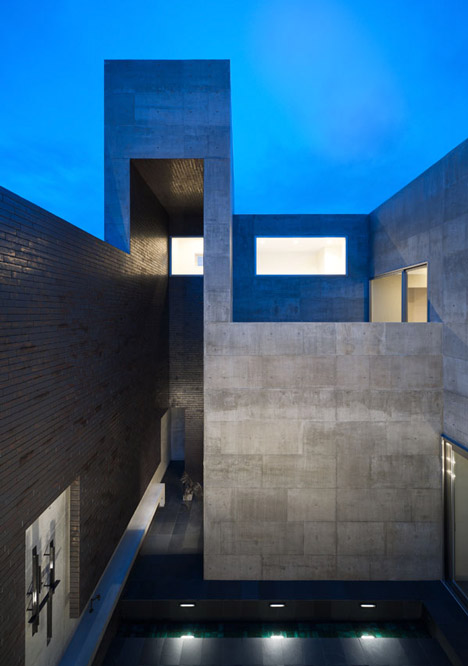
Named House of Silence, the two-storey building contains rooms with split levels and varying ceiling heights, creating a segmented structure with overlapping volumes and protruding walls. "The client wanted to have a house which is not influenced by the environment of its location," explains architect and studio founder Kouichi Kimura.
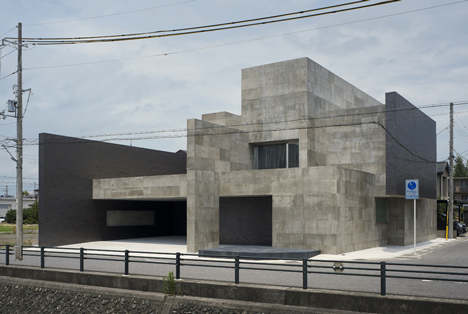
"This house will give you the experience of going through a variety of sequences, like going through cloisters with the light," he adds.
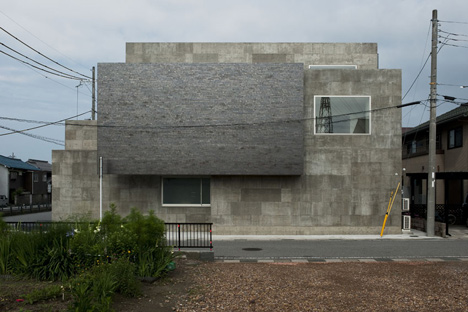
Above: photograph is by Kei Nakajima
The roof staggers up to its highest point in the north-west corner, creating a tower that Kimura refers to as a belfry.
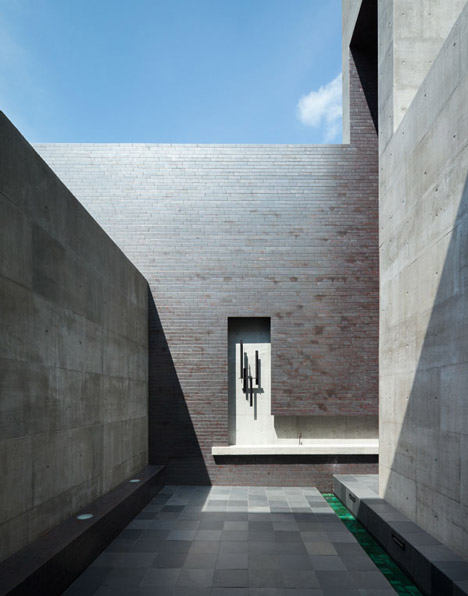
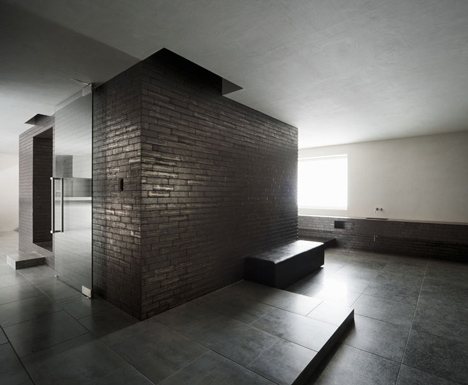
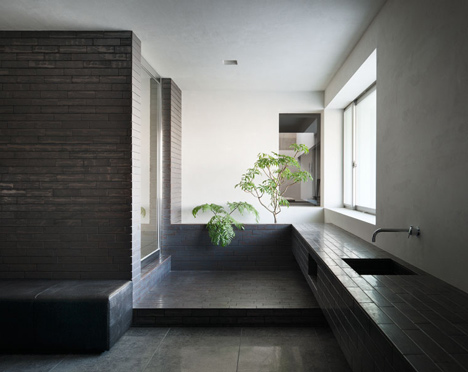
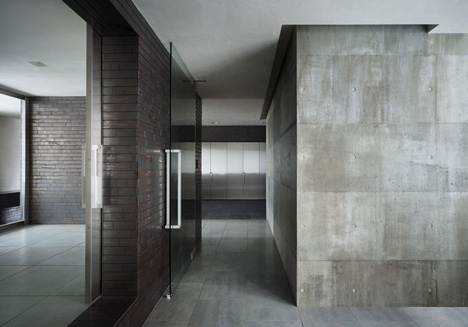
Unlike the surrounding houses, most of the building's walls and ceilings are concrete and the architect has also picked out a few surfaces with textured ceramic tiles.
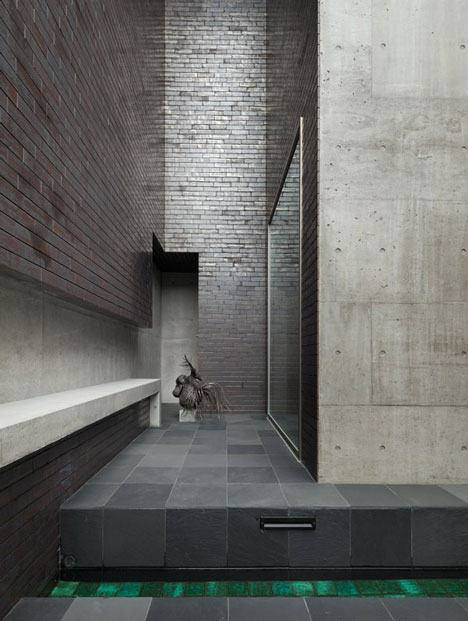
A small courtyard contains seating areas slotted into horizontal recesses.
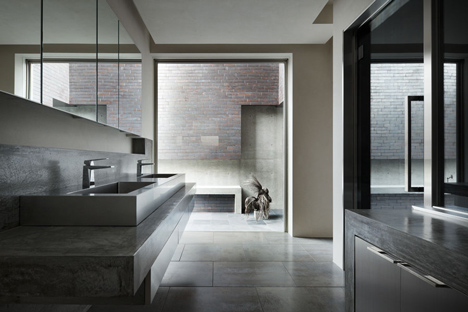
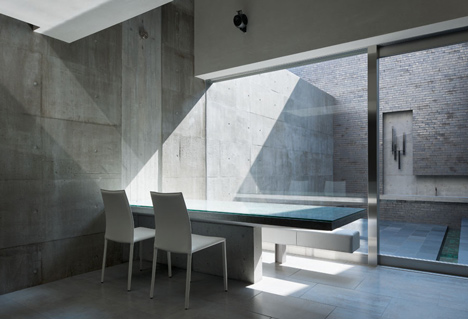
Some furniture inside the house uses the same materials as the architecture, so tiled worktops appear to extend from the walls and a glass dining table rests upon a precast concrete base that matches its backdrop.
One long concrete wall extends along the north-west facade, enclosing a large parking area for residents.
Japanese architect Kouichi Kimura set up his studio in Shiga in 1991 and other projects he's completed include the House of Representation that features a large light chimney and the House of Integration based on traditional folk houses.
See more stories about FORM/Kouichi Kimura Architects »
Photography is by Takumi Ota.
Here's some more information from Kouichi Kimura:
House of Silence
The client wanted to have a house which is not influenced by the environment of its location.
This architecture, which is composed of a concrete volume, has not got many windows and is closed by walls, but has got a variety of space inside that you will never imagine from outside.
The rough concrete finish, shiny tiles and an opening like a belfry will give you a hint of the variation of spaces inside.
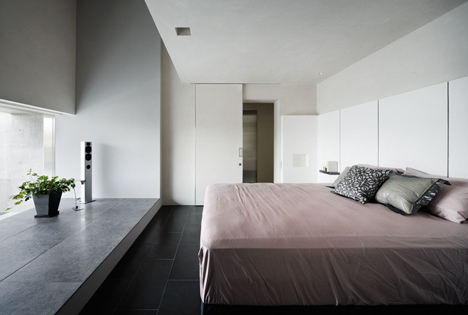
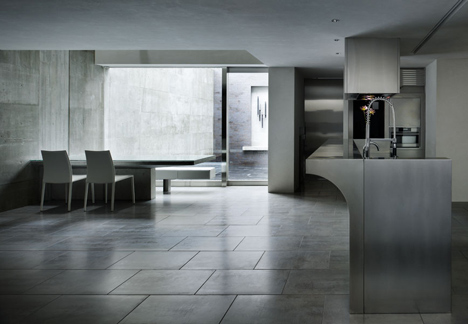
The inside spaces are divided by the ceiling height, the different levels of floor and type of lights, and are then connected by the circulated line of flow.
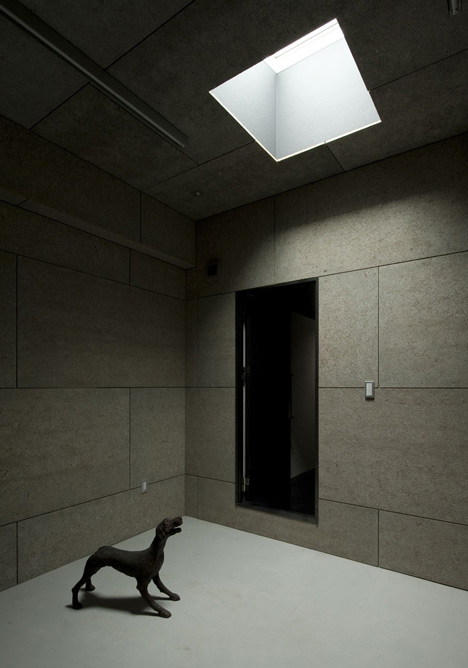
Above: photograph is by Kei Nakajima
The inner court is cut off from the outside environment and shows a variety of expressions as the light changes.
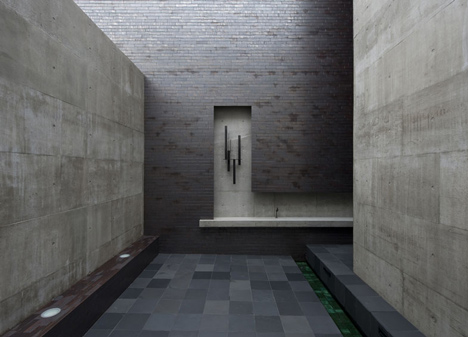
Above: photograph is by Kei Nakajima
Moreover, the contrast of the height makes the space even deeper and wider than it actually is.
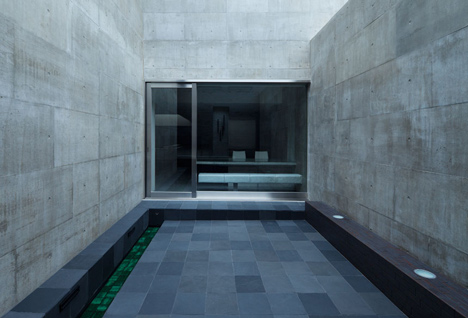
This house will give you the experience of going through a variety of sequences, like going through cloisters with the light.
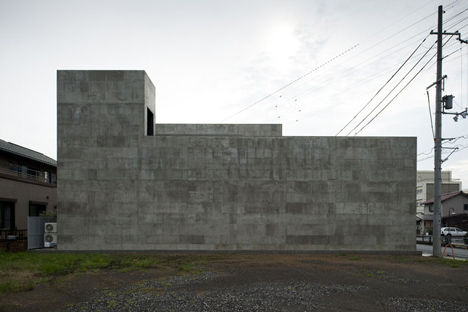
Above: photograph is by Kei Nakajima
It exists as a landmark in the town, but it also has highly secured privacy and variety of spaces inside.
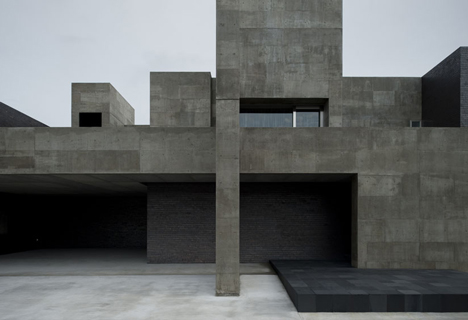
Above: photograph is by Kei Nakajima
Architects: FORM / Kouichi Kimura Architects
Location: Shiga, Japan
Client: Private
Construction Year: 2012
Site Area: 394,42 sq m
Constructed Area: 321,23 sq m
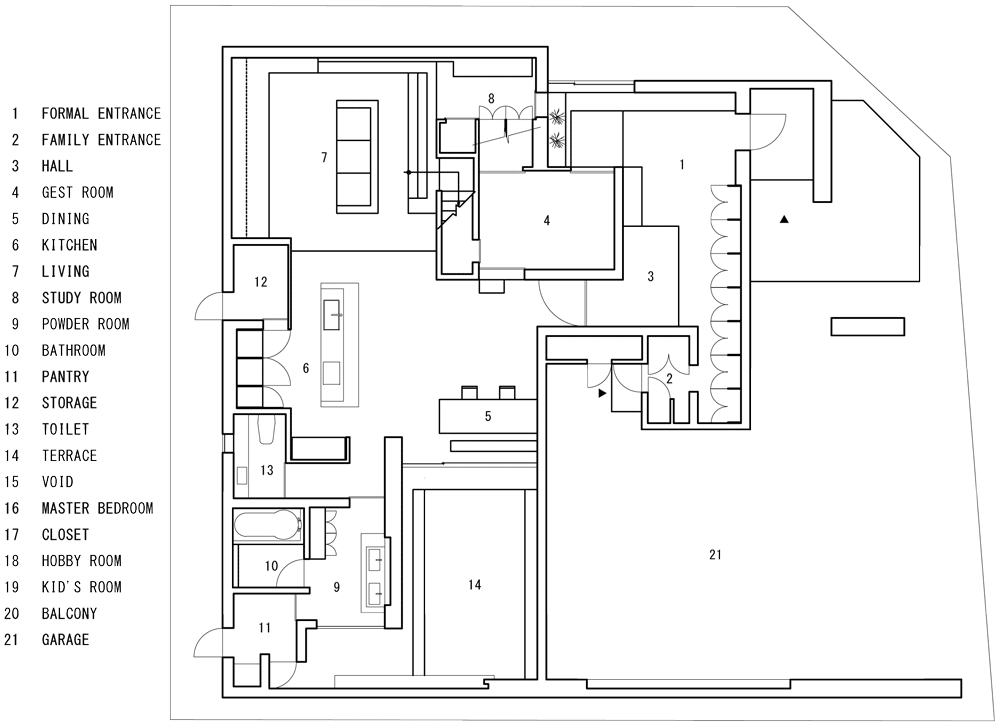
Above: ground floor plan
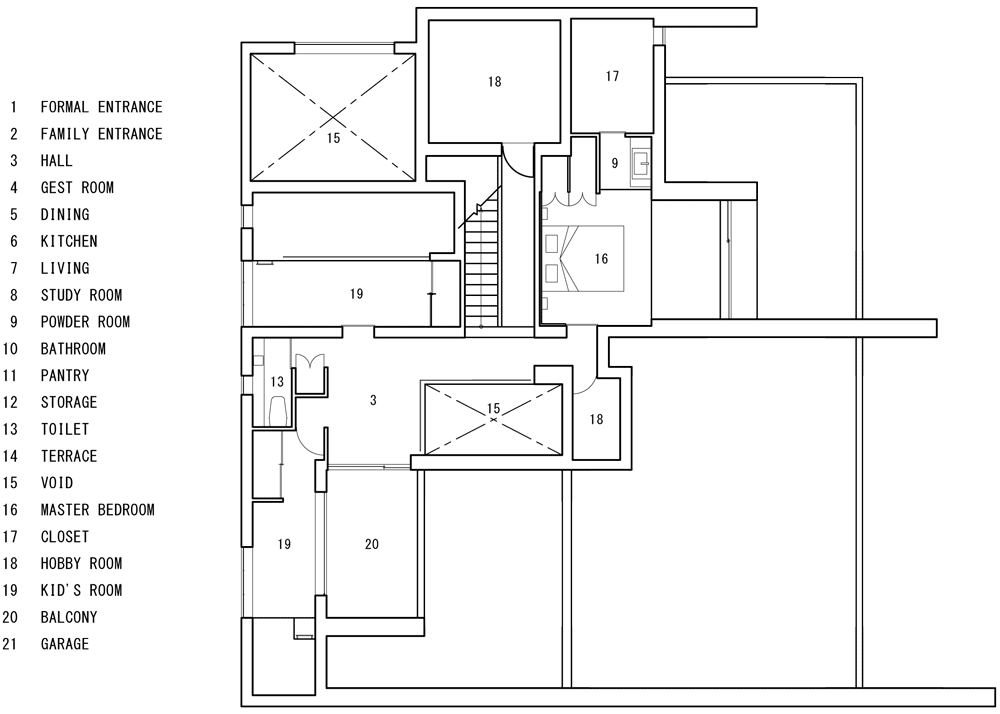
Above: first floor plan