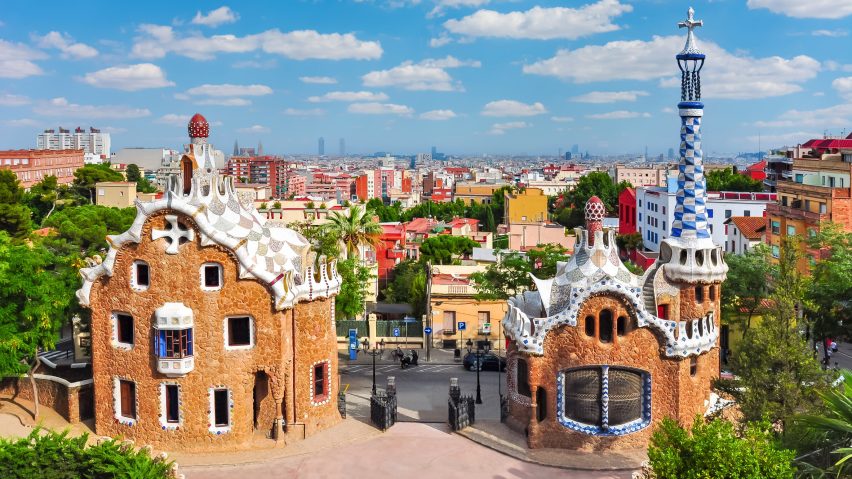
How Gaudí's failed Park Güell housing estate became Barcelona's most popular park
Continuing our Gaudí Centenary series, we look at Park Güell, a UNESCO-listed municipal park originally designed by the Catalan architect Antoni Gaudí as a private housing estate on the outskirts of Barcelona.
Opening in 1926 as a municipal garden for Barcelona's residents, the park is now such a popular attraction that there are protests about its "wild touristification".
But it was not planned this way. The park, which perhaps more than any other building showcases the many facets of Gaudí's enigmatic, unique personal style, was not even intended as a public space.
Situated on a mountainside plot in the city's Gràcia district, Park Güell's site was originally designed as an exclusive residential complex for the city's bourgeoisie.
The expansive development was proposed by Spanish industrialist Eusebi Güell based on the ideals of the garden city movement led by English town planner Ebenezer Howard.
As with all of the industrialist's major architectural works, he commissioned Gaudí for the design and it is one of five projects designed by the architect – including Palau Güell and Colonia Güell – that bear his name. Reports on Güell's wealth coming from slavery in Cuba have led to a recent rethinking of the legacy of this patronage.
Gaudí's plan divided the site into 60 triangular plots for luxury private homes, which would be surrounded by greenery and connected by a trio of viaducts that traverse the sloped landscape.
Construction on the estate began in 1900, with its two entrance pavilions, a central stairway, and elevated walkways being completed by 1903.
However, by 1914, the development was abandoned following a lack of interest from buyers due to complex lease contracts and few local transport systems. Only two of the 60 planned homes were ever built, one of which became Gaudí's home.
The park was sold to the city council in 1922, following the death of Güell at his on-site residence in 1918, and was later opened as a public space in 1926.
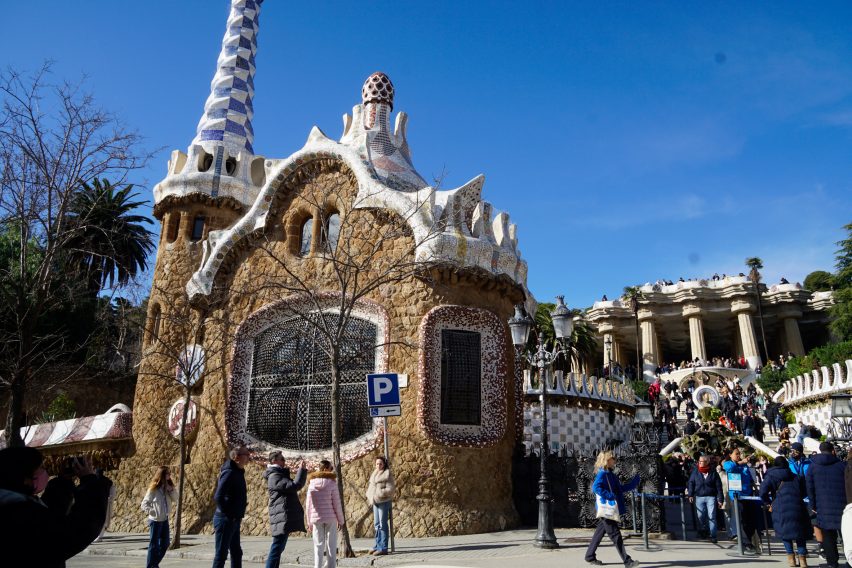
Now the estate-turned-major-tourist-attraction encompasses 12 hectares of public gardens with whimsical gingerbread house-style pavilions and mosaic-covered terraces overlooking the city.
It incorporates elements from the park's more luxurious beginnings, which act both as cultural infrastructure for the community and as important artefacts of Gaudí's work.
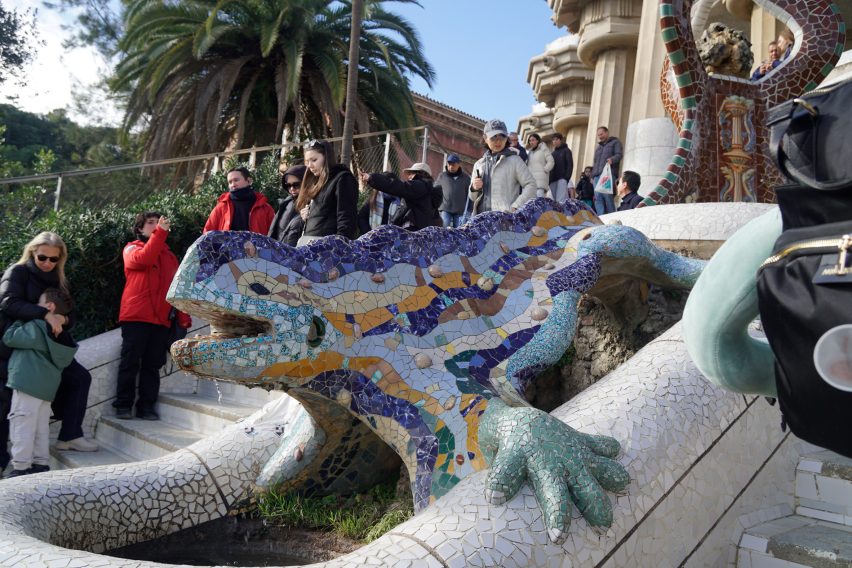
Alongside the architect's use of local stone and brick, more extravagant details, including serpentine benches, a mosaic dragon sculpture and large Doric columns, were made possible by Güell's fortune.
Today, the expansive park comprises two large areas – a 12-hectare main park and heritage site, and an additional eight-hectare woodland.
Two porter's lodge pavilions flank the park's gated entrance. Likened to gingerbread houses, their matching sand-coloured exteriors are clad with traditional Catalan clay tiles and mosaic detailing.
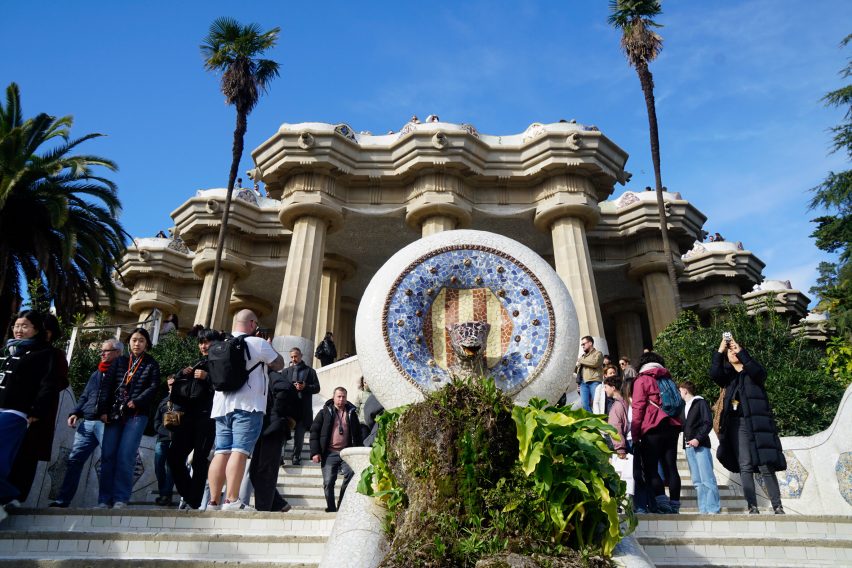
From here, visitors reach the park's Dragon Stairway, a grand double staircase that connects to the park's upper levels. The curved staircase is flanked on each side by grottos, topped with rounded terraces framed by decorative merlons.
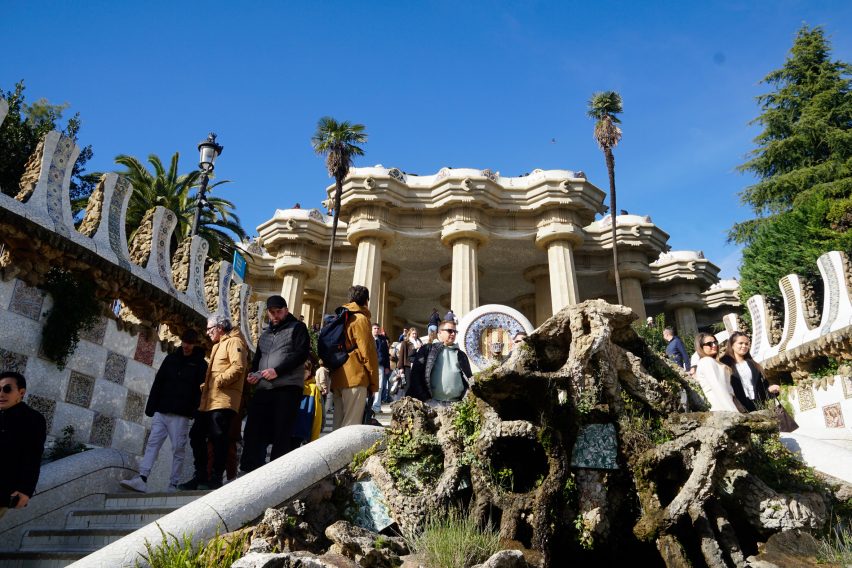
Featured on the steps is a dragon, or salamander, sculpture covered with an ornate tile-shard mosaic, which has become emblematic of the park.
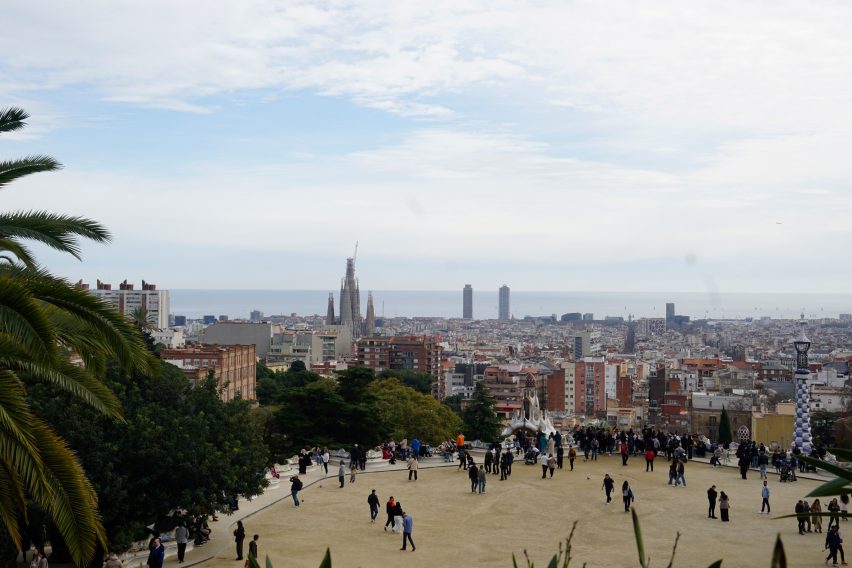
Situated at the centre of Park Güell is the Nature Square, a sprawling, open terrace originally conceived for hosting open-air shows visible from the surrounding terraces.
Here, visitors are also offered an unobstructed view of Gaudí's famous Sagrada Familia church, which began construction in 1882 and continued beyond the architect's passing in 1926.
A snaking bench designed by Gaudí's assistant Josep Jujol winds around the terrace to double as a balustrade and is similarly adorned with colourful tile-shard mosaic.
Partially dug into the hillside, the Nature Square is supported from its underside by a network of large stone pillars known as a hypostyle.
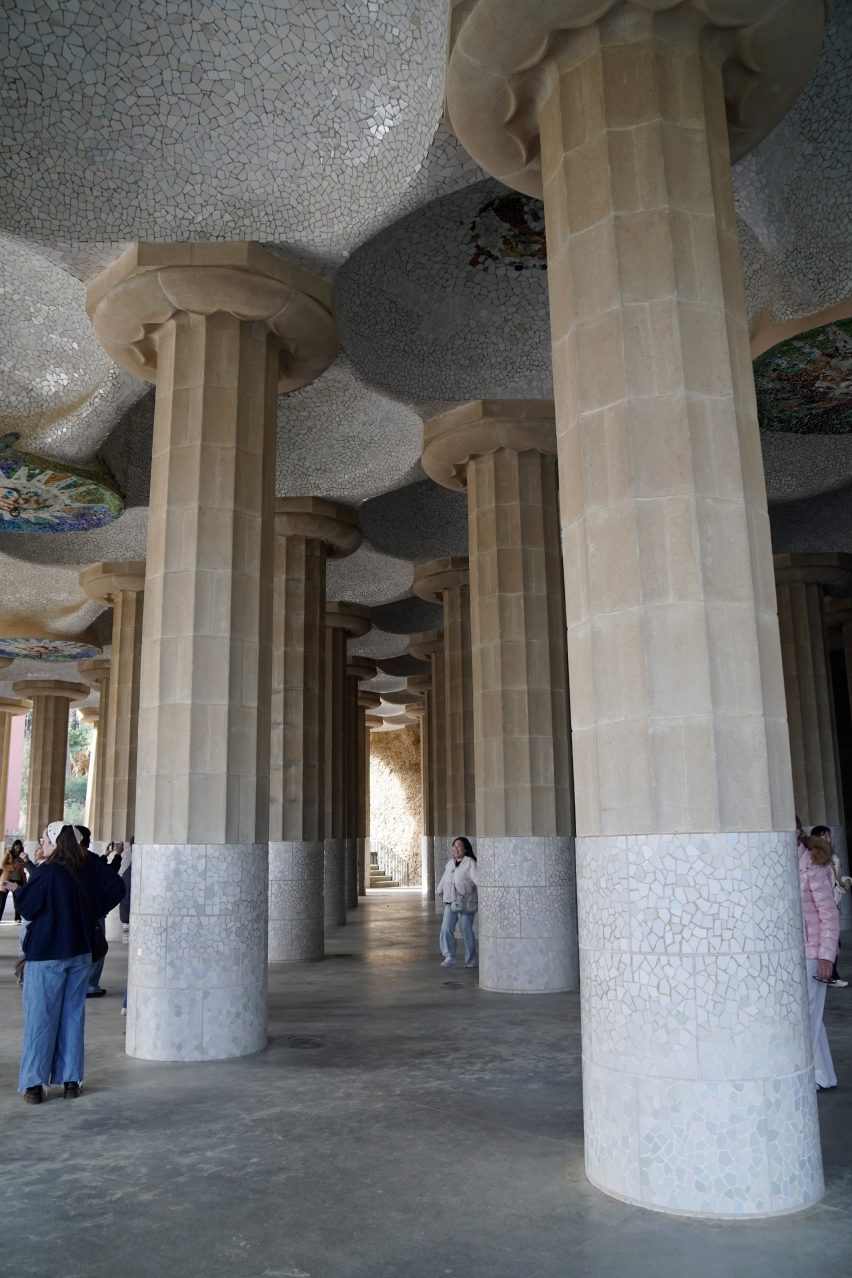
Named the Hypostyle Room, this space is made up of 86 striated Doric columns, with pockets of column-free areas designed as additional public space. Its ceiling is imprinted with several small domes.
A conduit collects rainwater from the square above, which is channelled through the hollow columns before being transferred to an underground tank.
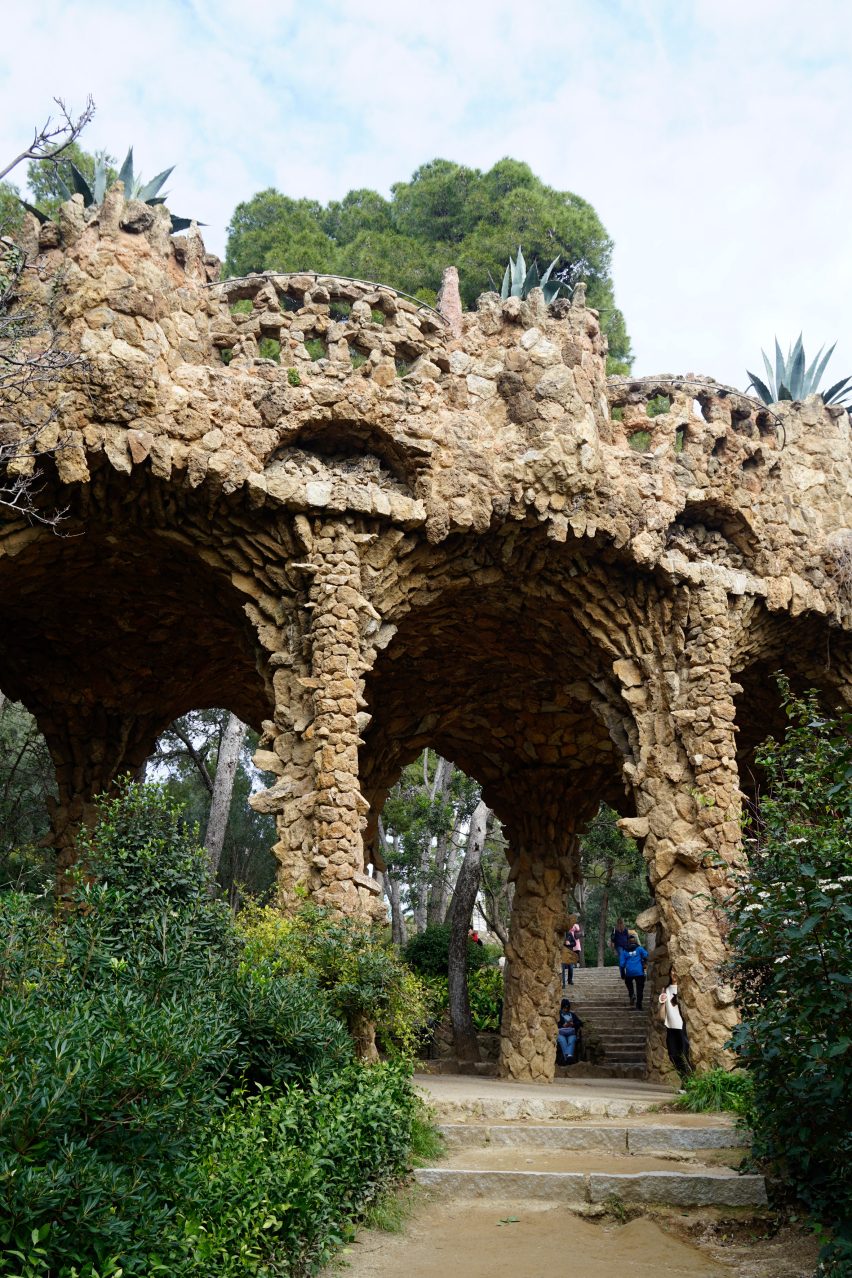
In response to the site's topography, Gaudí originally designed three five-metre-wide viaducts for carriages to transport residents to the higher terrain.
The Low, Middle and High viaducts – named after their respective positions on the hillside – are each suspended on a structure of sloping columns formed of stones found on the site.
Further connecting the expansive site is a 10-metre-wide arterial roadway lined with palm trees that carves through the park, alongside a network of three-metre-wide paths, shortcuts, and steps for those travelling on foot.
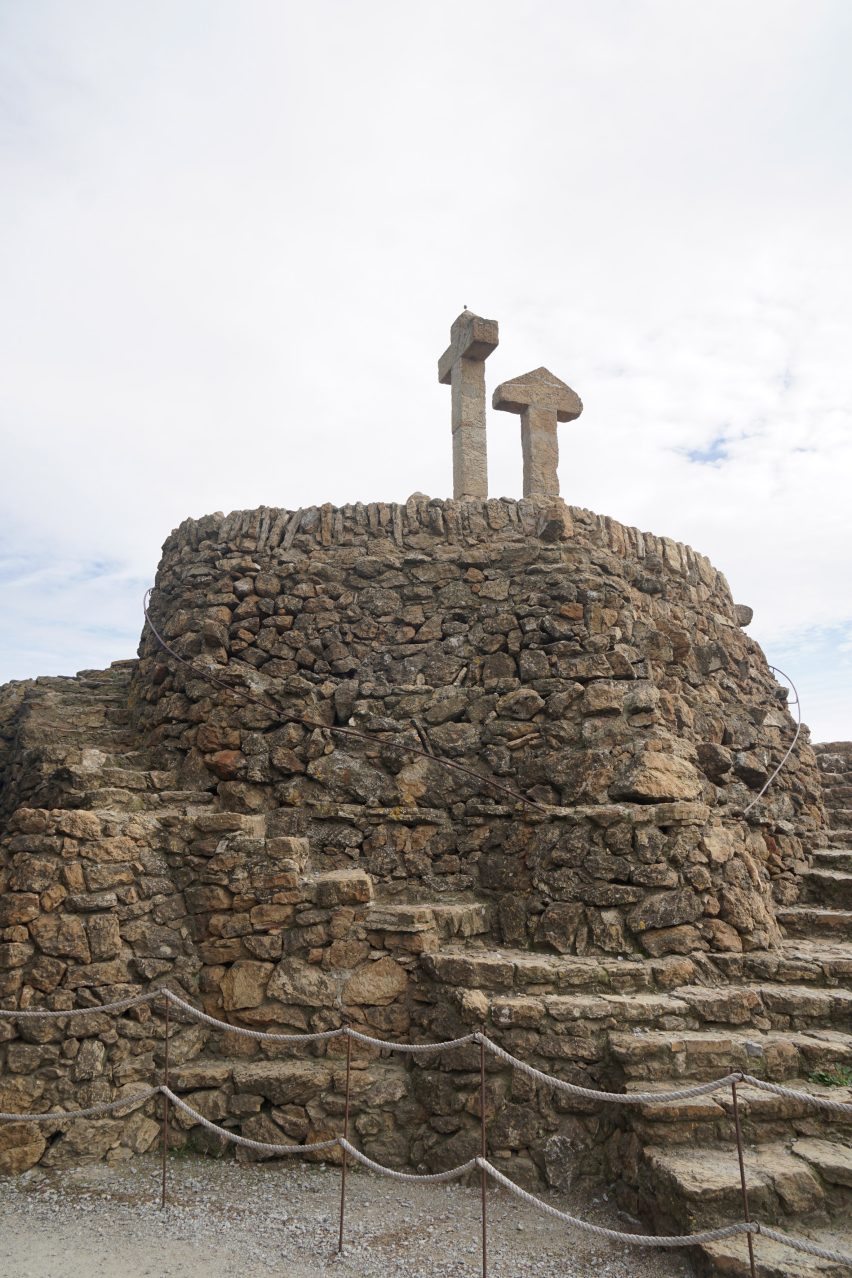
Park Güell culminates 182 metres above sea level at the Hill of the Three Crosses viewpoint, where stone crosses were erected in place of a chapel originally planned for the site.
The park's shift from a private estate to a public garden also saw the conversion of Güell's former home, Larrard House, into a municipal public school, and Gaudí's home into the Gaudí Home Museum.
As one of Barcelona's largest green spaces and a UNESCO World Heritage Site, Park Güell has become beloved by tourists and locals alike, with around 4.5 million visitors annually.
This popularity, however, has led to overcrowding. For this reason, Barcelona City Council has approved a plan that it claims will gradually reduce visitor numbers over two years and ultimately "bring the park back to the city".
Park Güell is one of seven UNESCO-listed buildings by Gaudí, alongside Casa Milà, Palacio Güell and the iconic Sagrada Familia, which is nearing completion after a 144-year-long construction.
The photography is by Cajsa Carlson, main photo via Shutterstock.
Gaudí Centenary
This article is part of Gaudí Centenary, our editorial series profiling the Catalan architect and designer Antoni Gaudí, marking 100 years since his death.