


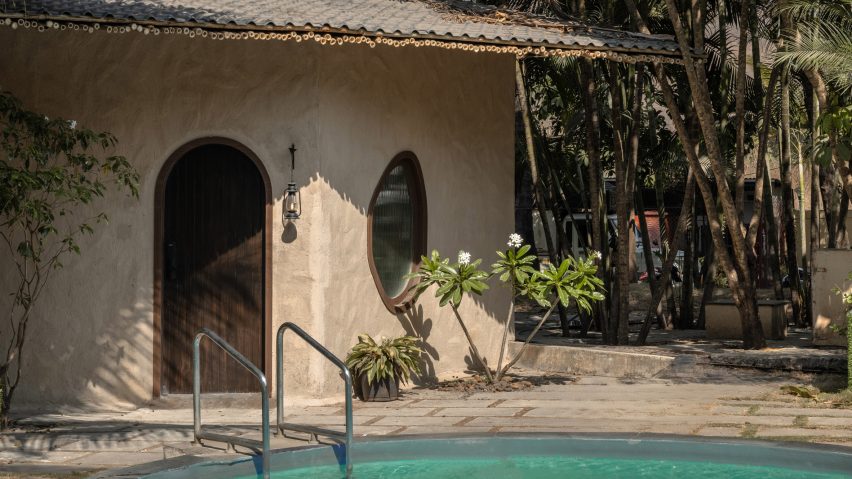
Indian studio AKSH Architects has completed The Earthen Retreat, a cluster of guesthouses in Pune created by repurposing several small abandoned buildings and coating them with mud and lime plaster.
The 557-square-metre plot was previously occupied by four site offices and storage units that had outlived their original purpose.

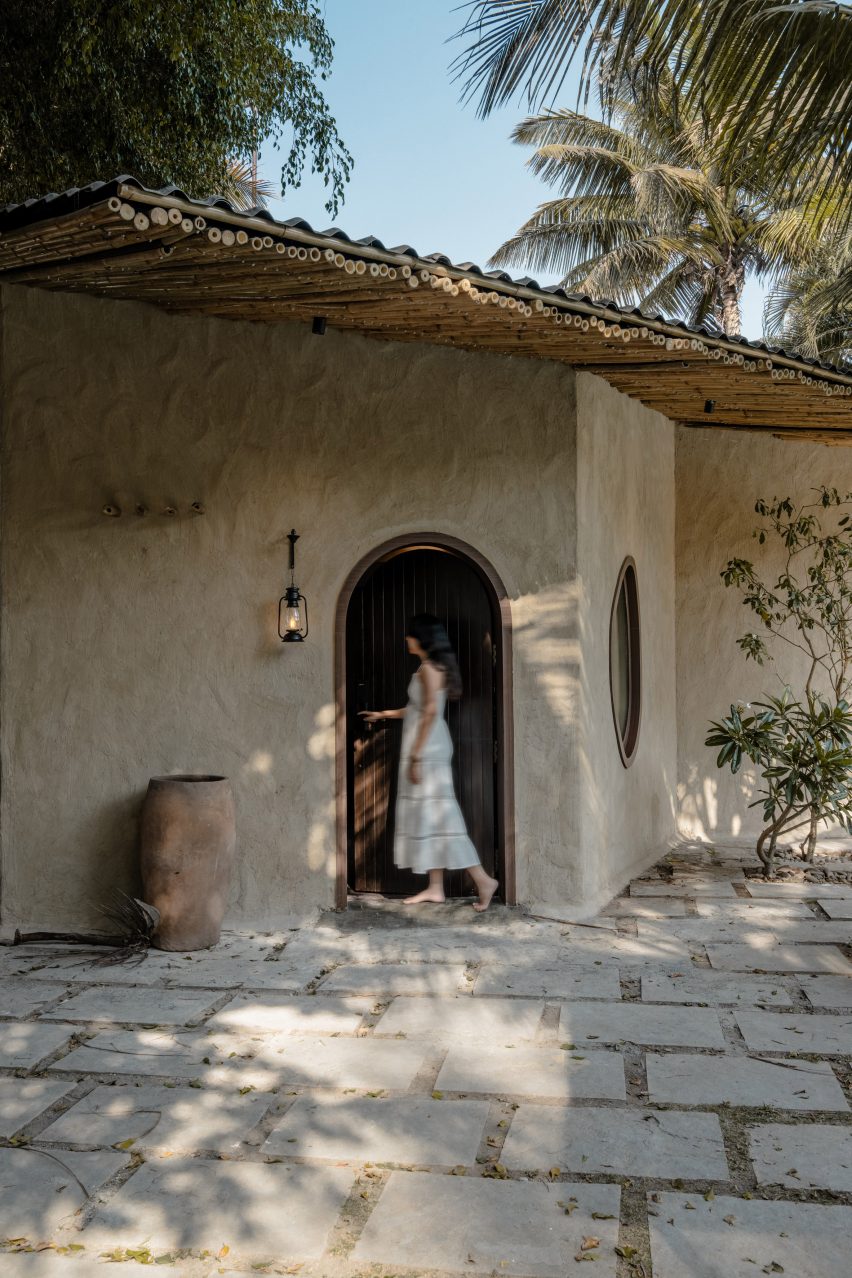
While maintaining the existing timber and steel structures of these units, AKSH Architects used natural materials to demonstrate how "forgotten infrastructure" can be transformed into "architecture with lasting cultural, environmental and experiential value".
"The design intervention was intentionally radical," the studio's founder Akash Shingvi told Dezeen.
"Every space was reshaped through sculptural forms, natural mud and lime-plastered surfaces, local materials and fluid spatial planning, making it almost impossible to recognise the original buildings," added Shingvi.
"Our intention was to create an experience that feels timeless, earthy and deeply connected to nature, where architecture is perceived through texture, light and emotion rather than ornamentation."
The four blocks, each of which is divided into two neighbouring guesthouses, are arranged symmetrically around a communal paved patio with a swimming pool at its centre.
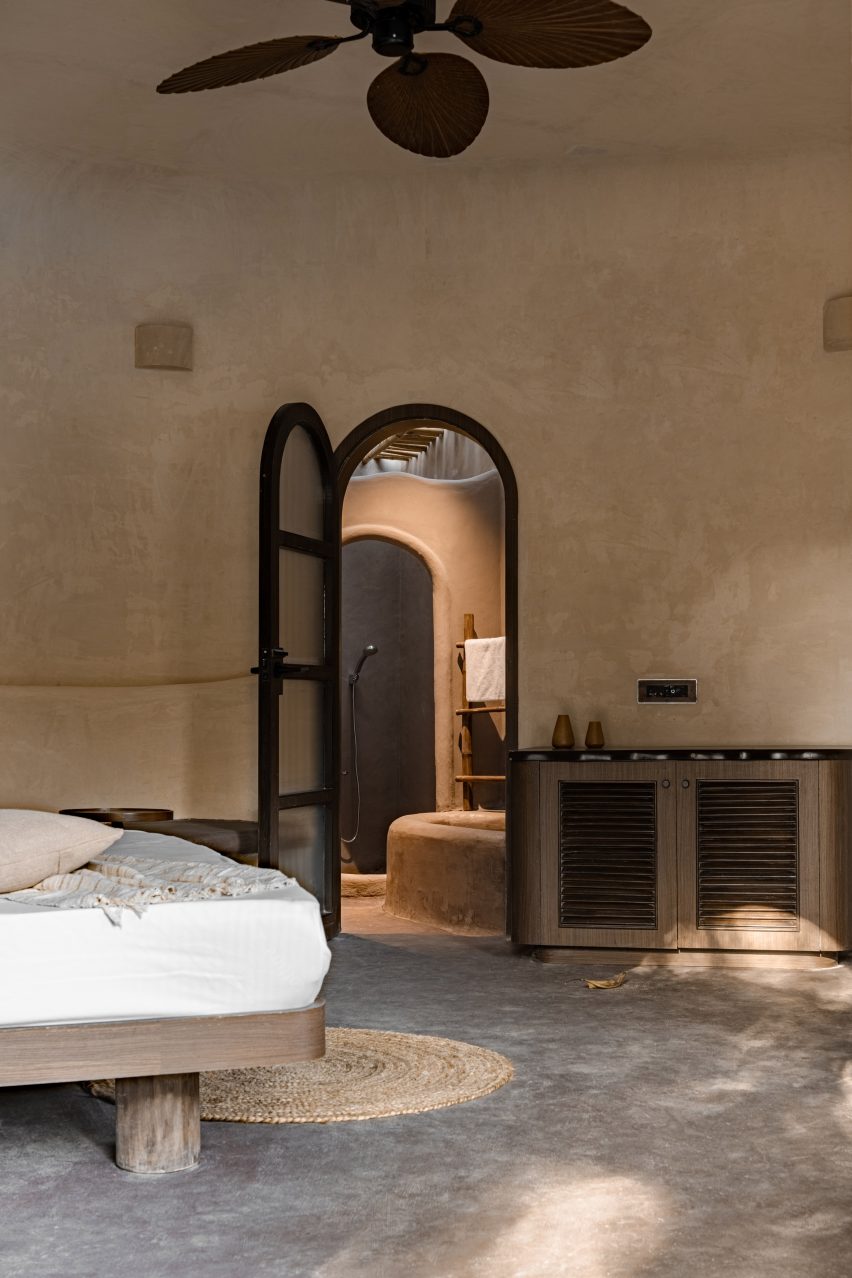
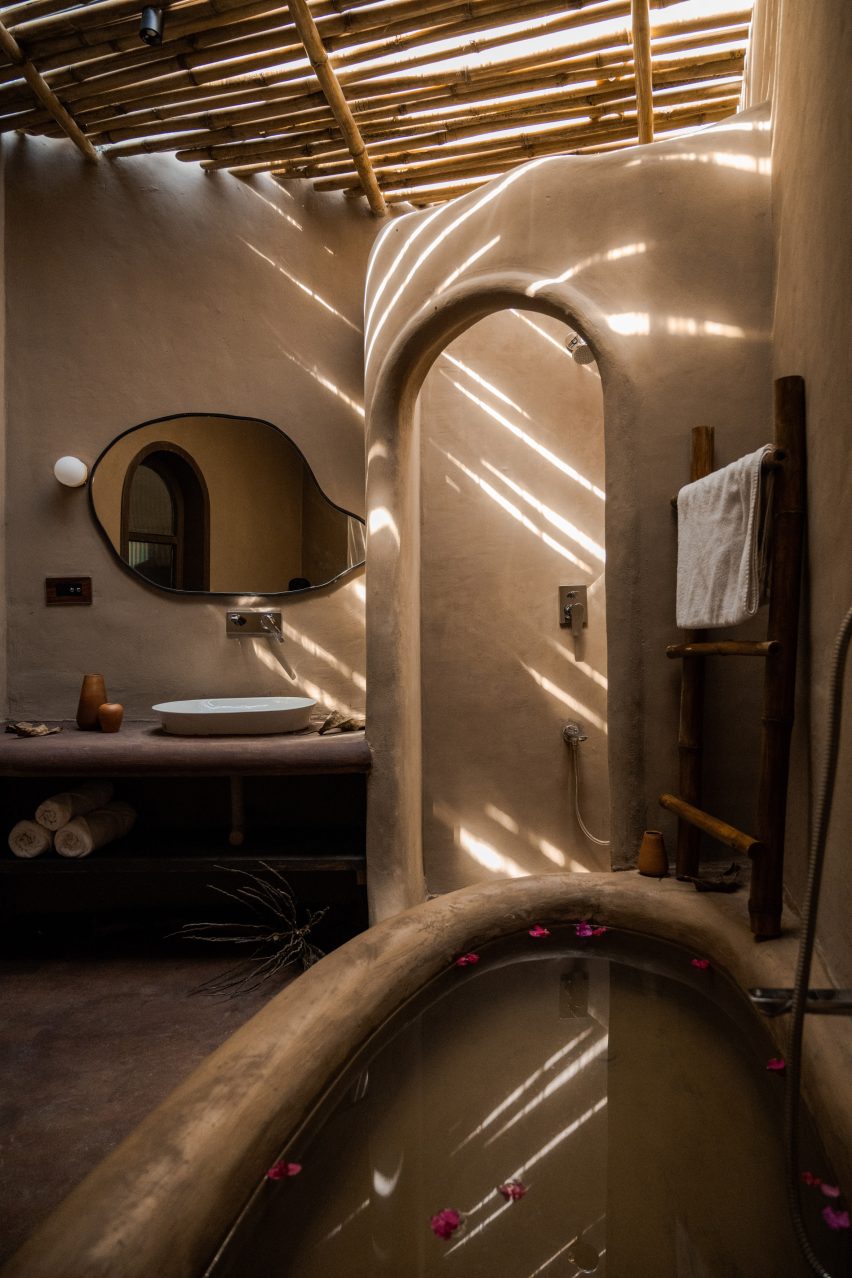
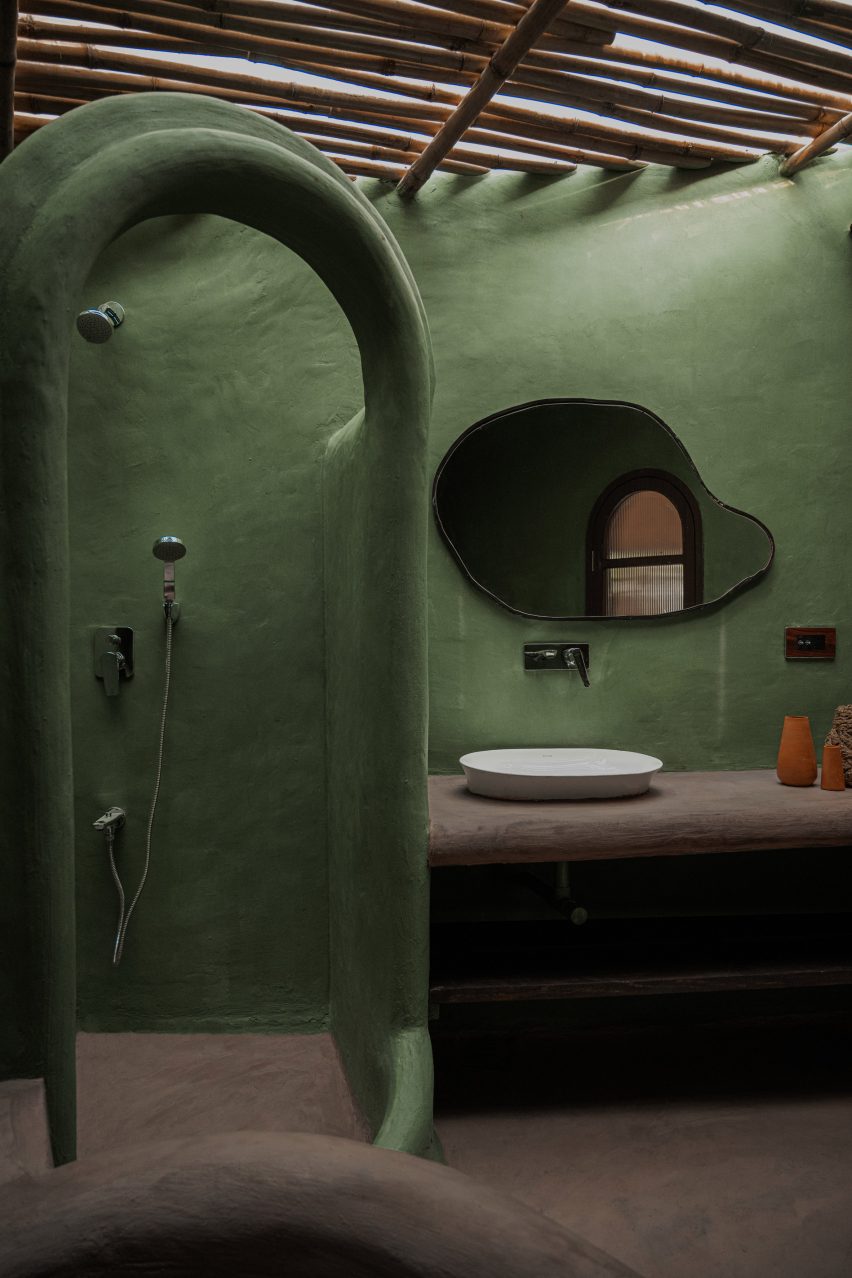
Inside, each of The Earthen Retreat's guesthouses contains a bedroom and a bathroom that has been left partially open to the elements, sheltered by a bamboo canopy that allows light and air to filter through.
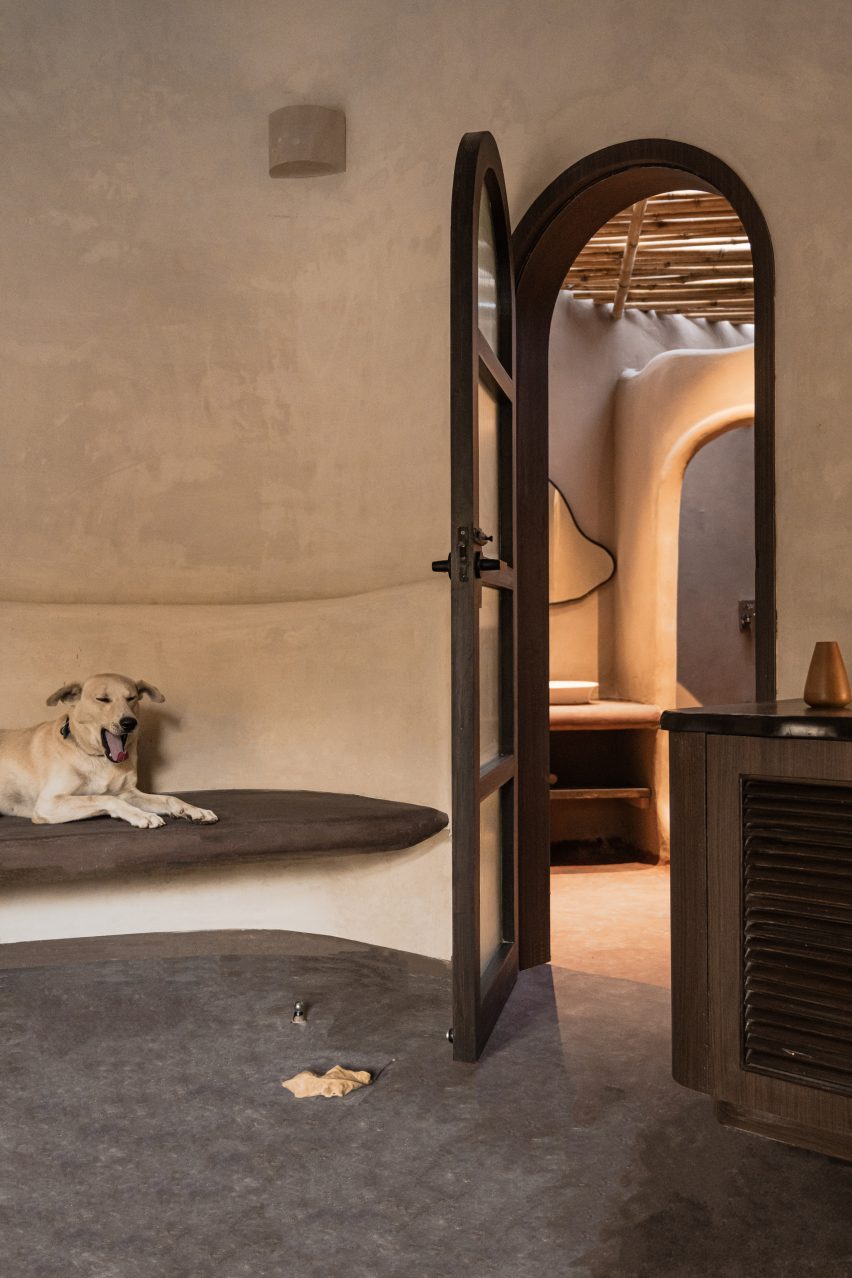
Textured, lime-plastered walls and ceilings envelop the rooms, finished in earthy shades of beige and dark green, and punctured by arched and curved openings.
Curved forms were also used for built-in benches that extend around half of the bedrooms to form bedside tables, as well as for the bathroom's large, oval-shaped bath and a curved opening into the shower.
Externally, each of the four units has been given a matching rough plaster finish, with their perimeters shaded by the deep overhang of the bamboo roofs above.
"Curved, organic forms replace rigid partitions, allowing movement through the cottage to feel fluid, intuitive and experiential," said Shingvi.
"Since the retreat sits in a tropical setting, it didn't feel right to introduce materials that looked overly refined or disconnected from the place," he added.
"We consciously worked with natural materials that were commonly available in the local context, such as bamboo, lime and mud plaster and timber," he added.
Other projects in India that have recently incorporated mud and earth into their material palette include Aurva Illam near Hyderabad, a home by studio Iki Builds designed to reflect the rocky character of the nearby Deccan Plateau, and the mud-walled Winterfell house, which is woven around existing trees in Tamil Nadu.
The photography is by Harsh Lunavat.