


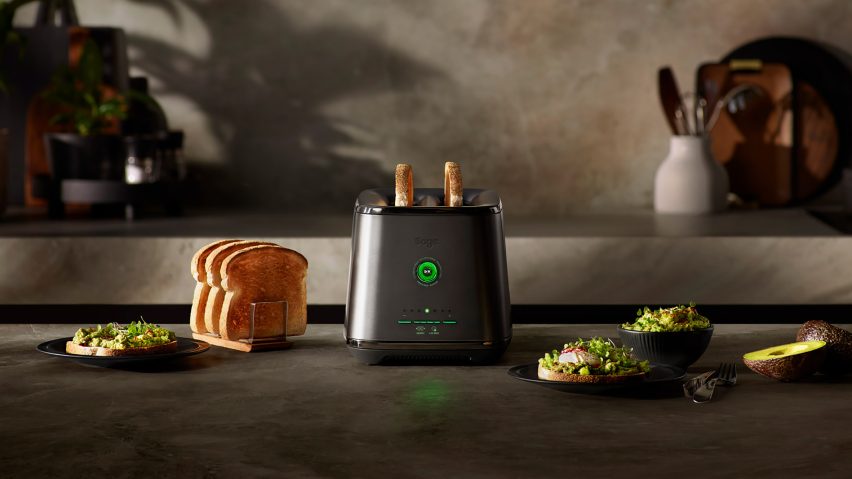
Kitchen brand Sage Appliances has launched a toaster that uses sensors to measure colour change to determine when toast is cooked.
Described by the brand as "a breakthrough in toasting innovation", the appliance allows users to determine how dark a piece of toast should be, rather than select the time that the toaster runs for.

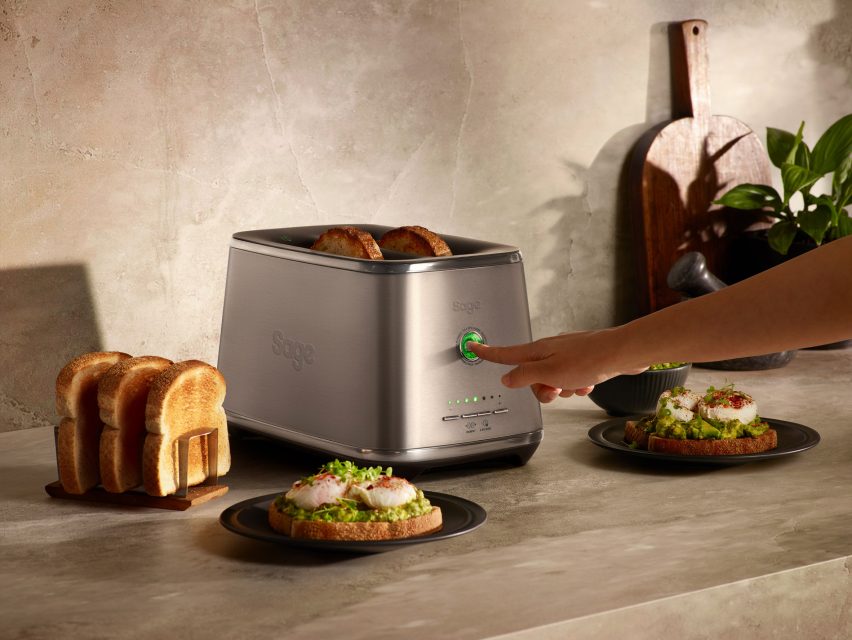
When the toast reaches the required darkness, the toaster automatically ejects the toast, in theory making burnt toast a thing of the past.
"Time is the wrong metric," Sage Appliances head of research Tom Groundes-Peace told Dezeen. "When we first started working on this project, we realised that there was a problem with all toasters – every toaster in the world's underlying technology works in the same way, it relies on a time."

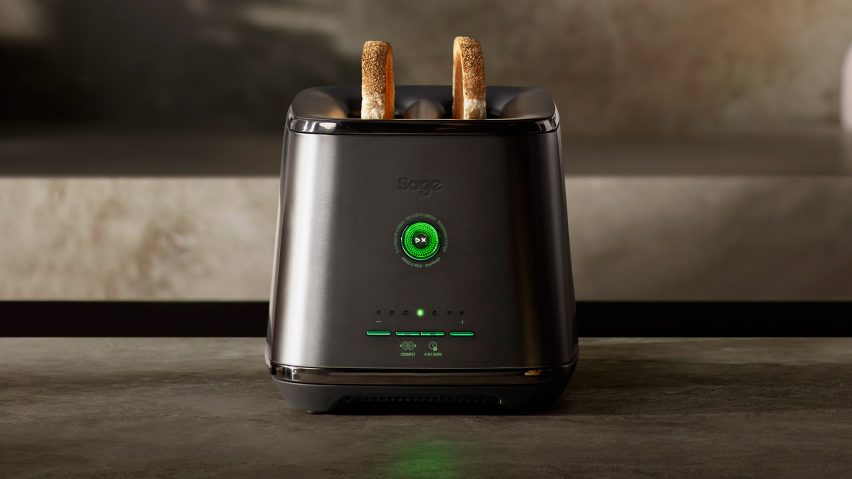
As the Eye Q toaster uses a pair of sensors to determine when the toast is done, no adjustment is needed for different thicknesses or types of bread, and in theory burning is impossible.
Sage Appliances aimed to ensure that the toaster worked with all types of bread – from white to rye, with dedicated sourdough and crumpet settings. According to Groundes-Peace, sourdough's often-burnt crust and fluffy interior was the biggest challenge for the toaster.
"Different breads take different amounts of time to toast," said Groundes-Peace. "So a timer is not the best way to toast."
"The reason why we chose colour is that that's how you or I work out whether our toast is done," he continued. "We just look at it, and visually we'll know if it's done to our liking. Hence the name of the product, the Eye Q."

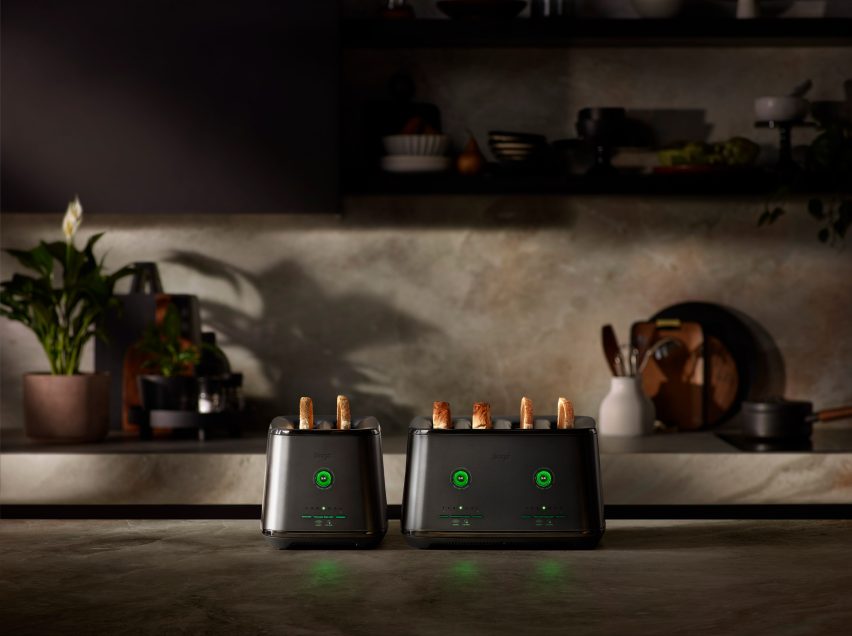
The sensors inside the toaster, which are patent-protected, monitor the toast up to 10 times a second to sense when the toast has reached the required level of colour.
According to Sage Appliances, developing sensors to monitor colour change that would work within the hot environment of the toaster was the biggest challenge for the creation of the appliance.
"There was no componentry around available to do optical sensing for the format that we wanted, which is detecting food colour change – it just didn't exist," said Groundes-Peace.
"Our component suppliers saw colour change as a challenge, and then we said, 'also, we're going to put it in a super hot environment, right in the middle of the toaster, and then toast it again and again with it, 10,000 times'."

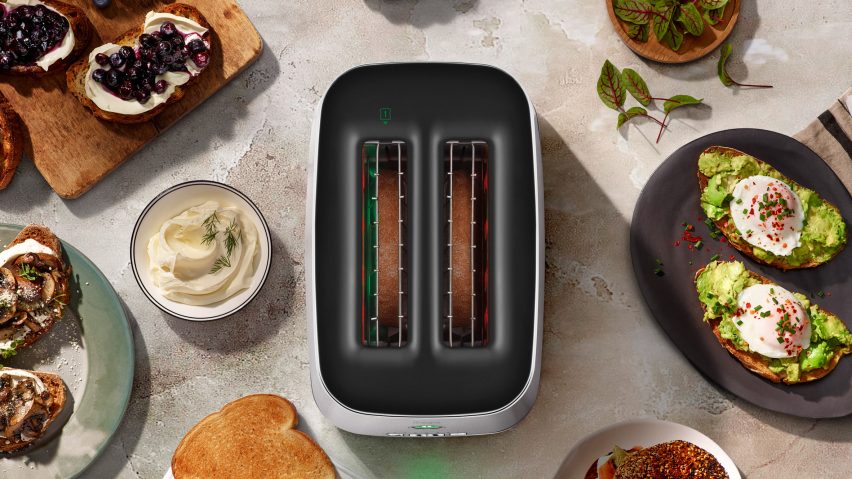
The toaster has a simple design with a prominent start/stop button and a row of buttons to determine colour beneath. According to the brand, this interface was designed to be as simple as possible as, in general, people won't need to adjust the settings often.
"The thing that stands out is the start-stop button, and really that's all we want people to engage with," said Groundes-Peace.
"We think once you've chosen your shade setting, you're not going to adjust it. You stick on the shade setting you like, and then every day you are just pushing that big button, and that's the simplicity," he continued. "Complexity is what happens underneath, but consumers don't even know."
Along with the colour sensor, the futuristic toaster contains several other customer-friendly functions, including a mechanism that lowers and raises the toast.
It also has a single-piece, non-stick ceramic-coated top to make cleaning easier and a retractable cable so that the length can easily be adjusted.
The photography is courtesy of Sage Appliances.