Royal Copenhagen brings Arje Griegst's "unapologetically expressive" Triton dinnerware back to life
Historic Danish porcelain manufacturer Royal Copenhagen has revived key pieces from its 1970s Triton dinnerware collection, unveiled as part of a cabinet of curiosities-style installation at 3 Days of Design.
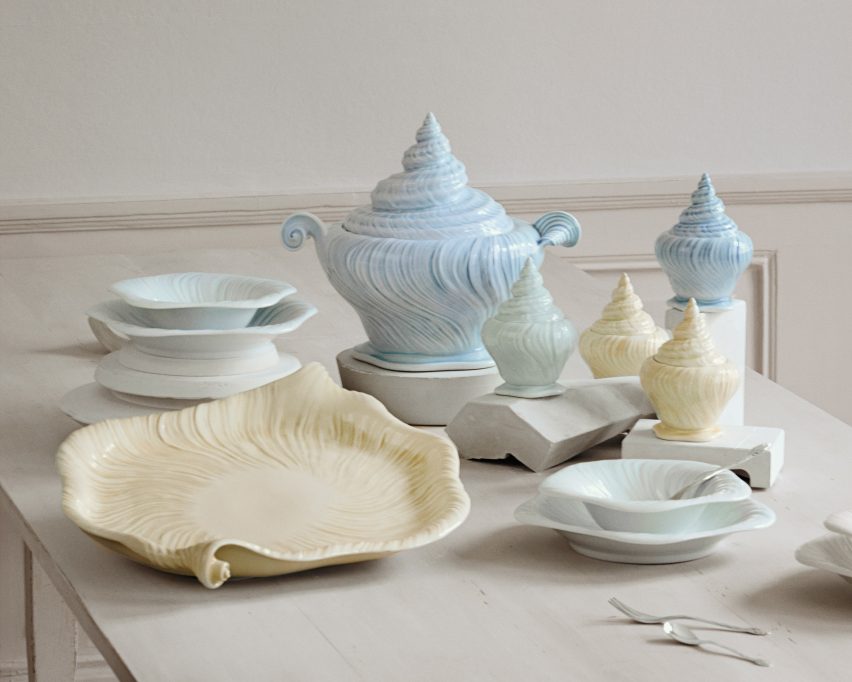
The Triton collection, with its distinctive conch-shell handles and fluid curves, was originally designed by jeweller Arje Griegst in 1976, but was later discontinued when its ornate detailing proved impossible to produce in the required quantities.
Now, fifty years after the pieces were first conceived, Denmark's royal porcelainmaker has brought a selection of the original crockery back to life in three underglaze colours – ocean, sand and celadon.
Working closely with Arje Griegst's son, photographer Noam Greigst, Royal Copenhagen also designed an installation for Copenhagen's 3 Days of Design that unpacked the history behind the collection.
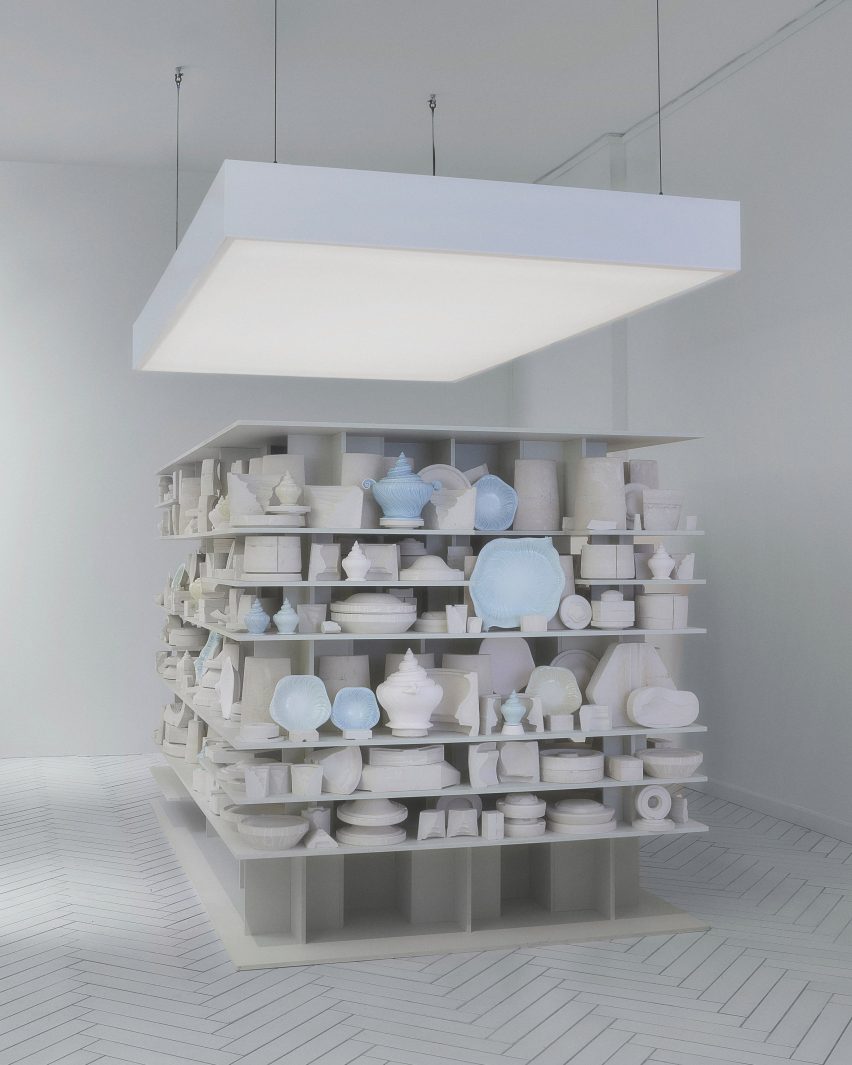
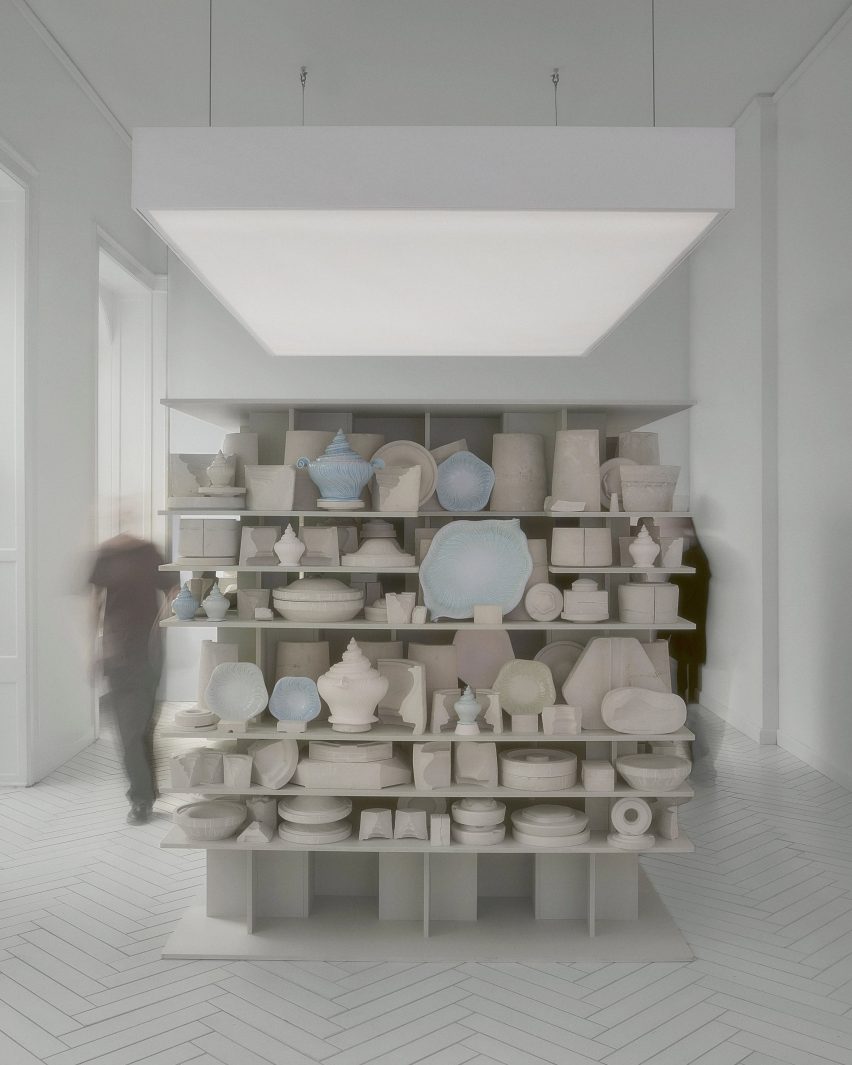
Here, past and present Triton pieces were arranged across rectilinear shelves in a single room at the brand's flagship store, forming a cabinet of curiosities-style selection of porcelain, illuminated by a large geometric light suspended from the ceiling.
Royal Copenhagen creative director Jasper Toron Nielsen told Dezeen that the installation was designed "to place a huge emphasis on the craftsmanship behind the collection", which stood out in 1970s Denmark for its unusually decorative forms.
"I think what makes Triton so special is that it feels completely unique within the Danish design landscape," said Toron Nielsen.
"There is not a trace of mid-century modern about this collection," he added. "Triton is unapologetically expressive, surreal, sculptural and imaginative."
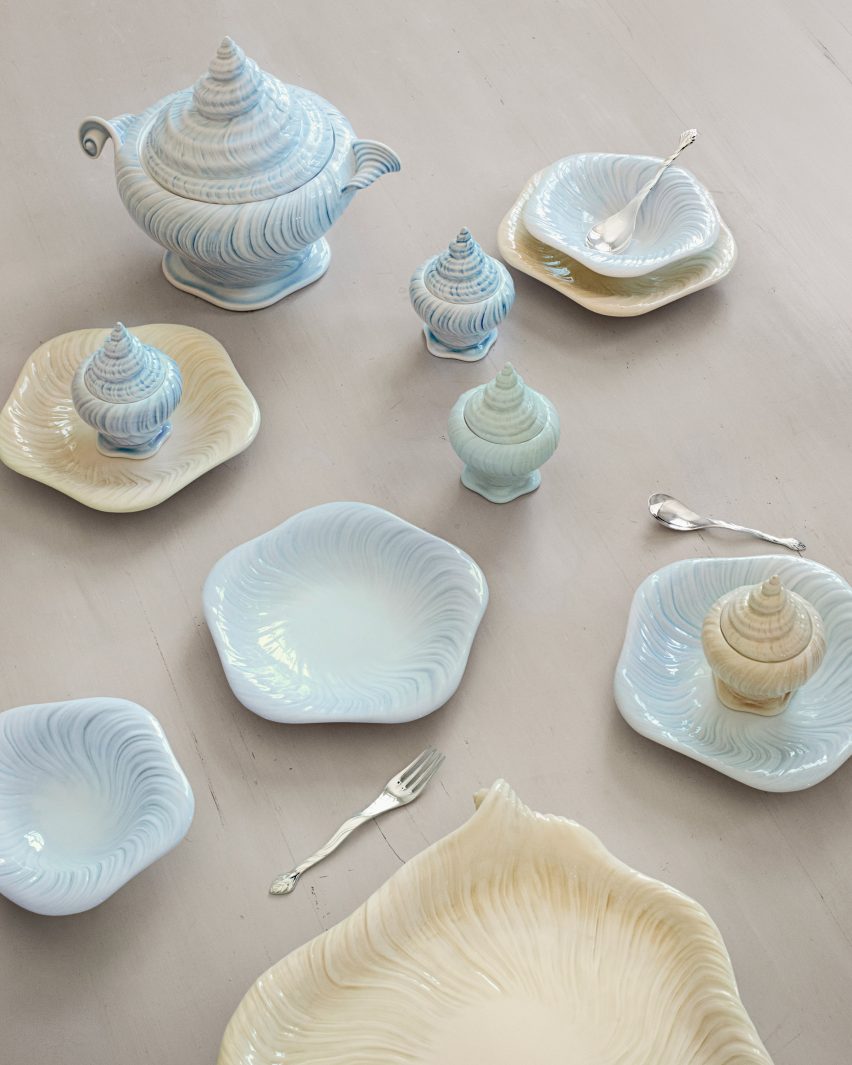
The 2026 dinnerware collection is made up of five pieces – a dish, a tureen, two different plates and a bonbonniere.
Each piece is washed in one of three glossy underglazes, informed by the colours of water and sand, and features the conch-shaped handles and fluid curves of Arje Griegst's original crockery.
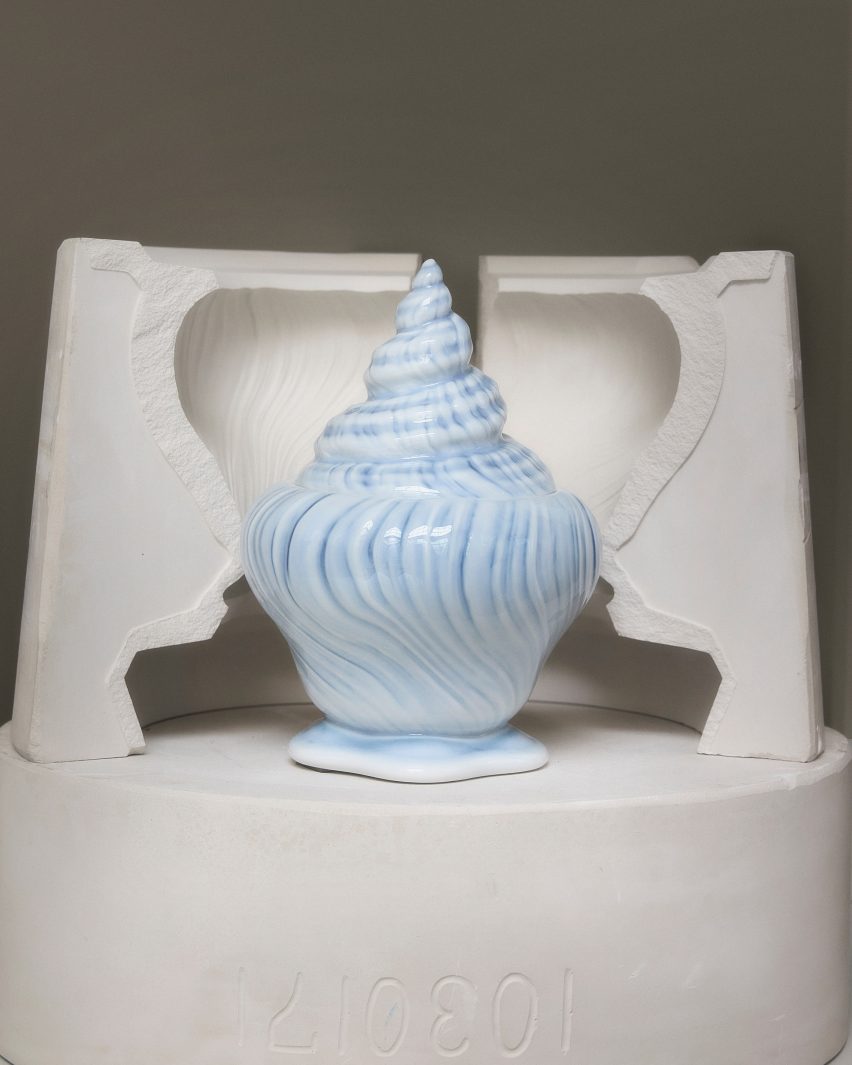
When creating the 1976 collection, Arje Griegst painstakingly applied the same lost-wax casting method that he had been using to make jewellery to make the porcelain dinnerware.
"This casting technique allowed him to sculpt forms that feel almost liquid despite being made from metal," Noam Griegst told Dezeen. "Porcelain proved to be a natural extension of this philosophy."
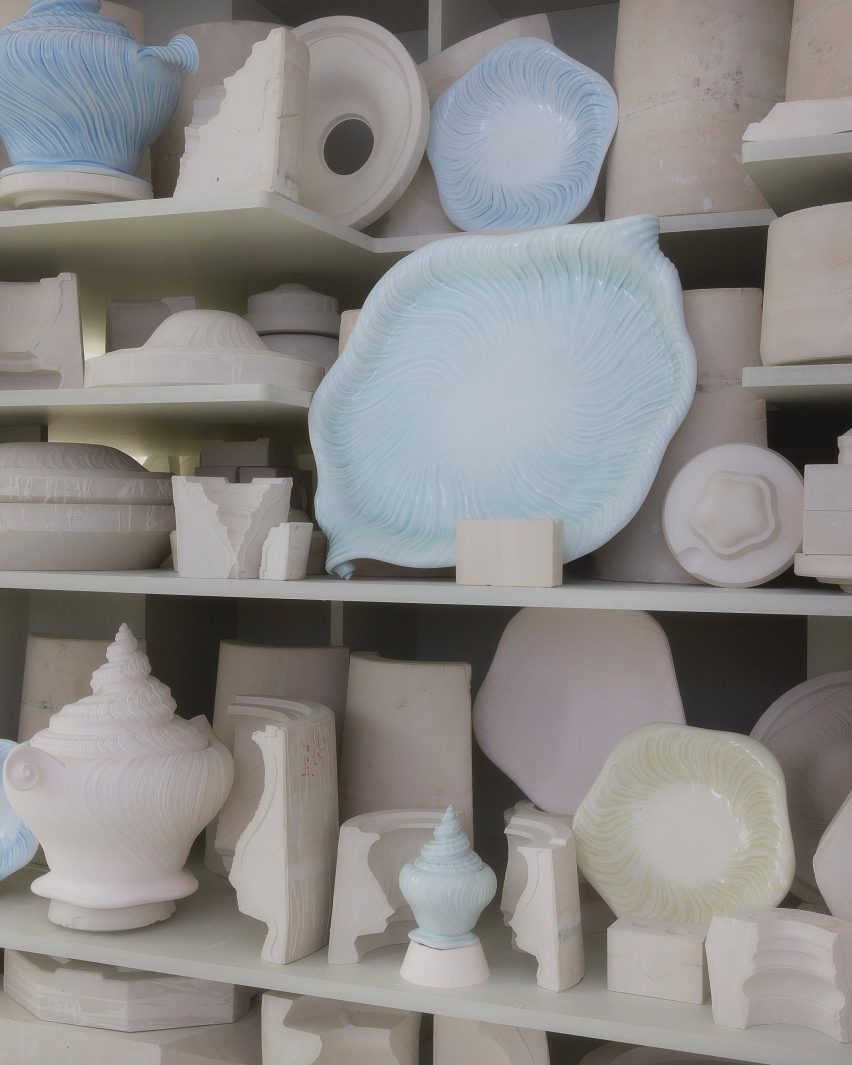
Royal Copenhagen craftsperson Bo Jørgensen restored the original Triton moulds, which were then used to bring the most recent pieces of crockery to life.
Jørgensen was an apprentice to Arje Griegst when Triton was first conceived, and his work on the 2026 crockery was the last project he completed before he retired.
"Bo's ability to preserve the character, fluidity and detail of the original designs was essential in making the collection a reality," said Noam Griegst.
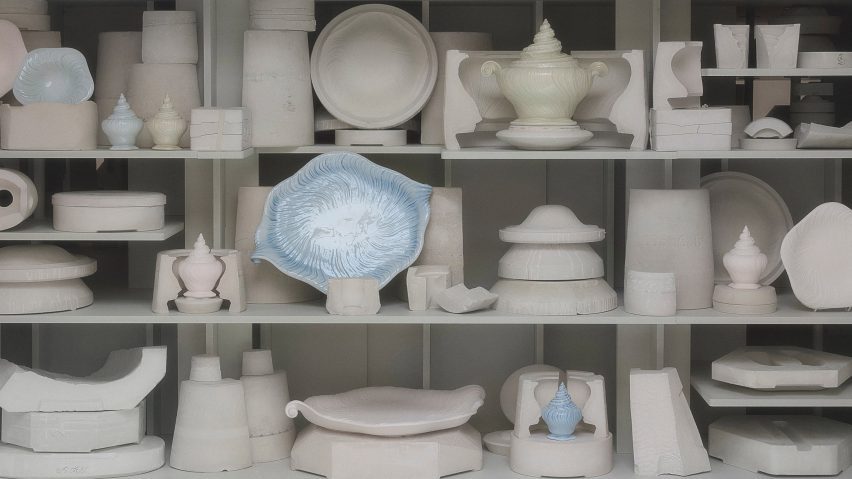
The moulds were displayed alongside the finished Triton crockery as part of the installation during 3 Days of Design.
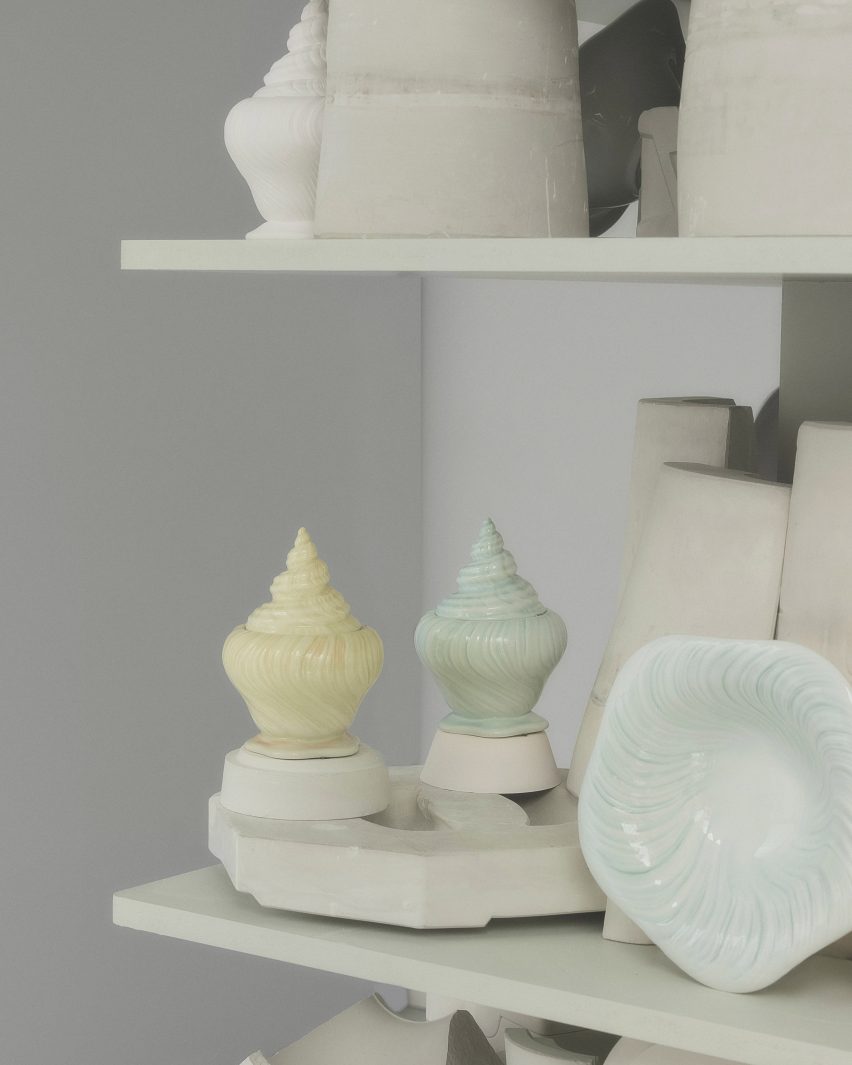
Toron Neilsen explained that the moulds and other process pieces were purposefully displayed next to the crockery to read as artefacts that hold equal importance to the finished products.
"There is just something so inherently poetic and sculptural about the process materials themselves," said the creative director.
"The models, plaster moulds and bisque pieces possess a beauty that totally deserves to be seen," he added. "We loved the contrast between their soft, powdery surfaces and the hard, glossy glaze of the finished Triton collection."
"We wanted the exhibition to be as much a celebration of the brilliant craftspeople at our factory in Copenhagen as it was of the finished pieces themselves."
3 Days of Design concluded in the Danish capital on 12 June. Plenty of other exhibitions and products showcased during the festival were rooted in a celebration of craft, including emerging design show Ukurant and a selection of standout chairs.
The photography is courtesy of Royal Copenhagen.
3 Days of Design took place from 10 to 12 June 2026 at various locations across Copenhagen, Denmark. See Dezeen Events Guide for more architecture and design events around the world.