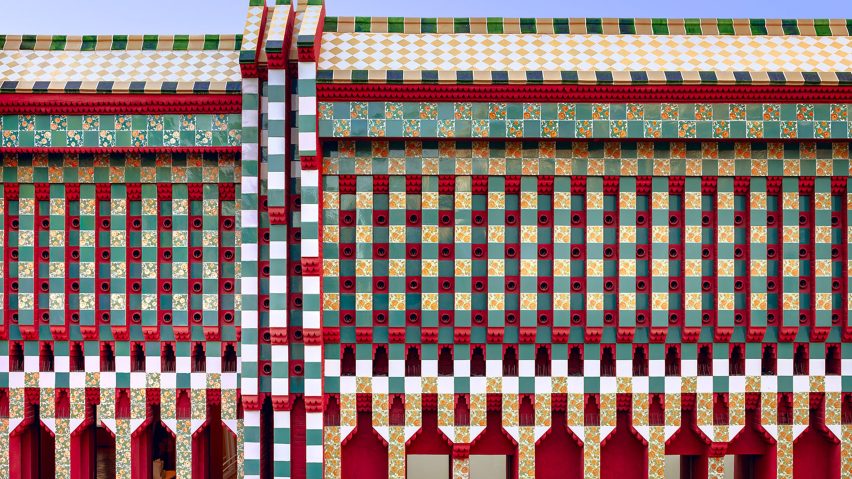
Casa Vicens was Antoni Gaudí's "manifesto home"
Continuing our Gaudí Centenary series we look at the first house designed by Antoni Gaudí, Casa Vicens, which was a testing ground for his later work and a masterpiece in its own right.
Construction began on Casa Vicens in 1883 when Gaudí was 31 years old – the same year he took over the design for the Sagrada Família.
The cathedral became Gaudí's masterpiece and what he is most known for, but Casa Vicens is widely considered the first major work of the Catalan Modernisme movement and a testing ground for themes that informed Gaudí's later works.
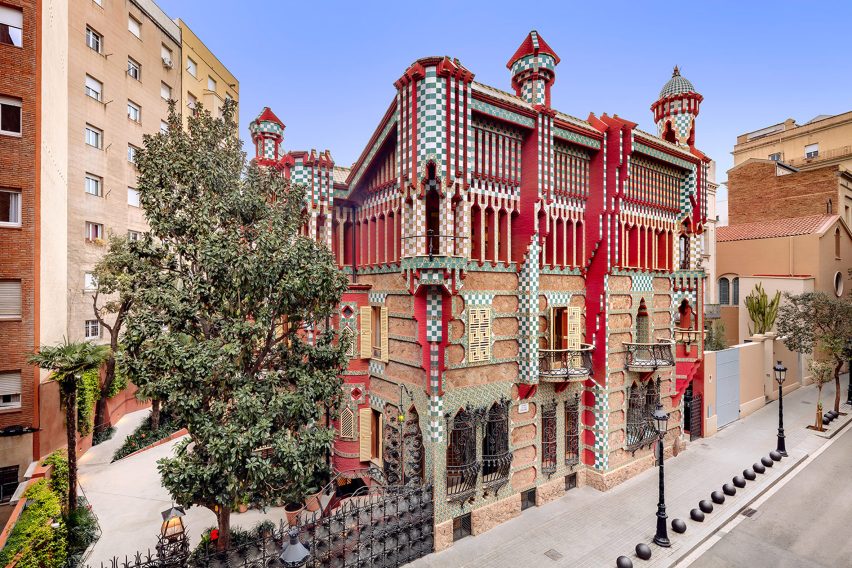
Casa Vicens, the first house designed by Gaudí, has a distinctly more geometric appearance compared to the fluid, organic forms of the subsequent works he became known for.
Completed in 1885 as a summer home for stockbroker Manel Vicens i Montaner, Gaudí drew upon Orientalist design and Moorish architecture when designing the home.
Colourful ceramic tiles frame stone masonry on the external walls, triangular arches encircle the second floor, and decorated chimneys punctuate the roof perimeter.
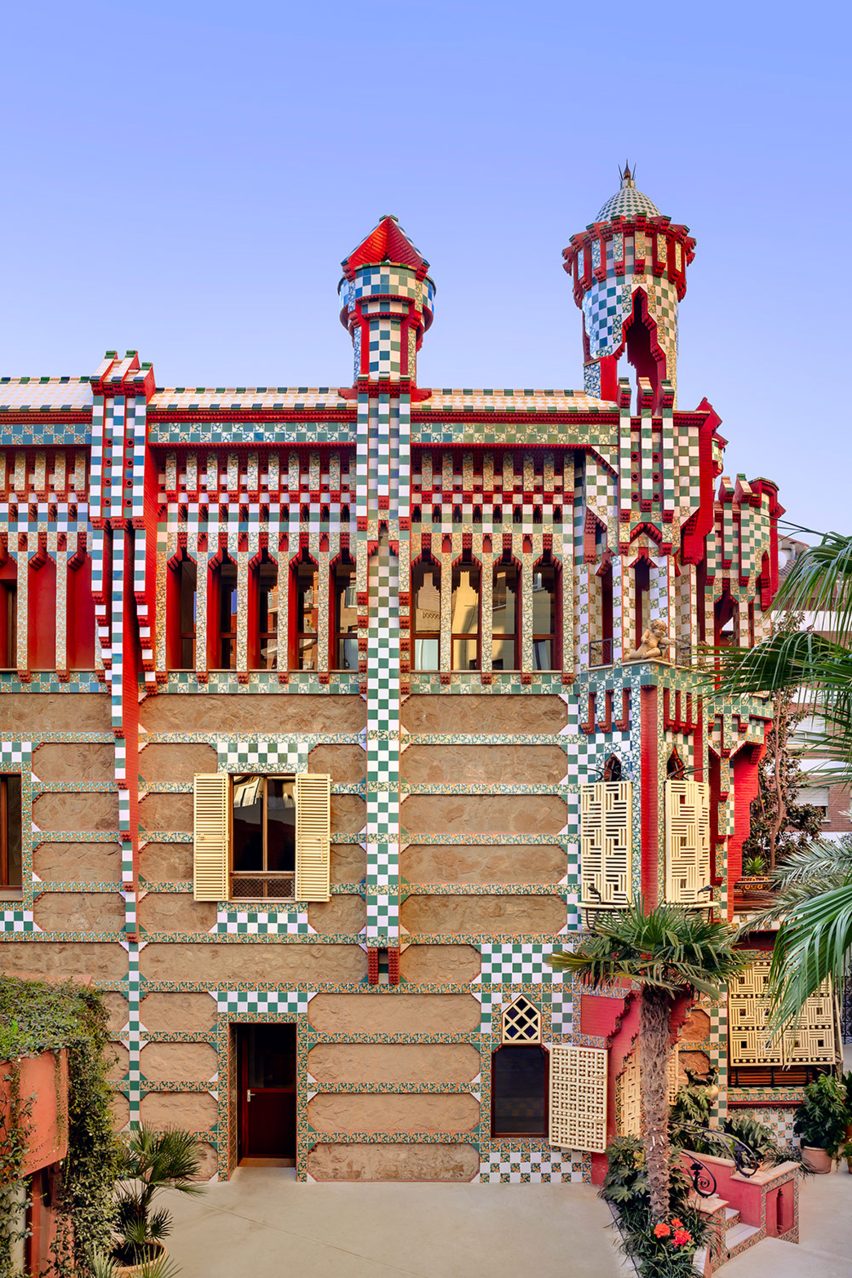
"Considered Gaudí's first masterpiece, it is the work of a young architect fizzing with invention but still fumbling towards the style that would later become his own: the organic, undulating, alien buildings that utterly undermined ideas about what architecture could be and that haunt machine hallucinations 140 years on," wrote Edwin Heathcote in the Financial Times.
"Its candy colours, dazzling geometric ornament, chequerboard tiles and finely wrought ironwork make it appear unreal, a kind of hybrid fairytale castle and witch's house."
"If the outside is eccentric, the interiors are nuts," Heathcote continued. "A cacophony of colours, frescoes, materials and patterns, each room has a distinctive and wholly original feel though the overall effect is slightly queasy, a sensual overload even for someone like me who has a lot of time for Gaudí's vivid hyperactivity."
Gaudí was first commissioned to design Casa Vicens in 1878, fresh from graduating from Barcelona's School of Architecture, where his talents were doubted by tutors. At the time, the only completed project to his name was a section of perimeter fence at the Parc de la Ciutadella.
Orientalism was a popular design style at the time, and a revival in Moorish architecture had also come about in Barcelona in the mid-nineteenth century, which had an influence on the Catalan Modernisme movement in the late 19th century – all of which were points of reference for Gaudí at Casa Vicens.
What first made an impression on him when visiting the site of the home was the golden yellow marigolds growing there, so much so that Gaudí covered the exterior of the home with tiles depicting the flowers.
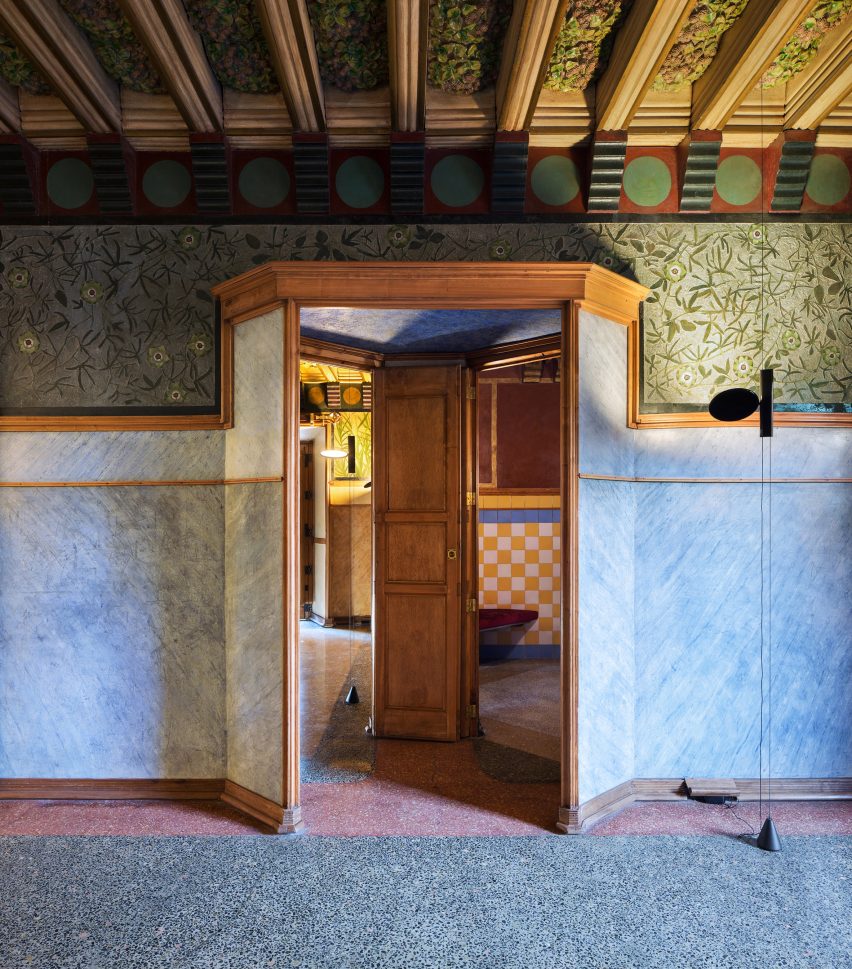
Not only in the home's facade tiles, but all over Casa Vicens are symbols drawn from nature – a great source of inspiration for Gaudí throughout his career.
The passionflower, a symbol of Jesus's crucifixion in Spanish Catholicism, features on the walls of the main bedroom. Gaudí designed the flowers with 10 petals to represent the 10 apostles said to have gathered at the crucifixion, the inner ring of the flower represents Jesus's crown of thorns, and the three prongs at the centre represent the three nails used to fix him to the cross.
Fern motifs in the sgraffito in the main bedroom represent good luck, while blackberries in the ceiling panels represent prosperity and wellbeing.
In the dining room, images of olive branches adorn the ceiling, and ivy crawls across the walls.
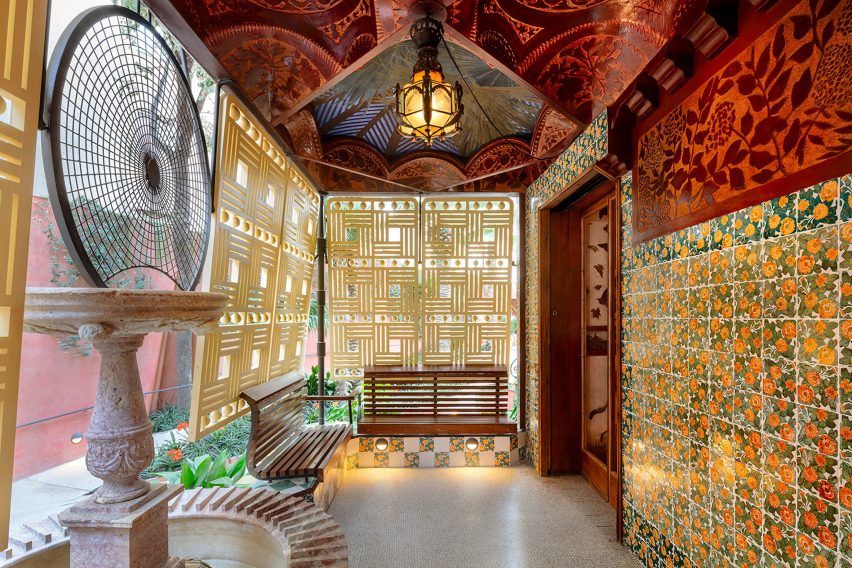
Yellow roses mark the tiled walls of the smoking room, and daisies and carnations also decorate surfaces in the home.
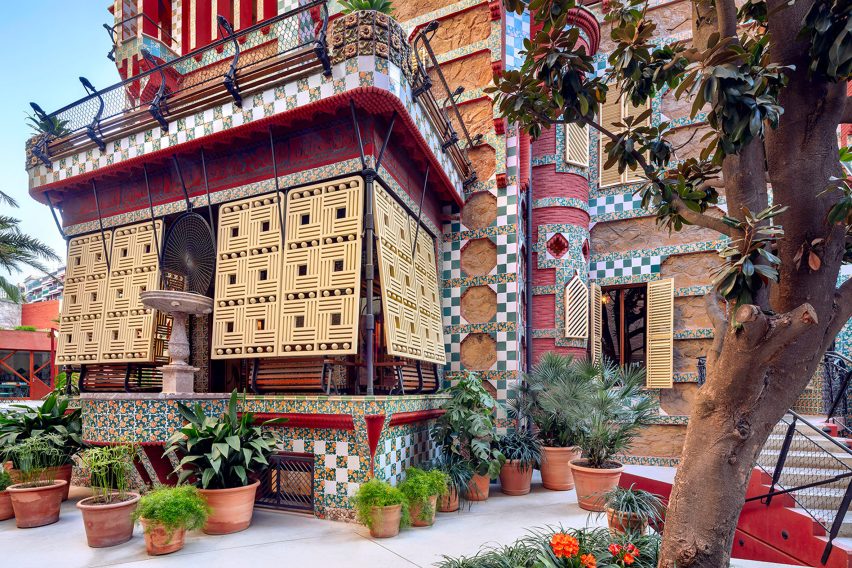
The European palm fan can be seen in the cast-iron gate and roof of the covered porch, and curved details in the ironwork over the windows hint at Gaudí's love for fluid lines to come.
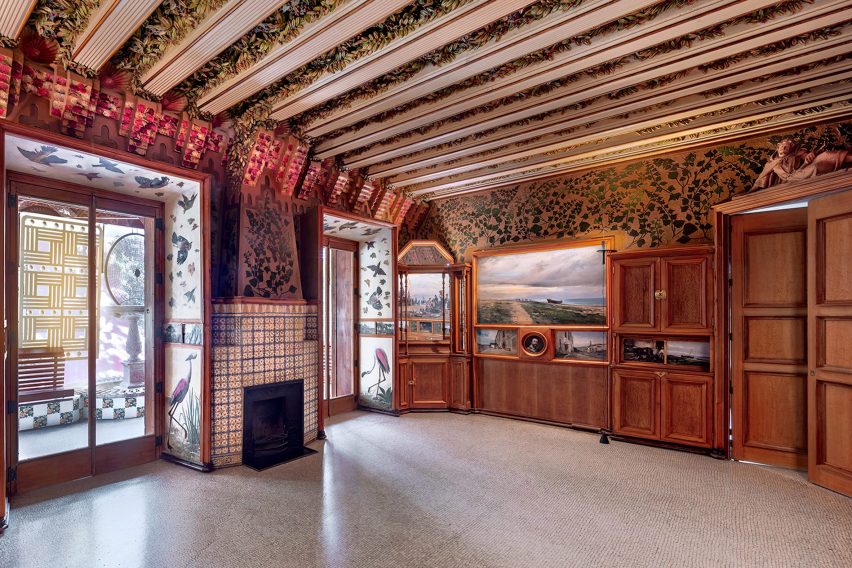
Gaudí designed an enclosed porch to connect the indoors and outdoors, drawing in nature from the garden into the living spaces on the ground floor.
The tallest point of the home is a sheltered corner of the accessible roof topped with a cupola – a place Gaudí designed for its resident to escape to with views across Barcelona.
Gaudí was asked to extend the home in the 1920s, but by this point, he was wholly devoted to his work on the Sagrada Família. The commission was passed on to his friend and follower, Joan Baptista Serra de Martínez, with Gaudí's blessing.
Completed in 1925, the extension nearly doubled Casa Vicens in size, transforming it from a single-family home to a multi-family home with a unit on each floor. Additional changes were made to the home in 1935 and 1964.
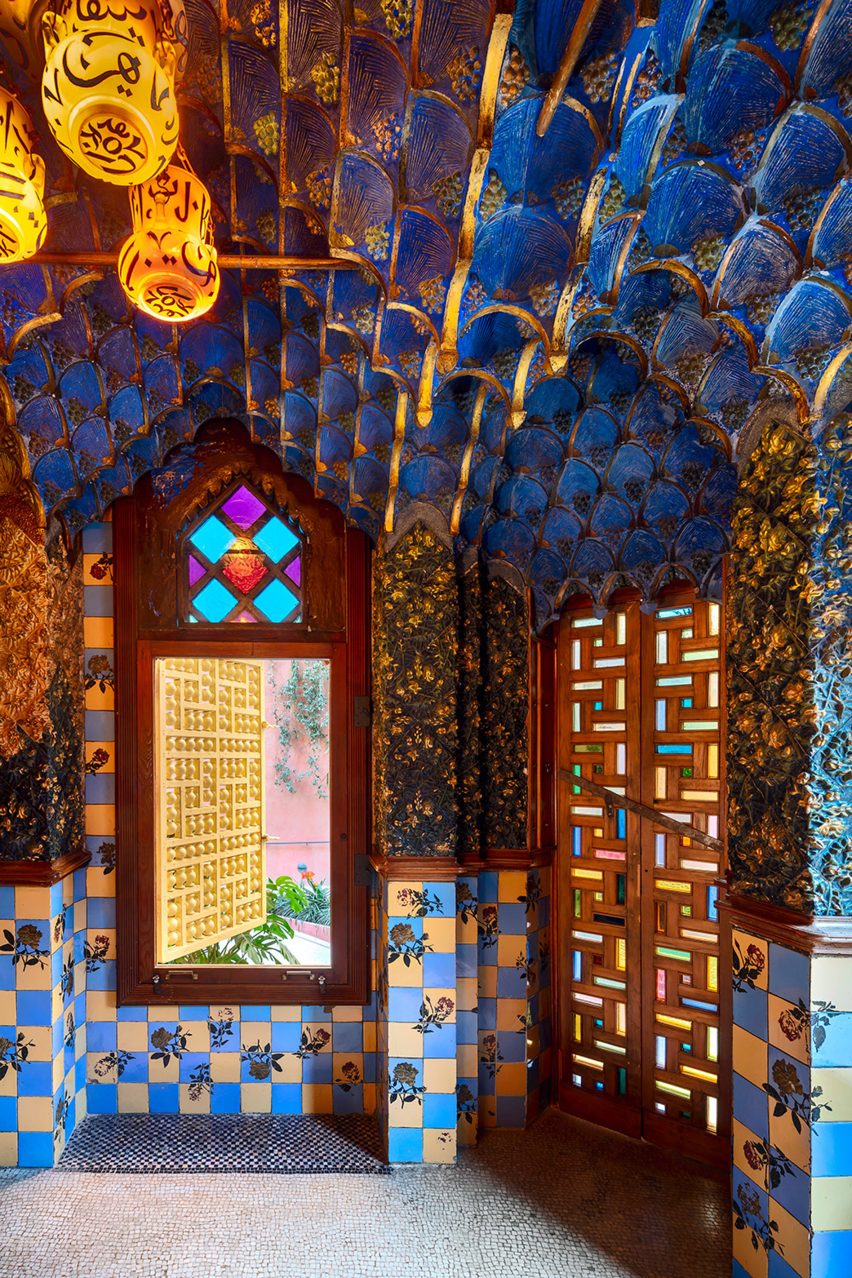
In 2017, Casa Vicens opened to the public for the first time as a museum, following three years of renovation works carried out by architects José Antonio Martínez Lapeña and Elías Torres, of Martínez Lapeña-Torres Architects, and David García of Daw Office.
It is one of seven Gaudí projects to be recognised by UNESCO as world heritage sites, but the last on the list to be publicly accessible, after functioning as a private home for 130 years
For the recent renovation, museum function and service spaces were added to the 1925 extension – including a visitor's entrance and exhibition space – in order to minimise changes to Gaudí's original work.
"Casa Vicens can be seen as Antoni Gaudí's manifesto home, a flagship for freedom of style uncommon in construction of the time, showing the architect's later creative evolution and, looking outward, anticipates other contemporary movements in the European avant-garde of the late 19th century," said the Casa Vicens museum.
"With Casa Vicens, Antoni Gaudí created an innovative, original work. Beyond the Orientalist elements, in terms of style, Gaudí broke away from anything that had been built previously in Catalonia, which is why Casa Vicens is considered one of the first masterpieces of Modernisme."
As part of Dezeen's Gaudí Centenary series, which marks 100 years since the architect's death, we also looked at his curving Casa Batlló and Park Güell, which was originally designed as a housing estate.
The photography is by David Cardelus.
Gaudí Centenary
This article is part of Gaudí Centenary, our editorial series profiling the Catalan architect and designer Antoni Gaudí, marking 100 years since his death.