Benthem Crouwel revamps "one of the Netherlands' most iconic waterworks"
A passage for migratory fish and a cycle route have been added to Afsluitdijk, an iconic dam in the Netherlands, in a recent revamp by Dutch studio Benthem Crouwel.
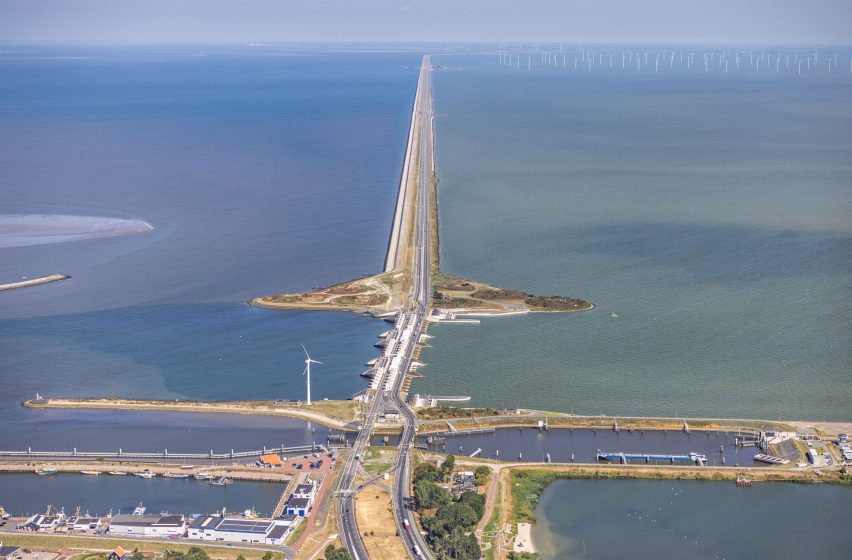
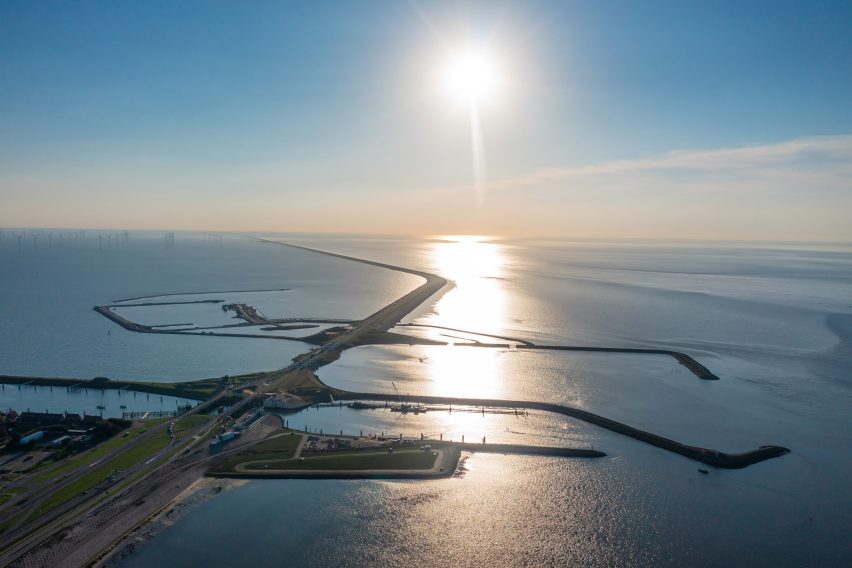
Afsluitdijk is a landmark 32-kilometre-long dam built between 1927 and 1932 to protect the Netherlands from storm surges and flooding caused by the North Sea.
It was updated over the last eight years to align with current safety standards and improve its performance against increasingly extreme weather and rising sea levels.
According to Benthem Crouwel, the overhaul ensures the dam can withstand a severe one-in-10,000-year storm, while preserving its iconic character and long, linear form.
"The Afsluitdijk is one of the Netherlands' most iconic waterworks and a landmark of Dutch water engineering," studio partner Daniel Jongtien told Dezeen.
"The significance of the Afsluitdijk is huge on many levels. It was built in the 1930s to close off the former Zuiderzee, creating the IJsselmeer and fundamentally changing how the country manages water," Jongtien explained.
"The brief was to strengthen the iconic and monumental character of the Afsluitdijk without losing sight of its primary function."
With a quarter of the country below sea level, marine engineering infrastructure is a common sight throughout the Netherlands. Afsluitdijk is one of the most notable examples, separating the IJsselmeer lake from the Wadden Sea.
Benthem Crouwel has been developing its revamp since 2018 with construction company BAM and contractor Van Oord, alongside investors Rebel and Invesis. This group will continue to maintain and oversee the project for 25 years.
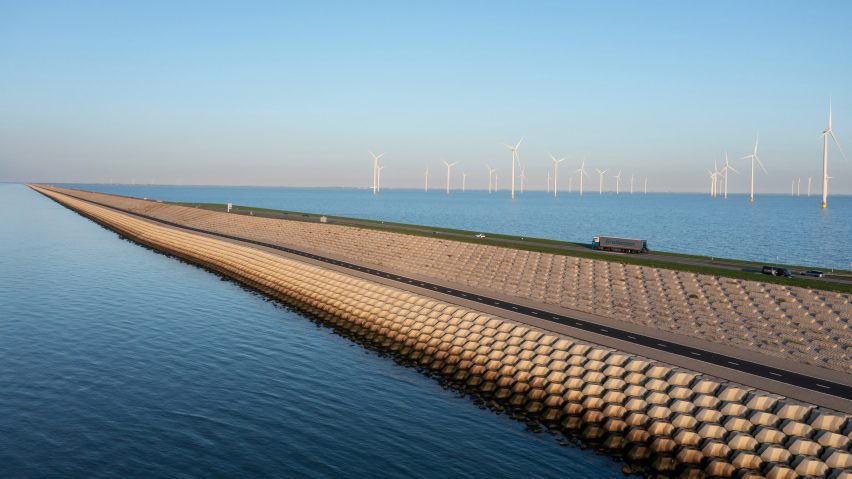
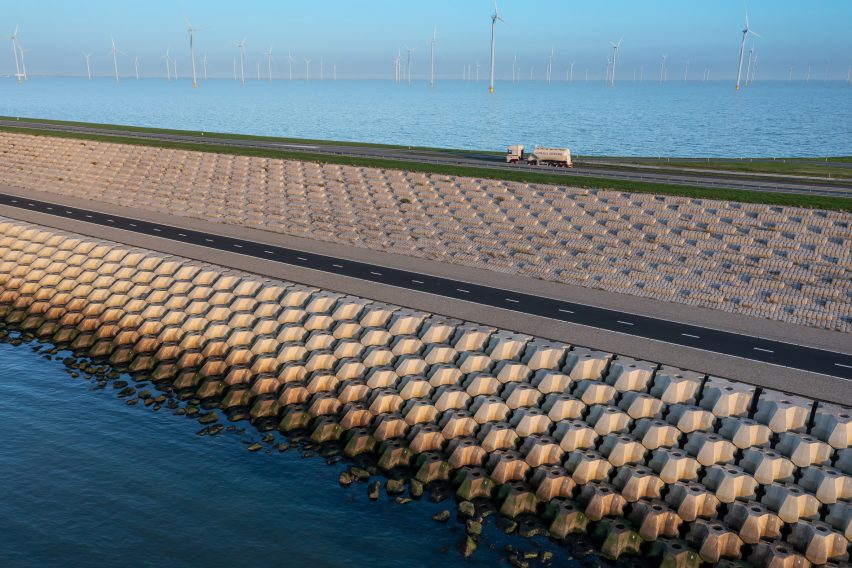
As part of the project, the studio reinforced the entire length of the structure with 75,000 interlocking concrete blocks called Levvel-blocs and raised it by two metres.
The blocks are arranged in a deliberately symmetrical and regular pattern, and finished with rough surfaces onto which marine vegetation can latch.
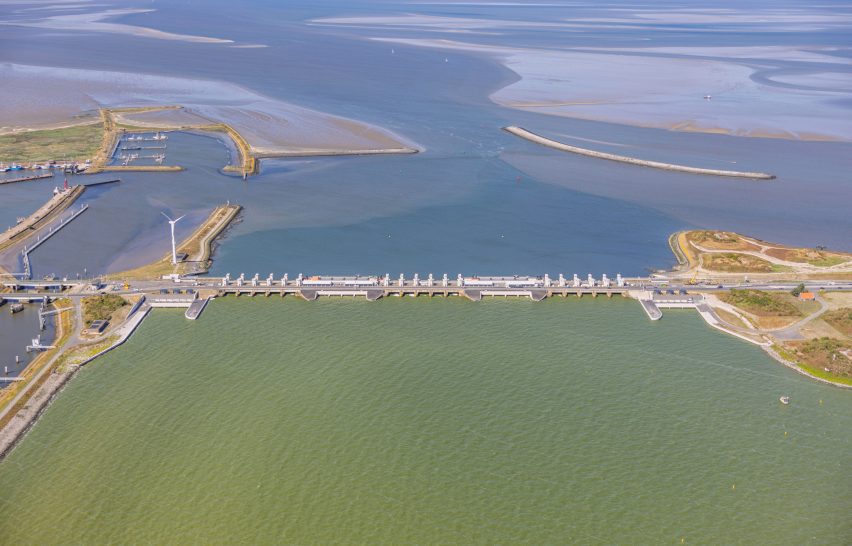
The team has also introduced additional pumping stations and discharge sluices – water channels that regulate flow – as well as storm surge barriers, a fish passage and a cycle path.
Benthem Crouwel said its overarching goal was simplicity and ensuring any visible elements "reveal how the infrastructure works and enhances the experience of the Afsluitdijk".
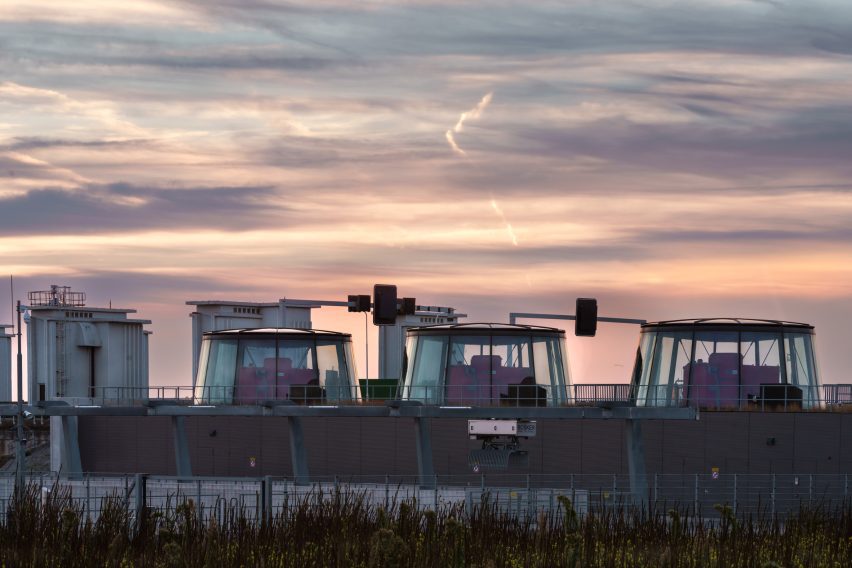
"The design is characterised by spectacular simplicity – abstract in form and minimalist in detail," said Jongtien.
"The architecture is restrained, allowing the function of the dike to remain visible while supporting technology is kept out of sight," he continued. "At the same time, where elements are made visible, they have a clear functional and architectural purpose."
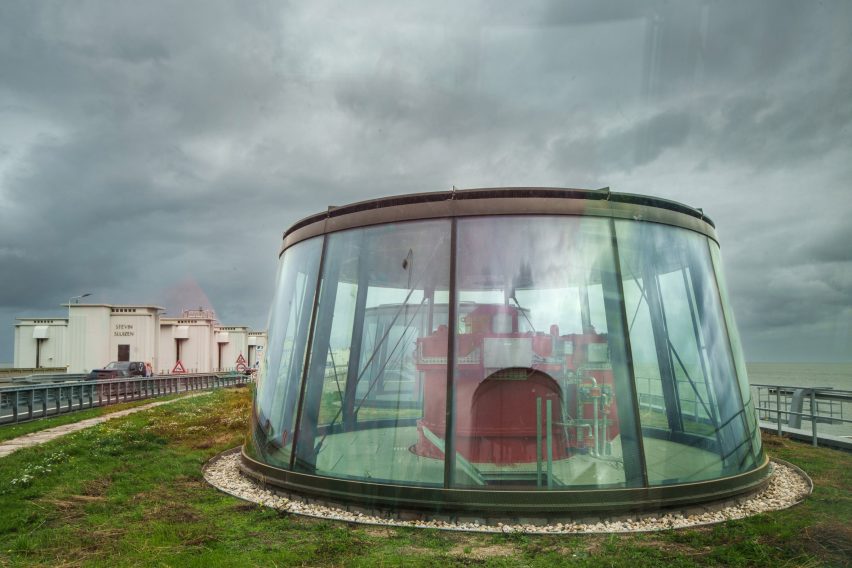
Among the most notable additions is the series of six pumping stations, housed in four-metre-high domes. These are "one of the few deliberately visible architectural elements added to the Afsluitdijk", Benthem Crouwel said.
These pumps discharge excess water from the IJsselmeer into the Wadden Sea.
"The almost 12-metre-high pumps beneath them discharge 275,000 litres of water per second, comparable to filling an Olympic swimming pool in nine seconds," said the studio.
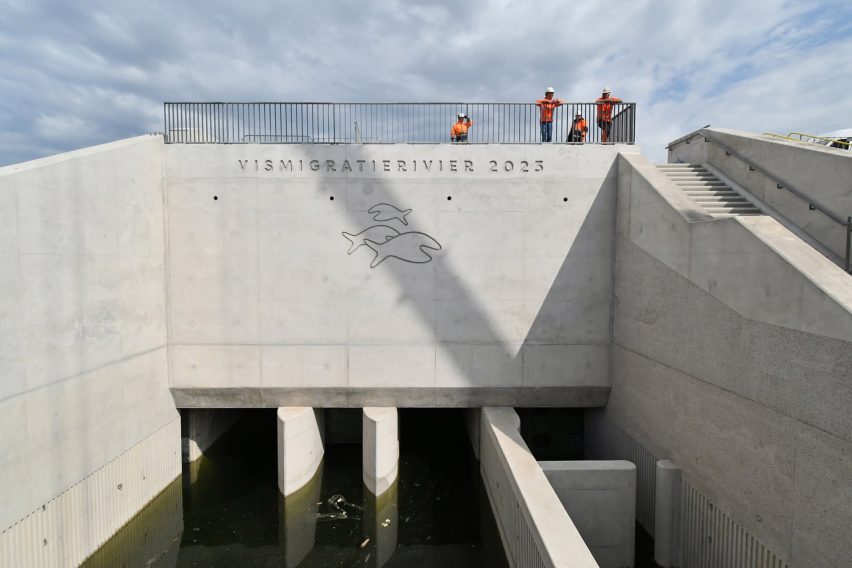
Meanwhile, a 15-metre-wide opening carved into the structure provides a new passage for fish to move between the IJsselmeer and the Wadden Sea – reinstating an important migratory zone between salt and fresh water that the structure blocked for almost a century.
"It represents a shift in thinking: from simply keeping water out to balancing flood protection with ecological connectivity," Jongtien explained.
Completing the project is a cycle and pedestrian route, positioned on the side of the Wadden Sea.
It incorporates viewpoint platforms and aims to give users "a more direct experience of the scale of the Afsluitdijk". An existing route on the IJsselmeer side was retained.
Other major infrastructure projects recently featured on Dezeen include Denmark's 300,000-square-metre land reclamation project and the Sydney Harbour Bridge Cycleway Ramp.
The photography is by Jannes Linders.