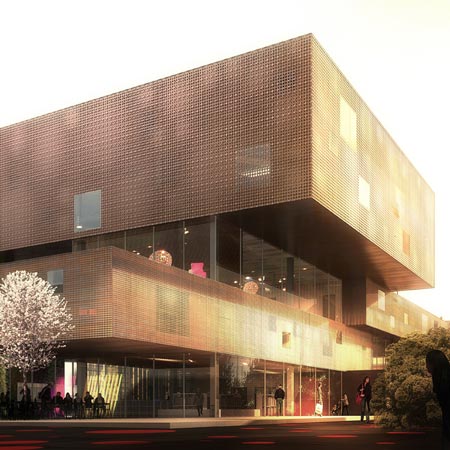
Copenhagen Culture House + Library by COBE
and Transform

| 28 comments

cobe_kulturhus_street.jpg

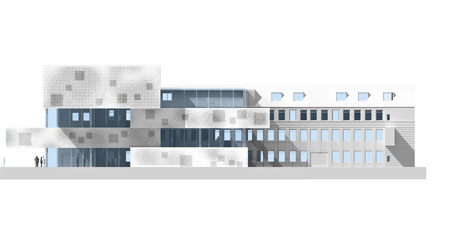
Danish architects COBE and Transform have won a competition to design a new Culture House and Library in Copenhagen.
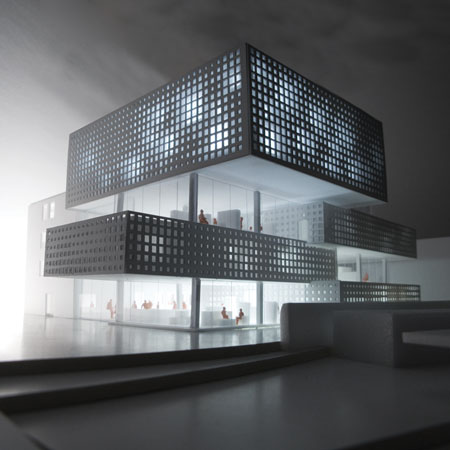
model.jpg

Renders are by Luxigon.

model2.jpg

Here's some info from COBE:

--

CULTURE HOUSE + LIBRARY IN COPENHAGEN BY COBE AND TRANSFORM

Location: Copenhagen, Denmark
Type: Competition 1st prize
Client: Copenhagen Municipality
Program: Culture house + library
Total floor area: 1800 m2
Status: Ongoing – To be realized in 2010
Architects: COBE + Transform
Web: www.cobe.dk, www.transform.dk
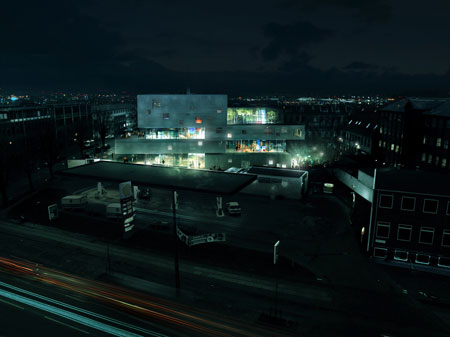
cobe_kulturhus_birdeye.jpg

The Northwest area of Copenhagen is located in the diverse and lively transition zone between the dense urban Nørrebro area and the villa neighbourhoods at the edge of the city. Even though many people live and work in the multi-ethnic Northwest Copenhagen, the area is by many Copenhageners mainly passed through going in and out of the city by car. The reason for this is the area's vicinity to numerous entry roads as well as the lack of cultural facilities and recreational areas.
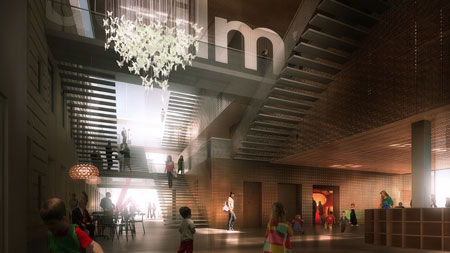
cobe_kulturhus_interior.jpg

Programme
The new Culture House + Library is composed of several elements: Rethinking and modernisation of an existing culture house, a merger of two newer libraries, and the addition of a new culture hall, together forming an enormous potential as a new Culture House for the whole area.
front.jpg

This can make up the significant and attractive cultural institution which the neighbourhood lacks today, creating a strong sense of community. The new Culture House + Library can be the missing link for the Northwest area, and will be placed centrally in the neighbourhood's and the people’s awareness. The house must prove itself functionally and be emphasised visually as a house growing out of the rough urbanity of the area - possibly starting up a necessary dialogue between the new and old in the neighbourhood.
model3.jpg

Urban passage
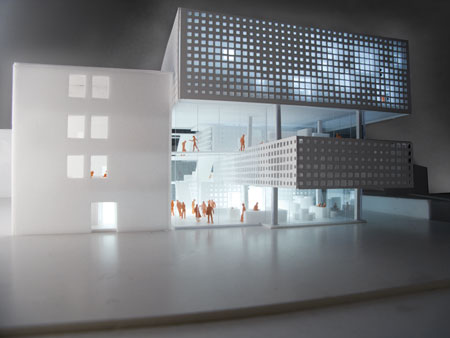
The building has two entrances. One from the north and one from the south, making the foyer act as an urban passage for the neighbourhood. For everyone it is possible and legitimate to walk through the building without any errands, and more people will feel inspired to spending time in the building. The passage is a simple gesture of how open the Culture house will be towards the city and its citizens. The building is fundamentally based on democratic principles: open, accessible and transparent. The building is designed to include and welcome all, and act as a platform for dialogue.
model4.jpg

Diversity
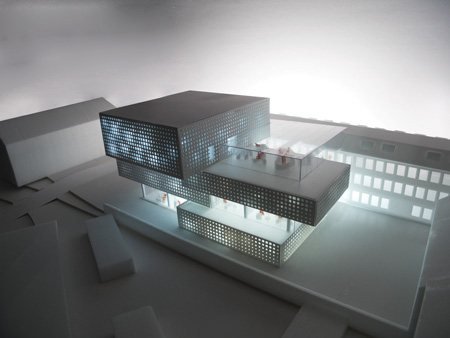
The complex has an intricate program. It is a dynamic figure of open and closed areas, which is occupied by the library and at the same time used for both fixed functions and flexible areas. This gives a varied coherence between open and closed spaces. Open spaces marked by the immediate context  and the closed areas as completely choreographed library spaces for, amongst others, children and youths.
concept.jpg

The top
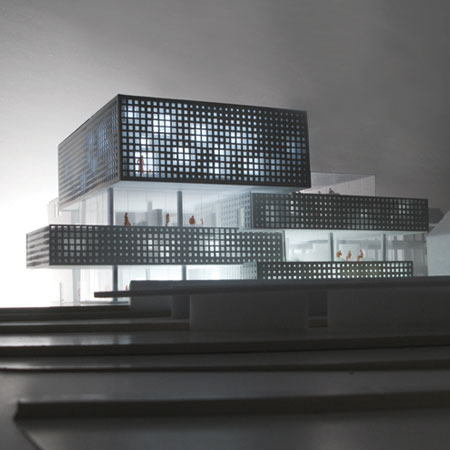
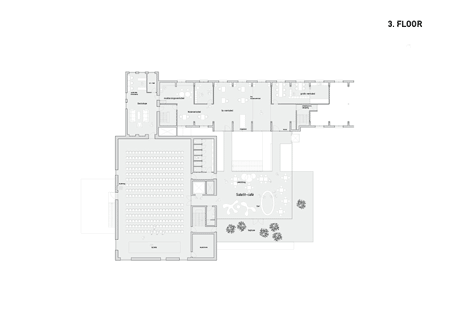
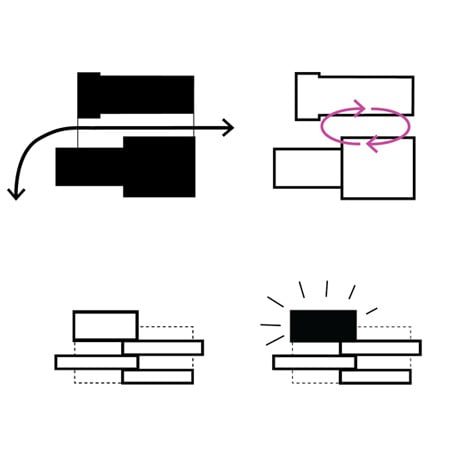
As a main gesture, the culture and concert hall is placed at the top of the building. A powerful object that seems to defy the laws of gravity, the position of the hall encourage people to move across the building towards the magnificent view over Copenhagen. The placement of the hall will leave a strong, dynamic impression on those passing by. The experience of a new initiative, opening up for a dialogue between the new and the old, the young and the elderly. A much needed institution for arts and culture.
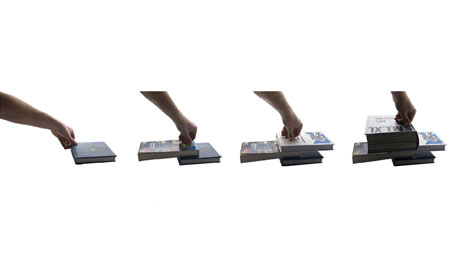
book_concept.jpg

0.gif

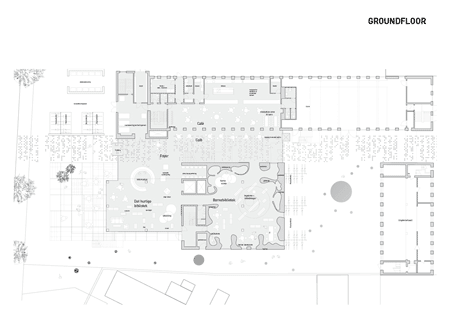
Above: ground floor plan

1.gif

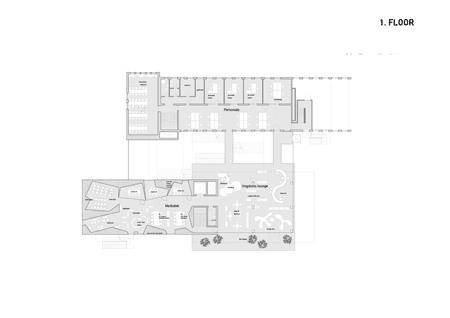
Above: first floor plan

2.gif

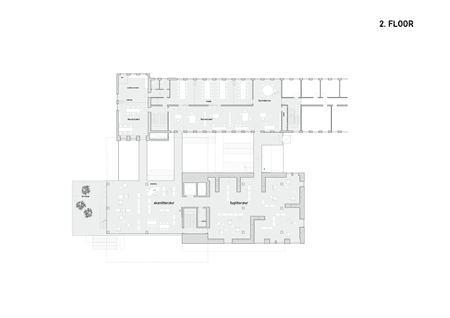
Above: second floor plan

3.gif

Above: third floor plan

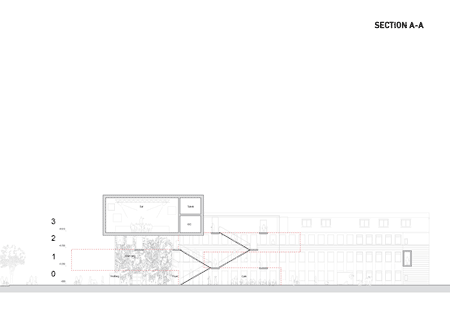
sectiona-a.gif

Above: section

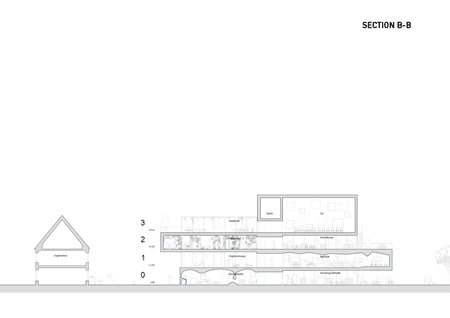
sectionb_b.gif

Above: section

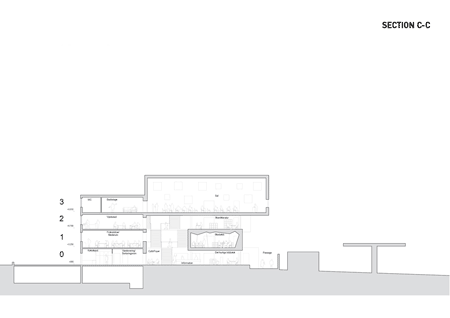
sectionc-c.gif

Above: section

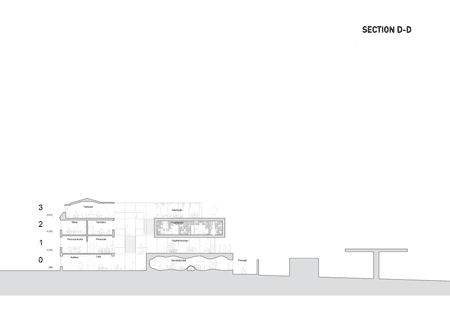
sectiond-d.gif

Above: section

One Response to Copenhagen Culture House + Library by COBE
and Transform

  1. J says:

    I thought this was the new OMAMVRDVBIGJDS, but it isn’t.

  2. J says:

    Ok, that was mean. It’s simple and clear. I like that.

  3. Carlos Coronado says:

    Keep it simple, keep it rational.

  4. SouL says:

    I can see Rem Koolhaas’s book being used in this project ;)

  5. stan says:

    isn’t OMA building/planning quite a similar building in the same city?

  6. jin says:

    i wonder when luxigon is going to claim part of the credit for all of their images

  7. neoprene says:

    i like it, but this way of thinking and operating , in architecture, is quite dated.

  8. AL says:

    is everything just a passing fad? [rationale] as thinking and [logic] as operations are hardly considered ideas for the “moment”, no? I should think they are timeless and should exist in all substantive works of architecture or is my thinking “quite dated” too?

  9. kk says:

    a lot of strange things happening on the plans, that dont seem to appear in 3d or in the sections

  10. omg says:

    it s oma s library at seattle without pantyhose

  11. Vico says:

    box is the new blob

  12. odris says:

    nice patterns

  13. antonius says:

    why these collumns? If you want to use this concept. Get rid of them.

  14. One says:

    Modern architects are now captured by the forth generation commercial architecture. It is now the urgence for those who aims to prevail wht freedom archiecture can explore.

  15. ststst says:

    hey I really like the floorplans and section :)

  16. David Klemmer says:

    I absolutely like the Render-Style. Nice project!

  17. neoprene says:

    x AL architecture is not timeless, as you know. the ‘spirit of time’ change costantly and become rapidly something different. I loved this project, but it seems something who belong to an ended cycle. the skin of the building? ok … the armony of the volumes? (OMA’s boxes?) ok – what’s new? architecture is fashion intended, ’cause contemporary architects had become stylists , and architecture had become seasonal ! bye

  18. :0 says:

    neoprene,
    hopefuly your idea of architects as stylists of seasonal elements (decorative?) in architecture will pass. A thoughtful conception of space (locus) and its relationship to the surroundings, as well as intelligent dialogues between structure and form will always remain. everything else can be decadent and vain, stylistic and seasonal one may say, and therefore, indeed, passes. Confusing strong principles of spatial conception for a passing style is quite alarming! I’m afraid you’re misinformed! bye

  19. nprn says:

    in a provocative perspective, F.N., an italian architect,during a conference, said: >>we have to build our constructions with dynamite in the pilars<<. i think it could be a funny thought. there are many different principles of spatial conceptions, principles that could represent a personal interpretation of the spatial solutions by the architects. are you speaking about ‘rules’ of architectonic planning?

  20. james webb says:

    jin, most often render houses don’t get credited. in the case of luxigon i guess most ppl know its them anyway :)

  21. batman says:

    looks like the work of a young beebe, tormented by older pran

  22. carmelo says:

    Good work Eric de Broche and company!

  23. Niels says:

    Very much with very little. The principle of stacking volumes produces a lot of interesting spaces.

  24. tanaka shin says:

    A very simple, clear and elegant execution by the architects to accommodate a set of complex programs. The concept of books stacking up to form the volumetric spaces is a good strategy.

  25. nana says:

    des livres superposé pour une bibliothéque :une belle métaphore ,elle est dans ca place

  26. chakijs says:

    i’m wondering about moderate scale of the project. i like it

  27. Thom says:

    OMA-lite. The book diagram is disingenuous–those structural principles don’t apply because of the columns.

  28. JuiceMajor says:

    Luv this….very OMA.

Leave a Reply

Your email address will not be published. Required fields are marked *

*

You may use these HTML tags and attributes: <a href="" title=""> <abbr title=""> <acronym title=""> <b> <blockquote cite=""> <cite> <code> <del datetime=""> <em> <i> <q cite=""> <strike> <strong>