Dezeen Wire: design critic Alice Rawsthorn writes about design that balances desirability with ethical credibility for the New York Times, citing Mathieu Lehanneur's Wi-Fi stations across Paris and Something & Son's temporary spa the Barking Bathhouse as good examples to follow - New York Times
Tag: Alice Rawsthorn
"The proper blend of beauty and ethics"
"Messing With Mother Nature"
- New York Times
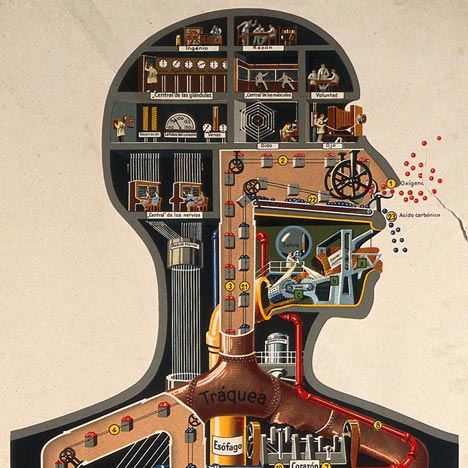
Dezeen Wire: design critic Alice Rawsthorn writes about the moral and social implications of redesigning the human body in advance of an exhibition about human enhancement called Superhuman at the Wellcome Collection in London from 19 July - New York Times
"When cliché grows out of distinction"
- New York Times
Dezeen Wire: design critic Alice Rawsthorn describes how the famous Arco lamp by Achille and Pier Giacomo Castiglioni has become a cliché for precisely the reasons that made it great - New York Times
More »
"How the love affair with Apple might end"
- New York Times
Dezeen Wire: New York Times design critic Alice Rawsthorn predicts that failing to address ethical and environmental issues could be the downfall of Apple, "the reigning champion of corporate design" - New York Times
"Nendo hones its unusual charm"
- New York Times
Dezeen Wire: design critic Alice Rawsthorn interviews Japanese designer Oki Sato of Nendo about how the company got its name, the humour and stories behind their work and his current preoccupation with glass-blowing - New York Times
Nendo presented two exhibitions of their work in Paris last week: furniture that's only stable when objects are placed on it and another collection at Carpernters Workshop Gallery that includes containers made of agricultural netting, tables with glass tops that have been allowed to flow outside their frames and huge blown-glass bubbles trapped in steel coffee tables.
See all our stories about Nendo here and watch our interview with Oki Sato on Dezeen Screen.
"Challenges for the Design Industry in 2012" - Alice Rawsthorn
Dezeen Wire: New York Times critic Alice Rawsthorn previews the design highs and lows of the coming year, including Thomas Heatherwick's new double-decker bus for London (high) and the logo for the 2012 Olympic games (low) - New York Times
Occupy movement establishes new protocols of
protest design – The New York Times
Dezeen Wire: in her latest article for The New York Times, design critic Alice Rawsthorn examines the symbols and slogans adopted by the Occupy protest movement in cities around the world.
Rawsthorn explains that the name 'Occupy', which originated at the Occupy Wall Street protest against the banking and democratic system, "is a stellar example of both what is known in marketing as an umbrella brand name and what the anti-corporatists in the movement could call beating them at their own game." She adds that the use of hashtags and slogans short enough to send on social networks such as Twitter have helped the movement spread globally and could represent a new protocol for protesters involving "the repeated use of a few carefully chosen words," rather than images.
"Keyed to Detail, No Matter How Crazy"
- The New York Times
Dezeen Wire: in her latest article for The New York Times, design critic Alice Rawsthorn explains how Dutch designer Aldo Bakker's expressive process and relentless attention to detail make him "one of the new wave of designers who could be called design-auteurs" – The New York Times
Bakker's products and furniture perform simple functions in ways that Rawsthorn says demonstrate "a quiet confidence, as if every element has been resolved with nothing left to chance." Bakker says of his creative methods, which can lead to each product taking years to develop: “I love having the freedom to pay attention to every detail in my work, no matter how crazy."
See designs by Aldo Bakker on Dezeen and read more articles by Alice Rawsthorn here.
"The Power, or Folly, of a Product’s Name"
- The New York Times
Dezeen Wire: in her latest article for The New York Times design critic Alice Rawsthorn strikes a blow against the current trend for naming products with confusing, forgettable or misleading monikers. More »
"Humanitarian design project aims to build a
sense of community"- The New York Times
Dezeen Wire: in her latest article for The New York Times, design correspondent Alice Rawsthorn profiles Studio H, a humanitarian design project has spent a year teaching design skills to school children in a deprived part of North Carolina - The New York Times
Rawsthorn describes the process that Studio H founders Emily Pilloton and Matthew Miller undertook with the pupils – providing basic skills that resulted in the creation of a 2,000-square-foot pavilion at a local farmers market – and outlines the benefits of teaching design to students at a formative age.
See links to more articles by Alice Rawsthorn here.
"Can anybody be a designer?"
- Alice Rawsthorn
Dezeen Wire: design critic Alice Rawsthorn dicusses the difficulty in accurately defining design, suggesting that more "open" design processes mean anyone can claim to be a designer - The New York Times
"Postmodern, but not especially proud of it"
-The New York Times
Dezeen Wire: ahead of the opening of Postmodernism: Style and Subversion 1970-1990 at the Victoria & Albert Museum next week, design critic Alice Rawsthorn describes the hype and controversy that surrounded the movement and its influence on subsequent designers - The New York Times
See a previous article discussing the definition of postmodernism by The Observer's architecture critic Rowan Moore here.
"Technology's Human Potential"
- New York Times
Dezeen Wire: design critic Alice Rawsthorn writes for the New York Times about London designers BERG, whose work is on show as part of the exhibition Talk to Me: Design and the Communication between People and Objects at the Museum of Modern Art in New York until 7 November - New York Times
See Berg's redesign of the standard till receipt in our earlier story.
"And the Great Furniture Festival Begins"
- Alice Rawsthorn
As the Milan furniture fair begins, Alice Rawsthorn previews this year's event in the New York Times and compares the design industry's fortunes to previous years. Read the story. See all Dezeen's stories from Milan 2011.
"For Electronic Types, a Mark of Distinction"
- New York Times
Dezeenwire: Alice Rawsthorn on the addition of 23 digital typefaces to MoMA's architecture and design collection, which until recently only included Helvetica - New York Times
Update - Read the whole story on the MoMA website »