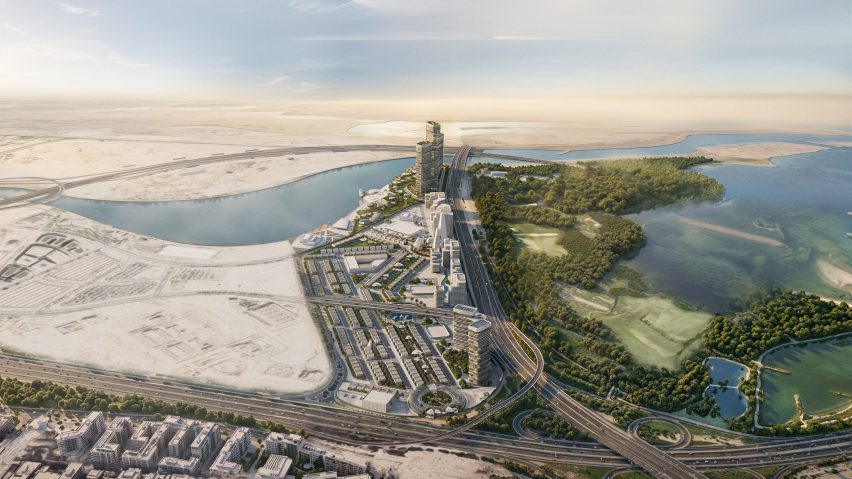
Zoned neighbourhood among projects from American University in Dubai
Dezeen School Shows: a masterplan exploring how the built environment can shape human emotion is among the student projects from American University in Dubai.
Also featured are a proposal that reimagines Dubai's industrial core as a creative hub and another that rethinks the city's waterfront as a climate-responsive public landscape.
American University in Dubai
Institution: American University in Dubai
Course: Master of Urban Design and Digital Environments (MUDDE)
School statement:
"The Master of Urban Design and Digital Environments (MUDDE) showcases a selection of student projects that investigate emerging approaches to urban development in Dubai.
"Featured works from the Thesis Studio course address contemporary urban challenges through research-driven design proposals. The projects explore themes including rule-based urbanism, gated communities, sense of belonging, superblocks, the development of industrial centres and ecological urbanism in beach environments.
"Collectively, they examine how urban design can respond to rapid urbanisation, environmental pressures and evolving social dynamics while enhancing the quality and inclusivity of urban life.
"Through a combination of analytical research and design speculation, students developed strategies that consider the relationships between urban form, mobility, ecology, economic development and community wellbeing.
"Additional projects from the Urban Design Studio – Neighbourhood Masterplan course focus on the design of a new district in Dubai, conceived on a vacant site.
"Students developed masterplans that integrate sustainability, liveability and adaptability in accordance with local regulations, proposing future-ready urban environments shaped by local conditions and global urban agendas.
"Together, the projects demonstrate the programme's emphasis on innovative urban thinking, digital design methodologies and context-sensitive approaches to shaping the cities of tomorrow."
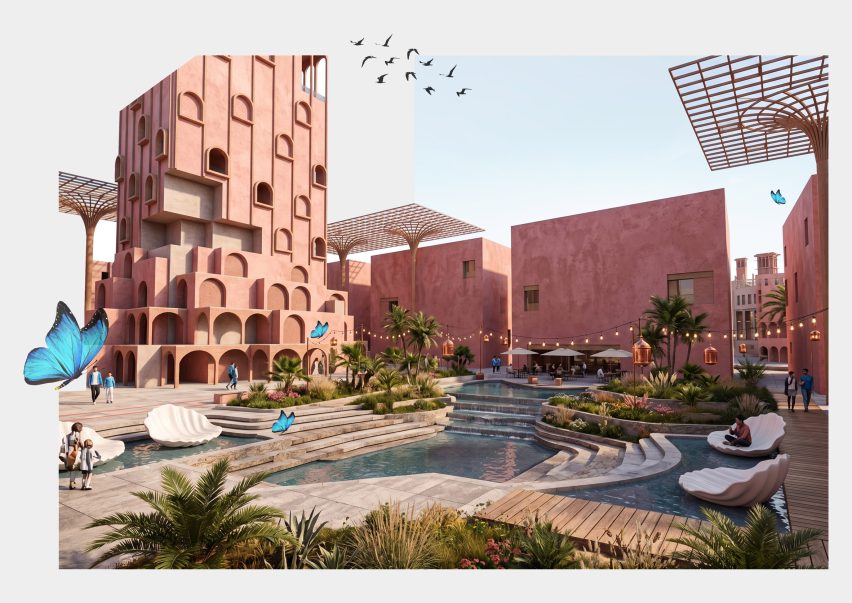
Rule-Based Urbanism in Dubai by Mohamed Wahid
"Parametric urbanism tends to produce cities that look complex but feel like nowhere.
"This project pushes back by employing Christopher Alexander's pattern language to identify urban patterns in Dubai and embed them in the algorithm.
"Working in Grasshopper and Python, the proposal translates Dubai's older spatial patterns – courtyard clusters, shaded sikkahs, wadi alignment, wind-tower ventilation – into generative rules, then tests them on a desert-edge site near Expo 2020.
"The patterns are treated as instructions and produce a method for designing arid cities that grow with their context rather than over it."
Student: Mohamed Wahid
Course: UDDE614 – Thesis Studio
Email: mohamed.anghilamohamedyacoob[at]mymail.aud.edu
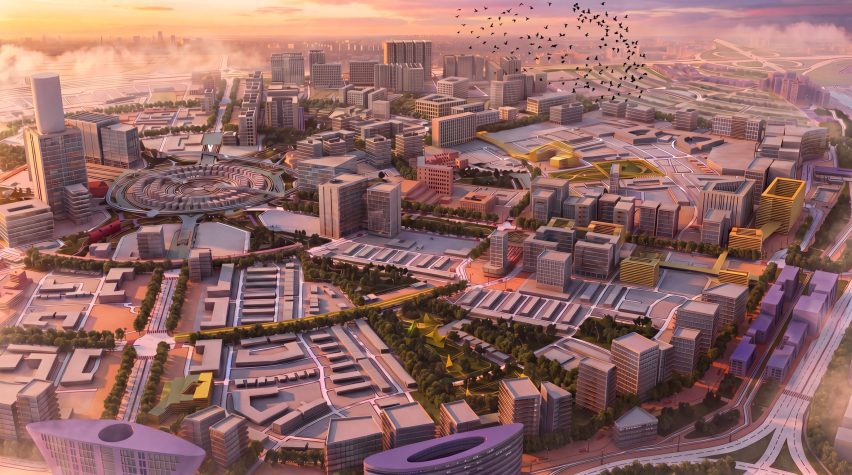
Re-Thinking Belonging in Transnational Urban Spaces: Evidence from Dubai's Multicultural Communities by Zahra Ahmadpour
"This infill development project explores how rapidly growing multicultural cities like Dubai can foster a stronger sense of belonging through strategic urban design interventions.
"Based on a loop-driven movement framework, the proposal reconnects vacant urban plots through integrated mobility, service, social and green networks that strengthen walkability, memory, mental mapping and everyday social interaction.
"The design transforms the large northern vacant plot into a courtyard-within-courtyard masterplan, creating a layered human-scale environment, which enhances social interaction, reinforces community identity and fosters deeper emotional connection to place."
Student: Zahra Ahmadpour
Course: UDDE614 – Thesis Studio
Email: zahra.ahmadpour[at]mymail.aud.edu
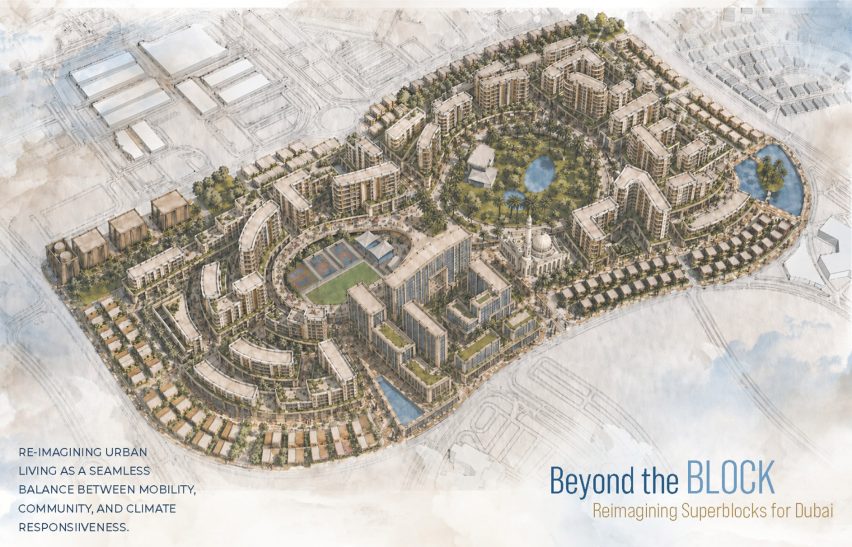
Beyond the Block: Reimagining Superblocks for Dubai by Ayah Albaumy
"This proposal reinterprets the superblock model for Dubai's hot-arid, car-oriented urban context.
"Set in Dubai Silicon Oasis, the project transforms large, fragmented plots into a connected network of climate-responsive superblocks organised around shaded mobility routes, green public spaces, mixed-use nodes and a central mobility hub.
"Rather than copying the European superblock model, the proposal adapts it through flexible block radii, thermal comfort strategies, last-mile connectivity and a gradual density transition.
"The project proposes a human-centred urban framework, which reduces short-distance car dependency while improving walkability, public life and environmental comfort."
Student: Ayah Albaumy
Course: UDDE614 – Thesis Studio
Email: ayah.albaumy[at]mymail.aud.edu
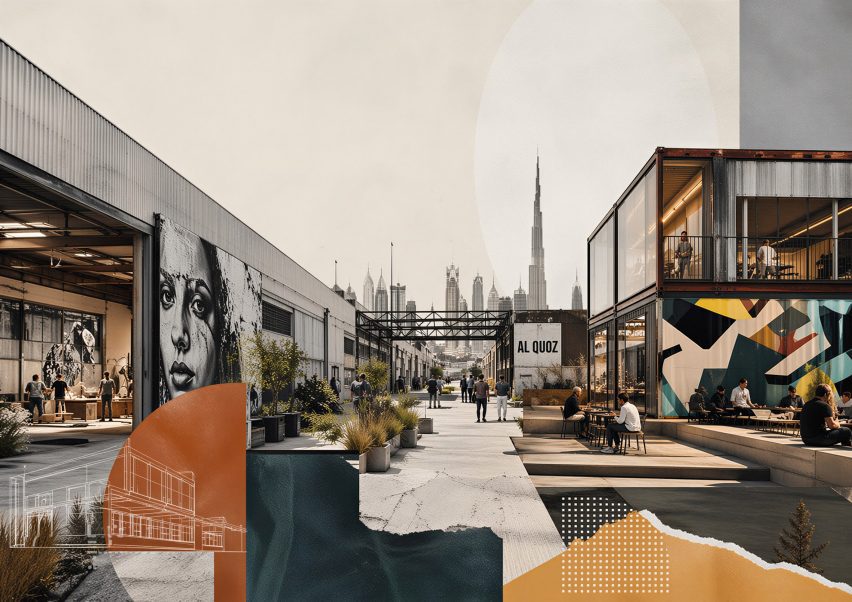
Regeneration of Industrial Zones into Creative Hub: The Case of Al Quoz by Charulatha Loganathan
"This project explores the transformation of Dubai's industrial core into a vibrant creative district while preserving its industrial identity.
"Aligned with the Dubai 2040 Vision, the thesis proposes 'symbiotic urbanism', using the Interlock design mechanism to integrate industrial logistics with human-centred urban experiences.
"This proposed masterplan introduces adaptive reuse of warehouses, climate-responsive pedestrian corridors and micro-mobility networks at district, neighbourhood and street scales.
"The design demonstrates how creative and manufacturing industries can coexist within a resilient, liveable and future-ready urban ecosystem."
Student: Charulatha Loganathan
Course: UDDE 614 – Thesis Studio
Email: charulathaloganathan[at]mymail.aud.edu
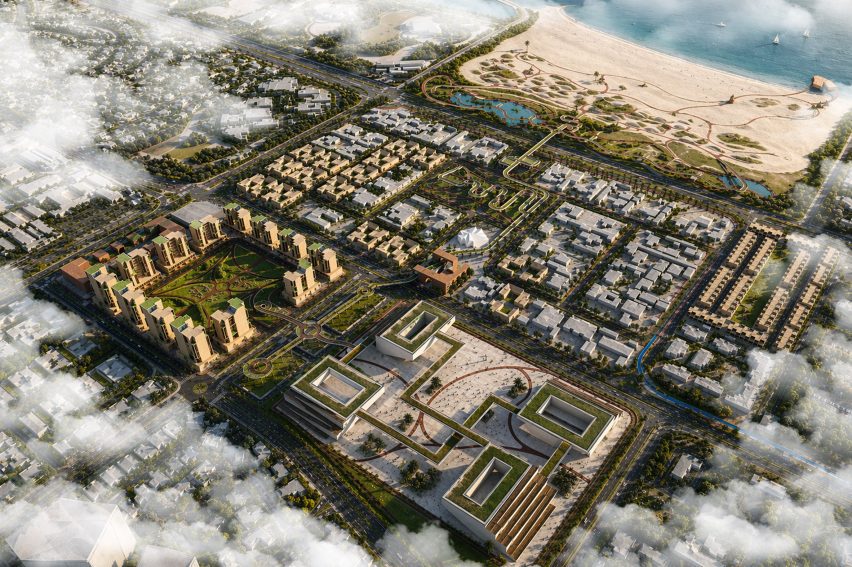
Eco-Link: Connecting City, Coast and Ecology by Azhaan Kalim
"Dubai's coastal edges are often treated as fragmented boundaries shaped by infrastructure and real estate, limiting their ecological and social potential.
"This proposal reimagines the waterfront as a climate-responsive public landscape, where the city, coastline and ecological systems are seamlessly integrated.
"Located in Al Sufouh, Dubai, this project introduces a central connective spine that links the urban fabric to the beach, supported by a network of activity nodes that distribute public life across the site.
"Through a system of connected open spaces, walkable networks and human-scale development, this masterplan enhances accessibility, microclimate and everyday usability."
Student: Azhaan Kalim
Course: UDDE614 – Thesis Studio
Email: azhaan.kalim[at]mymail.aud.edu
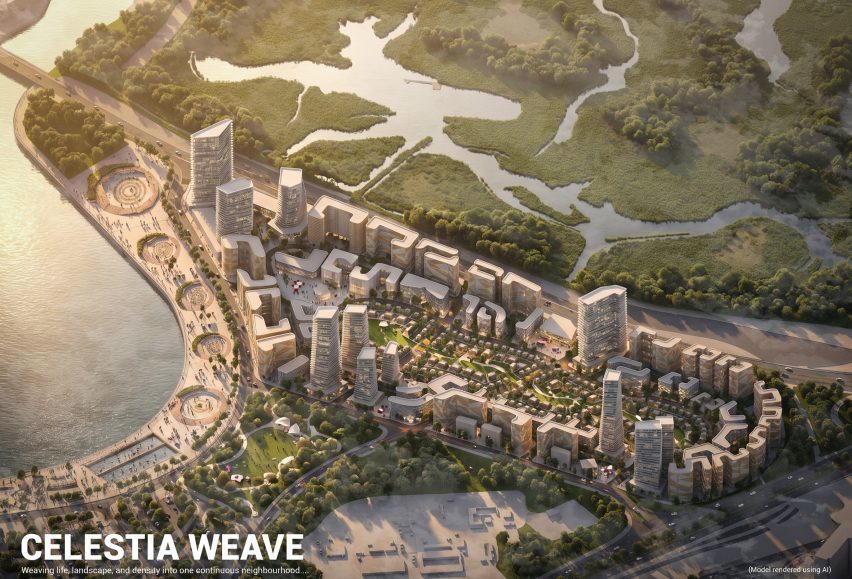
Celestia Weave by Hadithya Chandrasekar
"This neighbourhood masterplan for Dubai Design District explores the transformation of a fragmented work-oriented district into a connected mixed-use urban environment.
"The project is structured around a central spine, attractor nodes, layered mobility systems and integrated public spaces.
"Combining residential typologies, waterfront activation, pedestrian connectivity and a parametric architectural identity, the proposal creates a continuous and responsive urban ecosystem that balances density, movement, landscape and everyday public life."
Student: Hadithya Chandrasekar
Course: UDDE 604 – Urban Design Studio: Neighbourhood Masterplan
Email: hadithya.chandrasekar[at]mymail.aud.edu
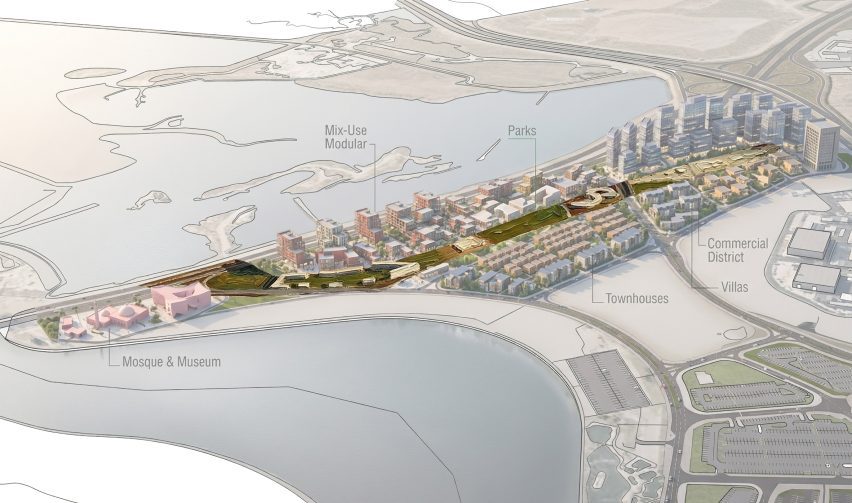
Tides of Equilibrium by Tracy Abi Najem
"This proposal aims to harness the fluidity of waves into an urban intervention, filtering the chaos of the city into a calming, structured site.
"Combining Dubai Design District's 'work hard, play hard' ethos with the dynamic nature of water – from calm waves to turbulent storms – the concept shapes the site into four quadrants of shifting atmosphere.
"Moving from a central calm core toward increasingly chaotic edges, four waves ripple outward from the centre, each quadrant defined by the existing road network."
Student: Tracy Abi Najem
Course: UDDE 604 – Urban Design Studio: Neighbourhood Masterplan
Email: tracy.abinajem[at]mymail.aud.edu
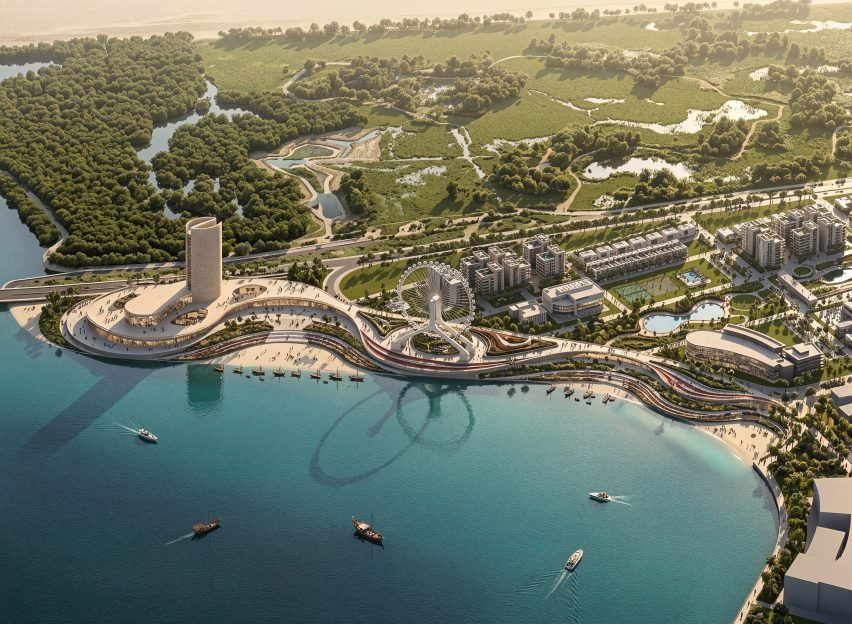
Skyline to Shoreline – A Bio-Creative Waterfront Masterplan for Dubai Design District by Patience Ankwatse
"This masterplan reimagines Dubai Design District as a living gradient where skyline, civic life, ecology, waterway and shoreline merge into a cohesive and future-ready urban environment.
"The proposal introduces diverse housing, ecological corridors and a highly walkable mobility network anchored by a central green-blue spine.
"A civic waterfront strengthens the relationship between the district and the Ras Al Khor Sanctuary in Dubai, enhancing public access and environmental stewardship.
"Aligned with the Dubai 2040 Vision, the project promotes climate resilience, social vibrancy and a balanced integration of nature, community and urban form."
Student: Patience Ankwatse
Course: UDDE 604 – Urban Design Studio: Neighbourhood Masterplan
Email: patience.ankwatse[at]mymail.aud.edu
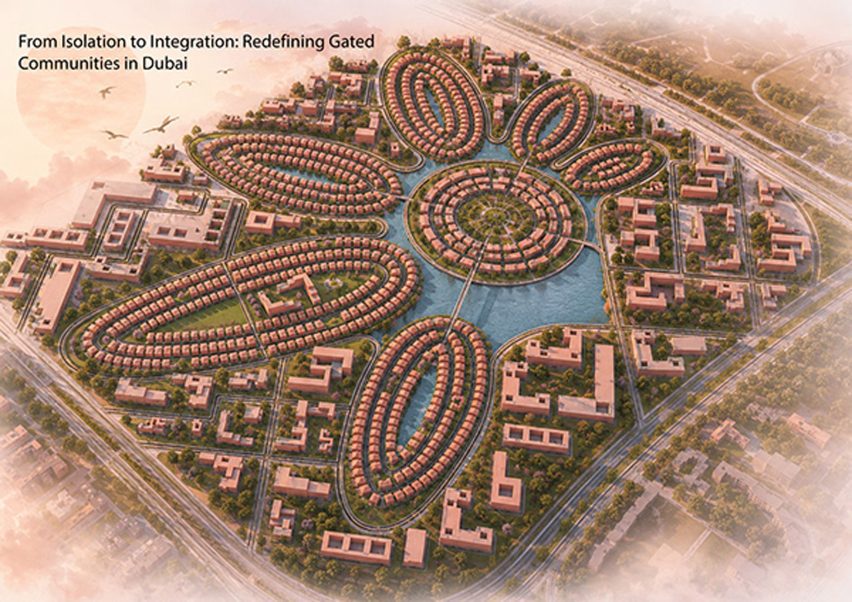
From Isolation to Integration: Redefining Gated Communities in Dubai by Elyazia Almurr
"This project redefines the gated community through the concept of the shell, proposing a layered spatial system that creates security through depth rather than rigid enclosure.
"The shell operates as a protective yet permeable boundary that transitions gradually from public edges to semi-public buffers and finally to private residential clusters.
"Instead of functioning as a solid wall, this masterplan uses layers of selective openings, green buffers and water bodies to maintain privacy while enhancing visual and physical connectivity.
"The outer layer acts as a harder protective edge, while the interior becomes softer, greener and more socially interactive.
"Through climate-responsive design and spatial hierarchy, the shell balances exclusivity with urban integration, proposing a more adaptive and community-oriented model of gated living."
Student: Elyazia Almurr
Course: UDDE 614 – Thesis Studio
Email: elyazia.almurr[at]mymail.aud.edu
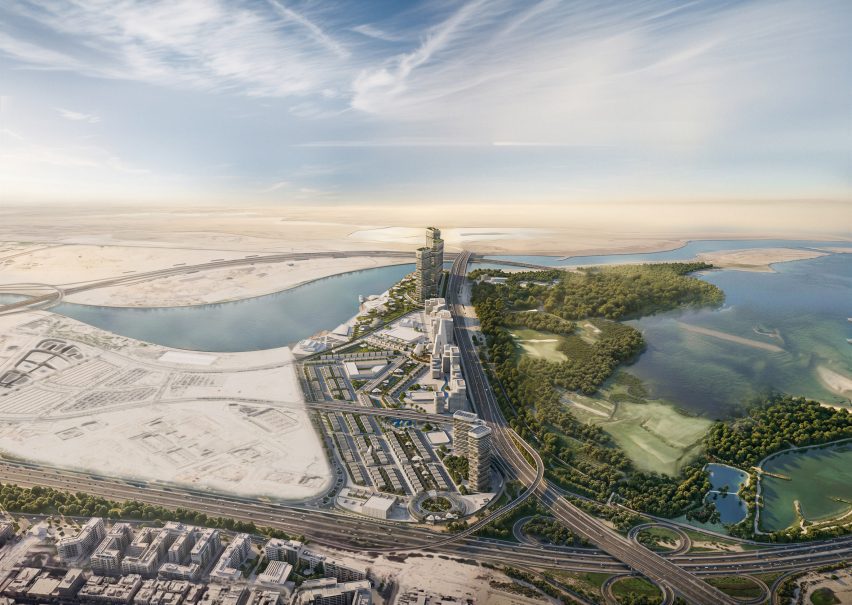
Embodied Experience by Zeyana Khamis Al Aamri
"This masterplan is a mixed-use urban proposal within the Dubai Design District, which is a context that catalyses creativity.
"The framework is driven by a sensory design philosophy that acknowledges that the body, mind and emotions work together.
"The proposal divides the neighbourhood into five key nodes, each designed around a distinct sense and intended to evoke a specific neurological and emotional response.
"Evolved from a poetic exploration into a practical solution, the design meets regulatory standards and is supported by environmental and technical analysis, with Forma used to document projected outcomes."
Student: Zeyana Khamis Al Aamri
Course: UDDE 604 – Urban Design Studio: Neighbourhood Masterplan
Email: zeyana.alaamri[at]mymail.aud.edu
Partnership content
This school show is a partnership between Dezeen and American University in Dubai. Find out more about Dezeen partnership content here.